If you’ve ever worked with SQL, you’ve probably faced moments where you just needed a quick place to store data temporarily — maybe for calculations, filtering, or debugging. That’s when a Temporary SQL Table comes to your rescue.
When I first learned SQL, I remember thinking, “Wait, do I really need to create a permanent table just to test my logic?” Nope. That’s when I discovered Temporary SQL Tables, and honestly, it changed the way I worked with data.
In this post, I’ll walk you through how to create a Temp SQL Table, why it’s so useful, and how it behaves differently from a regular table. Whether you’re working in SQL Server, MySQL, or PostgreSQL, the concept remains almost the same — just a few syntax tweaks here and there.
What is a Temporary SQL Table?
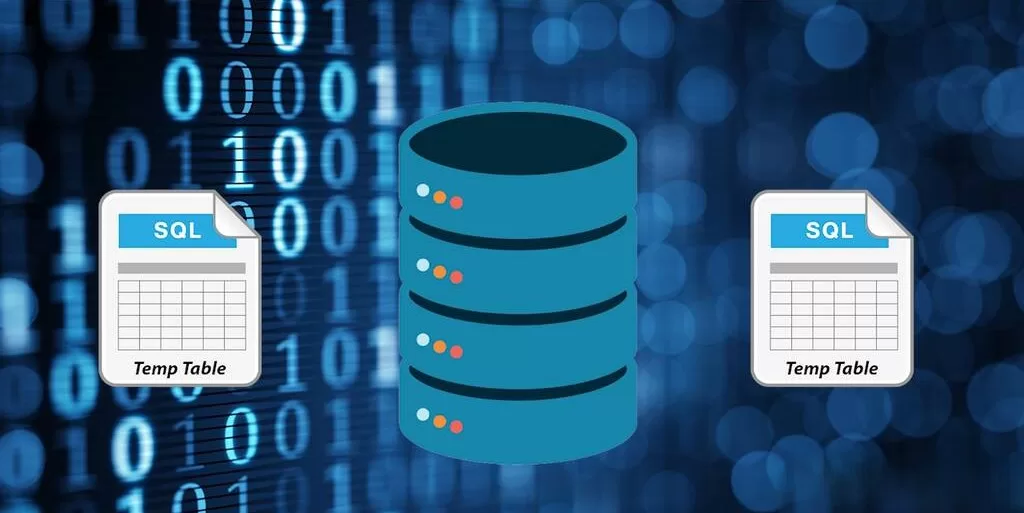
A Temp SQL Table is just like a regular table, except it doesn’t stick around forever. It’s stored in the tempdb database and automatically disappears when your SQL session ends.
Think of it like a scratchpad — you can jot down data, perform operations, and once you’re done, it’s wiped clean.
I often use Temporary SQL Tables when working on large datasets. Instead of running heavy queries repeatedly, I store results temporarily and work on them step by step. It’s efficient, quick, and safe to experiment with.
Why Use a Temporary SQL Table?
Let’s be real — we don’t always need permanent data storage. Sometimes, we just need a short-term workspace for:
- Storing intermediate results of complex joins
- Simplifying nested queries
- Reducing repeated calculations
- Debugging parts of a query
- Improving query performance
Here’s a quick real-life scenario from my experience:
While optimizing a client’s report generation query, the joins were getting out of hand — multiple tables, aggregations, and filters. I used a Temp SQL Table to hold the intermediate results, tested different indexes, and voila — the query ran 5x faster.
So yes, temporary tables are your best friend when you’re experimenting or fine-tuning SQL logic.
How to Create a Temporary SQL Table
Now let’s get practical. Creating a Temporary SQL Table is super simple.
There are two common ways to do it:
1. Using CREATE TABLE
You can create a temporary table just like a normal one, but with a # prefix.
Here, #EmployeeTemp is a local Temporary SQL Table.
Now, let’s insert some data:
And to view it:
Once your session closes or your script ends, this table disappears.
2. Using SELECT INTO
Sometimes you don’t want to define the structure manually — you can directly create a Temporary SQL Table from a query result.
This method is super handy when you just want to pull filtered data into a temporary workspace.
Local vs Global Temporary SQL Table

In SQL Server, there are two types of temporary tables — local and global.
| Type | Syntax | Scope | Lifetime |
|---|---|---|---|
| Local | #TempTable | Current session | Deleted when session ends |
| Global | ##GlobalTemp | All sessions | Deleted when last session using it ends |
Example of a global Temporary SQL Table:
Anyone connected to the same server can access this table — until everyone disconnects.
In most of my projects, I prefer local temp tables because they’re session-specific and avoid conflicts between users.
Temporary SQL Table vs Table Variable

You might wonder — “Wait, what about table variables?”
Good question. Both Temporary SQL Tables and table variables store temporary data, but they’re not the same:
| Feature | Temporary SQL Table | Table Variable |
|---|---|---|
| Scope | Session-level | Batch or function-level |
| Can use indexes? | Yes | Limited |
| Involves statistics | Yes | No |
| Suitable for large data? | ✅ Yes | ❌ No |
In my experience, if I’m working with a small dataset, I use a table variable. But when performance and indexing matter — Temporary SQL Tables win hands down.
How to Drop a Temporary SQL Table
Usually, temporary tables are automatically dropped once your session ends.
But if you want to manually delete them (especially in long-running scripts), you can use:
Pro tip 💡: Always drop temporary tables in stored procedures to avoid memory overhead in tempdb.
Performance Tips for Using Temporary SQL Tables
Here are a few lessons I’ve learned from real-world projects:
- Always create indexes on temporary tables if you’re using them in joins.
- Use
SELECT INTOfor quick prototyping, butCREATE TABLEfor structured queries. - Don’t forget to drop them when you’re done.
- Avoid using too many temporary tables in nested queries — it can slow down performance.
- If possible, use Common Table Expressions (CTEs) for smaller temporary operations.
Example: Real Use Case of Temporary SQL Table

Let’s say you’re analyzing monthly sales performance.
Here, I’m storing my aggregated sales data in a Temporary SQL Table — #MonthlySales.
I can run multiple analytics on this temporary data, and it’s gone once I’m done.
This method keeps my main Sales table untouched and reduces processing time.
Final Thoughts
A Temporary SQL Table is one of those small yet mighty features that make SQL so flexible.
It lets you experiment, test, and manipulate data without the fear of messing up your main database.
Whenever I’m working on data transformations, debugging, or performance tuning, I find myself relying heavily on temporary tables. They’re quick to create, easy to manage, and gone when you’re done — like a whiteboard that erases itself.
So next time you’re knee-deep in SQL queries, don’t hesitate to create a Temporary SQL Table. It might just save you hours of frustration.
Want to learn more about this?, Kaashiv Infotech Offers, SQL Course, Mysql Course & More, Visit www.kaashivinfotech.com.
Related Reads: