7 Key Roles of Subnet Mask You Shouldn’t Ignore

Introduction
Mask and subnet mask – sounds boring, right? I used to think the same. When I first heard the term during my networking classes, it felt like someone was speaking another language. But here’s the catch: subnet masks are not just some dull textbook thing. They’re literally the unsung heroes that make the internet work smoothly.
Think about it – without a mask and subnet mask, your device wouldn’t even know how to talk to the right computer or server. That would be like sending a letter with just the street name but no house number. Where would it go?

So let me walk you through this in the most human way possible. No heavy jargon. No robotic explanations. Just you, me, and subnet masks made simple.
What is a Subnet Mask?
A subnet mask is basically like a filter or a pair of glasses for your IP address. It helps separate the “network” part from the “host” part.
Here’s a real-life comparison I use when explaining to my friends:
- Imagine you live in an apartment complex.
- The apartment block is your network.
- Your flat number is your host.
- The mask and subnet mask? That’s the system that helps the postman know which letters belong to the entire building and which ones are for your specific flat.
Without the subnet mask, the poor postman would wander aimlessly. Same goes for your data packets on the internet.
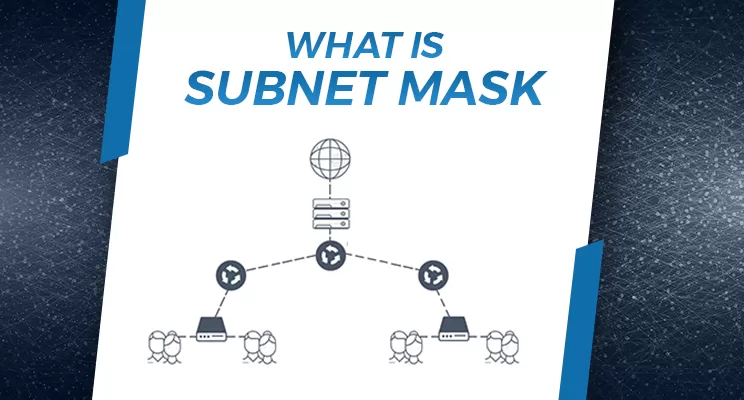
Why Do We Even Need a Mask and Subnet Mask?
When I first set up a small office network, I messed up big time. I had all devices under one big network without subnetting. The result? Chaos! Devices were colliding with each other, connections dropped, and troubleshooting felt like hunting a needle in a haystack.
That’s when I realized the role of subnet mask:
- It prevents network congestion.
- It organizes IP addresses neatly.
- It makes sure data travels to the right destination.
- It improves security by keeping networks separate.
In short, mask and subnet mask are like traffic police 🚦, directing where each vehicle (data packet) should go.
Breaking Down Subnet Mask with a Simple Example
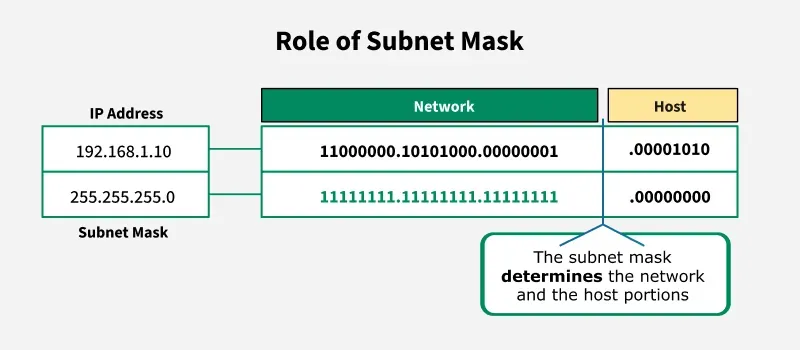
Let’s say you have this IP address:
192.168.1.10
And the subnet mask is:
255.255.255.0
Here’s what happens:
255.255.255part tells you this is the network..0part means the last portion is available for hosts.
So the network is 192.168.1.0, and all the devices (like your phone, laptop, smart TV) will have addresses from 192.168.1.1 to 192.168.1.254.
Now you can see how mask and subnet mask create order from chaos.
The Role of Subnet Mask in the Real World 🌍
When you browse YouTube or Netflix, you don’t think about subnet masks. But behind the scenes, they’re silently:
- Dividing large networks into smaller, manageable ones.
- Ensuring your streaming data doesn’t get mixed with someone else’s office data.
- Helping ISPs allocate IPs efficiently.
For example, your ISP (like Airtel or Jio in India) doesn’t just throw random IPs to customers. They use subnetting with mask and subnet mask to divide the pool of IP addresses. That’s why you and your neighbor can be online without stepping on each other’s toes.

Common Mistakes People Make with Mask and Subnet Mask ❌
Let me be real with you – subnetting can be tricky. I’ve made these mistakes myself:
- Using the wrong subnet mask – I once set
255.255.0.0instead of255.255.255.0. Result? My devices were talking to a much bigger network than needed. Sluggish speed! - Not planning IP ranges – Forgetting to divide IPs properly can cause duplicate IP issues.
- Overcomplicating – Sometimes, we use too many subnets where one is enough.
The key lesson: keep subnetting practical.
Quick Tips to Understand Mask and Subnet Mask (From My Experience)
- Start small. Use a home Wi-Fi example.
- Visualize the mask and subnet mask as a divider.
- Play with online subnet calculators (here’s one).
- Practice with IP ranges like
192.168.x.x. - Don’t panic if it feels hard at first—it clicks with practice.
How to Calculate Subnets (Without Losing Your Mind) 🧮

Subnetting often scares beginners. But here’s my friendly way to approach it:
- Step 1: Write down the IP. Example:
192.168.10.0. - Step 2: Look at the subnet mask. Example:
255.255.255.128. - Step 3: Subnet mask tells you the block size. Here, it’s
128. - Step 4: Divide:
- First subnet →
192.168.10.0 – 192.168.10.127 - Second subnet →
192.168.10.128 – 192.168.10.255
- First subnet →
Boom! You just created 2 subnets with the help of mask and subnet mask.
Subnet Mask vs. Default Gateway – Don’t Confuse Them
I used to confuse these two terms all the time. Let’s clear it up:
- Subnet mask: Splits network and host.
- Gateway: The exit door of your network to reach the outside world (like the internet).
Together, they’re the power couple of networking. One organizes internally, the other connects you to the world.

Why Learning About Mask and Subnet Mask Matters in 2025
With more IoT devices (smart bulbs, watches, cameras) and technologies like 6G and AI-driven networks, managing IP addresses has never been more important.
Subnetting isn’t just for network engineers anymore. Even if you’re a student, gamer, or small business owner, understanding the role of mask and subnet mask can save you from slow networks and messy setups.
For example, I helped my cousin set up a small gaming café. By using proper subnetting, we reduced lag, avoided IP conflicts, and even created a separate subnet for billing systems. Smooth sailing!
Final Thoughts
The role of mask and subnet mask isn’t about memorizing numbers—it’s about understanding why your internet works the way it does.
When you grasp this concept:
- Troubleshooting becomes easier.
- Setting up networks feels less intimidating.
- You gain a skill that’s highly valuable in IT jobs.
So, next time you see that 255.255.255.0 on your Wi-Fi settings, don’t ignore it. Smile. Because now, you know the story behind it.
Want to learn more about Networking? Kaashiv Infotech Offers Networking Course, Cyber Security Course, Cloud Computing Course Visit www.kaashivinfotech.com.
Related Reads: