
Why I Wrote This: Because Learning Transmission Protocols Can Be Boring… Until It Isn’t
If you’ve ever searched for a networking course in Chennai, chances are you’re trying to understand how computers communicate across the internet. And if you’re anything like me back in college, terms like TCP, UDP, and protocol layers probably sounded like alien language.
It wasn’t until I took a hands-on networking class (right here in Chennai, by the way!) that I realized how crucial transmission protocols are to everything — from sending emails to streaming cricket matches on Hotstar. Let’s unpack this in simple language.
🧠 What Are Transmission Protocols?
At their core, transmission protocols are rules that govern how data moves between devices in a network. Think of them like traffic rules for data packets. Without them, the internet would be total chaos.
When you enroll in a networking course in Chennai, this is usually one of the first topics you’ll cover — and for good reason. Everything from WhatsApp messages to Netflix streams depends on these invisible mechanisms.
🧩 The Big Three: TCP, UDP, and QUIC
1. TCP (Transmission Control Protocol)
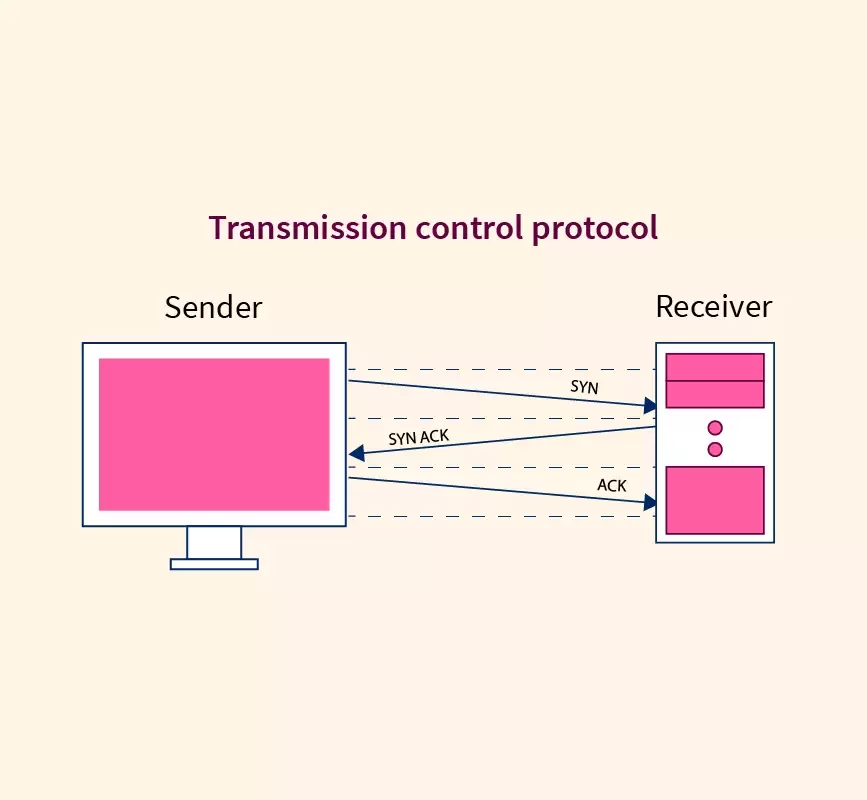
TCP is all about reliability. It ensures every bit of data arrives at its destination, in order, and without errors.
Common uses:
- Web browsing (HTTP/HTTPS)
- Email (SMTP)
- File transfers (FTP)
Key features:
- Connection-oriented
- Acknowledges every packet
- Retransmits lost packets
- Maintains data order
- Uses congestion and flow control
💡 If you’re studying a networking course in Chennai, you’ll likely do lab work demonstrating TCP’s 3-way handshake using Wireshark or a terminal.
2. UDP (User Datagram Protocol)
UDP is the rebel — it doesn’t bother with error checking or order. It’s perfect when speed matters more than accuracy.
Common uses:
- Live video streaming
- Online gaming
- Voice-over-IP (VoIP)
Key features:
- Connectionless
- No acknowledgments
- Faster, lighter than TCP
- Allows for packet loss
💡 If your career goal is to work in cybersecurity or network monitoring, understanding the differences between TCP and UDP is essential — and often taught in-depth in any good networking course in Chennai.
3. QUIC (Quick UDP Internet Connections)
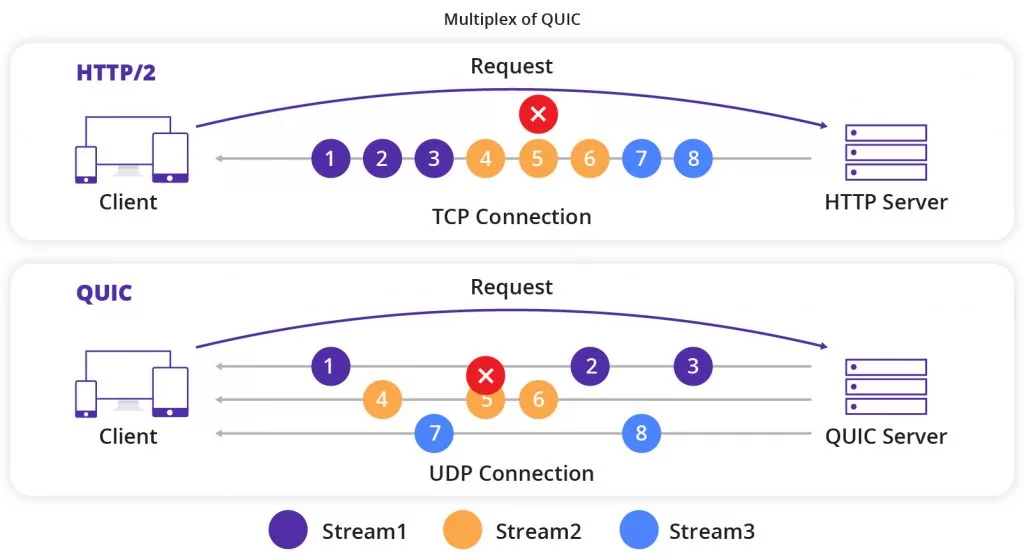
QUIC is the new kid on the block — developed by Google, it combines the speed of UDP with the reliability of TCP.
Common uses:
- HTTP/3
- YouTube, Gmail, Chrome
- Mobile apps requiring speed + security
Key features:
- Built on UDP
- Includes encryption (TLS)
- Handles multiple streams simultaneously
- Reduces latency
QUIC is what makes modern web apps load faster — and understanding it is critical if you’re preparing for certifications like CCNA, which many networking institutes in Chennai cover extensively.
💡 How Transmission Protocols Actually Work
Here’s what goes on behind the scenes:
- Segmentation: Data gets chopped into smaller packets
- Sequencing: Each packet is numbered
- Transmission: Sent across the network
- Acknowledgment: Receiver confirms receipt (TCP only)
- Reassembly: Packets are ordered correctly
- Error checking: TCP re-sends any missing or broken packets
When taking a networking course in Chennai, labs and simulations often show these steps using tools like Cisco Packet Tracer or Wireshark — and suddenly, it all makes sense.
📊 Comparison Table
| Feature | TCP | UDP | QUIC |
| Reliability | ✅ Yes | ❌ No | ✅ Yes |
| Speed | ⚠️ Moderate | 🚀 Fast | 🚀 Very Fast |
| Ordering | ✅ Yes | ❌ No | ✅ Yes |
| Encryption | Optional (TLS) | ❌ No | 🔒 Built-in |
| Use cases | Browsers, Email | Video, Games | HTTP/3, Apps |
🧠 Real-Life Use Cases (So It Sticks)
- TCP: Used when you shop online, ensuring your payment info gets to the server safely.
- UDP: Powers your online gaming and video calls — where speed is king.
- QUIC: Makes Google services lightning fast.
🎓 If you’re enrolled in a networking course in Chennai, you’ll likely simulate these use-cases in real time — it’s one of the best ways to learn.
🧭 Final Thoughts: Choosing the Right Transmission Protocol
When building apps or configuring a network, the choice of transmission protocol matters. Ask yourself:
- Do I need speed or reliability?
- Is the data time-sensitive?
- Do I need encryption?
Understanding these network transmission protocols makes you a smarter developer, gamer, or even Netflix-binger. 😉