


Whats the Matter of Automation and Testing?
When I first heard the term automation and testing, I will be honest enough to say I scowled. It was like some other buzzword that people were tossing around in software houses. But then reality hit me.’
Imagine the following: a new app is being released. Your team is excited. We have all done nights on features. However just before the release, a small bug sneaks past through manual test. Guess what? That bug crashes the software when the user attempts to use the simplest of functions. You have all those five star reviews you dreamed of and suddenly? Gone.
It is then I really realized automation and testing is not a fad, but survival.
Automation testing tells you at the outset that your software is working as intended. Regardless of the number of features you add to a system or the number of platforms your system runs on, bugs can be detected by automated scripts before your users can. And with software it is all about catching them early.

What is software testing Automation Testing?
Let’s keep it simple.
Manual Testing = A human tester verifies features one after another.
Automation Testing = A machine (script or tool) is used to repeat tests.
By automation and testing, we are referring to the ability to use software test tools, such as Selenium, Appium, Cypress, or JUnit, to test software without exhausting human testers.
Would it be nice to have a robot helper that scans all of the buttons, all of the input areas, and all of the features in a matter of seconds? That’s automation for you.
The Importance of Automation and Testing 💡
The fact is this: manual testing is still valuable, but it is not able to match the new rapid development life cycles. I can use an example of the real world.
Once, I was working on a project and our application was being deployed each two weeks. Testing manually? Impossible. We would require an army of testers to do so. In the case of automation and testing, however, regression tests were performed overnight when we were asleep. The following morning we had a full report of what broke, and what worked.
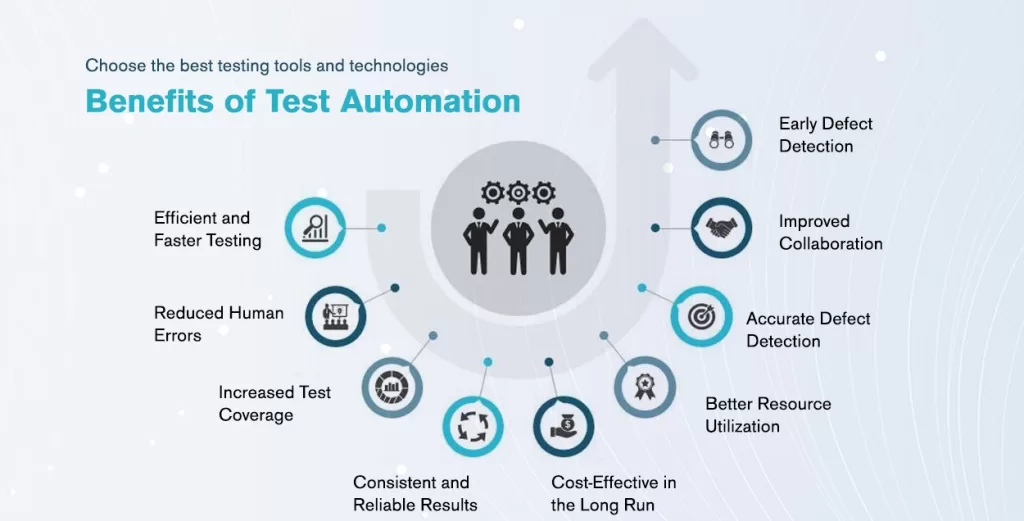
Best Advantages of Automation and Testing:
- ⚡ Speed: Run a thousand test cases in minutes.
- Cost-Effective: Few bugs at the beginning = less expensive bugs at the end.
- 🔁 Consistency: No human error, repeated running of the same test.
- ❤️ Scalability: Test on multiple devices, browsers and environments with ease.
- ⏳ Saves Time: Test at night, results in the morning.
- Automation is like a superhero cape to testers when timelines are short (and, in truth, they always are).
Manual vs. Automation Testing The Real Debate.
All right, and the question is: Should we abandon manual testing altogether?
Short answer: No.
There are still cases when manual testing may be required: usability tests, creativity tests, human judgment tests. To use an analogy, no machine can tell you whether a new UI design feels intuitive, even when you are testing it. That’s where humans shine.
But in the case of regression, repetitive work, and performance testing? Automation wins hands down.
Imagine it in the following way: manual testing is the equivalent of tasting food when you are cooking, whereas automation and testing is the equivalent of having a machine that ensures your kitchen does not run out of salt, oil, or utensils. The two are necessary to operate a profitable restaurant (or software project).

Tools That Make Automation and Testing Easy 🔧
If you’re wondering where to start, let me share a few popular automation and testing tools:
- Selenium – Great for web applications.
- JUnit/TestNG – Perfect for Java developers.
- Appium – Mobile app testing champion.
- Cypress – Fast, reliable, and developer-friendly.
- Jenkins – For continuous integration and automation pipelines.
Each tool has its strengths. For beginners, I often recommend Selenium because of its huge community support and tons of tutorials online.
The Future of Automation and testing
It is where the fun starts. As AI and machine learning enter the testing scene, automation and testing are getting smarter.
Consider a system that does not just test, but also predicts the place of bugs that might occur. Tools are changing to self-heal test scripts, change with changes in the UI and can even automatically write test cases.
The future? Quick releases, less bugs, more satisfied users.
You want to pursue a career in testing, then believe me there has never been a better moment than now to invest in automation testing skills.

How to Get Started with Automation and Testing
If you’re new, don’t feel overwhelmed. Here’s my quick starter guide:
- Learn the Basics of Manual Testing first. You need to understand test cases, scenarios, and bug life cycles.
- Pick One Tool (like Selenium or Cypress) and get hands-on.
- Start Small: Automate a login page test before jumping into huge frameworks.
- Join Communities: LinkedIn, Reddit, and GitHub are goldmines.
- Keep Practicing: The more projects you automate, the sharper you’ll get.
Final Thoughts:
Looking back at my first days of testing, I laugh at how I had to repeat clicking the same buttons several times. Testing and automation to my rescue. What is more important, it rescued projects.
Unless you have been convinced otherwise, you should keep in mind that companies which do not automate the testing today risk being left behind tomorrow. Users are not tolerant of buggy applications. And in this competitive world, you have only one opportunity of impressing them.
And whether you are a fresher with a dream of a testing career, or a company plagued by the time it takes to release a product-embrace automation and testing. Not only tools, but more intelligent, quicker and improved software.
If You Want to study Software Testing Course, or any other course & Internship visit www.kaashivinfotech.com