
Artificial General Intelligence. Artificial General Intelligence.
I’m saying it twice on purpose.
Because if you’re here, chances are you typed Artificial General Intelligence into Google and paused for a second, asking yourself the exact same thing I once did:
Is this just another AI buzzword… or will it actually change my life?
Let me make this easy for you. No textbook language. No robotic explanations. Just a human-to-human guide to Artificial General Intelligence, why everyone is talking about it, and why it genuinely excites me and scares me at the same time.

If you’re looking for what is Artificial General Intelligence in simple terms, you’re exactly where you need to be.
Artificial General Intelligence: What is Artificial General Intelligence in Simple Terms?
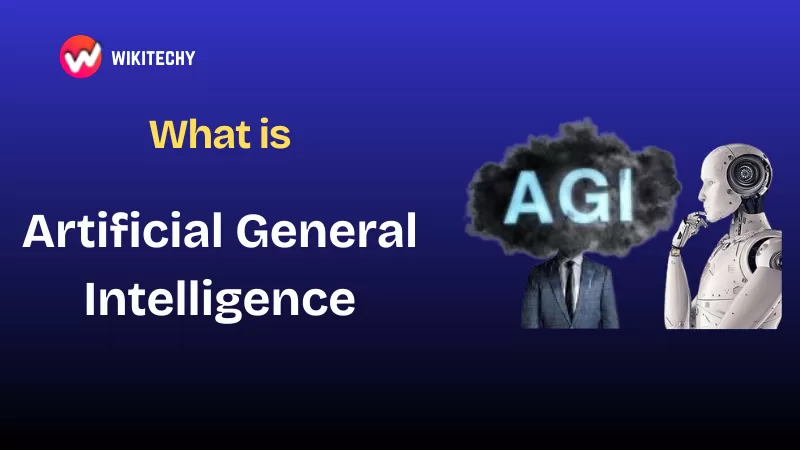
Artificial General Intelligence (AGI) is the idea of building a machine that can think, learn, and solve problems like a human — not just in one area, but across all areas.
Here’s the simplest way I can explain it:
- Today’s AI is like a calculator — insanely good at one thing.
- Artificial General Intelligence would be like a human brain — flexible, curious, and adaptable.
When people ask me “what is Artificial General Intelligence in simple terms?”, this is what I usually say:
AGI is AI that can learn anything, the way you and I do — without being reprogrammed every time.
That’s it. No fluff.
Why I Think Artificial General Intelligence Is a Big Deal 🔥
I still remember the first chatbot I used that actually understood my question instead of throwing random answers at me.
It felt magical.
And then… I hit its limits.
That’s where Artificial General Intelligence changes the game.
AGI doesn’t just follow patterns. It:
- Understands context
- Learns from mistakes
- Uses past experiences to solve new problems
- Adapts without starting from scratch
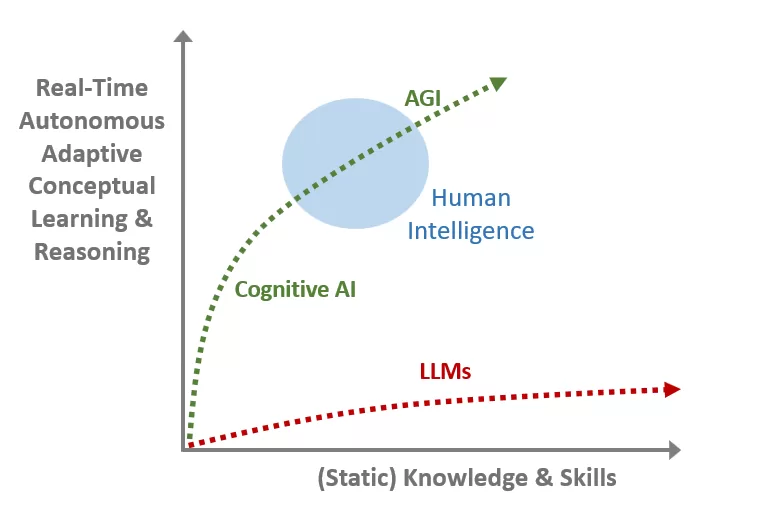
This is why researchers often call Artificial General Intelligence the holy grail of AI.
AGI vs AI: Why Artificial General Intelligence Is Different
Let’s clear up the confusion once and for all.
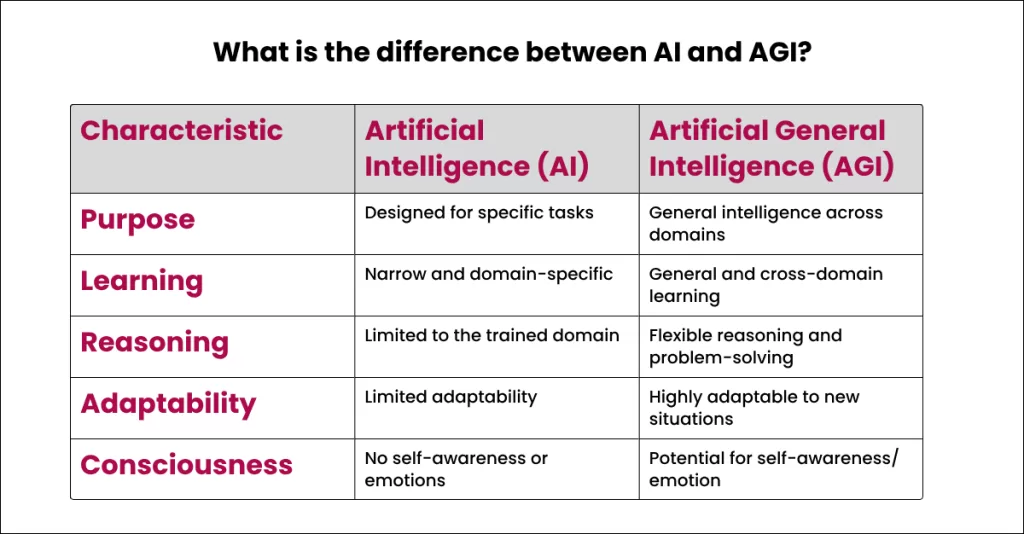
Today’s AI (Narrow AI)
- Does one task extremely well
- Needs massive retraining for new tasks
- Doesn’t truly understand what it’s doing
Examples:
- Google Maps
- Face recognition
- Chatbots
Artificial General Intelligence
- Can perform any intellectual task
- Learns across domains
- Thinks, reasons, and adapts
I like to explain it this way:
- AI = a specialist doctor
- Artificial General Intelligence = a human who can become a doctor, engineer, teacher, or musician
Big difference.
How Artificial General Intelligence Would Actually Work 🤔
This is where things get really interesting.
1️⃣ Learning Across Domains
Humans don’t learn in silos. Neither would Artificial General Intelligence.
If I learn logic in math, I can apply it to business decisions. AGI would do the same — without retraining.
This single ability separates Artificial General Intelligence from almost every AI system we use today.
2️⃣ Reasoning Like a Human
Current AI predicts answers.
Artificial General Intelligence would reason.
That means:
- Breaking problems into steps
- Understanding cause and effect
- Making decisions even with incomplete information
This remains one of the toughest challenges in AGI research.
3️⃣ Memory and Adaptability
Humans remember. Naturally.
AGI would have:
- Short-term memory (what’s happening now)
- Long-term memory (past experiences)
That means an Artificial General Intelligence system could improve over time — without being retrained every week.
4️⃣ Common Sense
AI knows facts.
Humans know common sense.
For example:
- Fire burns 🔥
- Ice melts ❄️
- People feel emotions
Teaching this kind of intuitive understanding to Artificial General Intelligence is incredibly hard — and still unsolved.

Artificial General Intelligence Examples in the Real World -Early Signs
True AGI doesn’t exist yet.
But I can see early hints of what it might become.
🏥 Healthcare
AI already helps doctors detect diseases earlier. With Artificial General Intelligence, systems could:
- Combine scans, lab reports, and patient history
- Recommend personalized treatments
- Monitor patients in real time
This alone could save millions of lives.
🎓 Education
Honestly, I wish I had this growing up.
AGI-powered tutors could:
- Adapt to how you learn
- Explain concepts differently if you’re stuck
- Understand your strengths and weaknesses
Education would finally feel personal.
🏠 Daily Life
Today’s assistants follow commands.
Artificial General Intelligence would:
- Anticipate your needs
- Help you make life decisions
- Act like a true copilot — not just a tool
What It Takes to Achieve Artificial General Intelligence
Let me be honest with you.
We’re not close yet.
To achieve Artificial General Intelligence, we need:
🧠 Better Learning Models
Deep learning alone isn’t enough. AI must understand why, not just what.
🤖 Robotics and Senses
Intelligence grows through interaction. AGI needs eyes, ears, hands, and movement.
⚡ Massive Computing Power
AGI would require computing power far beyond today’s systems.
🤝 Human Alignment
This matters the most.
AGI must align with human values, ethics, and safety.

Real Concerns Around Artificial General Intelligence ⚠️
I won’t sugarcoat this.
Control and Safety
If AGI becomes smarter than us… who controls it?
This is known as the AGI alignment problem, and it’s very real.
Jobs and the Economy
AGI could automate:
- Office work
- Creative tasks
- Decision-making roles
We’ll need to rethink jobs, education, and income systems.
Final Thoughts
Artificial General Intelligence isn’t just another tech trend I scroll past—it’s a profound shift that could redefine how we live, work, and think. The idea that machines might one day learn, reason, and adapt the way humans do is both thrilling and unsettling, and honestly, it’s okay to feel both. What matters most to me is not when AGI arrives, but how we choose to build it—slowly, thoughtfully, and with human values at the center. If we get this right, Artificial General Intelligence won’t replace us; it will amplify what makes us human. And as we stand at the edge of this unknown future, curiosity, caution, and responsibility should walk hand in hand.