
Prerequisites for Machine Learning (ML) is no longer a futuristic concept — it is already shaping the way we interact with technology every day. From personalized recommendations on Netflix to smart assistants like Google Assistant and intelligent search results on Google, Machine Learning is at the heart of modern innovation.
Because of its growing demand, many students and professionals want to start learning ML immediately. However, jumping directly into algorithms without building a foundation often leads to confusion and frustration.
If you truly want to master Machine Learning, you must first build strong fundamentals. In this detailed guide, we will explore the top 6 essential prerequisites for Machine Learning, why they matter, and how you can prepare yourself effectively.
Top 6 Essential Prerequisites for Machine Learning
1. Mathematics – The Backbone of Machine Learning
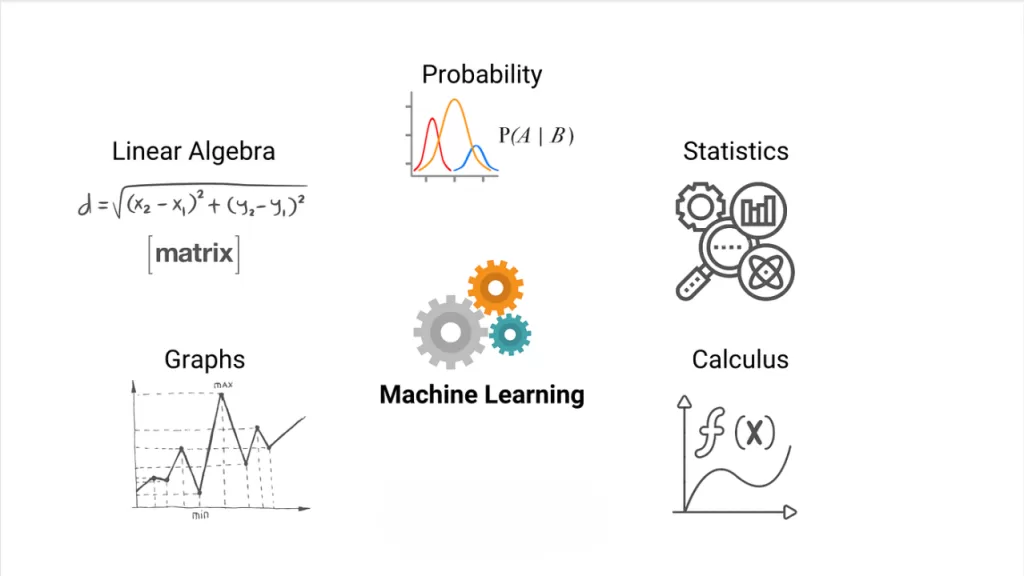
Mathematics forms the core foundation of Machine Learning. While you don’t need advanced theoretical mathematics, you must understand certain essential concepts clearly.
Linear Algebra
Linear algebra is used to represent and manipulate data. In ML, data is often stored in vectors and matrices. Operations like matrix multiplication, dot products, and transformations are used extensively in neural networks and deep learning.
Concepts such as eigenvalues and eigenvectors are particularly important in dimensionality reduction techniques like PCA (Principal Component Analysis).
Calculus
Calculus helps us understand how machine learning models learn from data. Most ML algorithms use optimization techniques like gradient descent, which rely on derivatives and partial derivatives.
When a model tries to minimize error, calculus explains how the parameters are updated step by step.
Probability and Statistics
Machine Learning is deeply connected with uncertainty and data patterns. Probability helps you understand randomness and likelihood, while statistics allows you to interpret data and evaluate performance.
Mean, variance, standard deviation, distributions, and Bayes’ theorem are fundamental to understanding how predictions are made.
Without mathematics, ML algorithms may seem like black boxes. With mathematics, they become logical systems.
2. Programming Skills – Especially Python

Machine Learning is implemented through programming. Among various languages, Python is the most popular choice because it is simple, readable, and has a powerful ecosystem.
You should be comfortable with:
- Variables and data types
- Loops and conditionals
- Functions
- Working with files and data
- Basic Object-Oriented Programming
Python libraries play a huge role in ML:
- NumPy for numerical computations
- Pandas for data manipulation
- Matplotlib and Seaborn for visualization
- Scikit-learn for traditional ML models
- TensorFlow and PyTorch for deep learning
If you can write clean Python code and manipulate datasets confidently, you are ready to begin practical Machine Learning.
3. Data Structures and Algorithms
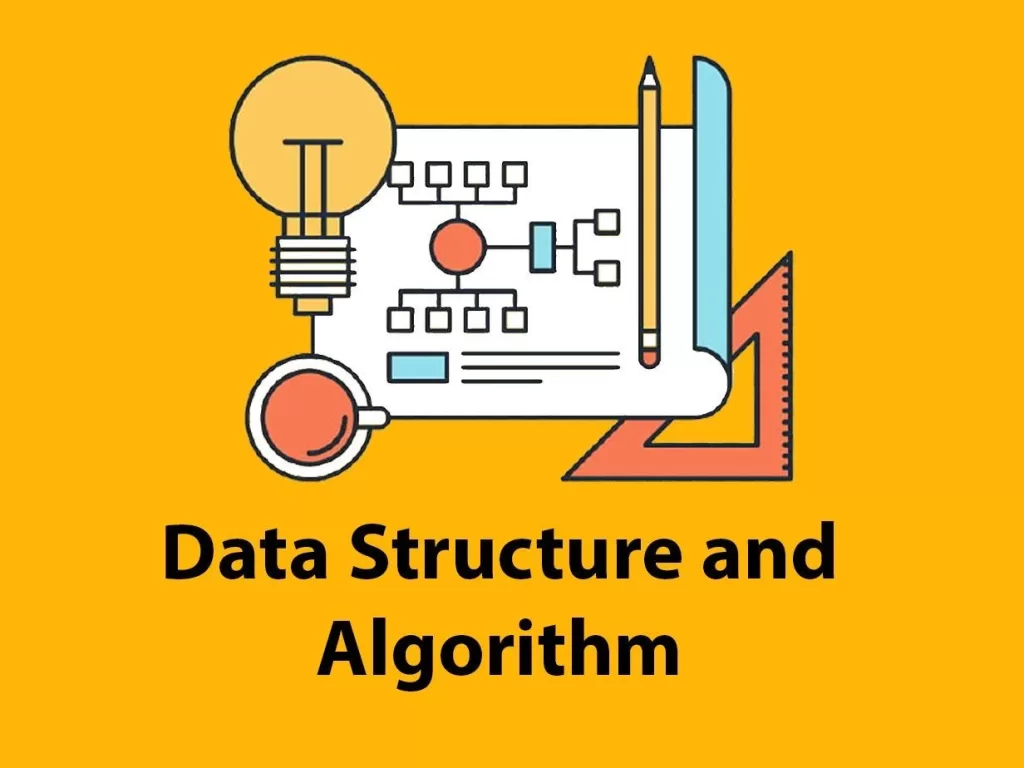
Machine Learning is fundamentally about algorithms. Understanding data structures and algorithmic thinking improves your ability to design efficient solutions.
You should know how arrays, lists, stacks, queues, trees, and graphs work. For example, decision tree models are directly inspired by tree data structures.
Understanding time and space complexity helps when working with large datasets. Efficient coding ensures your model training process is optimized and scalable.
A solid DSA foundation strengthens both your programming skills and analytical thinking.
4. Data Handling and Exploratory Data Analysis (EDA)

In real-world Machine Learning projects, most of the time is spent on data preparation rather than model building.
Raw data is rarely clean. You must learn how to:
- Handle missing values
- Remove duplicates
- Detect and treat outliers
- Encode categorical variables
- Normalize or scale data
Exploratory Data Analysis (EDA) helps you understand patterns, correlations, and anomalies. Visualization tools make hidden insights visible.
A well-prepared dataset significantly improves model performance. Strong data handling skills separate beginners from professionals.
5. Core Machine Learning Concepts
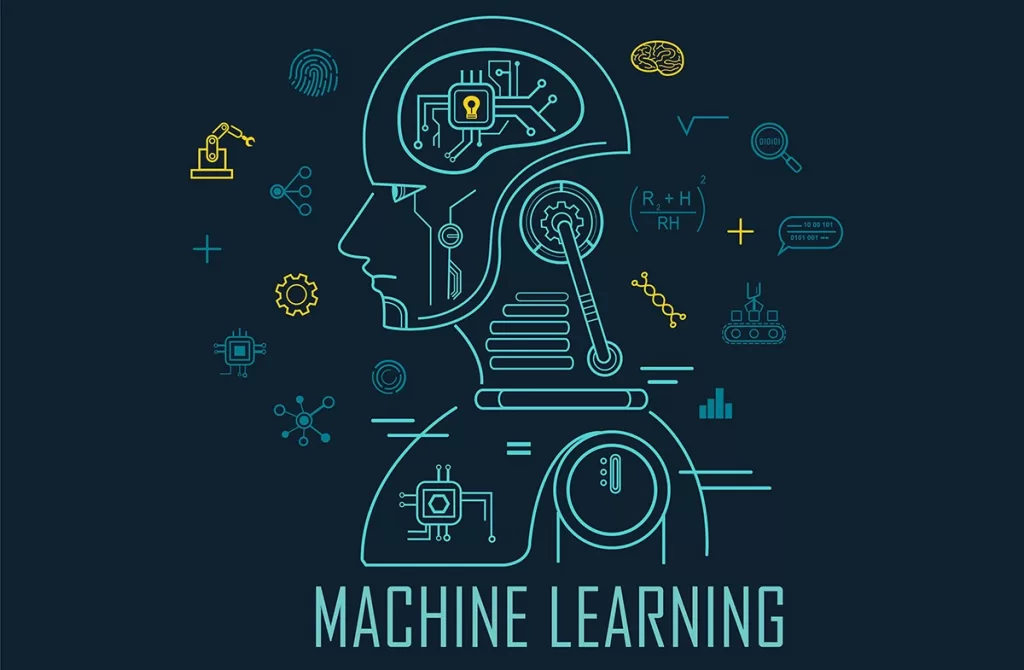
Before diving into advanced topics like deep learning, you must understand fundamental ML concepts.
Machine Learning is generally divided into supervised learning, unsupervised learning, and reinforcement learning. You should understand the difference between classification and regression problems.
It is also important to know how datasets are split into training and testing sets, and why overfitting and underfitting occur.
Understanding evaluation metrics such as accuracy, precision, recall, F1-score, and RMSE helps you measure model performance correctly.
These core concepts form the theoretical framework for advanced learning.
6. Logical Thinking and Problem-Solving Skills

Machine Learning is not just about coding models — it is about solving real-world problems intelligently.
You must learn how to break complex problems into smaller components. Logical thinking helps you decide which model to use, how to tune hyperparameters, and how to interpret outputs.
ML projects often require experimentation. Models may fail, predictions may be inaccurate, and datasets may behave unpredictably. Strong problem-solving skills allow you to analyze mistakes and improve results systematically.
The ability to think critically and iterate continuously is what makes a successful ML practitioner.
Final Thoughts
Prerequisites for Machine Learning is an exciting and rewarding field, but it requires preparation. Instead of rushing into advanced neural networks and AI frameworks, focus on building your foundation first.
Master mathematics, programming, data structures, data handling, core ML concepts, and logical thinking. Once these prerequisites are strong, learning Machine Learning becomes structured, intuitive, and enjoyable.
Remember, Machine Learning is not about memorizing algorithms — it is about understanding systems, analyzing data, and solving problems intelligently.
Prerequisites for Machine Learning If you build the right foundation today, you’ll be well-prepared to become a skilled Machine Learning professional tomorrow.
Kaashiv Infotech Offers, Full Stack Python Course, Data Science Course, & More, visit their website www.kaashivinfotech.com.