

Non-Coding Jobs in Cybersecurity are a great option for people who want to enter cybersecurity without spending their entire day writing programs. And honestly, this is something many beginners misunderstand.
When I first started exploring cybersecurity careers, I noticed that people often associate the field with ethical hacking, Python, Kali Linux, penetration testing, and writing scripts. Those are certainly important areas, but cybersecurity is much bigger than that.
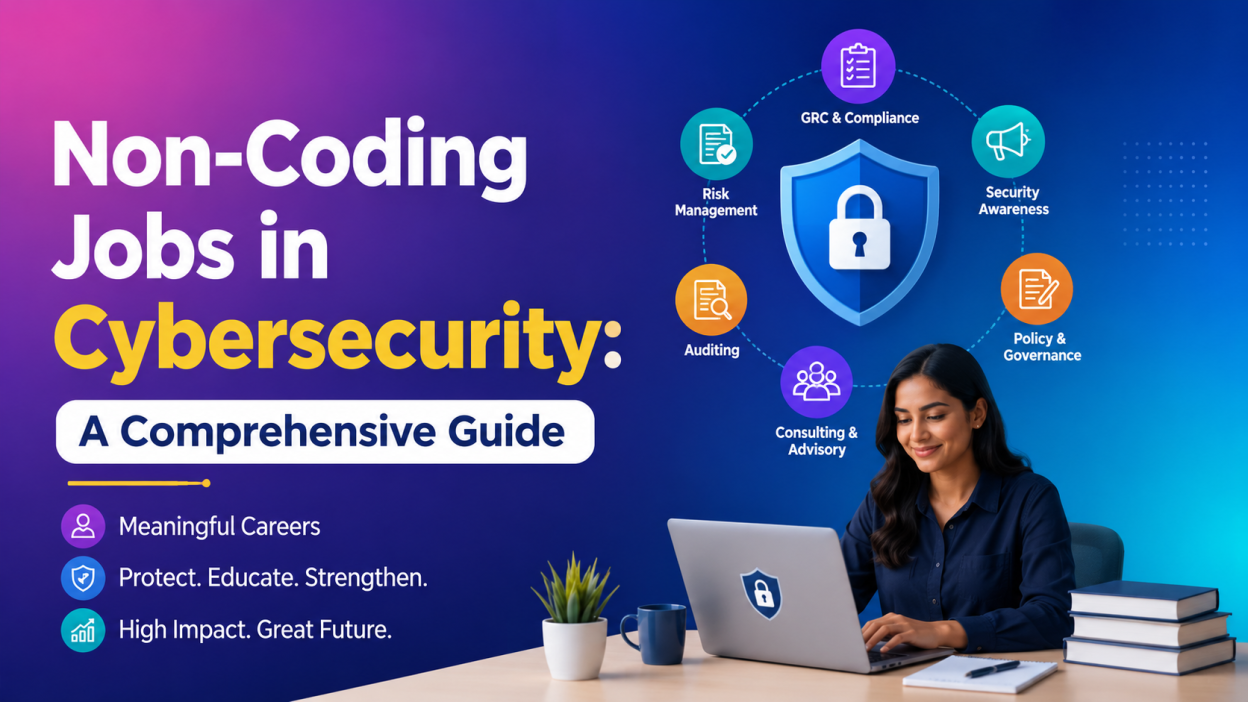
Non-Coding Jobs in Cybersecurity include roles in risk management, compliance, security awareness, governance, auditing, policy, project management, incident coordination, and cybersecurity consulting.
So, if you are thinking, “I like cybersecurity, but I don’t really enjoy coding,” don’t immediately give up on the field. You may simply need to choose a different career path.
The NICE Framework from NIST/CISA itself describes cybersecurity through many different work roles, including areas such as oversight and governance, policy and planning, workforce management, cybersecurity instruction, legal advice, and program management.
Key Highlights ⭐
- Non-Coding Jobs in Cybersecurity don’t require programming as their main responsibility.
- You can work in GRC, compliance, auditing, risk management, security awareness, consulting, and policy.
- Strong communication, documentation, analytical thinking, and problem-solving skills are extremely valuable.
- Some roles may require basic technical knowledge even though coding isn’t central.
- Certifications can help you prove your cybersecurity knowledge.
- Cybersecurity has career paths for both technical and non-technical professionals.
- You don’t have to become a hacker to build a cybersecurity career. 🔐
What Are Non-Coding Jobs in Cybersecurity?
Non-Coding Jobs in Cybersecurity are cybersecurity positions where programming isn’t the primary responsibility.
That doesn’t mean you can completely ignore technology.
I would actually recommend learning the basics of:
- Networks
- Operating systems
- Malware
- Phishing
- Firewalls
- Encryption
- Vulnerabilities
- Data protection
- Cloud computing
- Cybersecurity frameworks
You don’t necessarily need to build software.
Think about it this way.
Imagine a company has 1,000 employees. Someone needs to make sure employees understand security policies. Someone needs to check whether the company follows regulations. Someone needs to identify business risks. Someone needs to prepare audit documents.
Not everyone involved needs to write Python scripts.
That’s where Non-Coding Jobs in Cybersecurity become important.
Why Are Non-Coding Cybersecurity Jobs Important?
Cybersecurity isn’t just about technology.
It’s also about people, processes, policies, risk, and business decisions.
For example, suppose a company stores customer information in the cloud.
A technical security professional might configure security controls.
But who decides: “What data are we allowed to store?” “Who should have access?” “What happens if the data is leaked?” “Are we following privacy regulations?” “How frequently should we conduct security audits? These questions require much more than coding.
This is why cybersecurity organizations use different types of work roles. The NICE Framework groups cybersecurity work into areas such as Oversight and Governance, Implementation and Operation, Protection and Defense, and Investigation.
10 Best Non-Coding Jobs in Cybersecurity 🚀
Let’s look at some of the most interesting Non-Coding Jobs in Cybersecurity.
1. Cybersecurity GRC Analyst
GRC means:
- Governance
- Risk
- Compliance
This is one of the first areas I would suggest to someone who enjoys cybersecurity but doesn’t enjoy programming.
A GRC analyst helps an organization understand its security requirements and risks.
Typical responsibilities include:
- Creating security policies
- Managing compliance requirements
- Performing risk assessments
- Preparing audit documentation
- Reviewing security controls
- Tracking security issues
- Supporting internal and external audits
You may work with frameworks and standards such as ISO 27001, NIST, SOC 2, and other regulatory requirements.
The important thing here is that you need to understand why a security control exists, not necessarily write the code behind it.
2. Cybersecurity Risk Analyst
A Cybersecurity Risk Analyst focuses on identifying and evaluating security risks.
Imagine a company introduces a new cloud application.
You might ask:
- What could go wrong?
- What information will it store?
- Who can access it?
- What happens if the service becomes unavailable?
- What security controls are required?
You then document the risks and recommend ways to reduce them.
This makes risk management one of the valuable Non-Coding Jobs in Cybersecurity for people who enjoy analysis and decision-making.
You need to be comfortable working with reports, spreadsheets, documentation, risk registers, and business teams.
3. Cybersecurity Compliance Analyst
Compliance is another excellent option.
Companies must follow various laws, regulations, contracts, and industry requirements.
A compliance analyst checks whether the organization’s security practices meet those requirements.
For example, you might:
- Review company policies
- Collect evidence
- Maintain compliance records
- Prepare audit reports
- Track gaps
- Communicate with auditors
- Follow regulatory changes
You don’t need to spend your day coding.
Instead, attention to detail becomes extremely important.
And yes, there can be a lot of documentation. 😄
If you actually enjoy organized work, that isn’t necessarily a bad thing.
4. Cybersecurity Auditor
A cybersecurity auditor examines whether an organization’s security controls are working as expected.
Think of yourself as someone asking:
“Show me the evidence.”
For example:
A company says: “Only authorized employees can access sensitive information.”
An auditor may check the policies, access records, procedures, and evidence supporting that statement.
Cybersecurity auditors may work with:
- Security policies
- Access controls
- Risk assessments
- Compliance requirements
- Audit evidence
- Security procedures
- Control testing
This is another strong option among Non-Coding Jobs in Cybersecurity.
5. Security Awareness Specialist
Here’s a role I find particularly interesting because it focuses heavily on people.
A security awareness specialist helps employees understand cybersecurity.
You might create training about:
- Phishing
- Password security
- Social engineering
- Data protection
- Safe browsing
- Device security
- Remote working
- Reporting suspicious activity
For example, instead of simply telling employees “Don’t click suspicious links,” you could create a realistic phishing simulation and teach employees how to recognize warning signs.
CISA/NICCS also recognizes cybersecurity awareness and instruction as cybersecurity work roles.
So if you enjoy teaching, communication, presentations, and creating content, this could be a surprisingly good career.

6. Cybersecurity Policy Analyst
Every organization needs cybersecurity policies.
Someone has to create, review, and maintain them.
A cybersecurity policy analyst may work on policies covering:
- Password management
- Access control
- Acceptable device usage
- Data protection
- Remote access
- Incident reporting
- Third-party security
- Employee responsibilities
The job requires you to understand cybersecurity and translate it into clear rules that employees can actually follow.
And that’s harder than it sounds.
A policy filled with complicated technical language isn’t necessarily a good policy.
A good policy should be understandable.
7. Cybersecurity Consultant 💼
Consulting can be another path into Non-Coding Jobs in Cybersecurity.
A cybersecurity consultant may help organizations identify weaknesses, improve processes, prepare for audits, or develop security strategies.
Depending on the consulting role, you might:
- Talk to clients
- Understand business requirements
- Assess security practices
- Prepare reports
- Recommend improvements
- Present findings
- Help implement security programs
Some consulting jobs are highly technical, while others focus more on risk, compliance, governance, and strategy.
So always read the job description carefully.
The title “Cybersecurity Consultant” doesn’t automatically mean “no coding.”
8. Cybersecurity Project Manager
Cybersecurity projects need people who can manage them.
For example, imagine a company wants to implement a new security system.
Someone has to coordinate:
- Security teams
- IT teams
- Vendors
- Management
- Deadlines
- Budgets
- Documentation
- Risks
That’s where a Cybersecurity Project Manager comes in.
You don’t necessarily need to configure the security technology yourself.
Your job is to make sure the project actually moves forward.
If you’re good at organization, communication, planning, and leadership, this can be a strong career direction.
9. Cybersecurity Technical Writer
This role combines cybersecurity knowledge with writing.
A cybersecurity technical writer might create:
- Security documentation
- User guides
- Procedures
- Policies
- Training material
- Incident documentation
- Knowledge-base articles
This is perfect for someone who enjoys explaining complicated concepts in simple language.
And honestly, cybersecurity desperately needs people who can communicate clearly.
Knowing something and explaining it well are two completely different skills.
10. Cybersecurity Recruiter / Talent Specialist
Yes, even recruitment can become part of the cybersecurity ecosystem.
Cybersecurity companies need people who understand the difference between roles such as:
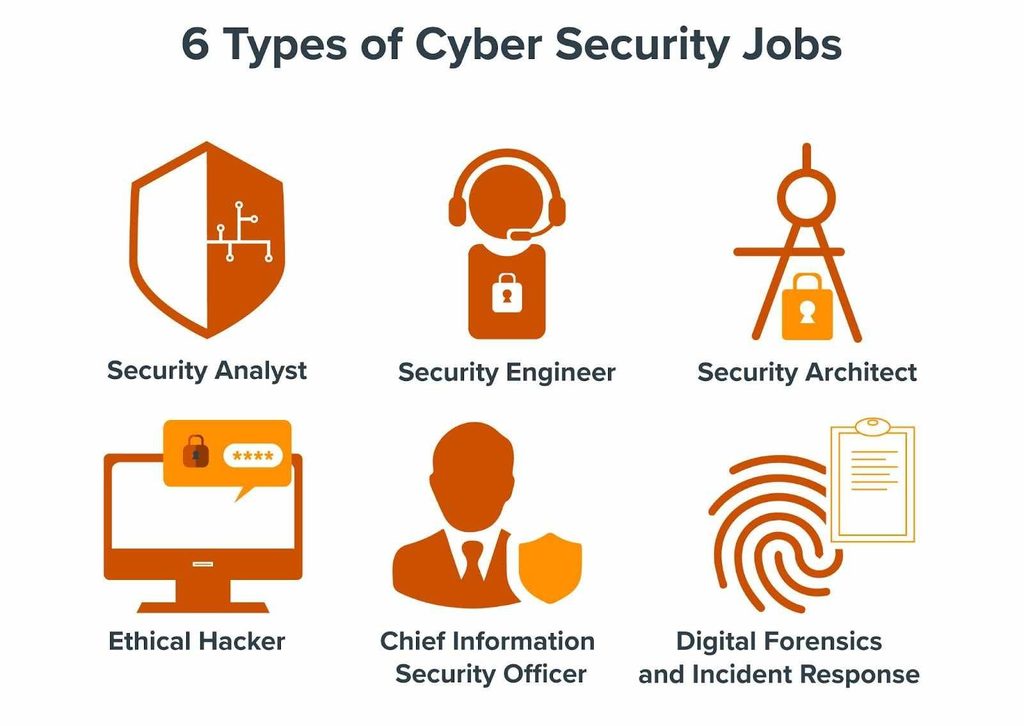
- SOC Analyst
- Penetration Tester
- Security Engineer
- GRC Analyst
- Incident Responder
- Security Architect
- Risk Analyst
A cybersecurity recruiter doesn’t necessarily need to code.
However, you should understand basic cybersecurity terminology so you can communicate effectively with candidates and hiring managers.
For people who enjoy HR, communication, networking, and recruitment, this can be an interesting path.
Non-Coding Jobs in Cybersecurity vs Coding Jobs
Here’s a simple comparison:
| Non-Coding Cybersecurity | Coding/Technical Cybersecurity |
|---|---|
| GRC Analyst | Security Engineer |
| Risk Analyst | Penetration Tester |
| Compliance Analyst | Malware Analyst |
| Security Auditor | Security Developer |
| Security Awareness Specialist | Security Automation Engineer |
| Policy Analyst | Application Security Engineer |
| Cybersecurity Project Manager | Security Researcher |
| Technical Writer | Threat Detection Engineer |
Remember: non-coding doesn’t mean non-technical.
That’s probably the most important point in this entire article.
What Skills Do You Need for Non-Coding Cybersecurity Jobs?
You don’t need to become a programming expert, but you should build a foundation.
1. Cybersecurity Fundamentals 🔐
Learn:
- CIA Triad
- Threats
- Vulnerabilities
- Risks
- Malware
- Phishing
- Social engineering
- Authentication
- Authorization
- Encryption
- Firewalls
2. Networking Basics
Understand:
- IP addresses
- DNS
- HTTP/HTTPS
- Ports
- Routers
- TCP/IP
- VPN
- Firewalls
You don’t need to configure an enterprise network immediately. Start with the concepts.
3. Communication Skills
This is huge for Non-Coding Jobs in Cybersecurity.
You may have to explain a security issue to someone who doesn’t understand technology.
If you can explain: “This is the risk, this is why it matters, and this is what we should do.”
—you already have a valuable skill.
4. Documentation
Learn how to create:
- Reports
- Policies
- Procedures
- Risk registers
- Audit evidence
- Security documentation
5. Analytical Thinking
You should be comfortable asking:
What happened?
Why did it happen?
What could happen next?
How can we reduce the risk?
That’s cybersecurity thinking.
Do Non-Coding Cybersecurity Jobs Pay Well?
They can, but salary depends heavily on experience, location, company, specialization, and role.
A beginner GRC analyst and an experienced cybersecurity consultant won’t have the same salary.
Likewise, a cybersecurity project manager with several years of experience can have a very different compensation level from an entry-level compliance analyst.
So I wouldn’t choose a career based only on salary.
Instead, look at:
Interest + skills + career growth + demand + salary
That’s a much healthier way to choose.
Certifications for Non-Coding Cybersecurity Jobs 📚
Certifications can help, particularly when you’re changing careers.
Depending on your target role, you could explore certifications related to:
- Cybersecurity fundamentals
- GRC
- Risk management
- Auditing
- Cloud security
- Information security management
Don’t collect certifications randomly.
For example, if your goal is GRC, focus your learning around governance, risk, compliance, security controls, and auditing.
If your goal is security awareness, focus more on security fundamentals, communication, training, and human risk.
CISA’s cybersecurity career resources and NICE Framework are useful starting points for understanding cybersecurity work roles and the skills associated with them.
Can a Beginner Get a Non-Coding Cybersecurity Job?
Yes.
But I wouldn’t expect to finish one beginner course today and become a cybersecurity manager tomorrow. 😄
Start small.
For example:
Step 1: Learn cybersecurity fundamentals.
Step 2: Learn basic networking.
Step 3: Choose a specialization.
Step 4: Take a relevant certification or structured course.
Step 5: Create small practical projects.
Step 6: Build a cybersecurity-focused resume.
Step 7: Apply for entry-level roles.
You can also use career pathway resources to compare different cybersecurity work roles and identify related skills.
How I Would Choose a Non-Coding Cybersecurity Career
If I were starting today, I wouldn’t simply search for “cybersecurity jobs without coding.”
I’d ask myself:
Do I enjoy documentation?
➡️ Consider GRC, compliance, auditing, or policy.
Do I enjoy analyzing problems?
➡️ Consider risk analysis or security assessment.
Do I enjoy teaching people?
➡️ Consider security awareness and cybersecurity training.
Do I enjoy talking to clients?
➡️ Consider cybersecurity consulting.
Do I enjoy organizing projects?
➡️ Consider cybersecurity project management.
Do I love writing?
➡️ Consider cybersecurity technical writing.
This approach makes career selection much easier.
Are Non-Coding Jobs in Cybersecurity Completely Free From Technology?
No.
And I want to make this very clear.
If a job advertisement says “non-coding cybersecurity role,” don’t interpret it as: “I don’t need to know anything about computers.”
You still need cybersecurity knowledge.
For example, a GRC analyst should understand what a vulnerability is. A compliance analyst should understand security controls. A security awareness specialist should understand phishing and social engineering.
The difference is that technology isn’t necessarily the main thing you’re building or programming.
That’s the real distinction.
Final Thoughts 💭
Non-Coding Jobs in Cybersecurity have become an attractive option for people who want to enter cybersecurity but don’t want programming to be their main career activity.
And personally, I think that’s a good thing.
Cybersecurity needs more than people sitting in front of terminals.
It needs people who can communicate, investigate, organize, document, teach, assess risks, understand regulations, manage projects, and make sensible security decisions.
The NICE Framework reflects this broader picture of cybersecurity work, including governance, policy and planning, workforce management, instruction, legal advice, and other roles alongside technical work.
So if you’re currently thinking:
“I want to work in cybersecurity, but coding isn’t really my thing.”
Don’t close the door yet.
Start with the fundamentals. Explore GRC, compliance, risk management, auditing, security awareness, policy, consulting, or project management. Find the area that matches your personality and strengths.
Because cybersecurity isn’t one job.
It’s an entire career ecosystem. 🔐🚀
Want to learn about ethical hacker skills, Cyber Security?, Kaashiv Infotech Offers, Cyber Security Course, or Networking Course & More, Visit www.kaashivinfotech.com.

