Agile Model in Software Engineering [2025]: Models, Principles, and Real Examples That Still Work
![Agile Model in Software Engineering [2025]](https://www.wikitechy.com/wp-content/uploads/2025/08/Agile-Model-in-Software-Engineering-2025.webp)
So, what’s the secret sauce behind teams that never seem to miss a beat? You’ve probably seen it—products rolling out faster, ideas turning into reality while others are still trapped in endless planning meetings. The difference often comes down to the Agile Model in Software Engineering and how it transformed the way development teams plan, build, and deliver software.
Here’s the flip side: the horror stories of projects collapsing under missed deadlines, chaotic handovers, or endless rework. Think of government IT projects that burned through billions only to be scrapped, or big tech rollouts that missed the market window and lost relevance overnight. One wrong move, and months of effort vanish in a blink. If you’ve ever been part of that chaos—or feared you might be—you know how brutal it feels.
That’s exactly where Agile proves its staying power. Even in 2025, when AI is rewriting workflows and industries are shifting every quarter, Agile remains one of the few approaches that still works—because it’s built for change, not against it.
And here’s the kicker: whether you’re just starting out, switching lanes, or steering big projects, knowing Agile isn’t just another bullet point on your résumé—it’s the edge that keeps careers relevant in a future where adaptability is currency.
✅ Key Highlights
- Agile methodology is an iterative, flexible way of managing projects and building software.
- Popular Agile models include Scrum, Kanban, Lean, XP, and SAFe.
- Agile principles focus on customer satisfaction, adaptability, and collaboration.
- Companies like Spotify, Infosys, Microsoft, and NASA rely on Agile to innovate faster.
- In 2025, Agile blends with AI, DevOps, and enterprise-level transformation.
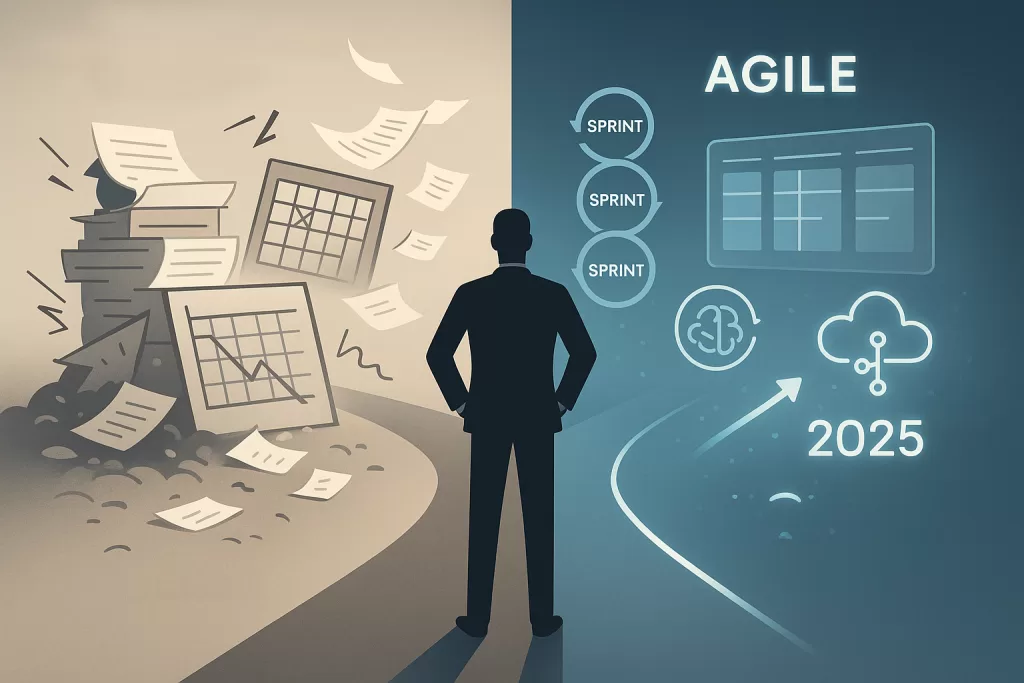
What is Agile Methodology in Software Engineering for 2025?
Agile methodology is a way of managing projects where work is done in small, quick cycles instead of one big plan. Teams deliver something useful fast, gather feedback, and improve as they go. In 2025, Agile also means using AI tools, scaling across large organizations, and blending different models (Scrum, Kanban, DevOps) for maximum flexibility.

In simple terms: instead of planning everything upfront and waiting months for results, Agile teams deliver working features in short sprints, gather feedback, and adjust as they go. This reduces risk, keeps teams aligned, and ensures the final product matches real user needs.
But in 2025, Agile has evolved far beyond its early roots. Companies don’t just want speed—they want efficiency at scale, data-driven planning, and integration with modern tools. That’s why today’s Agile often includes:
- AI-powered sprint planning to predict velocity and spot risks early.
- Scaled frameworks (like SAFe and LeSS) that allow 100+ teams to collaborate without chaos.
- Hybrid Agile models that combine Scrum, Kanban, Lean, and DevOps for maximum flexibility.
Instead of waiting six months to release something, Agile teams deliver small increments (sprints or iterations). Customers see results early, give feedback, and the product adapts.
And this isn’t just theory. According to the 2023 Digital.ai State of Agile report, over 71% of companies worldwide use Agile practices. In 2025, that number is even higher, as enterprises blend Agile with AI-driven planning, cloud-native architectures, and hybrid workforces.
Why the Agile Model in Software Engineering Works Better Than Waterfall
The Agile model is often compared to the Waterfall model — a linear, step-by-step approach that works for construction but often fails in software.
- Waterfall: You design, build, and test everything in one long cycle. If requirements change midway, it’s chaos.
- Agile model: You work in short iterations. Each sprint delivers something usable — whether it’s a shopping cart feature, a login system, or payment integration.
👉 Imagine building an e-commerce app:
- In Waterfall, the client waits months before seeing a working version.
- In Agile, the team ships the shopping cart in Sprint 1, payments in Sprint 2, and reviews in Sprint 3. Feedback flows early, and risks shrink.
That’s why Agile model in software engineering has become the standard — flexibility is built in.
The 12 Agile Principles You Can’t Ignore in 2025
The Agile Manifesto (2001) still guides teams today. But in 2025, its 12 Agile principles feel more relevant than ever:
- Customer satisfaction through early and continuous delivery.
- Welcome changing requirements, even late in development.
- Deliver working software frequently.
- Business and developers must collaborate daily.
- Build projects around motivated individuals.
- Prioritize face-to-face communication (or video calls in remote-first teams).
- Working software is the primary measure of progress.
- Agile processes promote sustainable development.
- Continuous attention to technical excellence improves agility.
- Simplicity—maximize work not done.
- The best designs emerge from self-organizing teams.
- Regularly reflect and adjust to improve effectiveness.
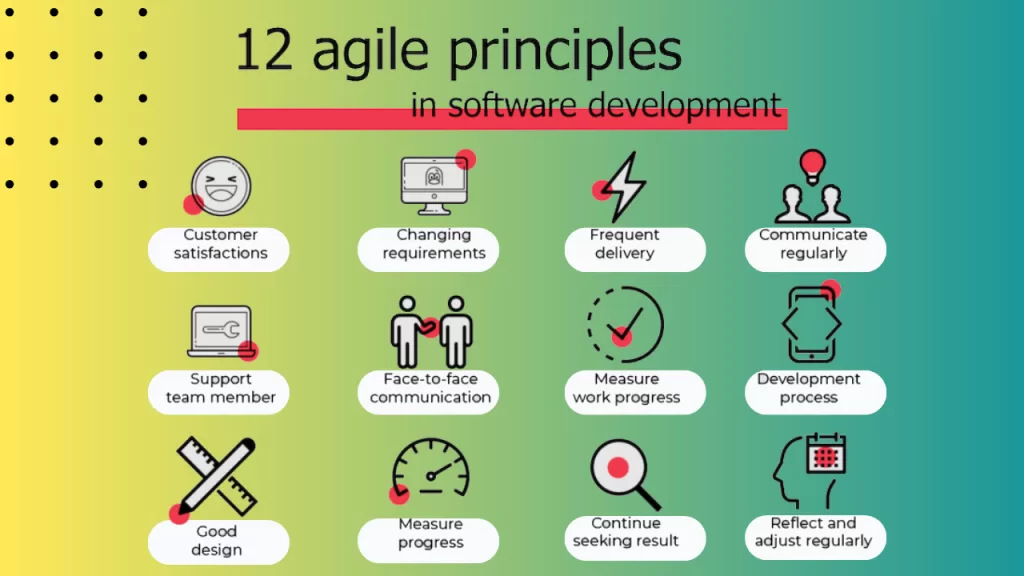
💡 Notice something? These principles don’t mention “tools” or “processes.” They’re human-centered, focusing on adaptability and collaboration.
Popular Agile Frameworks (And When to Use Them)
Agile methodology isn’t one-size-fits-all. Teams choose frameworks depending on culture, size, and goals.
- Scrum → Short sprints, daily standups, roles like Scrum Master & Product Owner.
- Example: Spotify squads scaled music features globally with Scrum.
- Kanban → Visual workflow boards with “to do → doing → done.”
- Example: Toyota pioneered Kanban; today tools like Trello and Jira make it digital.
- Lean Development → Strip waste, focus on what delivers customer value.
- Example: Startups use Lean to avoid building “nice-to-have” features nobody wants.
- Extreme Programming (XP) → Engineering excellence: pair programming, test-first design.
- Example: Microsoft AI teams use XP practices to reduce bugs.
- SAFe Agile (Scaled Agile Framework) → Enterprise-wide Agile adoption.
- Example: Infosys used SAFe to align 1,000+ teams and cut delivery times by 30%.
👉 What do all Agile frameworks have in common? They focus on continuous improvement, customer value, and adaptability — just at different scales.
Agile Project Management in 2025
The role of Agile project management has evolved. It’s no longer just about sticky notes and sprint boards. In 2025:
- AI tools help refine backlogs, estimate velocity, and forecast sprint risks.
- Agile + DevOps pipelines mean code moves from commit → production in hours.
- Remote-first teams rely on tools like Jira, ClickUp, and Asana, with asynchronous updates replacing long meetings.
- Agile in HR and marketing (yes, really) — even non-tech teams use Agile boards to manage recruiting campaigns or product launches.
Agile has grown beyond software; it’s a business strategy for adaptability.
Real-World Agile Examples
- Infosys: Adopted SAFe Agile at scale, cutting delivery times by 30%.
- Spotify: Built the “squad and tribe” model that keeps music personalization evolving.
- NASA’s Jet Propulsion Lab: Used Agile to adjust rover software mid-mission — because you can’t afford delays when Mars is the customer.
- Microsoft: Teams using XP and DevOps scaled AI features across Office 365 with fewer bugs.
These aren’t buzzwords — they’re proof that Agile delivers in high-stakes environments.
Best Practices for Agile Teams (And Why They Work)
A good Agile team should exhibit the following qualities:
- Clear product vision → Prevents backlog chaos.
- Frequent releases (MVP-first) → Customers guide the roadmap.
- Strong communication → Remote? Over-communicate. Transparency wins.
- Short, focused meetings → Daily standups = 15 minutes, not 50.
- Retrospectives that matter → Don’t skip reflection. Improvement compounds.
Why do these work? Because Agile isn’t about rituals. It’s about delivering value faster and adapting when things change.
Common Challenges of Agile (And How to Solve Them)
- Resistance to change → Start with a pilot team. Success spreads.
- Too many ceremonies → Keep standups short, reduce meeting fatigue.
- Poor backlog management → Use a dedicated Product Owner and AI-assisted tools.
- Scaling issues → Frameworks like SAFe or Spotify’s model help large teams.
Agile isn’t magic. But with the right guardrails, it scales.
Agile Model in Software Engineering Cheat Sheet (2025)
Want a quick reference? Here’s a lightweight cheat sheet to keep Agile principles, frameworks, and practices at your fingertips:
FAQs on Agile Methodology
- What is Agile model in software engineering?
An iterative development approach that focuses on adaptability and customer feedback. - What is an Epic in Agile?
A large body of work broken into smaller user stories. - What is Agile testing?
Continuous testing within each sprint to ensure quality. - What are story points in Agile?
A measure of effort used for sprint planning. - What is velocity in Agile?
The amount of work a team completes per sprint — used for forecasting. - What are Agile ceremonies?
Scrum events like sprint planning, daily standup, sprint review, and retrospective. - What is SAFe Agile?
A scaled Agile framework for enterprises managing multiple teams.
Conclusion: Why Agile Still Matters in 2025
Agile isn’t just another buzzword. It’s how modern teams survive in a world that refuses to sit still. Whether you’re a developer tired of endless requirement docs or a business leader chasing ROI, Agile Model in Software Engineering ensures projects stay adaptable, collaborative, and customer-driven.
And as AI, DevOps, and hybrid teams reshape work, Agile continues to evolve. In 2025, not using Agile isn’t just a disadvantage — it’s a risk your business can’t afford.
🔗 Further Reading:
Agile Software Development: Principles, Life Cycle, and Best Practices Explained




![Square Brackets []](https://www.wikitechy.com/wp-content/uploads/2026/03/Square-Brackets-The-Critical-Key-to-Data-Access-in-Programming-🗝️-380x220.webp)