What Is Datafication?: How Everyday Life is Transformed into Data (Complete Guide with Examples)
In the modern digital era, data has become one of the most valuable resources—often referred to as the “new oil.” Every click, swipe, purchase, and interaction generates data. But how does this data come into existence? The answer lies in a powerful concept called datafication.
Datafication is revolutionizing industries, reshaping businesses, and influencing how decisions are made. From social media platforms to healthcare systems, datafication is everywhere. This comprehensive guide explores the concept in depth, with detailed explanations, real-world examples, benefits, challenges, and future trends.
What is Datafication?
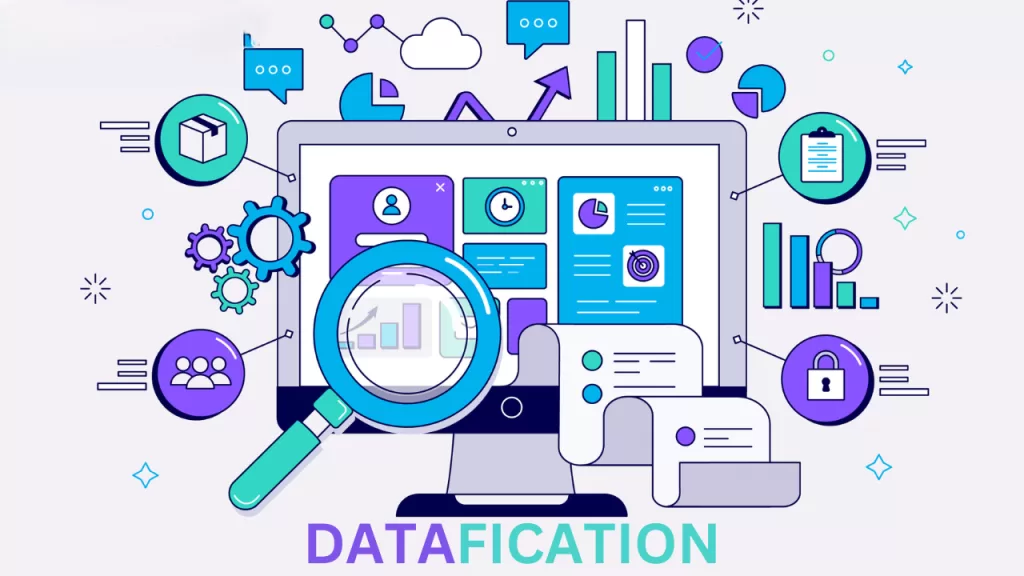
Datafication is the process of converting real-world activities, behaviors, and processes into digital data that can be collected, measured, and analyzed.
Simple Definition:
Datafication means turning human actions and interactions into quantifiable data.
Unlike digitization (which simply converts analog to digital), datafication goes a step further by extracting meaningful insights from everyday activities.
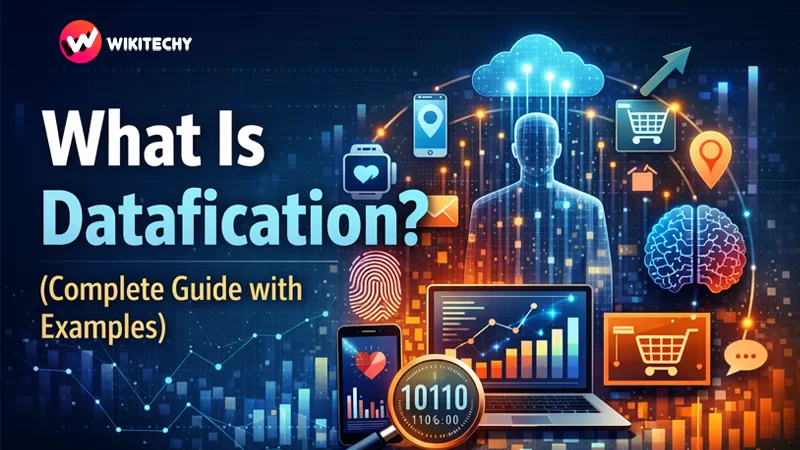
Visual Overview of Datafication
Key Features of Datafication
1. Continuous Data Generation
Data is produced constantly from devices, apps, and systems in real time.
2. Behavioral Tracking
User actions like clicks, searches, and purchases are monitored.
3. Scalability
Large volumes of data (Big Data) can be handled efficiently.
4. Actionable Insights
Collected data is analyzed to improve decisions and strategies.
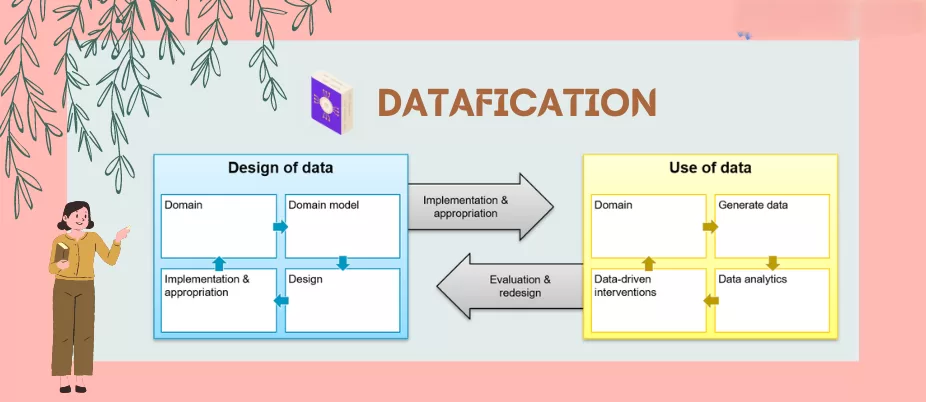
The Datafication Process (Step-by-Step)
1. Data Collection
Data is gathered from multiple sources:
- Mobile applications
- Websites
- IoT devices
- Social media platforms
- Sensors and smart devices
2. Data Storage
Collected data is stored in:
- Cloud databases
- Data warehouses
- Data lakes
3. Data Processing
Raw data is cleaned, structured, and prepared for analysis.
4. Data Analysis
Advanced technologies like AI and machine learning analyze the data to identify patterns.
5. Data Utilization
Insights are used for:
- Decision-making
- Personalization
- Predictions
Real-World Examples
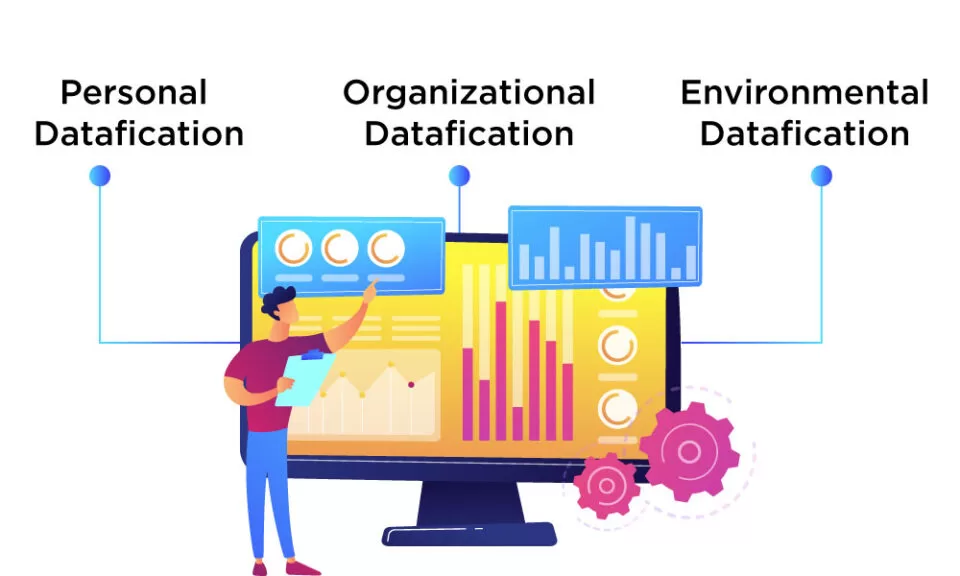
Social Media Datafication
Platforms like social media apps collect:
- Likes, comments, and shares
- Time spent on posts
- User interests and interactions
Result: Personalized feeds and targeted advertisements.
E-commerce Datafication
Online shopping platforms track:
- Search history
- Purchase behavior
- Wishlist and cart activity
Example: Product recommendations based on past searches.
Healthcare Datafication
Healthcare systems collect:
- Patient records
- Health metrics
- Wearable device data
Impact: Improved diagnosis and personalized treatment.
Smart Devices & IoT
Devices like smartwatches and IoT sensors monitor:
- Physical activity
- Heart rate
- Sleep patterns
Banking & Financial Services
Banks use datafication to:
- Detect fraud
- Analyze spending patterns
- Provide personalized financial advice
Education & E-learning
Educational platforms track:
- Student progress
- Learning speed
- Engagement levels
Importance of Datafication
Data-Driven Decision Making
Organizations rely on real-time insights instead of guesswork.
Personalization
Users receive tailored recommendations and experiences.
Business Growth
Companies optimize operations and increase profitability.
Innovation
New technologies like AI and predictive analytics depend on data.
Advantages of Datafication
- Enables predictive analytics
- Improves customer experience
- Enhances operational efficiency
- Supports automation
- Provides real-time insights
- Drives innovation across industries

Challenges of Datafication
1. Privacy Concerns
User data collection raises serious privacy issues.
2. Data Security Risks
Sensitive information is vulnerable to breaches.
3. Data Overload
Managing large volumes of data is complex.
4. Ethical Issues
Misuse of data can lead to manipulation or bias.
Datafication vs Digitization vs Digitalization
| Concept | Description |
|---|---|
| Digitization | Converting analog information into digital form |
| Digitalization | Using digital tools to improve processes |
| Datafication | Transforming activities into data for analysis |
Technologies Behind Datafication
- Big Data Analytics
- Artificial Intelligence (AI)
- Machine Learning
- Cloud Computing
- Internet of Things (IoT)
These technologies work together to collect, process, and analyze massive datasets.
Future of Datafication
The future of datafication is rapidly evolving with advancements in:
Smart Cities
Cities will use data to manage traffic, energy, and infrastructure efficiently.
Personalized Healthcare
Real-time data will enable precise treatments.
Advanced AI Systems
AI will become more accurate with larger datasets.
Automation
Businesses will automate processes using data insights.
Best Practices for Responsible Datafication
- Ensure data privacy and compliance
- Use strong cybersecurity measures
- Maintain transparency with users
- Avoid unethical data usage
- Implement proper data governance
Conclusion
It is transforming the world by turning everyday actions into valuable insights. It empowers businesses, enhances user experiences, and drives innovation. However, it also brings challenges related to privacy, security, and ethics.
As we move deeper into the digital age, understanding and responsibly using datafication will be essential for individuals, organizations, and societies alike.
Want to learn more ??, Kaashiv Infotech Offers Data Analytics Course, Data Science Course, Cyber Security Course & More Visit Their Website www.kaashivinfotech.com.
Related Reads: