Design and Analysis of Algorithms – A Complete Guide

In discussing the design and analysis of algorithms, we are at the heart of computer science. Algorithms are present in the design of every software system, mobile app or AI-based application we use on a daily basis. From search systems such as Google, to financial systems and social media feeds, algorithms are at work behind the scenes powering our digital world.
In this blog, we will discuss what the design and analysis of algorithms is, why the design and analysis of algorithms are so important, and how modern computing is directed by various methods and principles.
What is Design and Analysis of Algorithms?

The design and analysis of algorithms is a branch of computer science which deals with:
- Designing algorithms: the step by step strategy of typically efficient solutions to computational problems
- Analyzing algorithms: measuring algorithms’ performance in terms of time complexity and space complexity
To put it simply the algorithm design is analogous to deciding how to write a recipe to solve problems, while the algorithm analysis is to measure how good that recipe is when given large inputs.
Why is Algorithm Design Important?
- Efficiency matters – A poorly designed algorithm could do hours of computing to compute what a well-designed algorithm could do in milliseconds.
- Scalability – As data increases, you will want to know how well your algorithm performs.
- Optimization – Algorithms are how we minimize costs, maximize speed and improve efficiency.
- The foundation of many advanced fields – When studying machine learning, data science, AI, cryptography, networking, etc., the principles underlying these subjects are found in algorithm and algorithm design.
Techniques in the Design of Algorithms

When computer scientists approach problems, they don’t reinvent the wheel every time. Instead, they use well-established algorithm design techniques:
- Divide and Conquer
- Breaks the problem into smaller subproblems, solves them independently, and combines results.
- Example: Merge Sort, Quick Sort, Binary Search.
- Greedy Algorithms
- Makes the locally optimal choice at each step, hoping for a global optimum.
- Example: Dijkstra’s Algorithm, Huffman Coding.
- Dynamic Programming (DP)
- Solves problems by breaking them into overlapping subproblems and storing results to avoid recomputation.
- Example: Fibonacci sequence, Knapsack problem.
- Backtracking
- Explores possible solutions by building candidates and abandoning those that fail.
- Example: N-Queens Problem, Sudoku Solver.
- Randomized Algorithms
- Uses random numbers to simplify problems or improve efficiency.
- Example: Randomized Quick Sort, Monte Carlo Algorithms.
Analysis of Algorithms: Measuring Efficiency

The second part of design and analysis of algorithms focuses on evaluating performance.
1. Time Complexity
How fast does the algorithm run? Expressed using Big O Notation:
- O(1): Constant time (very efficient)
- O(log n): Logarithmic time (Binary Search)
- O(n): Linear time (Linear Search)
- O(n log n): Efficient sorting (Merge Sort, Quick Sort)
- O(n²): Quadratic time (Bubble Sort, Insertion Sort)
2. Space Complexity
How much memory does the algorithm need?
3. Asymptotic Notations
- Big O (Upper Bound) – Worst-case scenario.
- Big Theta (Average Case) – Tight bound.
- Big Omega (Lower Bound) – Best-case performance.
Real-World Applications of Algorithm Design
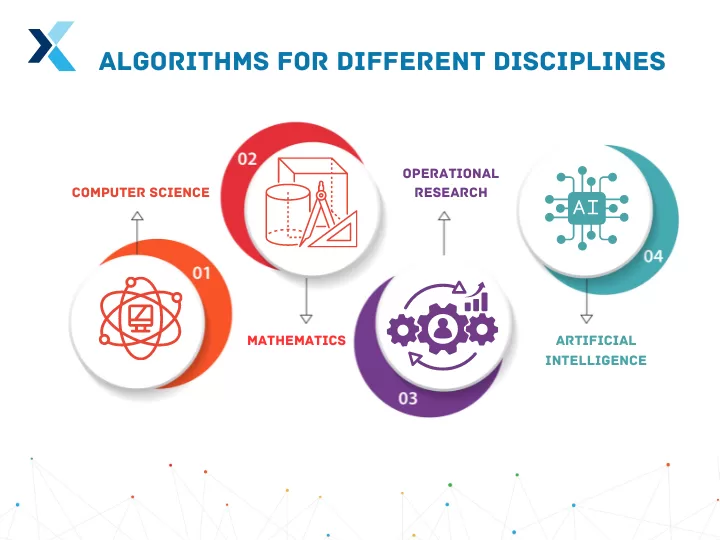
The importance of design and analysis of algorithms becomes clear when we look at real-world applications:
- Search Engines – Google’s PageRank uses graph algorithms.
- Data Compression – JPEG, MP3 use greedy and dynamic programming techniques.
- Artificial Intelligence – Pathfinding algorithms in self-driving cars.
- Finance – Algorithms for stock trading and fraud detection.
- Healthcare – Genome sequencing relies on efficient string-matching algorithms.
- Cybersecurity – Encryption algorithms protect sensitive data.
Challenges in Algorithm Design and Analysis
Although algorithms are very powerful, computer scientists encounter some difficult obstacles including:
- NP-Complete Problems – These are problems that cannot be resolved efficiently (e.g., Travelling Salesman).
- Temporal and Spatial Trade-off – More memory may mean faster algorithms.
- Big Data and Scalability – Algorithms that need to work with petabytes of data.
- Parallel/Distributed Computing – Designing algorithms made for multi-core/cloud systems.
Learning Path for Design and Analysis of Algorithms
If you’re a student or beginner who wants to master design and analysis of algorithms, here’s a suggested learning path:
- Learn Basic Data Structures – Arrays, Linked Lists, Stacks, Queues, Trees, Graphs.
- Study Algorithm Design Paradigms – Divide & Conquer, Greedy, Dynamic Programming.
- Practice Complexity Analysis – Solve problems with different Big O notations.
- Apply in Coding Platforms – LeetCode, HackerRank, Codeforces.
- Explore Advanced Topics – Graph theory, string algorithms, computational geometry.
Conclusion
The study of algorithms is much more than an academic field; algorithm design and analysis represents the foundation of today’s computing world. Understanding algorithm design techniques and the analysis of efficiency helps you develop solutions that are scalable and efficient.
Cleaning up your algorithmic design and analysis basics will take you far in addressing real solutions with confidence, whether you are a computer science student, software developer, or aspiring data scientist.
Related Links