Fastest Programming Languages to Master in 2026: Performance, Efficiency, and Real-World Speed

In today’s fast-evolving tech landscape, speed is more than just execution time—it’s about how efficiently a programming language helps you build, scale, and maintain applications. In 2026, the definition of “fastest programming language” blends raw performance, memory efficiency, scalability, and developer productivity.
This comprehensive guide explores the fastest programming languages in 2026, their strengths, trade-offs, and where they truly shine in real-world scenarios.
🚀 Understanding Speed in Programming
When developers talk about speed, they’re usually referring to multiple dimensions:
1. Execution Speed
How fast a program runs after compilation or interpretation. This is critical in:
- Game engines
- Operating systems
- High-frequency trading systems
2. Compilation Speed
How quickly code is converted into executable form. Faster compilation means:
- Faster development cycles
- Better productivity
3. Memory Efficiency
Efficient memory usage leads to:
- Lower hardware costs
- Better performance at scale
4. Developer Productivity
A language that is easy to write, debug, and maintain can dramatically reduce development time—even if it’s slower at runtime.
👉 The fastest language isn’t always the best—it depends on your use case.
🏆 Top Fastest Programming Languages in 2026
🔹 1. C – The Benchmark of Raw Performance
C continues to dominate when it comes to pure execution speed. It provides unmatched control over system resources and compiles directly into machine code with almost no abstraction layer.
Why it stands out:
- Direct memory access
- Minimal runtime overhead
- Highly optimized compilers
Limitations:
- No built-in safety features
- Manual memory management
Best suited for:
- Embedded systems
- Operating systems
- Performance-critical applications
🔹 2. Rust – High Performance with Built-in Safety
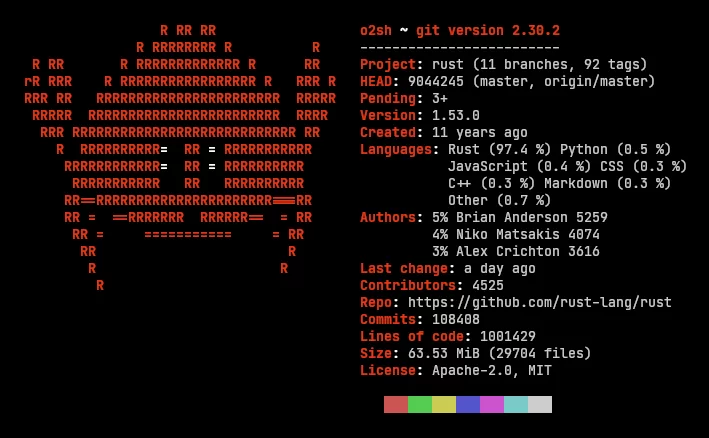
Rust has become a favorite among modern developers due to its ability to deliver C-level performance with memory safety.
Key advantages:
- Ownership model prevents memory leaks
- No garbage collector
- Strong concurrency support
Challenges:
- Steep learning curve
- Complex syntax for beginners
Best use cases:
- System-level programming
- Backend services
- Security-focused applications
🔹 3. C++ – Performance with Flexibility
C++ remains one of the most powerful languages for high-performance applications. It combines low-level control with high-level programming features.
Why it’s powerful:
- Fine-grained memory control
- Object-oriented and generic programming
- Extensive libraries and frameworks
Drawbacks:
- Complex syntax
- Harder to maintain large codebases
Ideal for:
- Game development
- Real-time simulations
- Financial systems
🔹 4. Go (Golang) – Speed Meets Simplicity
Go is designed for modern distributed systems. While it may not beat C in raw speed, it excels in real-world performance.
Highlights:
- Lightning-fast compilation
- Built-in concurrency (goroutines)
- Clean and simple syntax
Limitations:
- Less flexibility compared to C++
- Limited generics (though improving)
Best for:
- Cloud-native applications
- Microservices architecture
- APIs and backend systems
🔹 5. Java – Consistent and Scalable Performance

Java continues to be a dominant force due to its JIT (Just-In-Time) compilation, which optimizes performance during runtime.
Strengths:
- Platform independence
- Mature ecosystem
- Strong performance tuning capabilities
Weaknesses:
- Higher memory usage
- Slower startup times
Best suited for:
- Enterprise systems
- Large-scale backend applications
- Android development
🔹 6. Swift – Optimized for Apple Performance
Swift is engineered for performance within the Apple ecosystem, offering a modern alternative to Objective-C.
Advantages:
- Fast execution
- Safe memory handling
- Clean syntax
Use cases:
- iOS applications
- macOS development
🔹 7. Julia – Scientific Speed Powerhouse

Julia is built for high-performance numerical and scientific computing.
Why it’s unique:
- Near-C performance
- Designed for mathematical computations
- Excellent for parallel processing
Best for:
- Data science
- Machine learning research
- Scientific simulations
🔹 8. C# – Modern Performance with Developer Comfort
C# has evolved significantly with the .NET ecosystem, offering improved runtime performance and developer-friendly features.
Key strengths:
- Rich libraries
- Cross-platform support
- Excellent tooling
Best applications:
- Enterprise software
- Game development (Unity)
- Desktop and web apps
🔹 9. Python – Productivity Over Speed
Python is often considered slow, but its developer speed and ecosystem make it indispensable.
Why it dominates:
- Simple and readable syntax
- Massive libraries (AI, ML, automation)
- Rapid development
Limitations:
- Slower execution
- Higher memory usage
Best for:
- Machine learning
- Data analysis
- Automation scripts
🔹 10. Emerging Contenders in 2026
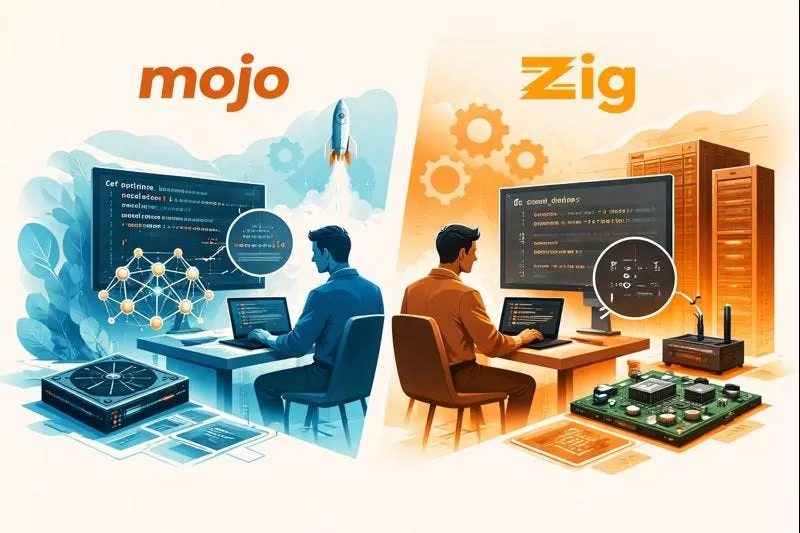
New languages are pushing the boundaries of performance:
- Zig – Simpler alternative to C with modern features
- Mojo – Designed for AI performance
- Kotlin Native – Improving system-level efficiency
These languages are still evolving but show great promise.
📊 Detailed Performance Comparison
| Language | Execution Speed | Compile Speed | Memory Efficiency | Developer Ease |
|---|---|---|---|---|
| C | ⭐⭐⭐⭐⭐ | ⭐⭐⭐ | ⭐⭐⭐⭐⭐ | ⭐ |
| Rust | ⭐⭐⭐⭐⭐ | ⭐⭐ | ⭐⭐⭐⭐⭐ | ⭐⭐⭐ |
| C++ | ⭐⭐⭐⭐⭐ | ⭐⭐ | ⭐⭐⭐⭐ | ⭐⭐ |
| Go | ⭐⭐⭐⭐ | ⭐⭐⭐⭐⭐ | ⭐⭐⭐ | ⭐⭐⭐⭐ |
| Java | ⭐⭐⭐⭐ | ⭐⭐⭐ | ⭐⭐⭐ | ⭐⭐⭐⭐ |
| Python | ⭐ | ⭐⭐⭐⭐⭐ | ⭐⭐ | ⭐⭐⭐⭐⭐ |
| Julia | ⭐⭐⭐⭐ | ⭐⭐⭐ | ⭐⭐⭐ | ⭐⭐⭐ |
| C# | ⭐⭐⭐⭐ | ⭐⭐⭐ | ⭐⭐⭐ | ⭐⭐⭐⭐ |
⚖️ Speed vs Quality vs Productivity
Choosing a programming language in 2026 involves trade-offs:
- C / C++ → Maximum speed, low safety
- Rust → High speed + high safety
- Go → Balanced speed and simplicity
- Java / C# → Enterprise-grade performance
- Python → Maximum productivity
👉 The smartest developers choose based on project requirements, not just speed.
🔮 Key Trends Shaping 2026
1. Rise of Memory-Safe Languages
Rust is gaining adoption in companies replacing legacy C/C++ systems.
2. Cloud-Native Development Boom
Go is dominating microservices and distributed systems.
3. AI-Driven Language Innovation
Languages like Mojo are emerging specifically for AI workloads.
4. Hybrid Development Approaches
Developers combine:
- Python (logic)
- C/C++/Rust (performance-critical parts)
🏁 Final Thoughts
The concept of the “fastest programming languages” has evolved. In 2026, it’s not just about raw speed—it’s about:
- Efficiency
- Scalability
- Maintainability
- Developer experience
💡 The best choice is not the fastest language—but the one that helps you build fast, reliable, and scalable software efficiently.
Want to Learn More ? Kaashiv Infotech Offers Full Stack Python Course, Artificial Intelligence Course, Data Science Course & More Visit Their Website course.kaashivinfotech.com.
Related Reads: