What Is a Floppy Disk? 10 Facts That’ll Surprise You About This Legacy Storage Icon 💾
Floppy Disk: The OG of Legacy Storage 💽
Let’s rewind to a time when you had to insert something into a computer to make it work — I’m talking about the era of magnetic diskettes.
These little square pieces of plastic weren’t much to look at, but they carried games, documents, and even operating systems across desks and decades.
Once considered revolutionary, they paved the way for everything from CD-ROMs to cloud storage.
So, What Is a Floppy Disk?
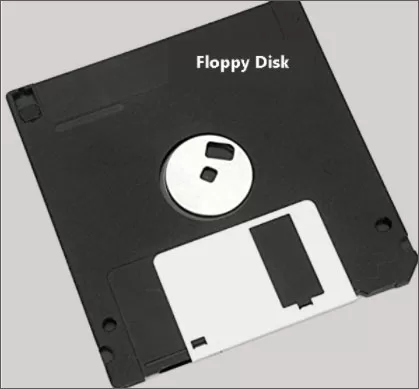
A diskette was a portable storage medium, made from a thin, flexible magnetic surface enclosed in a plastic shell. Think of it as the original “save button” — seriously, that 💾 emoji? That’s based on this!
Insert it into a 3.5-inch drive, and you could read or write files in seconds (okay, maybe not that fast).
In fact, the floppy disk drive (FDD) was the way to boot up many systems back in the day. You couldn’t just click an icon — you had to feed your machine a disk first.
My First Floppy Disk Story 🧒💾
I still remember the first time I used one — I had to install a video game that came on four separate disks. You’d pop one in, hear the drive whirl, wait patiently… and then it would ask for Disk 2.
It sounds tedious now, but back then, it was magic.
Types of Floppy Disks: From 8-Inch Giants to Pocket-Sized Heroes
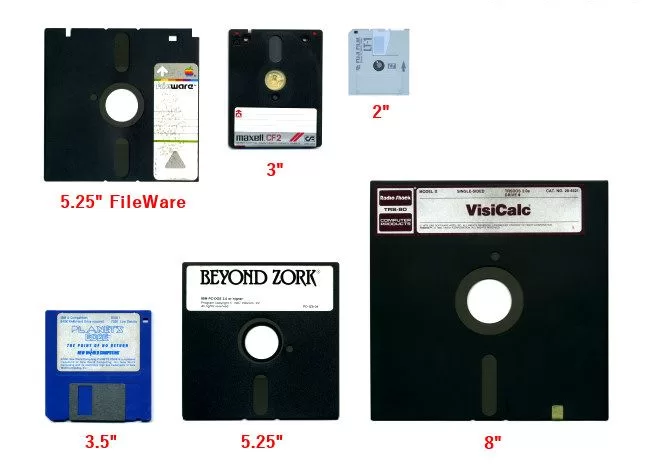
Let’s break it down by format:
1. 8-inch Format
- Released: 1971
- Capacity: Around 80 KB
- Usage: Early IBM systems
2. 5.25-inch Format
- Released: Late 1970s
- Capacity: Up to 1.2 MB
- Famous for: MS-DOS and boot disks
3. 3.5-inch Format
- Released: Early 1980s
- Capacity: 1.44 MB (High Density)
- The most iconic floppy disk of all
These versions were all accessed using a disk drive, which would spin the internal media and allow for data to be read or written via magnetic heads.
Understanding Floppy Disk Capacity 📏
While it sounds tiny today, that 1.44 MB could hold a dozen Word documents or a low-res image — and that was a big deal.
Here’s a breakdown:
- Single Density (SD) – ~90 KB
- Double Density (DD) – ~360–720 KB
- High Density (HD) – 1.44 MB
- Extra High Density (ED) – Up to 2.88 MB
How Did Floppy Disks Actually Work? ⚙️
The core tech behind this media was simple yet brilliant:
- Inside was a circular magnetic surface.
- It was divided into tracks and sectors.
- A drive read these patterns using a magnetic head.
This allowed users to store files, applications, and even entire operating systems with ease. The read/write process wasn’t lightning-fast, but it got the job done — no internet required.
Why Were Floppy Disks So Popular?
✅ Cheap
✅ Portable
✅ Universally supported
✅ Reusable
In short — they were the USBs of their time. You could save a Word doc, pass it to a friend, and it just worked. No internet required.
Why Did Floppy Disks Die?
Simple: they just couldn’t keep up.
- CDs offered 700MB
- USBs gave us GBs
- Cloud storage made physical media less relevant
With the rise of optical discs, USB storage, and cloud platforms, magnetic disks became obsolete.
Eventually, laptops and desktops phased out built-in drives, and manufacturers like Sony stopped production altogether by 2011. By then, even email could carry more data than a diskette ever could.
But even in 2025, you might still find legacy devices using them in very specific systems — from industrial machines to aerospace control panels.
Real-Life Uses of Floppy Disks in 2025 🤯
You wouldn’t believe it, but:
- Some aircraft systems still rely on them.
- Old embroidery machines use floppy disk drives.
- Retro gamers and tech collectors keep them alive.
Floppy Disk vs. Modern Storage: No Contest
| Feature | Floppy Disk | USB Drive |
| Capacity | 1.44 MB max | 1 GB–1 TB+ |
| Speed | Very slow | Super fast |
| Durability | Easily damaged | Very durable |
| Portability | Okay | Excellent |
Still… floppy disks had personality. They clicked, spun, and made your PC feel alive. You don’t get that from a USB stick.
Why I Still Love the Floppy Disk ❤️
Even if you never used one, the importance of this storage format in shaping the digital world is undeniable.
It taught us about portability, data safety, and what it meant to “save” something outside a computer.
Plus, let’s be honest — there’s something kind of romantic about retro tech.
Final Thoughts 💬
The magnetic storage medium may be gone from our desks, but its spirit lives on. Without it, our journey to gigabytes and cloud drives might have taken a lot longer.
So next time you click “Save” — give a silent nod to the little plastic square that made it all possible.
Useful Links