Highest Position in a Bank: Complete Guide to Hierarchy & Career Growth

If you’ve ever walked into a bank and wondered, “Who runs this show?” or dreamed of sitting in that corner office making big financial decisions, you’re not alone. The banking sector is one of the most structured and rewarding career paths in India. But to navigate it successfully, you need to understand the ladder.
What is the highest position in a bank? Is it the CEO? The Chairman? Or does it change between public and private banks?
In this guide, we’ll break down the complete bank hierarchy, discuss salaries, compare roles, and show you exactly how you can climb from an entry-level job to the top seat. Whether you’re preparing for IBPS, SBI PO, or just curious about banking careers, this article is your roadmap.
What is the Highest Position in a Bank?
Let’s cut to the chase. The highest position in a bank is generally held by the Chief Executive Officer (CEO) or the Managing Director (MD).
However, the title can vary slightly depending on the type of bank:
- Public Sector Banks (PSBs): The top post is usually the Chairman and Managing Director (CMD). This person is appointed by the government and holds the ultimate authority over operations and strategy.
- Private Sector Banks: The top role is the MD & CEO. They report to the Board of Directors and are responsible for the bank’s profitability, growth, and compliance.
While the Chairman of the Board holds a prestigious title, the CEO/MD is the operational boss who drives the bank’s day-to-day success and long-term vision.
CEO vs. Chairman: Who’s the Real Boss?
It’s a common confusion. Think of it this way:
- The Chairman leads the Board of Directors. They focus on governance, policy, and representing shareholders.
- The CEO/MD runs the actual business. They execute the strategy, manage thousands of employees, and ensure the bank makes money.
In many Indian public banks, these roles are combined into the CMD, making it the undisputed highest position in a bank.
The Complete Bank Hierarchy Structure
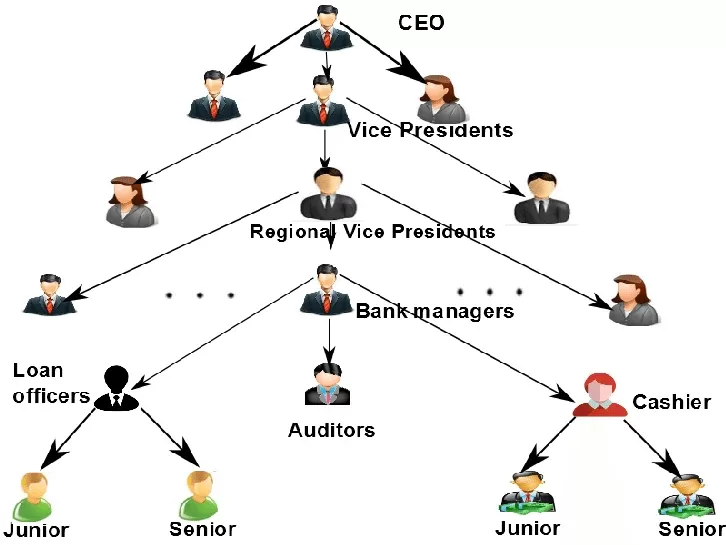
Banking is all about structure. Every role has a clear place in the hierarchy, which helps in smooth operations and defined career growth. Here’s how the ladder looks, from the ground floor to the penthouse.
Top-Level Management
These are the decision-makers. They shape the future of the bank.
- Chairman / Board of Directors: The governing body that oversees the bank’s direction.
- CEO / Managing Director (MD): The face of the bank and the head of operations.
- Executive Directors (EDs): Senior leaders who head major verticals like Retail Banking, Corporate Banking, Risk, or Finance. They report directly to the MD.
- Chief Operating Officer (COO) & CFO: In private banks, these C-suite roles manage operations and finances respectively.
Senior Management
This layer bridges the gap between strategy and execution.
- General Manager (GM): Oversees large regions or critical departments. They handle budgets, major approvals, and regional performance.
- Deputy General Manager (DGM): Reports to the GM. DGMs manage clusters of branches or specialized departments like credit audit or forex.
- Assistant General Manager (AGM): A mid-senior role. AGMs often handle key branches, zonal offices, or specific product lines.
Middle & Junior Management
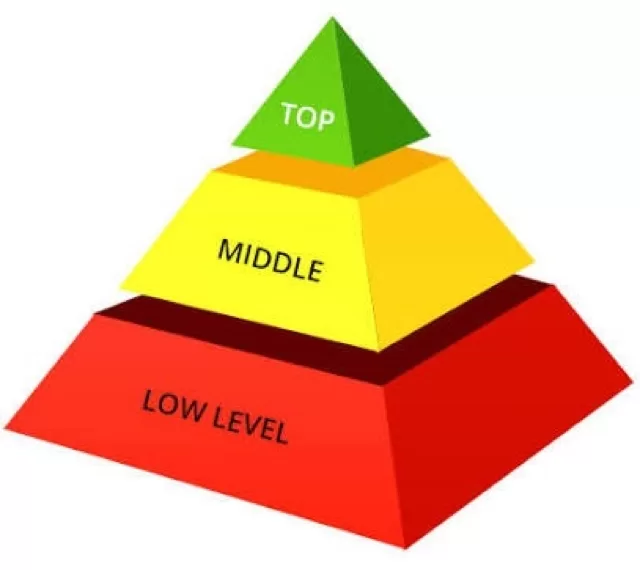
This is where the action happens. Most banking aspirants start here.
- Chief Manager: Often the head of a large branch or a department head in a zonal office.
- Branch Manager: The captain of a specific branch. They handle customer relationships, staff management, and branch targets.
- Deputy Manager / Assistant Manager: Support the branch manager and handle loan processing, customer service, and operations.
- Probationary Officer (PO): A managerial trainee role. POs are fast-tracked for leadership and undergo rigorous training.
- Clerk / Associate: The entry-level role focusing on cash handling, customer queries, and daily transactions.
Quick Tip: Many candidates ask, “Which post is higher, PO or Clerk?” The answer is clear: PO is higher. A PO is a managerial trainee with faster promotions, while a Clerk is an operational role. However, Clerks can also take internal exams to become Officers!
Public Sector vs. Private Sector: Key Differences
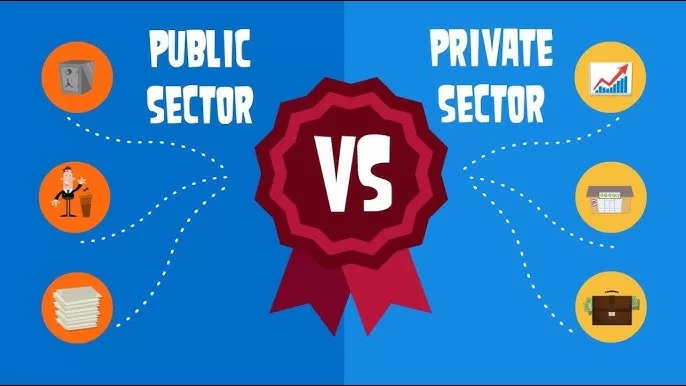
The highest position in a bank might look similar on paper, but the journey differs between sectors.
| Feature | Public Sector Banks (PSB) | Private Sector Banks |
|---|---|---|
| Top Post | Chairman & Managing Director (CMD) | MD & CEO |
| Appointment | Selected by Banks Board Bureau/Govt | Appointed by Board of Directors |
| Growth Path | Exam-based promotions, seniority | Performance-based, faster growth |
| Job Security | Very High | Moderate to High |
| Salary at Top | Capped by government norms | Market-driven, often higher |
In PSBs, reaching the highest position in a bank requires clearing internal exams, consistent performance, and often decades of service. In private banks, aggressive performance, networking, and strategic moves can accelerate your rise to the top.
Salary Breakdown: Highest Post in Bank with Salary
Let’s talk numbers. Banking offers some of the most lucrative packages in India, especially at the top. While entry-level salaries are decent, the highest position in a bank comes with serious compensation.
Note: Salaries are approximate and vary by bank, location, and experience.
- CMD / MD & CEO: ₹80 Lakhs to ₹3 Crores+ per annum. Private bank CEOs can earn significantly more with stock options.
- Executive Director (ED): ₹50 Lakhs to ₹90 Lakhs per annum.
- General Manager (GM): ₹30 Lakhs to ₹60 Lakhs per annum.
- Deputy General Manager (DGM): ₹25 Lakhs to ₹50 Lakhs per annum.
- Assistant General Manager (AGM): ₹20 Lakhs to ₹40 Lakhs per annum.
- Branch Manager: ₹10 Lakhs to ₹20 Lakhs per annum.
- Probationary Officer (PO): ₹8 Lakhs to ₹12 Lakhs per annum (CTC).
- Clerk: ₹4 Lakhs to ₹6 Lakhs per annum.
As you can see, the financial rewards grow exponentially as you climb the hierarchy. Reaching the highest position in a bank not only brings power but also substantial wealth.
How to Climb the Ladder to the Top?
Dreaming of becoming a CEO? It’s a marathon, not a sprint. Here’s how you can progress toward the highest position in a bank.

1. Start Strong
Clear competitive exams like IBPS PO, SBI PO, or RBI Grade B. Starting as a PO gives you a managerial track from day one. If you start as a Clerk, don’t worry—many CMDs started as Clerks and worked their way up through internal promotions.
2. Focus on Continuous Learning
Banking is evolving. To reach senior roles, you need more than just experience.
- Pursue certifications like CAIIB (Certified Associate of Indian Institute of Bankers).
- Consider an MBA in Finance or specialized courses in risk management and fintech.
- Stay updated on digital banking, AI in finance, and regulatory changes.
3. Build Leadership Skills
The highest position in a bank requires exceptional leadership.
- Volunteer for challenging projects.
- Mentor junior staff.
- Develop strong communication and decision-making skills.
- Learn to handle pressure and crisis management.
4. Network and Perform
Consistency is key. Deliver results, meet targets, and maintain a clean compliance record. In private banks, networking and visibility can fast-track promotions. In PSBs, your performance appraisal and exam scores matter most.
5. Understand “Level 7” and Beyond
You might hear terms like “Level 7” in banking. In many banks, Level 7 corresponds to Assistant General Manager (AGM) or Deputy Manager roles depending on the structure. Understanding these internal levels helps you track your progress toward GM, DGM, and eventually the CEO chair.
Common Questions About Bank Roles
What is the Hardest Job in a Bank?
While the highest position in a bank carries the most responsibility, many argue that Branch Managers and Credit Risk Officers have the toughest day-to-day jobs. They deal with direct customer pressure, sales targets, regulatory audits, and loan recoveries simultaneously.
Can a 12th Pass Become a CEO?
Not directly. You need a graduation degree to enter banking. However, if you start early, complete your education while working, and show exceptional performance, nothing is impossible. Most CEOs hold degrees in Commerce, Economics, Engineering, or an MBA.
What is the Lowest Position in a Bank?
The entry-level role is typically the Clerk or Bank Associate. They handle cash transactions, passbook updates, and customer inquiries. It’s the foundation of the banking hierarchy and a great starting point for many successful careers.
Become An AI, ML, Cloud & Blockchain Expert With Kaashiv Infotech
Looking to dive into the cutting-edge world of Artificial Intelligence (AI) & Machine Learning (ML), Cloud Computing, or Blockchain Technology and carve your path to success? Kaashiv Infotech is here for you! Our comprehensive Inplant Training (IPT) and specialized certification programs are meticulously designed by Microsoft MVPs and Google-recognized industry experts to equip you with practical skills, real-world exposure, and battle-tested experience that will help you set your foot firmly in these high-demand, competitive technology domains.
Let’s Break Down Our Program Offerings To See What Makes Kaashiv Infotech Stand Out
2 Live Industry Projects + Capstone
You won’t just learn theory — you’ll work on 2 real-time, live industry projects per internship that mirror actual enterprise challenges in AI/ML model deployment, cloud infrastructure design, or blockchain application development. Cap it all off with a dedicated capstone project that becomes the crown jewel of your professional portfolio, showcasing your ability to solve real business problems from end to end.
Hands-On Practice Exercises & Lab Sessions
Get rigorous, hands-on practice with daily coding exercises and structured lab sessions tailored to each technology track — whether you’re building neural networks with TensorFlow, configuring AWS/Azure environments, or writing Solidity smart contracts. These exercises reinforce your learning and help you master every key concept through repetition and application.
Dedicated Doubt Clearing & Mentorship Sessions
Our regular, instructor-led doubt clearing sessions ensure that absolutely no question goes unanswered. Whether you’re stuck on a backpropagation algorithm, a Kubernetes deployment, or a consensus mechanism in blockchain, our mentors provide crystal-clear explanations that give you complete conceptual clarity before you move forward.
Training Led By Microsoft MVPs & Google-Recognized Experts
Forget generic instructors. At Kaashiv Infotech, every session is led by certified Microsoft MVPs, Google-recognized professionals, and seasoned industry practitioners from top MNCs who bring years of real-world project experience directly into your learning journey. They don’t just teach — they mentor, guide, and shape you into an industry-ready professional.
Industry-Oriented, Future-Ready Curriculum
Our curriculum is not built in a vacuum. It is continuously updated and aligned with the latest industry demands across AI & ML (Deep Learning, NLP, Computer Vision, Generative AI), Cloud Computing (AWS, Azure, GCP, DevOps, Microservices), and Blockchain Technology (Ethereum, Hyperledger, DeFi, Web3). Every module, every lesson is directly applicable to what companies are hiring for right now.
Triple Certification — Your Competitive Edge
Upon successful completion, you don’t just earn one certificate — you earn Kaashiv Infotech’s powerful Triple Certification:
- ✅ Internship Completion Certificate — Validates your hands-on project experience
- ✅ Inplant Training (IPT) Certificate — Recognized proof of structured industrial training
- ✅ Industrial Exposure Certificate — Demonstrates your real-world industry readiness
This triple-certified credential stack is recognized and valued by recruiters and employers across the technology industry, giving you a decisive advantage over candidates with a single generic certificate.
Collaborative Q&A Forum & Peer Learning Network
Engage with fellow trainees, alumni, and expert instructors in Kaashiv Infotech’s dedicated Q&A forum. Exchange ideas, seek advice, debug problems together, and collaborate on projects — building not just your skills but also a professional network that supports your career for years to come.
ATS-Friendly Resume Building & Interview Question Banks
We go beyond just training. Kaashiv Infotech provides you with professionally crafted, ATS-friendly resume templates optimized for tech hiring platforms, along with curated interview question banks specific to AI/ML, Cloud Computing, and Blockchain roles. Walk into every interview prepared, polished, and confident.
Interview Opportunities & Career Guidance
Gain access to direct interview opportunities with Kaashiv Infotech’s hiring partner network. Our career guidance team works with you on mock interviews, technical interview prep, HR round coaching, and portfolio reviews to ensure you’re fully equipped to land your dream role in your chosen technology domain.
100% Job Assistance Guarantee + Kaashiv-Wide Alumni Support
We stand behind your success with our 100% Job Assistance Guarantee. From the moment you complete your program, our placement team actively connects you with relevant job openings, and you receive ongoing, lifetime support from Kaashiv Infotech’s expansive alumni network — a community of thousands of professionals who have launched their careers through our programs and are now thriving across the global tech industry.
So What Are You Waiting For?
The future belongs to those who master AI, Machine Learning, Cloud Computing, and Blockchain. These aren’t just buzzwords — they are the foundational technologies reshaping every industry on the planet, and companies are desperately searching for skilled professionals who can build, deploy, and innovate with them.
Launch your career with confidence!
Your transformation from learner to industry-ready professional starts here. Start with Kaashiv. Succeed everywhere.
Conclusion
The highest position in a bank represents the pinnacle of financial leadership. Whether it’s the CMD of a public sector giant or the MD & CEO of a private bank, these roles demand vision, integrity, and relentless dedication.
But remember, every CEO started somewhere. Some began as POs, others as Clerks. The banking hierarchy is designed to reward hard work, skill, and consistency. If you’re aiming for the top, focus on clearing your exams, building expertise, and leading with purpose.
Banking isn’t just a job; it’s a career with a clear path, immense respect, and the potential to impact the economy. So, start your journey today. Who knows? One day, your name might be on the plaque at the highest position in a bank.
For more career guides, exam tips, and tech insights, keep exploring wikitechy.com. Your dream banking career is just a click away!
FAQs: Highest Position in a Bank
Q1. What is the highest position in a bank?
The highest position is the CEO (Chief Executive Officer) or Managing Director (MD). In public sector banks, it is often the Chairman and Managing Director (CMD).
Q2. Is the Chairman higher than the CEO?
The Chairman leads the Board of Directors and focuses on governance, while the CEO runs daily operations. In terms of operational power, the CEO is the boss, but the Chairman holds the top governance role. In many PSBs, the CMD combines both roles.
Q3. How much does a bank CEO earn in India?
A bank CEO’s salary varies widely. In public banks, it can range from ₹70 Lakhs to ₹1 Crore+, while private bank CEOs can earn ₹2 Crores to ₹10 Crores+ including bonuses and stock options.
Q4. Can a Probationary Officer (PO) become a CEO?
Yes! Many top bankers started as POs. With consistent performance, promotions, and leadership skills, a PO can rise through the ranks to become GM, ED, and eventually the CEO or CMD.
Q5. What is the lowest position in a bank?
The lowest position is typically the Clerk or Associate. This is an entry-level role handling customer service and transactions. Clerks can also appear for internal exams to become Officers and climb the hierarchy.