Library vs Framework: Understanding the Core Differences in Software Development
Library vs Framework:
In the world of software development, the terms library vs framework are frequently used, sometimes interchangeably. However, they represent two fundamentally different approaches to building applications. Understanding the difference between a library vs framework is essential for developers because it directly influences how applications are structured, how control flows through the code, and how scalable and maintainable a project becomes over time.
At a glance, the difference may seem subtle, but in real-world development, choosing between a library vs framework—or knowing how to use both together—can significantly impact productivity and code quality.
Understanding Libraries
A library is a collection of reusable code that developers can call whenever they need specific functionality. It focuses on solving a particular problem or providing a set of related features, such as handling HTTP requests, performing mathematical calculations, manipulating the DOM, or formatting dates.
When using a library, the developer is always in control of the application flow. Your program decides when to call the library, how to use it, and when to stop using it. The library never dictates how your project should be structured or how your code should be written.
For example, when using a JavaScript utility library like Lodash, you explicitly call its functions inside your own logic. The library helps you perform tasks efficiently, but it never controls the lifecycle of your application. This makes libraries highly flexible and easy to integrate into almost any project.
Libraries are commonly preferred when developers want freedom in designing their application architecture or when they need only a small piece of functionality without committing to a larger ecosystem.
Understanding Frameworks
A framework, on the other hand, provides a complete structure for building applications. Instead of simply offering reusable functions, a framework defines how the application should be organized and how different components interact with each other.
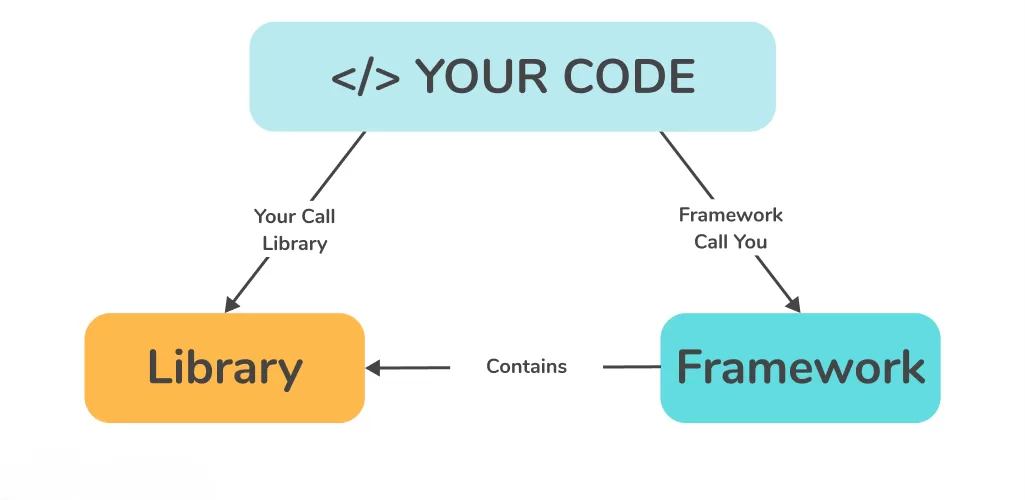
The most important concept behind frameworks is inversion of control. Unlike libraries, where you call the code when needed, a framework calls your code at specific points in the application lifecycle. You write pieces of logic—such as controllers, services, or components—and the framework decides when and how they are executed.
For instance, in a backend framework like Django or Spring, you define routes, controllers, and models according to the framework’s rules. The framework handles request routing, dependency management, security, and application startup. Your code fits into the framework rather than the framework fitting into your code.
Frameworks are designed to solve broader problems and are especially useful for building large, scalable, and maintainable applications.
Control Flow: The Core Difference
The most significant distinction between a library vs framework lies in who controls the flow of execution.
With a library, your application controls the flow. You decide when to call a function and what to do with its result. With a framework, the control is reversed. The framework controls the overall flow and calls your code when necessary.
This difference may seem abstract, but it has real consequences. Libraries give developers more freedom but also more responsibility. Frameworks provide structure and conventions but reduce flexibility.
A common saying among developers summarizes this perfectly:
“You call a library, but a framework calls you.”
Impact on Application Architecture
Libraries do not enforce any specific project structure. This makes them ideal for small projects, scripts, or applications where custom architecture is required. However, as projects grow larger, this freedom can become a drawback if consistent patterns are not followed.
Frameworks, in contrast, enforce a standardized structure. They define where files should be placed, how components communicate, and how data flows through the system. This consistency makes large projects easier to maintain, especially when multiple developers are working together.
In enterprise or team-based environments, frameworks help ensure that everyone follows the same conventions, reducing confusion and technical debt.
Performance Considerations
Libraries are generally lightweight because they include only the functionality they are designed to provide. This makes them efficient for specific tasks and suitable for performance-sensitive applications.
Frameworks may introduce additional overhead because they include many built-in features such as routing, dependency injection, middleware, and security layers. While this overhead is usually optimized, it can still be noticeable in smaller applications where such features are unnecessary.
That said, modern frameworks are highly optimized and often include performance tools that help developers manage and reduce overhead in production environments.
Testing and Debugging
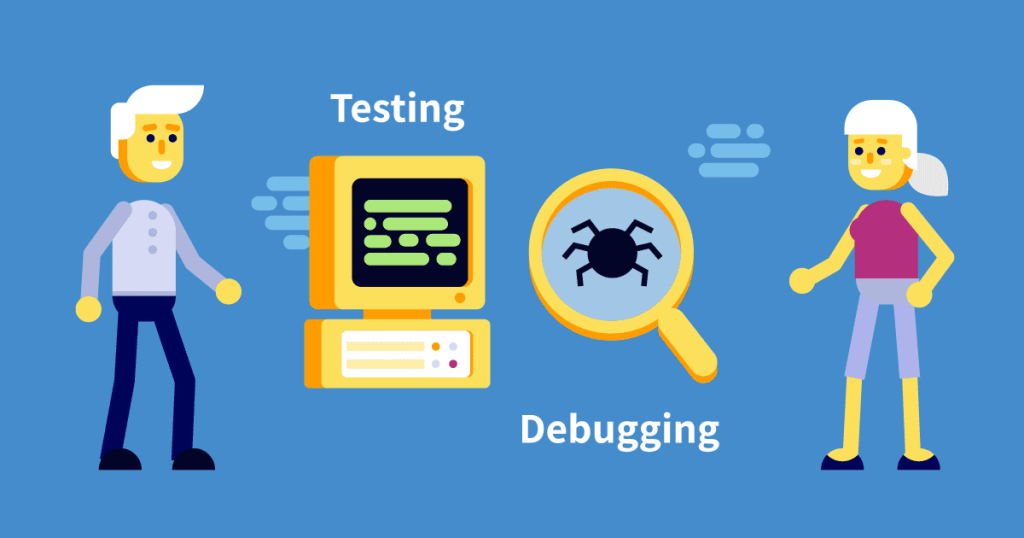
Testing applications built with libraries is usually straightforward because the developer controls the entire execution flow. Unit testing is often simpler, as individual functions can be tested independently.
Framework-based applications require a different testing approach. Since the framework controls execution, developers often need to write integration tests or end-to-end tests that align with the framework’s lifecycle. While this adds complexity, frameworks often provide built-in testing tools that make the process easier once the learning curve is overcome.
Learning Curve and Developer Experience
Libraries typically have a gentle learning curve. Developers only need to understand the library’s API and how to integrate it into their existing code.
Frameworks usually require more time to learn because they introduce new concepts, rules, and conventions. Developers must understand not just what the framework does, but also how it expects applications to be structured. However, once mastered, frameworks can significantly boost productivity by handling repetitive tasks automatically.
When to Use a Library
Libraries are ideal when you need specific functionality without changing your application’s architecture. They work well for small projects, custom-built systems, or situations where flexibility is more important than standardization.
If you already have a project structure in place and only need tools to enhance it, libraries are often the best choice.
When to Use a Framework
Frameworks are best suited for large-scale applications where consistency, scalability, and maintainability are critical. They are especially useful for web applications, enterprise systems, and team-based projects.
When you want built-in solutions for routing, authentication, security, and configuration management, a framework can save significant development time.
Using Libraries and Frameworks Together
In real-world development, libraries and frameworks are rarely used in isolation. Most modern applications combine both. A framework provides the overall structure, while libraries are used within that structure to handle specific tasks.
For example, a web application might use a backend framework to manage requests and responses while relying on multiple libraries for logging, validation, or data processing.
Common Misconceptions
A common misconception is that frameworks are always better than libraries. In reality, neither is universally superior. The best choice depends on the project’s size, complexity, and long-term goals.
Another misunderstanding is assuming that a tool must be either a library or a framework. Some tools blur the line and offer characteristics of both, depending on how they are used.
Conclusion
The difference between a library vs framework goes far beyond terminology. It affects how applications are designed, how code is written, and how teams collaborate. Libraries provide flexibility and control, while frameworks offer structure and guidance.
Library vs Framework – A skilled developer understands both approaches and knows when to use each. By mastering this distinction, you can make better architectural decisions and build applications that are not only functional but also scalable and maintainable in the long run.
Kaashiv Infotech Offers, Full Stack Python Course, Full Stack Java Course, & More, Visit Their Website course.kaashivinfotech.com.
Related Reads: