Strong AI vs Weak AI in 2026: Understanding the Future of Artificial Intelligence
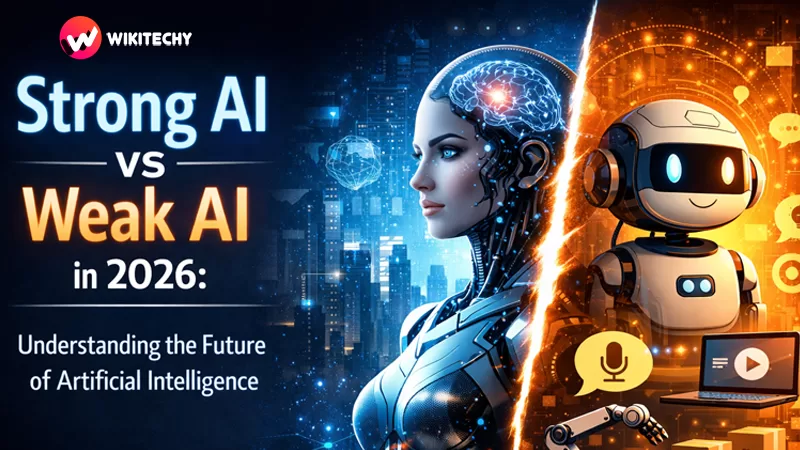
Artificial Intelligence (AI) is no longer a futuristic concept—it is deeply embedded in our daily lives, from smart assistants to recommendation engines. Yet, beneath the surface of this rapidly evolving technology lies a fundamental distinction that shapes how AI is built, understood, and applied: Strong AI vs Weak AI.
This comprehensive guide Strong AI vs Weak AI explores these two major categories of AI in depth, explaining their definitions, characteristics, differences, applications, advantages, challenges, and what the future might hold. Whether you are a student, developer, or tech enthusiast, understanding this distinction will give you a clearer perspective on where AI stands today—and where it is heading.
Understanding Artificial Intelligence
Before diving into Strong and Weak AI, it’s important to understand what AI actually means. Artificial Intelligence refers to machines or systems designed to mimic human intelligence, including learning, reasoning, problem-solving, perception, and language understanding.
However, current AI systems vary greatly in their capabilities. Some are highly specialized, while others aim to replicate human-like intelligence. This is where the classification into Strong AI and Weak AI becomes essential.
What is Weak AI (Narrow AI)?
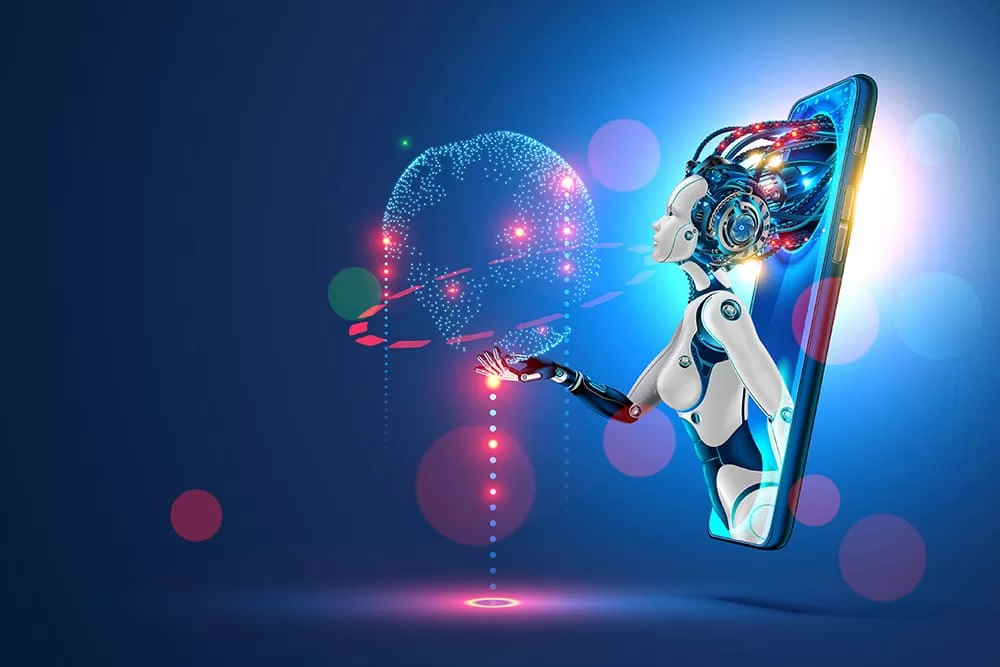
Weak AI, often referred to as Narrow AI, is designed to perform specific tasks within a limited scope. These systems are highly efficient but operate under predefined rules and trained data models. They do not possess consciousness, emotions, or true understanding.
Weak AI dominates the modern technological landscape. Almost every AI system we interact with today falls into this category.
Key Characteristics of Weak AI
Weak AI systems are built with a focused objective. They excel in performing a single task or a narrow range of functions.
- Task-specific intelligence
- No consciousness or self-awareness
- Operates on data-driven models
- Cannot generalize knowledge beyond training
- High accuracy in defined domains
Real-World Examples of Weak AI
Many popular tools and platforms use Weak AI to deliver seamless user experiences:
- Voice assistants like Siri and Alexa
- Recommendation systems used by Netflix and Amazon
- Spam filters in email systems
- Facial recognition software
- Chatbots used in customer service
These systems simulate intelligence but lack genuine understanding. For example, a chatbot can respond to queries effectively but does not truly “know” what it is saying.
What is Strong AI (Artificial General Intelligence)?
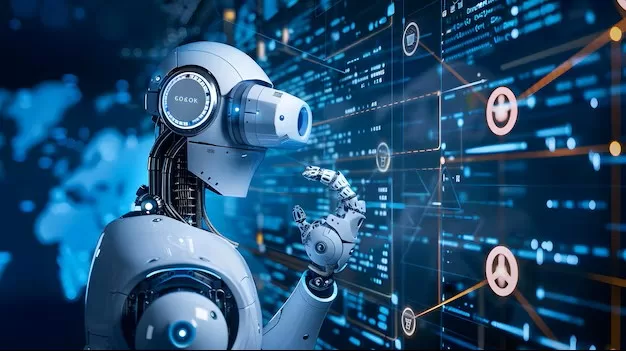
Strong AI, also known as Artificial General Intelligence (AGI), represents a theoretical form of AI that can perform any intellectual task that a human can. Unlike Weak AI, Strong AI would not be limited to a single function.
It would possess the ability to reason, learn from experience, adapt to new situations, and potentially exhibit consciousness.
Key Characteristics of Strong AI
Strong AI aims to replicate the depth and flexibility of human intelligence.
- Human-like reasoning and thinking
- Ability to learn and apply knowledge across domains
- Self-awareness and consciousness (theoretical)
- Independent decision-making
- Adaptability to new and unfamiliar situations
Unlike Weak AI, Strong AI would not require retraining for every new task—it could transfer knowledge naturally.
Strong AI vs Weak AI: Detailed Comparison
The differences between Strong AI vs Weak AI go beyond simple definitions. They reflect two entirely different approaches to intelligence.
Intelligence Scope
Weak AI is limited to narrow tasks, while Strong AI aims for general-purpose intelligence capable of handling diverse challenges.
Learning and Adaptation
Weak AI relies heavily on training data and cannot easily adapt outside its programmed environment. Strong AI would be capable of continuous learning and knowledge transfer.
Awareness and Consciousness
Weak AI operates without awareness. Strong AI, on the other hand, is theorized to possess self-awareness and possibly emotions, making it closer to human cognition.
Flexibility
Weak AI systems are rigid and task-bound. Strong AI would be flexible, capable of solving new problems without explicit programming.
Current Development Status
Weak AI is widely implemented across industries today. Strong AI remains largely theoretical and under active research.
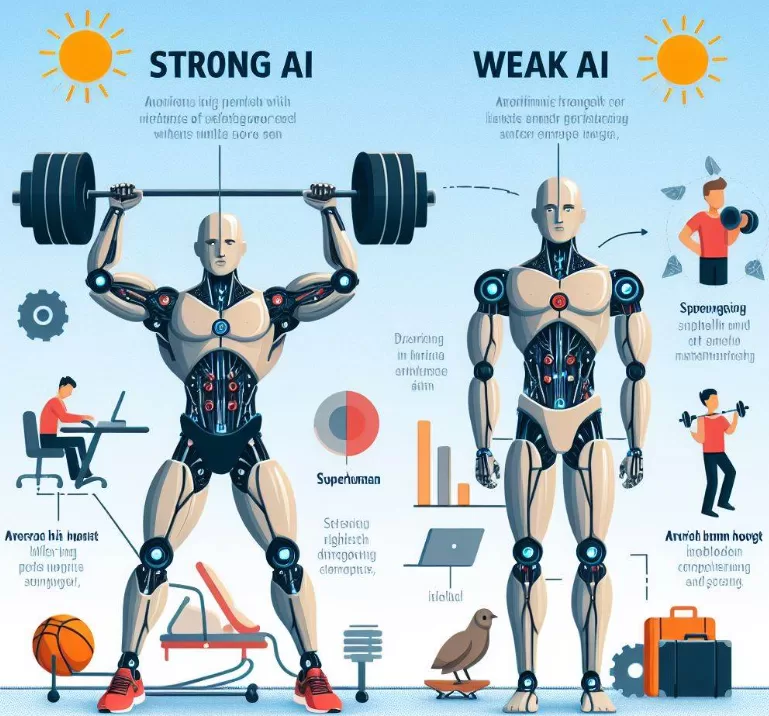
Comparison Table
| Feature | Weak AI (Narrow AI) | Strong AI (AGI) |
|---|---|---|
| Intelligence Type | Task-specific | General intelligence |
| Learning Ability | Limited | Adaptive and continuous |
| Awareness | None | Theoretical |
| Flexibility | Low | High |
| Real-World Use | Common | Not yet achieved |
| Examples | Siri, Alexa, Netflix AI | Hypothetical human-like systems |
Advantages of Weak AI
Weak AI has become the backbone of modern technology due to its efficiency and practicality.
It enables automation at scale, improves decision-making through data analysis, and enhances user experience through personalization. Businesses rely heavily on Weak AI for tasks such as customer support, fraud detection, and predictive analytics.
Another key advantage is its reliability within defined boundaries. Since Weak AI is designed for specific tasks, it can achieve extremely high accuracy and performance.
Limitations of Weak AI
Despite its widespread use, Weak AI has several limitations. It cannot think independently or understand context beyond its programming. It struggles with tasks that require creativity, emotional intelligence, or deep reasoning.
Additionally, Weak AI systems depend heavily on data. Poor or biased data can lead to inaccurate or unfair outcomes. This highlights the importance of responsible AI development.

Potential Benefits of Strong AI
If Strong AI becomes a reality, it could revolutionize nearly every field.
In healthcare, it could diagnose diseases with human-level accuracy and even suggest treatments. In education, it could provide deeply personalized learning experiences. In science, it could accelerate discoveries by solving complex problems that are currently beyond human capability.
Strong AI could also enhance creativity, assist in decision-making, and potentially collaborate with humans as intelligent partners rather than tools.
Risks and Ethical Concerns of Strong AI
While the potential of Strong AI is exciting, it also raises serious concerns.
One major issue is control. If machines become more intelligent than humans, ensuring they act in alignment with human values becomes a critical challenge.
There are also ethical questions about machine consciousness. If a machine becomes self-aware, should it have rights? How do we define responsibility and accountability?
Additionally, Strong AI could disrupt job markets on an unprecedented scale, replacing not only manual labor but also cognitive roles.
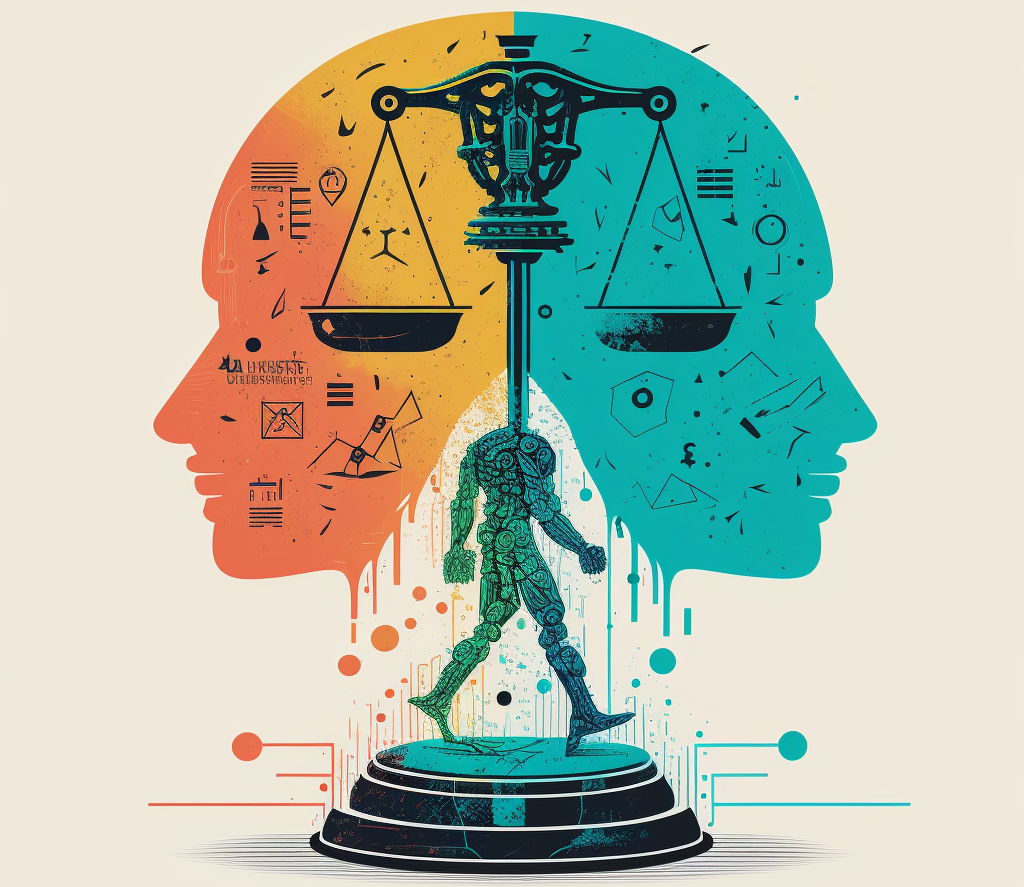
Present vs Future: Where We Stand
Present Reality (Weak AI)
Today’s world is powered by Weak AI systems embedded in:
- Smartphones and virtual assistants
- E-commerce platforms
- Financial systems for fraud detection
- Autonomous vehicle features
- Social media algorithms
These systems are powerful but limited in scope.
Future Possibilities (Strong AI)
In the future, Strong AI could enable:
- Fully autonomous robots with human-like reasoning
- Advanced medical systems capable of independent diagnosis
- Intelligent research assistants
- Machines that can understand emotions and context deeply
However, achieving this level of intelligence requires breakthroughs in multiple disciplines, including neuroscience, computing, and cognitive science.
Are We Close to Strong AI?
Strong AI vs Weak AI – Despite rapid progress in machine learning and deep learning, we are still far from achieving Strong AI. Current systems, including advanced AI models, remain forms of Weak AI because they lack true understanding and self-awareness.
Researchers are exploring innovative approaches such as neural architectures inspired by the human brain and hybrid AI models. Yet, replicating human consciousness remains one of the greatest challenges in science.
Conclusion
The distinction between Strong AI vs Weak AI is fundamental to understanding artificial intelligence. Weak AI, with its task-specific capabilities, continues to drive innovation and shape industries worldwide. Strong AI, on the other hand, represents a bold vision of machines that can think, learn, and understand like humans.
While Strong AI remains a long-term goal, its potential impact is enormous. As technology advances, the line between these two forms of AI may continue to evolve, bringing both opportunities and challenges.
Strong AI vs Weak AI Understanding this difference not only helps us appreciate current AI systems but also prepares us for a future where intelligence itself may be redefined.
Want to Learn More About Python & Artificial Intelligence ???, Kaashiv Infotech Offers Full Stack Python Course, Artificial Intelligence Course, Data Science Course & More Visit Their Website course.kaashivinfotech.com.
Related Reads: