Top 10 Tips and Tricks to Crack Competitive Programming

Competitive programming is one of the most effective ways to sharpen your coding skills and build a strong problem-solving mindset. It goes beyond writing simple programs and pushes you to think logically, optimize solutions, and work under strict time limits. Today, competitive programming plays a vital role in technical interviews, coding assessments, and global programming contests.
Many beginners feel overwhelmed when they start competitive programming because they focus only on solving problems instead of building the right foundation. This guide explains 10 powerful tips and tricks that will help you progress steadily, avoid common mistakes, and become confident in coding competitions.
What Makes Competitive Programming Important?
Competitive programming improves logical thinking, strengthens your understanding of algorithms, and enhances your ability to write optimized code. It trains your brain to analyze problems quickly and find efficient solutions. Over time, it also helps you develop discipline, patience, and consistency—skills that are valuable in any software development career.
1. Choose One Programming Language and Master It Completely
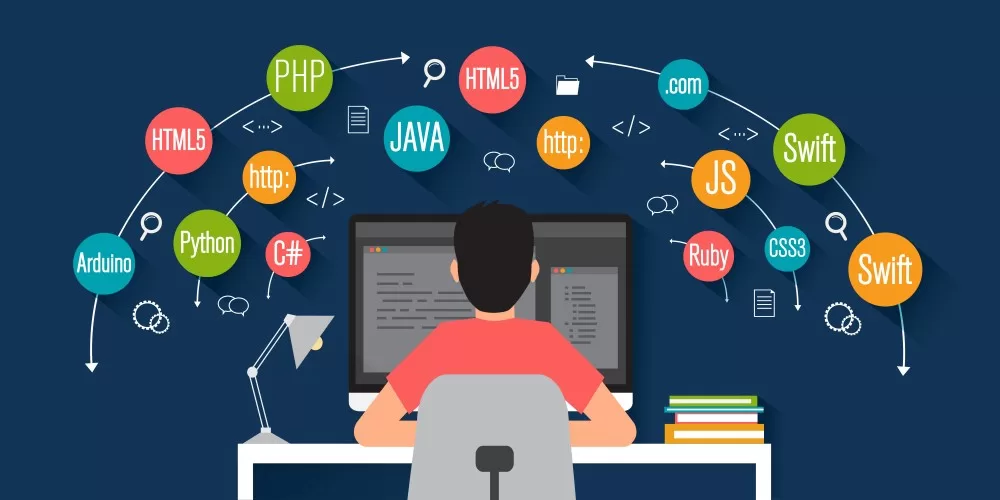
One of the biggest mistakes beginners make is switching between multiple programming languages. Competitive programming requires speed and accuracy, which are difficult to achieve if you are not comfortable with your language.
Choosing a single language and mastering it helps you focus on problem-solving instead of syntax. When you know your language inside out, you can implement ideas faster and debug efficiently during contests. Understanding built-in functions, libraries, and shortcuts can save valuable time and reduce unnecessary errors.
2. Build a Strong Foundation in Programming Basics
Strong fundamentals act as the backbone of competitive programming. Before attempting advanced problems, you should be completely comfortable with core concepts such as loops, conditional statements, functions, recursion, and input-output handling.
Many wrong answers occur due to small logical or implementation mistakes. When your basics are clear, you can easily convert logic into working code. This foundation also helps you understand advanced algorithms without confusion.
3. Understand Data Structures Through Problem Solving

Data structures are essential because they determine how data is stored and accessed efficiently. Instead of memorizing definitions, you should learn how and where each data structure is used.
By solving problems that involve arrays, stacks, queues, hash maps, trees, and graphs, you gradually develop an intuition for selecting the right data structure. This understanding helps you write optimized solutions that run faster and use less memory.
4. Learn Algorithms with Clarity, Not Memorization

Algorithms are the heart of competitive programming, but memorizing them without understanding will not help. You should focus on how an algorithm works and why it is used in certain situations.
For example, knowing when to apply greedy methods or dynamic programming can completely change how you approach a problem. Implementing algorithms from scratch improves confidence and ensures that you can modify them based on problem requirements.
5. Start Small and Gradually Increase Difficulty

Many beginners lose motivation by directly attempting complex problems. A better approach is to start with simple challenges that strengthen your thinking process.
Solving easy problems consistently builds confidence and improves pattern recognition. As your skills improve, medium and hard problems become less intimidating. Growth in competitive programming comes from steady progress, not sudden leaps.
6. Practice Consistently on Competitive Platforms

Consistency is the most important factor in competitive programming success. Practicing regularly trains your mind to think logically and respond quickly to problem statements.
Even short daily practice sessions can make a huge difference over time. As you solve more problems, you start recognizing patterns and common techniques, which significantly reduces solving time during contests.
7. Learn by Reading Editorials and Optimized Solutions

Editorials provide insight into the most efficient ways to solve problems. After attempting a problem, reading the editorial helps you compare your approach with better solutions.
This habit exposes you to new techniques, improves code optimization, and teaches you how experienced programmers think. Over time, this learning process sharpens your problem-solving strategy.
8. Develop Awareness of Time and Space Complexity

Writing code that works is not enough in competitive programming. Your solution must also be efficient.
Understanding time and space complexity helps you judge whether your solution can handle large inputs. When you analyze complexity before coding, you avoid solutions that fail due to time limit or memory issues. This awareness is crucial for clearing all test cases.
9. Participate in Contests to Improve Speed and Accuracy

Live contests simulate real competitive environments where time management is critical. Participating in contests helps you improve speed, decision-making, and stress handling.
Initially, your performance may not be impressive, but each contest builds experience. Over time, you learn how to prioritize problems and manage time effectively.
10. Stay Patient, Motivated, and Consistent
Competitive programming is a long-term journey that requires patience and dedication. Progress may feel slow at times, but consistency always leads to improvement.
Taking breaks, learning from mistakes, and setting realistic goals help you stay motivated. With regular practice and the right mindset, improvement becomes inevitable.
Conclusion
Competitive programming is a powerful skill that improves both technical knowledge and logical thinking. By mastering one language, strengthening fundamentals, understanding data structures and algorithms, and practicing consistently, anyone can succeed in coding competitions.
Success in competitive programming does not come overnight, but with dedication and smart practice, you can steadily level up your skills and confidence. Keep coding, stay curious, and enjoy the journey
Kaashiv Infotech Offers, Full Stack Python Course, Full Stack Java Course, & More, Visit Their Website course.kaashivinfotech.com.
Related Reads:




![Merge Sort Algorithm [2025]](https://www.wikitechy.com/wp-content/uploads/2025/08/Merge-Sort-Algorithm-2025-380x220.webp)