Upskilling vs Reskilling: What’s the Ultimate Difference & Which Do You Need for Your Career Growth?
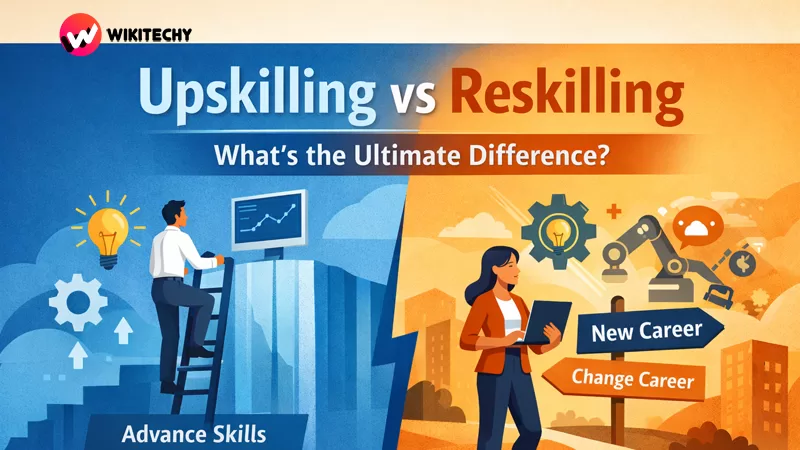
upskilling vs reskilling – The modern workplace is changing faster than ever before. A decade ago, earning a degree and gaining a stable job was often enough to build a lifelong career. Today, that reality has shifted completely. Technology evolves continuously, industries transform rapidly, and new job roles emerge every year while others slowly disappear.
Because of this transformation, professionals everywhere are facing a common challenge — staying relevant. Skills that were once highly valuable can quickly become outdated if they are not continuously improved or adapted.
This is why two concepts have become central to career development conversations: upskilling vs reskilling. Although the terms sound similar, they represent different approaches to professional growth. Understanding the difference helps you make smarter career decisions and prepare for long-term success.
In this guide, we’ll explore what upskilling and reskilling really mean, how they differ, and how to decide which one your career needs right now.
Why Continuous Learning Has Become Essential
The digital economy has fundamentally changed how organizations operate. Automation, artificial intelligence, cloud platforms, and data-driven decision-making are redefining job expectations across industries. Employers are no longer hiring only for existing skills; they are hiring for adaptability and learning ability.
As businesses adopt new technologies, employees must evolve alongside them. Professionals who continuously learn remain competitive, while those who rely only on past knowledge often struggle to keep pace with industry demands.
Career growth today is less about choosing the perfect job once and more about continuously upgrading yourself throughout your professional journey. Upskilling and reskilling are the two main ways individuals achieve this adaptability.
What Is Upskilling?

Upskilling refers to improving your existing skill set so you can perform better within your current role or industry. Instead of changing careers, you expand your expertise and learn advanced tools or techniques related to what you already do.
Imagine a graphic designer learning motion design, or a software developer mastering cloud deployment. Their profession remains the same, but their capabilities grow stronger and more relevant.
Upskilling allows professionals to stay aligned with industry changes without leaving their career path. It often leads to promotions, higher salaries, and increased responsibility because employers value individuals who continuously improve their expertise.
Common examples of upskilling include:
- Learning new software or technologies used in your field
- Developing advanced analytical or leadership skills
- Gaining certifications related to your profession
- Adapting to new digital tools or workflows
The primary goal of upskilling is growth within familiarity. You build upon what you already know rather than starting from zero.
What Is Reskilling?
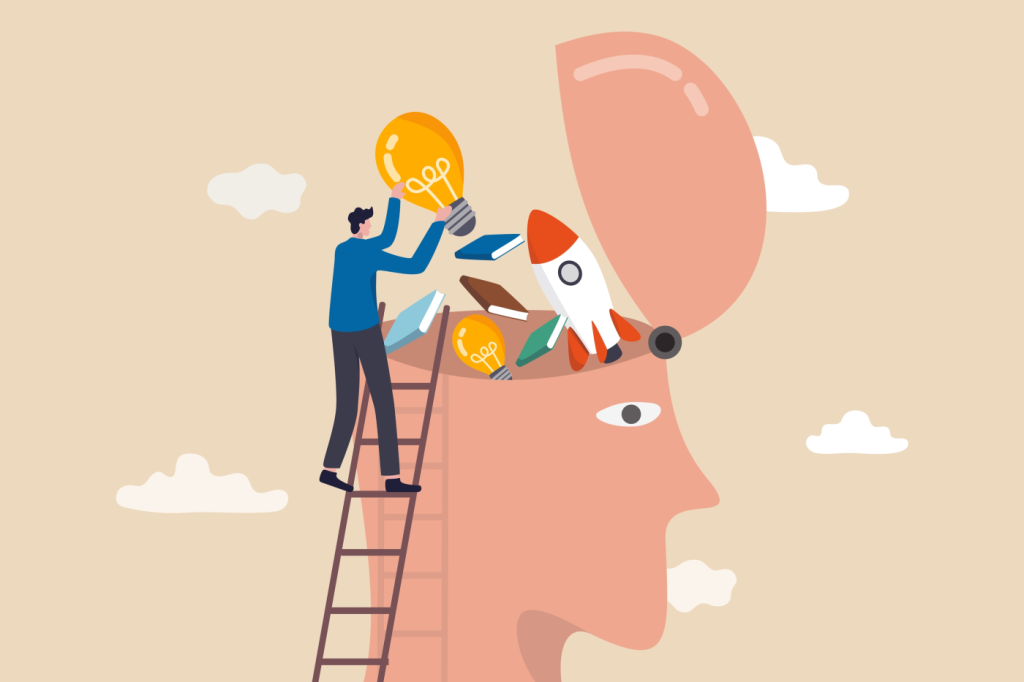
Reskilling involves learning an entirely new set of skills to move into a different job role or industry. Instead of improving your current career, you prepare yourself for a new professional direction.
This often happens when industries evolve or when individuals realize their interests or opportunities lie elsewhere. For example, a sales executive transitioning into digital marketing or a mechanical engineer becoming a data analyst represents reskilling.
Reskilling requires a deeper learning commitment because it involves acquiring foundational knowledge in a new domain. While the process may feel challenging initially, it enables professionals to adapt to changing job markets and explore new opportunities.
Reskilling typically includes:
- Learning a completely new technical or professional skill
- Switching industries or career paths
- Building a new portfolio or practical experience
- Starting at an entry or intermediate level in a new field
Unlike upskilling, which enhances an existing identity, reskilling helps create a new professional identity.
Upskilling vs Reskilling: The Real Difference
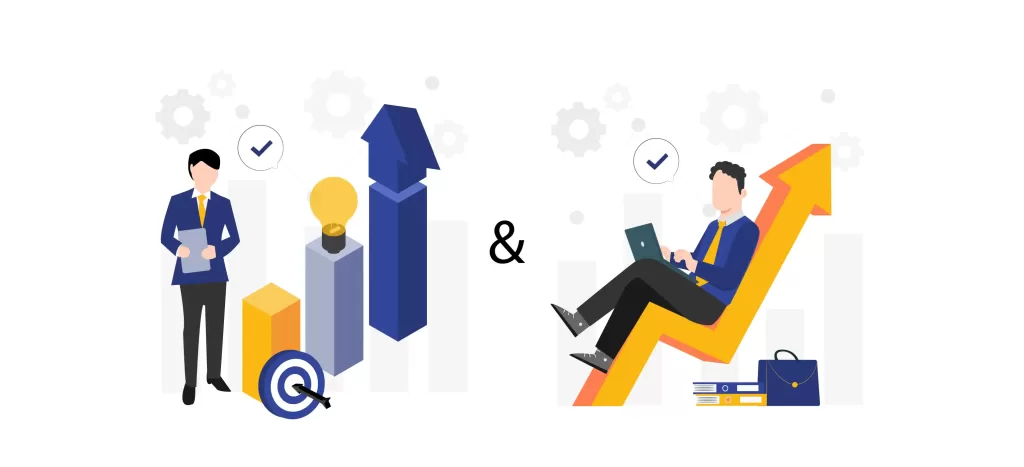
The difference between these two approaches lies mainly in career direction.
Upskilling strengthens your current path. You grow deeper within the same industry, becoming more specialized and valuable over time. Reskilling, however, changes your trajectory by preparing you for a different role altogether.
Think of it this way: upskilling helps you climb higher on the same ladder, while reskilling helps you move to a completely different ladder.
Both strategies are equally important, but they serve different career situations.
Why Today’s Professionals Often Need Both
In real-world careers, the choice is rarely limited to only one approach. Many professionals upskill to remain competitive in the short term while gradually reskilling for future opportunities.
For instance, a marketing professional may learn AI-powered analytics tools to improve performance today. Over time, that same person might transition into product management or data science by learning new competencies.
This blended learning strategy is becoming increasingly common because skill lifecycles are shortening. The ability to learn continuously has become more valuable than mastering a single skill permanently.
When Upskilling Makes More Sense
Upskilling is ideal when you enjoy your current field and see long-term opportunities within it. It allows you to evolve without abandoning your existing experience.
You should consider upskilling if:
- Your industry is growing but becoming more technology-driven
- You want promotions or leadership roles
- New tools are emerging in your profession
- You want to increase earning potential without changing careers
Upskilling provides stability while still enabling progress, making it a lower-risk path for career advancement.

When Reskilling Is the Better Choice
Reskilling becomes necessary when your current role no longer offers growth or when industry changes reduce job security. It is also suitable for individuals seeking meaningful career change.
Reskilling may be the right decision if:
- Your job role is becoming automated
- Career growth feels limited
- You want to explore a completely new domain
- Market demand for your current skills is declining
Although reskilling requires effort and patience, it can open doors to faster-growing and more future-proof industries.
Benefits of Upskilling
Upskilling supports steady professional development and strengthens long-term career stability. Professionals who regularly upgrade their skills often experience increased confidence and recognition at work.
Key advantages include:
- Improved job performance and productivity
- Greater promotion opportunities
- Higher salary potential
- Stronger professional reputation
Upskilling ensures that your experience remains relevant as industries evolve.
Benefits of Reskilling
Reskilling offers transformation rather than gradual improvement. It allows individuals to redefine their career direction and access new opportunities.
Major benefits include:
- Entry into high-demand industries
- Increased career flexibility
- Better long-term employability
- Opportunities for personal reinvention
For many professionals, reskilling becomes a turning point that leads to renewed motivation and career satisfaction.
Challenges You May Face
Both upskilling and reskilling require commitment. Learning alongside work responsibilities can feel overwhelming, and progress may sometimes seem slow.
Common challenges include limited time, fear of starting over, financial investment in learning programs, and uncertainty about outcomes. However, consistent learning habits and practical project experience often reduce these difficulties over time.
The key is progress, not perfection.

How to Decide Which One You Need
Choosing between upskilling and reskilling becomes easier when you evaluate your career honestly. Ask yourself whether you want improvement or transformation.
If you still feel motivated by your current profession, upskilling is likely the right move. If you feel disconnected from your work or see limited future opportunities, reskilling may offer a better path forward.
Your decision should align with both market trends and personal satisfaction.
Practical Steps to Start Your Learning Journey
Instead of waiting for the perfect moment, begin with small, consistent actions.
You can start by:
- Identifying skills currently in demand
- Taking structured online courses
- Building real-world projects
- Networking with professionals in your field
- Tracking your learning progress regularly
Small improvements made consistently often lead to significant career changes over time.
The Future Belongs to Lifelong Learners

The biggest shift in modern careers is not technology itself — it is the expectation that learning never stops. Professionals who treat learning as an ongoing process remain adaptable regardless of industry changes.
Upskilling and reskilling are not competing ideas. They are complementary strategies that help individuals grow, adapt, and reinvent themselves when necessary.
The most successful professionals are not those who avoid change but those who learn how to evolve with it.
Conclusion
Upskilling vs reskilling represent two powerful approaches to career growth in a rapidly changing world.
Upskilling helps you deepen expertise and advance within your current profession, while reskilling enables you to transition into entirely new opportunities. Knowing when to apply each strategy is the key to long-term professional success.
In today’s job market, the ultimate competitive advantage is simple: continuous learning combined with smart career decisions.
Your career does not depend on what you learned once — it depends on what you choose to learn next.
Kaashiv Infotech Offers, Full Stack Python Course, Full Stack Java Course, & More, Visit Their Website course.kaashivinfotech.com.
Related Reads: