Website Development: The Complete Guide to Building Modern Websites

If you’re searching for web development, you likely want an effective approach to building a strong, professional online presence. With this guide, you will learn about all aspects of web development, whether you are a business owner, budding developer, or just simply interested in the concept. This guide will go through the planning, design, launch, and maintenance of your website.
What is Website Development?
Website development (often referred to as web development) consists of building and maintaining websites. Website development isn’t just coding; it involves a range of processes, including the design of the user interface, to the configuration of the back-end systems used to support dynamic, data-driven sites.
In simple terms, website development refers to:
- Front-end development (what users see: design, layout, and responsiveness)
- Back-end development (what powers the site: servers, databases, and logic)
- Full stack development (a combination of both)
You can think of a development website like a house; the design of the website would be your architecture; the front-end is your interior decorating, and the back-end would be the plumbing and electrical that make it work.
Why Website Development Matters in 2025
In a digital-first world, your website has become the hub of your brand. Research suggests that 75% of users determine a company’s credibility based on its website design and functionality.
- A strong website development strategy can provide:
- Increased online visibility
- Increased conversion and sales
- Trust from customers
- 24/7 availability
Regardless, as a start-up or enterprise company, development web technologies will drive your digital growth.
Key Steps for Developing the Website
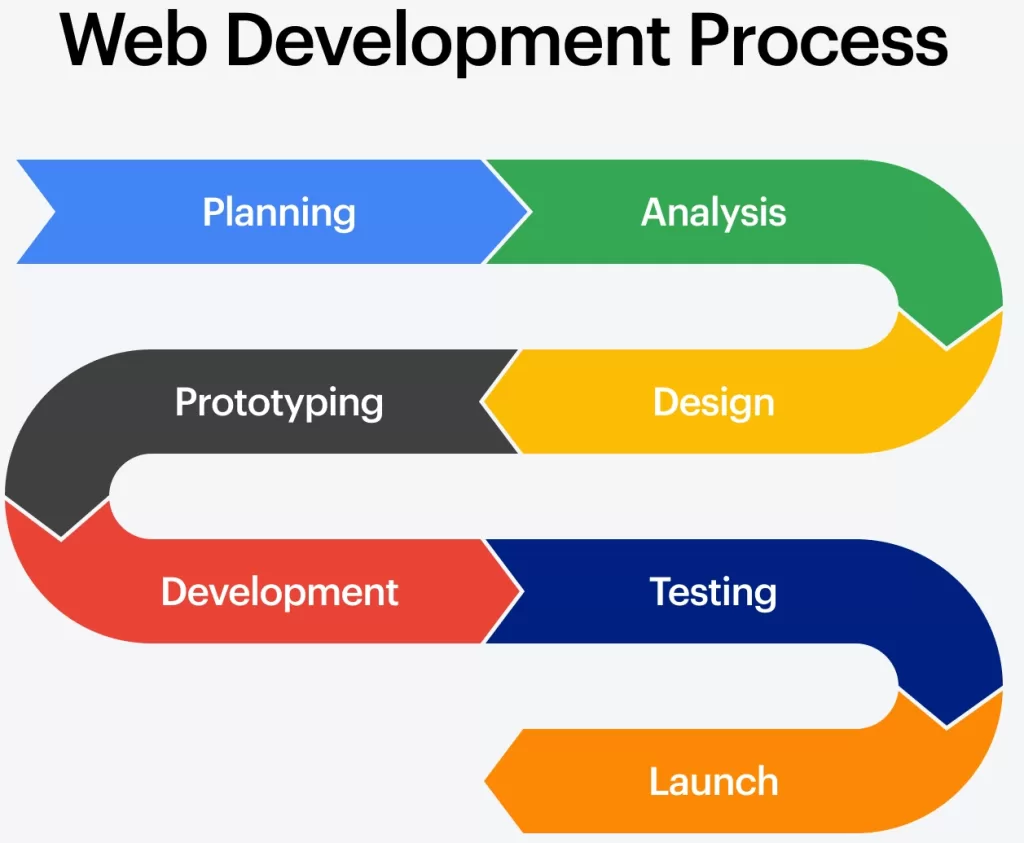
1. Planning & Research
Prior to starting the coding phase, you’re going to want to decide:
- Target audience
- Purpose of the site
- Required features (blog, e-commerce, booking system, etc)
Your time now won’t be wasted during the next few phases!
2. Website Design
Website design is the fusion of creativity and usability. A quality development project will include:
- Responsive layouts (for mobile, start with mobile)
- User-friendly navigation
- Visual branding (colours, fonts, imagery)
Pro Tip: Use wireframing tools such as Figma or Adobe XD to create a project outline before the coding work starts.
3. Front-End Development
Recognize front-end is primarily the technologies:
- HTML5, CSS3, JavaScript
- Frameworks: React, Angular, Vue.js
Example: What the site visitor sees, e.g. Real Estate Company’s search filter and image gallery are built with front-end technologies.
4. Back-End Development
The back-end is the intelligence of the website – it makes it run and manages all the data that your website is managing. Common languages and frameworks include:
- Node.js, Python (Django, Flask), PHP (Laravel), Java (Spring Boot)
- Databases: MySQL, MongoDB, PostgreSQL
If the front end is a car’s dashboard, then the back end is the engine under the hood.
5. Full Stack Web Development
A full stack developer is typically responsible for both sides, including the UI, setting up and managing servers, etc. This approach is usually cost-effective for Start-ups looking for rapid web development.
6. CMS Development
Not every project will demand custom programming. Content Management Systems (CMS) such as WordPress, Shopify, Drupal, and Wix do exist for businesses that are looking to build a website quickly and affordably.
7. Testing & Deployment
No matter what the project is, testing ensures that your development website works without problems, is responsive, and secure on the web.
- Functional Testing
- Performance Testing
- Security Testing
After testing, the final deployment will take place with the help of hosting companies such as: AWS, Bluehost, and DigitalOcean.
8. Website Maintenance
Development does not stop at Launch. Maintaining a website requires all post-launch maintenance, such as:
- Updates,
- Bug fixes,
- Performance tuning,
- Security monitoring.
Types of Projects
- Static Websites – Simple, fast, and budget-friendly.
- Dynamic Websites – Interactive and database-driven.
- E-commerce Websites – Online stores with cart and payment integration.
- Web Applications – SaaS tools like Google Docs or Trello.
- Custom Website Development – Tailored for unique business needs.
Latest Trends 2025
- AI-powered websites (chatbots, personalization)
- Voice search optimization
- Progressive Web Apps (PWAs)
- Motion UI and micro-interactions
- No-code/low-code development web platforms
Staying updated with these trends ensures your web development strategy is future-proof.
How to Choose the Right Website Development Partner
When selecting a agency, there are some non-negotiable things to consider:
- Proven portfolio
- Transparent pricing
- Knowledge base on the newest technologies
- Post launch support
Avoid any company that prioritizes design over performance and SEO.
FAQ’s
Q1) What would it typically cost to build a site?
The cost depends on the complexities involved. A more simple portfolio site or business site would typically be cheaper than a custom ecommerce site or larger platform.
Q2) How long to build a site from start to finished?
There are many factors that will influence the timeline. A small or simple project may only take a few weeks, while a large, more complex platform that has many features may take several months to create.
Q3) Do I need to know coding to create my own site?
Not always. There are many no-code tools and content management systems that allow non-developers to build and launch their own sites in a matter of hours.
Q4) What is a difference between a static site and a dynamic site?
A static site presents only fixed content, whereas a dynamic site pulls content from databases, enables user interactivity and presents real-time information.
Q5) How often should I update my site?
It is important that you update your site regularly to patch bugs, keep young and nice security, and present new content to repeat visitors.
Final Thoughts
In today’s expansive competitor online space, website development is not an option; it has become a requirement. A well-organized development website draws in visitors and converts them into devoted customers.
If you are a business owner needing to hire a web development team, or you are an aspiring developer learning the craft, investing in high-quality website development is the best digital decision you can make.
👉 Are you ready to jump-start your website development? Check out our Web Development Course to create a future-proof online presence today!
Related Links