
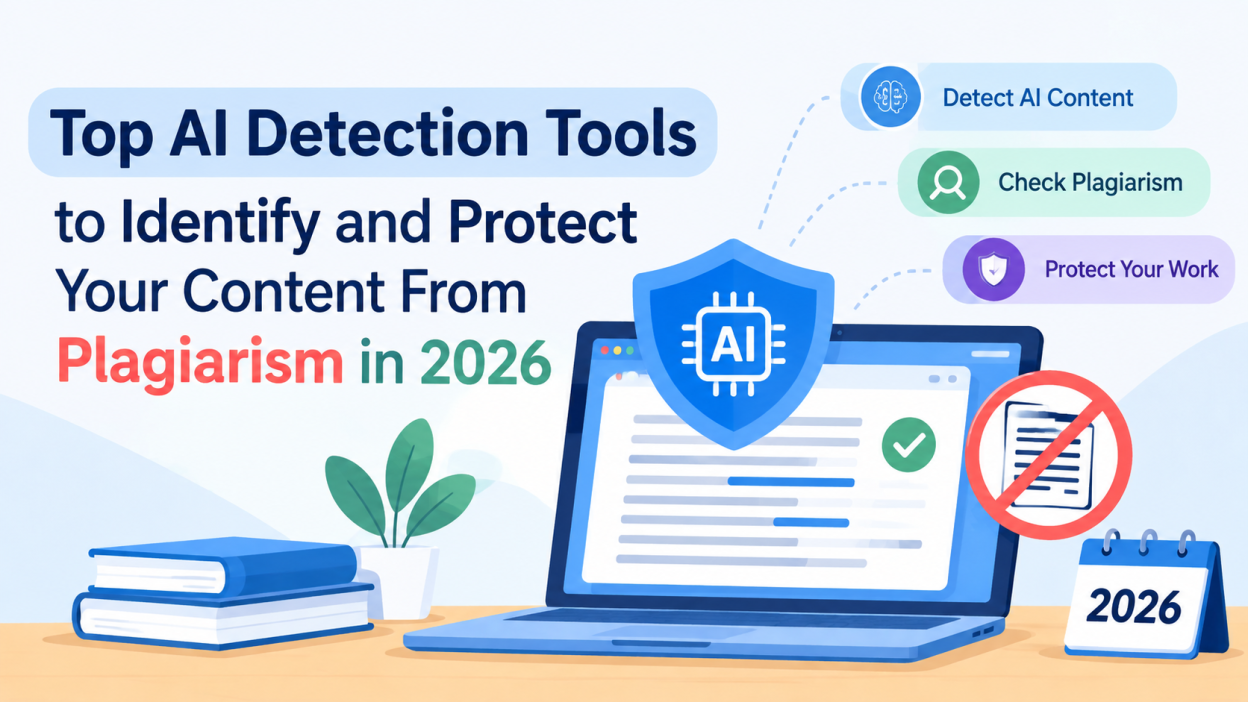
Artificial Intelligence has completely transformed the way content is created. From blog writing and academic assignments to marketing copies and emails, AI tools are now everywhere. While this improves productivity, it also raises a serious concern — how do we identify whether content is written by humans or generated by AI?
This is where AI detection tools come into play. These tools help educators, organizations, and content creators verify originality, maintain credibility, and prevent unethical usage of AI-generated text.
In this article, we’ll explore the top AI detection tools, how they work, their features, and who should use them — explained in a simple and practical way.
What Are AI Detection Tools?
AI detection tools are software applications that analyze written content to determine whether it is:
- Human-written
- AI-generated
- Partially AI-assisted
They use advanced algorithms trained on large datasets of AI and human writing to identify patterns, predictability, and stylistic consistency.
Common Uses of AI Detection Tools
- Academic integrity checks
- Content authenticity verification
- SEO content audits
- Hiring and recruitment screening
- Brand content quality control
Why AI Detection Tools Are Important

AI-generated content is not inherently bad. However, misuse or overuse without disclosure can cause serious issues.
Key Reasons to Use AI Detection Tools
- ✔ Prevent plagiarism and cheating
- ✔ Maintain trust in educational systems
- ✔ Protect brand reputation
- ✔ Ensure SEO-safe content
- ✔ Promote ethical AI usage
With search engines and institutions becoming stricter, AI detection tools have become a necessity rather than an option.
How Do AI Detection Tools Work?
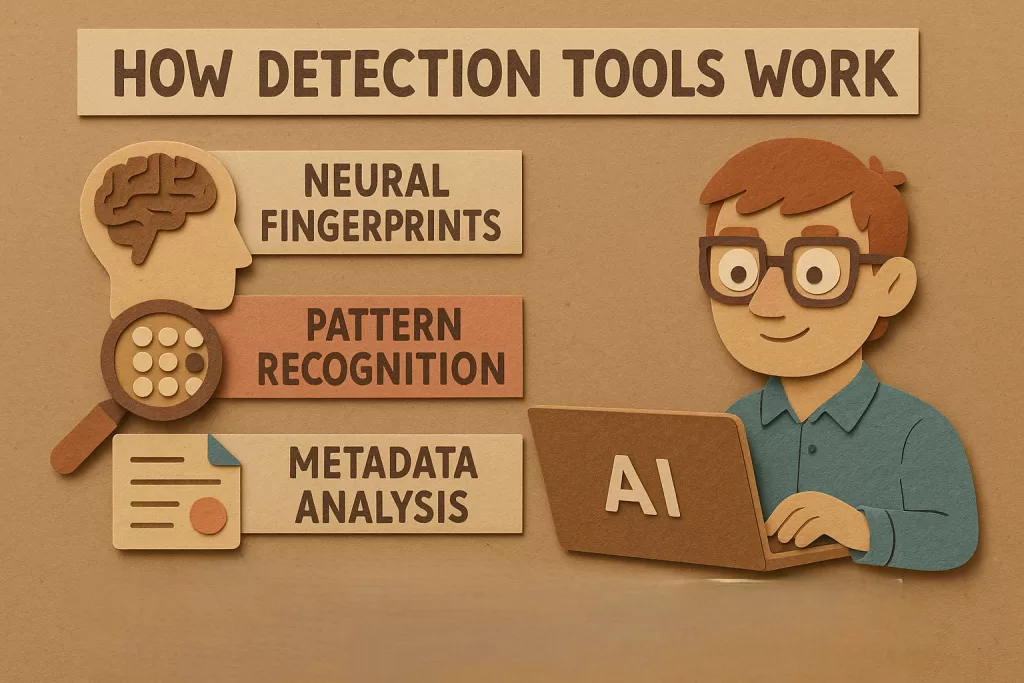
AI detection tools typically analyze text using:
- Perplexity – Measures how predictable the text is
- Burstiness – Checks sentence variation and writing rhythm
- Language probability models
- Stylometric analysis – Writing style patterns
AI-generated content usually appears more structured, predictable, and uniform than natural human writing.
Top AI Detection Tools You Should Know
1. Originality.ai
Ideal for: Bloggers, publishers, SEO agencies
Key Features:
- Advanced AI content detection
- Integrated plagiarism checker
- Team collaboration features
- Chrome extension support
Why It Stands Out:
Designed specifically for content-heavy websites and digital publishers.
2. GPTZero
Ideal for: Teachers, students, beginners
Key Features:
- Perplexity and burstiness scoring
- Sentence-level analysis
- Easy-to-read reports
Why It Stands Out:
Simple interface and quick results make it popular in educational environments.
3. Copyleaks AI Detector
Ideal for: Enterprises and institutions
Key Features:
- AI + plagiarism detection
- Supports multiple languages
- API integration for large platforms
Why It Stands Out:
Strong compliance standards and enterprise-ready features.
4. Turnitin AI Detection
Ideal for: Universities and colleges
Key Features:
- AI writing identification
- Academic plagiarism detection
- Trusted global database
Why It Stands Out:
Widely accepted in the academic world for maintaining integrity.
5. Proofademic AI Detector
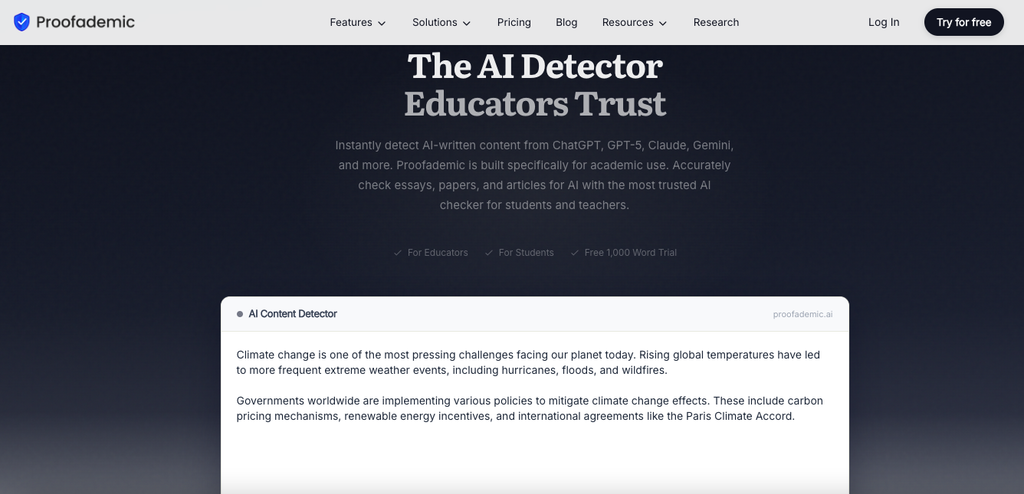
Ideal for: Students, educators, and academic researchers and writers
Key Features:
- Sentence-level AI detection
- Built-in plagiarism checker
- Fast turnaround before submission deadlines
Why It Stands Out:
Purpose-built for academic writing, not general web content, so it catches AI-generated passages other detectors often miss.
6. Writer.com AI Content Detector

Ideal for: Marketing and content teams
Key Features:
- AI detection
- Brand voice consistency tools
- Content quality analysis
Why It Stands Out:
Best suited for professional and corporate writing environments.
7. Content at Scale AI Detector
Ideal for: SEO professionals
Key Features:
- AI probability scoring
- Long-form content analysis
- Free basic detection
Why It Stands Out:
SEO-focused insights make it useful for blog optimization.
Comparison Overview
| Tool | AI Detection | Plagiarism Check | Best Use Case |
|---|---|---|---|
| Originality.ai | High | Yes | Publishers |
| GPTZero | Medium | No | Education |
| Copyleaks | High | Yes | Enterprises |
| Turnitin | Very High | Yes | Academia |
| Proofademic | High | Yes | Academia |
| Writer.com | Medium | No | Marketing |
| Content at Scale | Medium | No | SEO |
How to Choose the Right AI Detection Tool
Before choosing a tool, consider:
- 📌 Purpose (education, SEO, business)
- 📌 Content length (short vs long)
- 📌 Need for plagiarism checking
- 📌 Budget and scalability
Simple Recommendations
- Students & Teachers: GPTZero, Turnitin
- Bloggers & SEO Writers: Originality.ai, Content at Scale
- Companies & Platforms: Copyleaks, Writer.com
Limitations of AI Detection Tools
Even the best AI detection tools have limitations:
- ❌ False positives can occur
- ❌ Human-edited AI content is harder to detect
- ❌ Creative writing may confuse detectors
👉 These tools should be used as support systems, not absolute judges.
Best Practices for Ethical AI Content Usage
If you use AI tools responsibly:
- Add your own insights
- Rewrite in your own words
- Include personal experience
- Vary sentence structure
- Fact-check all information
This improves content quality and reduces detection issues.
The Future of AI Detection Tools

Looking ahead:
- AI detectors will evolve alongside AI writers
- Real-time detection will become common
- Ethical AI policies will strengthen
- Content transparency will be prioritized
AI detection will soon become a standard content quality measure.
Conclusion
AI detection tools play a crucial role in maintaining originality, trust, and credibility in today’s digital ecosystem. Whether you’re an educator, content creator, or business owner, using the right AI detection tool ensures responsible AI usage and protects your content from plagiarism.
By combining AI technology with human creativity, we can build a more ethical and transparent content future.
Want to Learn More About Python & Artificial Intelligence ???, Kaashiv Infotech Offers Full Stack Python Course, Artificial Intelligence Course, Data Science Course & More Visit Their Website course.kaashivinfotech.com.