
Is Golang Easy to Learn? – Golang, also known as Go, is a popular programming language developed by Google. It is widely used for backend development, cloud computing, networking, DevOps tools, APIs, and scalable applications. Go is known for its simple syntax, fast performance, and built-in support for concurrent programming.
Many beginners who want to start a programming career wonder whether Golang is easy to learn, especially if they have experience with Python, Java, C, or JavaScript. The good news is that Go is designed to be simple, readable, and easy to understand. However, learning programming concepts and building real-world applications still requires practice.
This article explains whether Golang is easy to learn, its important features, the skills beginners need, and how to start learning Go step by step.
What Is Golang?
Golang is an open-source programming language created by Google and introduced in 2009. It was designed to make software development faster, easier, and more efficient, especially for large-scale applications.
Go combines the simplicity of a programming language like Python with performance advantages associated with compiled languages. It is compiled directly into machine code, which helps applications run efficiently.
Go is commonly used for:
- Backend web development
- REST API development
- Cloud applications
- DevOps tools
- Microservices architecture
- Networking applications
- Distributed systems
- Command-line tools
Popular technologies such as Docker and Kubernetes are built primarily using Go, which has increased its popularity among developers.
Is Golang Easy to Learn for Beginners?
Yes, Golang is relatively easy to learn for beginners because it has a clean syntax, a small number of language features, and straightforward programming rules.
Unlike some programming languages that have complicated syntax or multiple ways to perform the same task, Go encourages developers to write simple and readable code.
For example, a basic Go program looks like this:
package main

import "fmt"

func main() {
    fmt.Println("Hello, World!")
}
This program prints “Hello, World!” on the screen. Beginners can quickly understand the structure of the program and start experimenting with simple code.
However, learning advanced concepts such as goroutines, channels, error handling, interfaces, and application architecture may take more time.
Why Is Golang Easy to Learn?
1. Simple Syntax
Go has a straightforward syntax that makes programs easy to read and understand. Beginners do not need to learn complicated language structures before writing their first program.
Variables, functions, loops, conditions, and data structures are easy to understand with regular practice.
For example, a simple variable declaration looks like this:
package main

import "fmt"

func main() {
    name := "John"
    age := 22

    fmt.Println(name)
    fmt.Println(age)
}
Go also uses automatic formatting through its gofmt tool, helping developers maintain consistent code styles.
2. Easy Learning Curve
Go does not contain too many complex features compared with some other programming languages. Beginners can focus on understanding programming fundamentals without getting overwhelmed by unnecessary syntax.
The learning process can begin with basic topics such as variables, data types, operators, conditions, loops, and functions. After learning these topics, students can move towards arrays, slices, maps, structures, interfaces, and packages.
3. Built-in Concurrency Support
One of the most powerful features of Go is concurrency. It allows programs to perform multiple tasks efficiently.
Go uses goroutines, which are lightweight functions that can run concurrently.
Example:
package main

import (
    "fmt"
    "time"
)

func sayHello() {
    fmt.Println("Hello from Goroutine")
}

func main() {
    go sayHello()

    time.Sleep(time.Second)
    fmt.Println("Main Function")
}
The go keyword starts a goroutine. Beginners may initially find concurrency difficult, but Go makes it easier to work with compared with many traditional approaches.
4. Strong Documentation and Community
Go has official documentation, tutorials, learning resources, and an active developer community. Beginners can find explanations, sample programs, and project tutorials for almost every important concept.
Practicing with small projects and reading other developers’ code can help students improve their understanding.
What Should Beginners Learn in Golang?
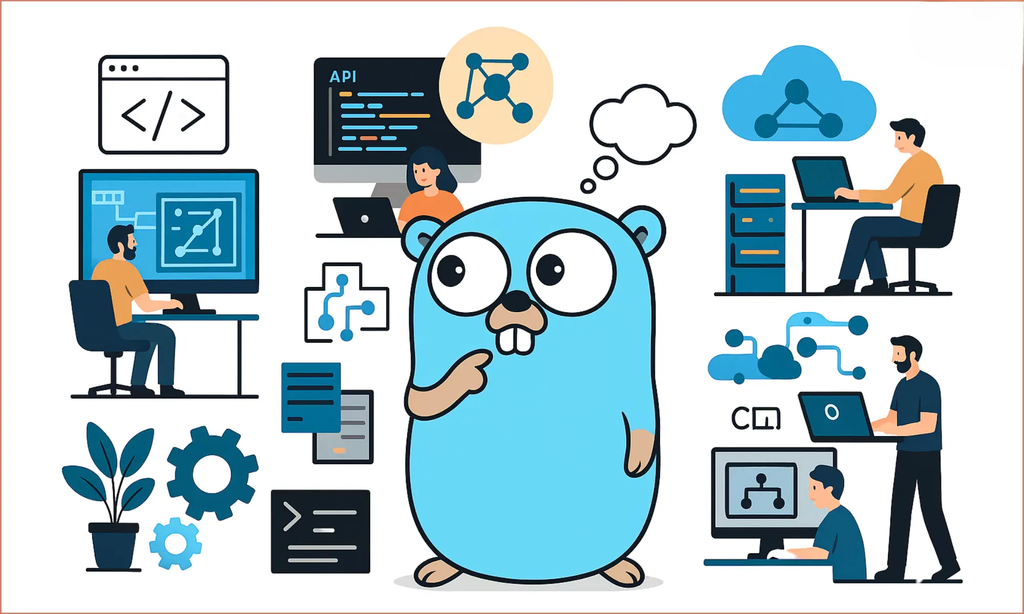
To learn Go effectively, beginners should follow a structured learning path.
Go fundamentals:
- Installing Go
- Writing your first program
- Variables and constants
- Data types
- Operators
- Input and output
Programming concepts:
- Conditional statements
- Loops
- Functions
- Arrays and slices
- Maps
- Pointers
- Structures
Intermediate concepts:
- Interfaces
- Packages and modules
- Error handling
- File handling
- Methods
- JSON handling
Advanced concepts:
- Goroutines
- Channels
- Mutexes
- Concurrency
- Networking
- REST APIs
- Database connectivity
Following these topics in order helps beginners build a strong foundation before moving into advanced application development.
Is Golang Easier Than Python, Java, and C++?
The difficulty of learning a programming language depends on your previous experience and learning goals. Go is considered beginner-friendly, but each language has its own advantages.
| Programming Language | Learning Difficulty | Main Advantage |
|---|---|---|
| Python | Easy | Simple syntax and beginner-friendly |
| Go | Easy to Moderate | Simple syntax and high performance |
| Java | Moderate | Object-oriented programming and enterprise development |
| C++ | Difficult | High performance and memory control |
| JavaScript | Easy to Moderate | Web development and interactive applications |
Python is generally easier for absolute beginners because it has very simple syntax. Go is also easy to understand, but it introduces concepts such as explicit error handling, pointers, concurrency, and static typing.
For developers who already know Python, Java, C, or C++, learning Go can be much easier because they already understand programming fundamentals.
How Long Does It Take to Learn Golang?
The time required to learn Go depends on your practice schedule, programming experience, and the complexity of projects you want to build.
- 1–2 weeks: Learn syntax, variables, data types, conditions, loops, and functions.
- 3–4 weeks: Understand slices, maps, structures, pointers, methods, and packages.
- 1–2 months: Learn interfaces, error handling, file handling, JSON, and database connectivity.
- 2–3 months: Build APIs, backend applications, and projects involving concurrency.
Students who practice for one or two hours daily can understand the fundamentals within a few weeks. Becoming comfortable with real-world application development requires consistent practice.
Best Golang Projects for Beginners
Building projects is one of the best ways to improve programming skills. Beginners can start with simple applications and gradually develop more advanced projects.
1. Calculator Application
Create a calculator that performs addition, subtraction, multiplication, and division. This project helps beginners understand functions, operators, user input, and conditions.
2. Student Management System
Develop an application that stores student details, marks, and grades. Use structures, slices, functions, and basic file handling to manage student records.
3. To-Do List Application
Create a task management application that allows users to add, update, delete, and view tasks. This project introduces CRUD operations and data management.
4. Weather Application
Build a weather application that retrieves information from a weather API. It helps developers understand HTTP requests, JSON parsing, API integration, and error handling.
5. REST API Project
Develop a backend API for an online shopping application, student portal, or employee management system. Use Go with a database such as MySQL or PostgreSQL to store and retrieve information.
These projects help beginners move from theoretical knowledge to practical programming experience.
Career Opportunities After Learning Golang
Golang offers several career opportunities in software development, particularly in backend engineering, cloud computing, and distributed systems.
Developers with Go skills can explore roles such as:
- Golang Developer
- Backend Developer
- Software Engineer
- Cloud Engineer
- DevOps Engineer
- Microservices Developer
- Platform Engineer
Companies working with cloud infrastructure, APIs, networking, and large-scale distributed applications often use Go in their development environments.
Learning Go along with SQL, Git, REST APIs, Docker, cloud platforms, and basic networking can help students prepare for software development opportunities.
Tips to Learn Golang Faster
Beginners can improve their learning experience by following these practical tips:
- Learn programming fundamentals before jumping into advanced topics.
- Write code every day instead of only watching tutorials.
- Practice small programs after learning each concept.
- Understand error handling instead of ignoring errors.
- Build projects using APIs and databases.
- Read official documentation and explore existing Go programs.
- Practice debugging and solving coding problems.
Avoid trying to learn every Go feature at once. Focus on understanding the basics and gradually increase the complexity of your projects.
Conclusion
Golang is one of the beginner-friendly programming languages for students interested in backend development, cloud computing, networking, and software engineering. Its simple syntax, fast execution, built-in concurrency support, and powerful standard library make it an excellent choice for beginners and experienced developers.
Although learning basic Go is relatively easy, mastering advanced concepts such as goroutines, channels, interfaces, API development, and microservices requires regular practice.
If you already know another programming language, you can learn Go even faster. If you are a beginner, start with fundamentals, practice coding daily, and build small projects before moving to advanced applications.
Overall, Golang is easy to learn, but becoming a skilled Go developer requires practical experience and consistent learning.
Want to Learn More About Python & Artificial Intelligence ???, Kaashiv Infotech Offers Full Stack Python Course, Artificial Intelligence Course, Data Science Course & More Visit Their Website course.kaashivinfotech.com.