

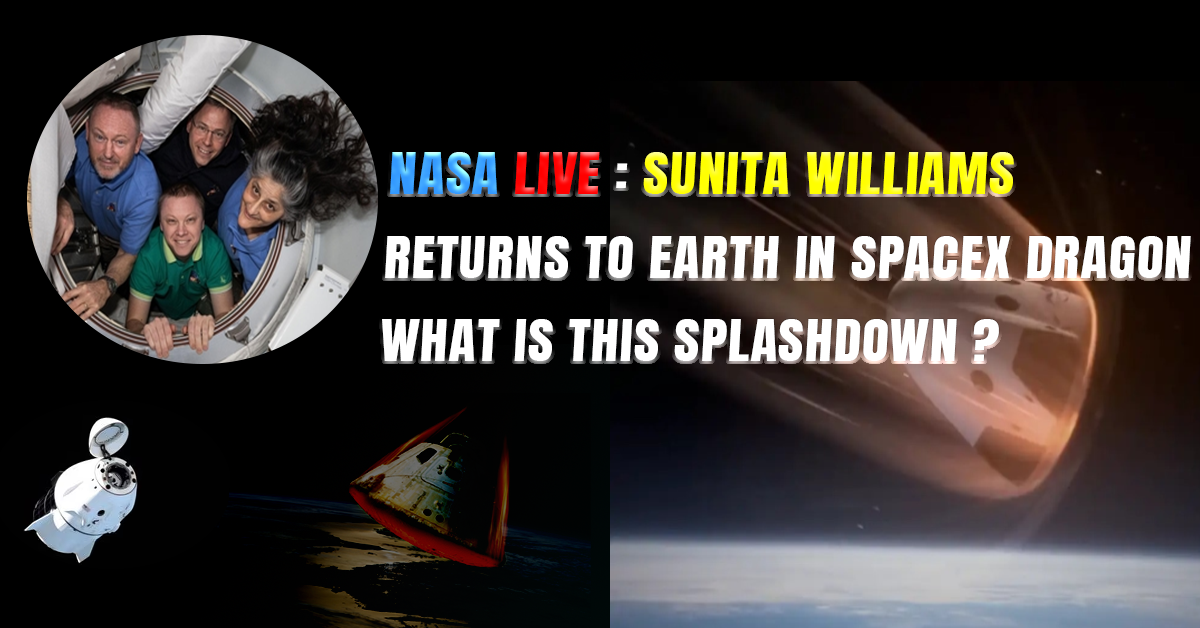
I like many was watching the NASA Live stream of SpaceX Crew-9 Quartet Enters Dragon and Closing the Hatch. It got me wondering what it really takes to return from space, buckle up—because this is not your typical plane ride home. Sunita Williams and her crew are plummeting toward Earth at blistering speeds, riding a controlled fireball through the atmosphere before slamming into the ocean. It’s intense. It’s risky. And it’s happening live on NASA’s stream. 🌍🔥
What’s Happening Right Now?
At 1:05 a.m. EDT (10:35 a.m. IST) on Tuesday, NASA astronauts Nick Hague, Sunita Williams, and Butch Wilmore, along with Roscosmos cosmonaut Aleksandr Gorbunov, undocked from the International Space Station (ISS). Their ride? The SpaceX Dragon spacecraft—a high-tech capsule designed to bring them back safely to Earth. Their journey is a controlled free fall, battling heat, gravity, and some serious G-forces.
- Splashdown Time: 5:57 p.m. EDT(3:27 a.m. IST, March 19) (2157 UTC) off the coast of Florida 🌊
- Mission Duration: ~6 hours of descent ⏳
- Re-entry Speed: ~28,000 km/h (nearly 17,500 mph!) 🚀

At the conclusion of undocking coverage, NASA live was switched to real-time audio-only until live Crew-9 return coverage resumes at 4:45 p.m. EDT Tuesday. that is about 2:15 a.m. IST (March 19, 2025).
The Crazy Descent: Step-by-Step
🚀 Dragon Departure from the ISS
- 1:05 a.m. EDT: With a series of precise commands, Dragon disengages from the ISS docking port, firing its small thrusters to gently drift away from the station. No room for error here—one misfire, and the capsule could end up on the wrong trajectory. This part is already available for those who missed the NASA live.
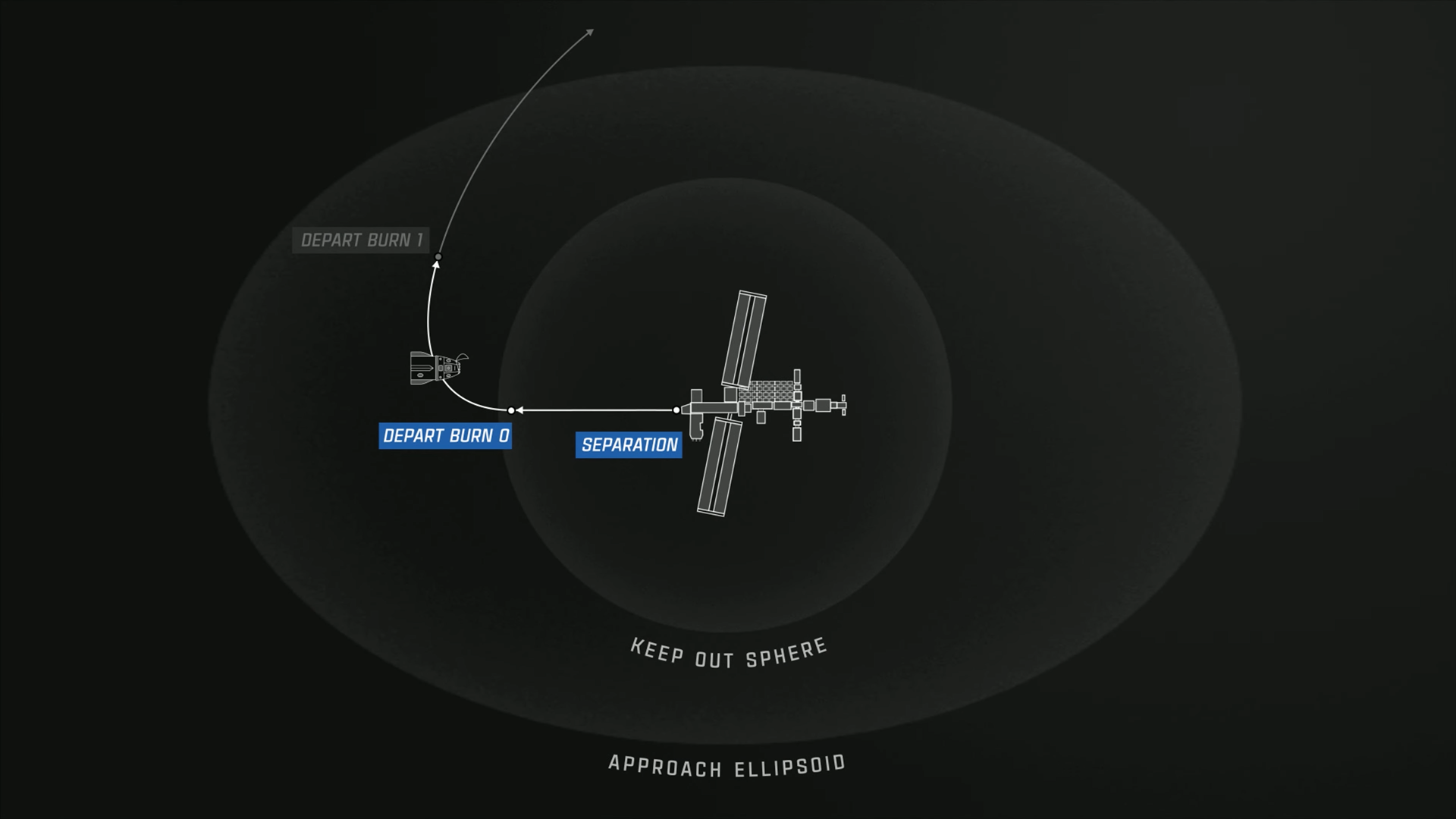
- The spacecraft then initiates two departure burns, short bursts from its Draco thrusters that push it into a safe orbit away from the ISS. At this point, it’s officially on its way home.
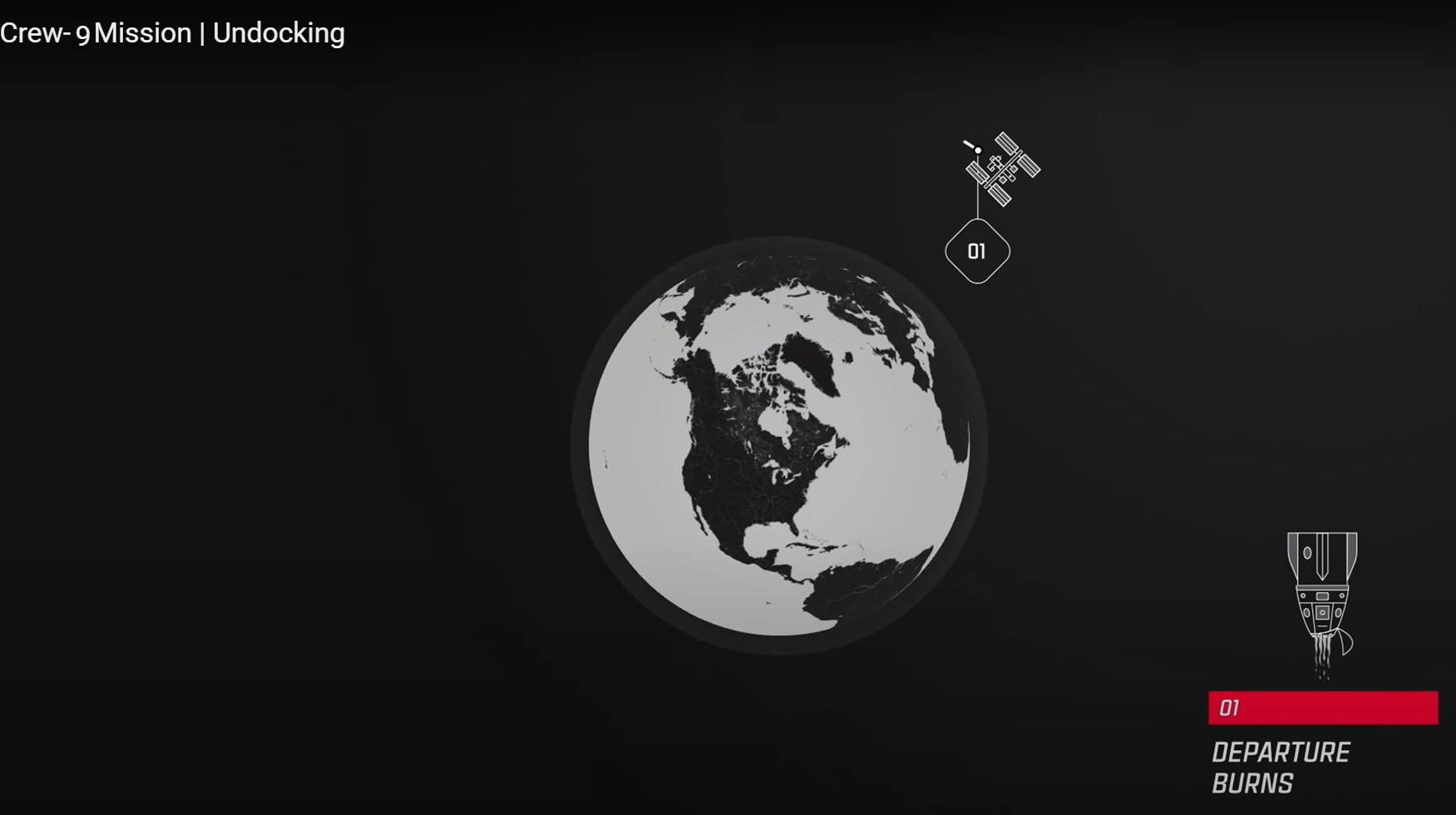
- The spacecraft uses The Draco thrusters—16 small thrusters distributed around Dragon for precise maneuvering to gently push itself away from the station.
- At this point, it is still in a free-drift mode, preventing any unintentional thrusting that could damage the ISS.
Exiting the Keep-Out Sphere (KOS)
- The Keep-Out Sphere (KOS) is an imaginary 200-meter safety bubble surrounding the ISS.
- Dragon performs Depart Burn 0, a brief downward thrust to start moving away at a controlled rate.
- Shortly after, Depart Burn 1 is executed, increasing the spacecraft’s separation speed and pushing it toward a lower orbit.
- At this stage, the spacecraft is still close enough to the ISS that, in an emergency, it could safely re-dock.

Exiting the Keep-Out Sphere (KOS)
- The Keep-Out Sphere (KOS) is an imaginary 200-meter safety bubble surrounding the ISS.
- Dragon performs Depart Burn 0, a brief downward thrust to start moving away at a controlled rate.
- Shortly after, Depart Burn 1 is executed, increasing the spacecraft’s separation speed and pushing it toward a lower orbit.
- At this stage, the spacecraft is still close enough to the ISS that, in an emergency, it could safely re-dock.

🔥 Trunk Detach
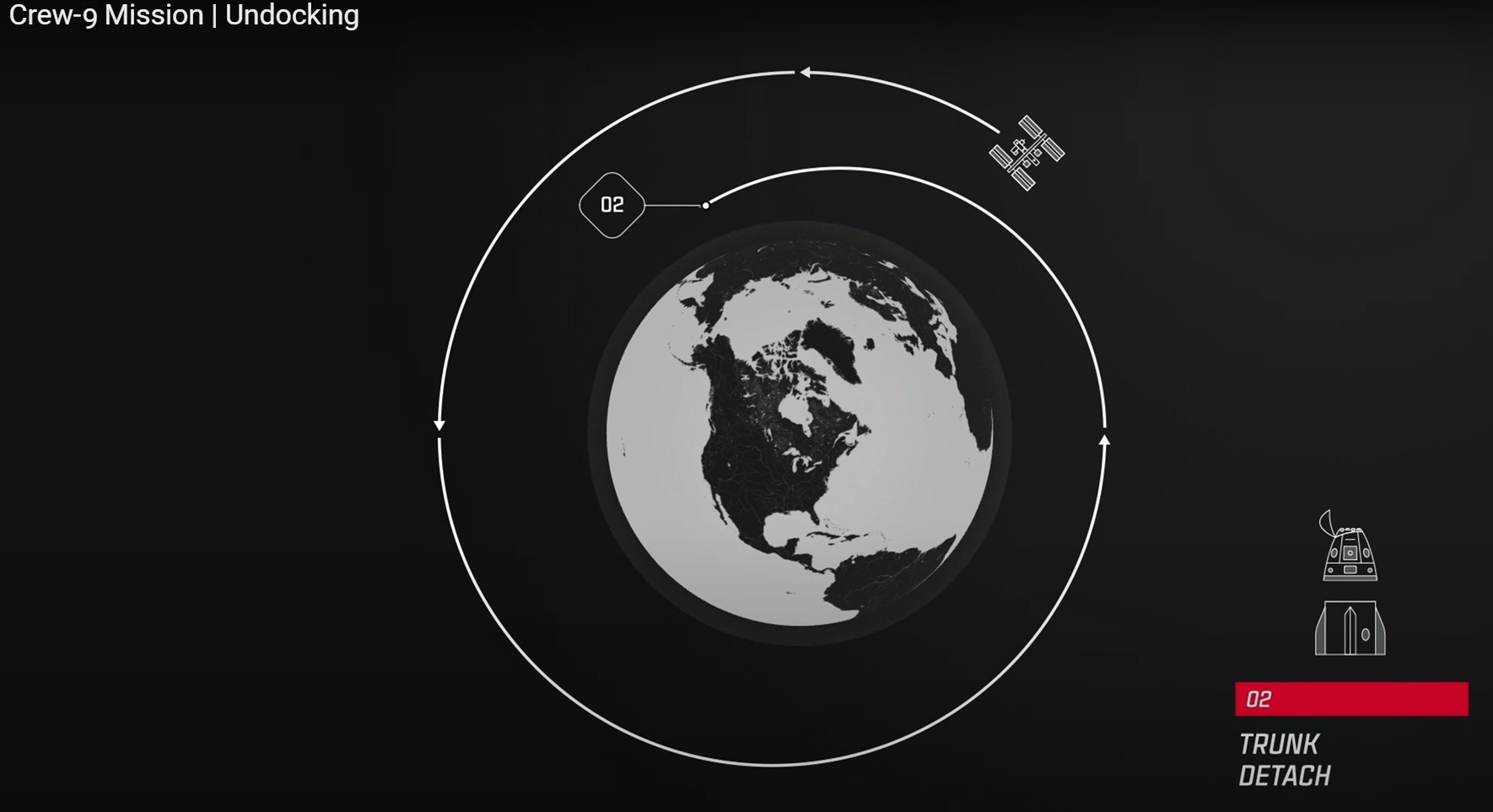
- As the spacecraft approaches the final stages of re-entry prep, it jettisons its trunk—the cylindrical lower section that housed solar panels and radiators.
- This part doesn’t come back; it’s left behind to burn up in Earth’s atmosphere. The capsule itself is now completely self-contained, with everything needed for a safe landing.
🌎 Deorbit Burn
- This is the point of no return. Dragon fires up its powerful Draco thrusters in a long burn, changing its orbit so that Earth’s gravity can take over.
- The goal? Slow down just enough so that instead of circling the planet, it begins a rapid descent toward Earth.
- This burn is meticulously calculated—too much force, and they could overshoot the landing zone; too little, and they’d stay stuck in space.

☄️ Re-Entry Begins: The Ride Through Fire
- The spacecraft slams into the atmosphere at hypersonic speeds, generating plasma-hot temperatures exceeding 1,600°C (2,900°F). The heat shield works overtime to keep the crew safe.
- It is so hot NASA live streams only audio for this parts.
- Blackout zone: For a few nerve-wracking minutes, plasma surrounds the capsule, cutting off all communications with NASA. The crew is flying blind.
- Inside? G-forces increase dramatically—like an elephant sitting on your chest. Breathing gets tough. Blood struggles to circulate. This is the most physically demanding part of the return.

🪂 Parachutes Deploy: The Final Slowdown
- 10 km above the ocean, small drogue chutes deploy, stabilizing the tumbling capsule.
- Then, huge main parachutes unfurl, yanking the spacecraft back with a massive jolt. Descent slows dramatically from hundreds of miles per hour to just a gentle fall.

🌊 Splashdown!
At Tuesday 5:57 p.m. EDT(3:27 a.m. IST, March 19), Dragon hits the water off Florida’s coast. The capsule bobs like a cork, waiting for recovery crews to arrive. The mission is almost complete, but the crew still has to be pulled from the capsule.

Rescue and Recovery
- Recovery ships are already waiting nearby. Trained divers secure flotation devices around the capsule to keep it stable.
- A crane lifts Dragon onto the ship’s deck, where NASA medics check the astronauts’ vitals.
- After months in space, walking is nearly impossible—their muscles have weakened, their balance is off, and their blood pressure struggles to readjust to Earth’s gravity.
- It takes weeks to months of rehab before astronauts regain full strength.

How is Sunita Williams Doing?
After months in microgravity, Sunita Williams will be feeling the effects of her space adventure. Immediate symptoms?
- Dizziness 🌍 (Her inner ear has to re-learn gravity)
- Muscle Weakness 💪 (Even sitting up can feel exhausting)
- Bone Density Loss 🦴 (Astronauts lose ~1-2% of bone mass per month in space)
- Blood Pressure Issues ❤️ (Her body has to re-learn how to circulate blood in gravity)
NASA’s medical team will monitor her for weeks, helping her regain strength through physical therapy. But knowing Sunita? She’ll bounce back fast. 💪 with NASA live streaming we will probably see her as she lands.
Final Thoughts: The Beauty of a Controlled Fall
This is splashdown—a controlled plunge back to Earth, surviving extreme temperatures, violent deceleration, and the final jolt into the ocean. It’s a mix of cutting-edge engineering and raw human resilience. And Sunita Williams? She’s just completed another ride through the fire, proving once again that space travel is one of the most extreme challenges humans can face.
NASA live streaming the entire event is a great boon !🚀 Don’t miss the chance to witness history in real-time.
Key Highlights from This Mission:
✅ NASA Live broadcast of Sunita Williams’ return
✅ Dragon spacecraft re-entry at hypersonic speeds
✅ Parachute-assisted splashdown in the Atlantic Ocean
✅ Astronaut health recovery process after months in microgravity
✅ SpaceX’s role in returning astronauts home safely
This isn’t just another space mission. It’s a thrilling, high-stakes journey back to Earth—one that pushes both technology and the human body to its limits. And Sunita Williams? She’s coming home in the most spectacular way possible. 🌍🚀
🔹 Primary Focus Keyword: NASA Live
🔹 Secondary Focus Keywords: Sunita Williams reentry, NASA astronaut recovery, Space capsule parachute landing, Dragon spacecraft splashdown, SpaceX crew return mission