7 Things You Need to Know About a Horizontal Line: Slope, Equation, and Real-Life Examples
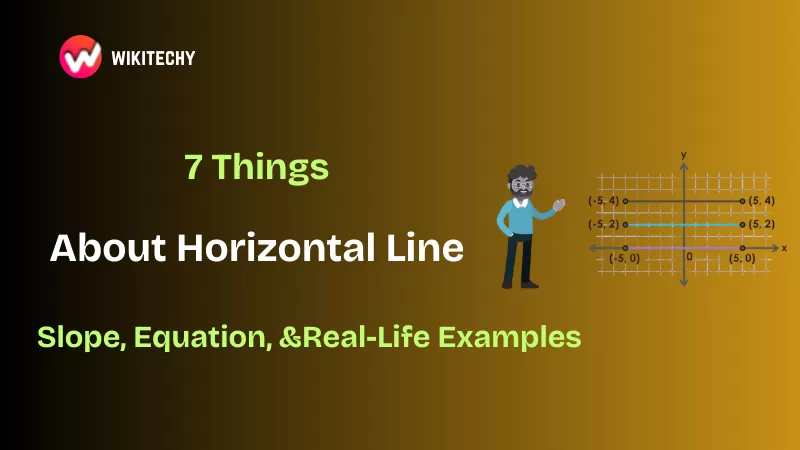
Horizontal Line — the term might sound simple, but trust me, it’s more fascinating than most people give it credit for. I remember the first time I really understood a horizontal line; it wasn’t in a textbook or a lecture. I was staring at my cup of coffee on a table, and it hit me — the surface of the coffee was perfectly level. That’s a horizontal line in real life!
In this post, I’ll break down horizontal lines, their slope, equations, and how they differ from vertical lines. Plus, I’ll sprinkle in real-life examples so it actually sticks.

What Is a Horizontal Line? 📏
A Horizontal Line is a straight line that runs left to right (or right to left) across a graph or surface. It never tilts up or down. Imagine the horizon you see during a sunset — that’s your perfect real-world horizontal line.
Mathematically, a horizontal line has a slope of 0, which means it never rises or falls. I know, I know, slope can be confusing at first, but stick with me — it’s actually straightforward.
Why does slope matter? 🤔
- Slope tells us how steep a line is.
- For horizontal lines, slope = 0 → no steepness at all.
- For vertical lines, slope = undefined → straight up, no run at all.
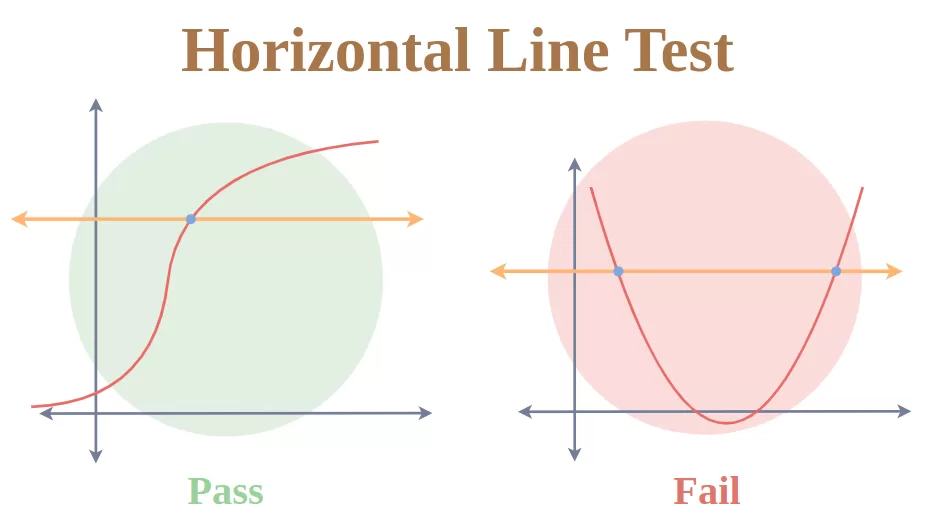
Equation of a Horizontal Line 🧮
Here’s where the math gets friendly. The equation of a horizontal line is always in the form:
y = k
Where k is a constant. That means every point on this line has the same y-coordinate.
For example, if you draw a line at y = 3 on graph paper, every point on that line has y = 3. Simple, right? I remember struggling with this in high school until I drew it physically — once I saw it, it clicked.
Horizontal vs Vertical Line: How They Differ ⚡
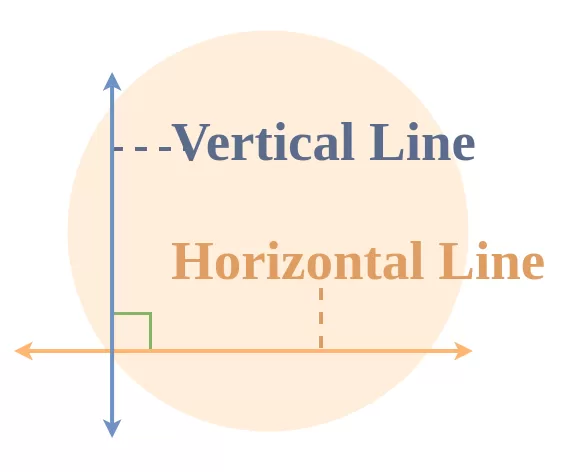
Many people confuse horizontal lines with vertical lines, but the difference is huge:
| Feature | Horizontal Line | Vertical Line |
|---|---|---|
| Slope | 0 | Undefined |
| Equation | y = constant | x = constant |
| Orientation | Left to Right | Up and Down |
| Real-life Example | Table surface | Flagpole |
See? It’s not just math — it’s everywhere around us.
Real-Life Examples of Horizontal Lines 🌎
Honestly, once you start noticing, horizontal lines are everywhere. Here are a few I’ve spotted in my own life:
- The horizon on a beach or mountain. 🌅
- Shelves in your kitchen or living room. 🏠
- Railway tracks (the rails themselves run horizontally even if the train moves). 🚆
- Whiteboard lines in classrooms — perfect horizontal lines for writing straight. 📝
- Screens of phones or computers (the top and bottom edges). 💻
These are simple, but once you start observing, you’ll see horizontal lines all over the place. I’ve even found myself marking horizontal lines in my notebook just for fun — nerd alert.
How to Identify a Horizontal Line in Graphs 🖊️
Here’s a trick I always tell my students:
- Look at the y-values of points. If they’re all the same → horizontal line.
- Check the slope: If slope = 0 → horizontal.
- Draw it on paper: You’ll see it literally runs flat.
Sometimes, I combine this with vertical lines to quickly compare — it’s an easy mental shortcut.
Why Understanding Horizontal vs Vertical Lines Matters
You might think, “Do I really need to care about this?” Well, yes! These concepts pop up in:
- Physics: motion along a flat plane
- Engineering: designing structures like bridges
- Art & design: aligning elements horizontally
- Everyday problem-solving: furniture placement, architecture
I remember once helping a friend hang a shelf. Without thinking, I noticed it wasn’t horizontal — the shelf tilted slightly. Thanks to my random obsession with horizontal lines, we fixed it instantly.

Fun Ways to Practice
- Draw a horizon in your room with a ruler and mark points — see if you get the same y-values.
- Compare objects in your house: which edges are horizontal vs vertical?
- Sketch graphs of y = constant and x = constant on graph paper — your brain will thank you later.
Key Takeaways 💡
- Horizontal lines run left to right, slope = 0, equation: y = constant.
- Horizontal vs vertical lines: slope is the main difference, plus orientation.
- You encounter horizontal lines daily — coffee tables, horizons, screens, you name it!
- Recognizing these lines can make math and life a little easier.
I promise, next time you see a horizontal line, you’ll notice it everywhere — and maybe even thank it for keeping your world “level”!
Final Thoughts ✨
Understanding a Horizontal Line might seem like basic math at first, but it’s one of those concepts that quietly shows up everywhere in life — from the horizon at sunrise to the shelves in your home. The next time you glance at a flat surface, a graph, or even your phone screen, you’ll notice how horizontal lines keep things steady and balanced.
Remember, the key things to take away:
- Slope = 0, equation y = constant — simple but powerful.
- Horizontal vs Vertical Line — knowing the difference helps in math, design, and everyday problem-solving.
- Real-life examples are everywhere — just keep your eyes open. 👀
So, don’t just memorize the formulas. Observe, notice, and appreciate horizontal lines in your daily life. They might be “flat,” but they sure make the world feel stable.
And here’s a little challenge for you: next time you’re outside, spot 5 horizontal lines around you. I promise, it’s more fun than it sounds!
want to learn more?, kaashiv infotech offers, Cyber Security Course, Networking Course, linux course, .Net Full stack developer, and more visit their website www.kaashivinfotech.com
Related Reads
- How many can straight lines be drawn from 15 non-collinear points ?
- MathML Subscript
- Horizontal Line in Geometry – Wikipedia (external)
- Check out my guide on Vertical Lines Explained: Slope & Equation (internal)
- Learn more math basics at Khan Academy (external)