Amazon Web Services (AWS) Explained in 2025: 7 Reasons Why AWS Cloud Still Dominates 🌍
Amazon Web Services (AWS) has been around since 2006 and as of 2025 it is still the backbone of cloud computing for start-ups, enterprise companies and the government. When I first looked into AWS, it was dizzying- there are hundreds of services, pricing models, and certifications. But as soon as you start to dive into AWS, I believe you’ll see a powerful toolbox that offers up what you need and nothing that you don’t.
Just imagine if instead of purchasing expensive servers and managing them 24/7, you were able to rent computing power, data-storage, and databases via the internet, pay exclusively for your use and scale instantly. That’s the magic of AWS Cloud.

🔎 Key Highlights
- What is Amazon Web Services (AWS) in cloud computing
- Core AWS services (EC2, S3, RDS, Lambda)
- AWS fundamentals: regions, availability zones, global network
- Real-world use cases: Netflix, NASA, Airbnb, Capital One
- AWS pricing explained: Pay-as-you-go, Reserved, Spot, Free Tier
- AWS certification paths: Cloud Practitioner, Solutions Architect
What is Amazon Web Services (AWS)?
Amazon Web Services, or AWS for short, is a cloud computing platform and the various resources provided by Amazon. Instead of purchasing the physical servers or storage that you would with a traditional host, AWS allows you to rent the IT resources you need through the internet. This means you are not dealing with the hardware anymore, you just logged in, selected services, and you’re building.
To simplify it: AWS = IT infrastructure on demand.
So when someone asks “What is Amazon Web Services in cloud computing?” the answer is simple, it is all the things (200 services and counting) you can use in cloud computing such as: computing, databases, storage, AI, etc.–all delivered via the cloud!
Core AWS Services You’ll Use 💻
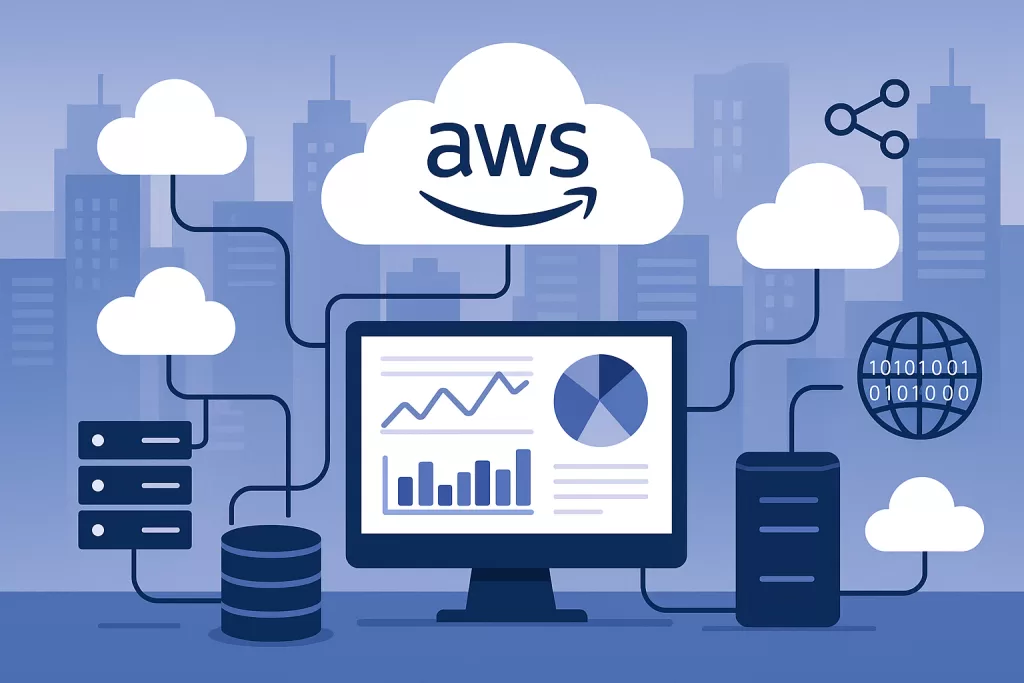
AWS offers a huge catalog, but these four services form the foundation:
- EC2 (Elastic Compute Cloud): Virtual servers to run apps and workloads.
- S3 (Simple Storage Service): Object storage for files, media, and backups.
- RDS (Relational Database Service): Managed databases like MySQL, PostgreSQL, and Oracle.
- Lambda: Serverless computing where you run code without worrying about servers.
👉 Whether you’re a student building a project or a company like Netflix scaling video streaming, these services are the building blocks.
AWS Fundamentals You Must Know 🌍
Before diving deeper, it’s important to understand how AWS is structured:
- Regions – AWS operates in over 30 regions across the globe. Each region is a physical location like North Virginia (US-East) or Mumbai (ap-south-1).
- Availability Zones (AZs) – Each region has multiple isolated data centers (AZs). If one goes down, others keep your app running.
- Global Network Infrastructure – AWS has a private, international, high-speed ingress/egress fiber network to link all of these regions, minimizing latency and improving performance.
This global design is why AWS can guarantee high availability and speed for businesses worldwide.
Why Choose AWS Cloud Computing?
Why do developers and enterprises choose AWS cloud services over and over?
- On-Demand Resources – You don’t have to pay an upfront fee for operable servers; you can instantly spin up a resource whenever you want.
- Pay-as-You-Go Pricing – You are charged only for what you use (yes, kind of confusing at first, but once you see your first bill for $2 after having a server running for hours, it makes sense).
- Global Reach 🌍 – Deploy apps close to your users, whether they’re in India, the US, or Europe.
- Reliability & Performance – AWS offers load balancing, scaling, and backup features that hardly allow an app to go down.
- All-in-One Platform – AWS provides you with a dashboard that allows you to do everything from machine learning, to security, to anything you might need in between.

Real-World Examples of AWS in Action 🚀
AWS isn’t just theory—here’s how big names use it:
- Netflix: Uses AWS to deliver content to millions of its subscribers with extremely low latency.
- Airbnb: Uses AWS to run its global marketplace that can scale and be trusted.
- NASA Jet Propulsion Laboratory: Uses AWS to analyze large data reservoirs from space missions.
- Capital One: Uses AWS to enable cloud banking with security and compliance.
These companies prove AWS isn’t just for startups—it’s the go-to platform for innovation.

AWS Pricing Explained (Simple & Honest)
AWS pricing scares a lot of new users, but let’s level with you – it is pay-as-you-go pricing that allows you flexibility.
- On-Demand Instances – Pay by the second/hour with no long-term contract.
- Reserved Instances – Commits you for 1-3 years, but can save you up to 75%.
- Spot Instances – Allows you to bid for unused capacity and can receive up to an additional 90% discount.
- Free Tier – Pespecially useful if you just want to try AWS: 750 hours/month of EC2 (t2.micro), 5GB of storage in S3, and 1 million requests to Lambda for 12 months.
👉 Pro Tip: Use the AWS Pricing Calculator to avoid surprises.

AWS Certifications & Career Path 🎯
One reason AWS tends to attract so many students and professionals is the career path.
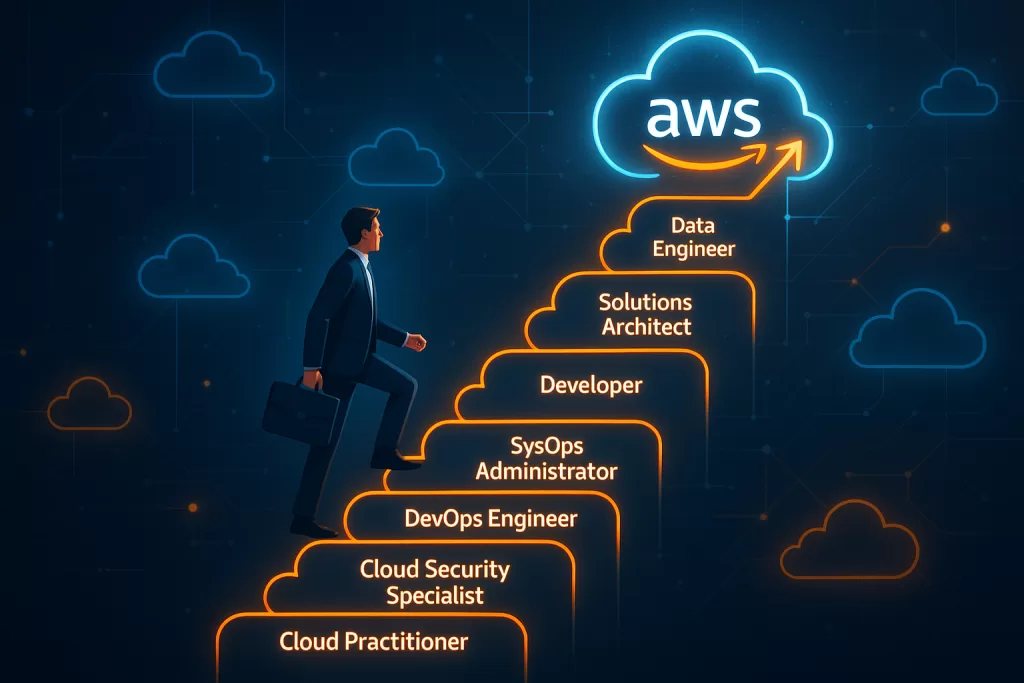
- AWS Cloud Practitioner Certification: Entry level – great for beginners. It provides a basic overview of AWS, pricing, and use cases.
- AWS Solutions Architect (Associate): The next level. The primary job role is to design solutions.
- Other Tracks: The other certification tracks include Developer, SysOps, Security and Specialty.
💡 The AWS Cloud Practitioner exam is about $100, and it is probably the best starting point if you have never been exposed to cloud before.
FAQs about Amazon Web Services (AWS)
Q1: What is Amazon Web Services (AWS) in cloud computing?
AWS is a cloud platform that offers IT resources like servers, storage, and databases over the internet.
Q2: Is AWS free for beginners?
Yes, AWS Free Tier gives you 12 months of free usage (with limits).
Q3: What is Amazon Web Services login / sign-in?
It’s the AWS Management Console where you access and manage your services: AWS Sign-In.
Q4: What is Amazon Web Services India Private Limited?
It’s the registered legal entity of AWS operating in India to serve local customers.
Q5: What does the Amazon Web Services logo mean?
The AWS logo with a smile represents Amazon’s cloud division, designed to convey simplicity and trust.
Q6: How much does the AWS Cloud Practitioner exam cost?
It costs $100 (as of 2025), and you can take it online or at a test center.
Conclusion: Is AWS Cloud Worth It in 2025?
If I needed to start over again in technology today, I would still start with Amazon Web Services (AWS). AWS is beginner friendly, people trust AWS worldwide, and AWS has a clearly defined career certification path for advancements. Whether you are a student, developer, or enterprise, AWS has the tools you need to build, scale, and innovate.
👉 Start today: Try the AWS Free Tier or prepare for the AWS Cloud Practitioner certification to kickstart your cloud career!
Related Reads:
- Normalization in DBMS: 1NF, 2NF, 3NF — A comprehensive guide explaining the fundamentals of database normalization and how to apply First, Second, and Third Normal Forms.
- What is tr Command in Linux: Syntax & Options (2025) — A clear overview of the
trutility in Linux, including its syntax and common use cases. - BODMAS Rule in Programming, AI, and IT: 2025 Guide — Detailed insight into the importance of applying the BODMAS (order of operations) rule across programming and AI contexts.
- Insertion Sort Time Complexity Guide — A breakdown of the insertion sort algorithm, including its time complexity analysis in various scenarios.
- Camel Case vs. Pascal Case: Guide — An informative comparison between camelCase and PascalCase naming conventions, with guidance on usage best practices.