🌍 Arab Countries List (2025): Full Guide to the Arab World, Map, Population & Facts 🌟

🌟 What Are Arab Countries? Let Me Break It Down for You
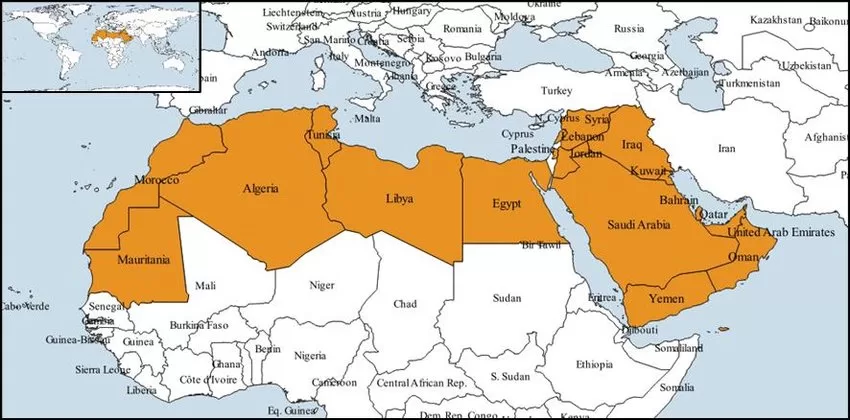
If you’re here, you’re probably curious (or confused) about what exactly makes a country an Arab country. Trust me — I’ve been there too. A while ago, I found myself staring at a map, wondering why Somalia, Comoros, and Djibouti — countries I never associated with the Arab world — were part of this group.
So, what does “Arab countries” even mean?
At its core, an Arab country is one where Arabic is the official language, and most of them are members of the Arab League — a political and cultural alliance founded in 1945 to promote unity among Arabic-speaking nations.
👉 As of 2025, there are 22 Arab countries, spread across North Africa, the Middle East, parts of the Horn of Africa, and even some island nations.
Let’s dive deeper.
🌍 Full Arab Countries List (2025) by Region
You’ll hear terms like Arab nations, Arab League countries, or Arab world — they’re often used interchangeably, but let me walk you through this with examples.
🌅 North African Arab Countries (Maghreb + Nile Valley)
- 🇪🇬 Egypt
- 🇩🇿 Algeria
- 🇲🇦 Morocco
- 🇸🇩 Sudan
- 🇹🇳 Tunisia
- 🇱🇾 Libya
- 🇲🇷 Mauritania
- 🇰🇲 Comoros (Yes, an island off East Africa!)
These are the countries most people picture when they think of the “Arab world” — large deserts, ancient history, and vibrant cities like Cairo and Casablanca.
💡 Fun fact: Algeria is the largest Arab country by land area, while Comoros is one of the smallest.
🏜️ Arabian Peninsula (GCC Countries)
- 🇸🇦 Saudi Arabia
- 🇦🇪 United Arab Emirates
- 🇴🇲 Oman
- 🇶🇦 Qatar
- 🇧🇭 Bahrain
- 🇰🇼 Kuwait
- 🇾🇪 Yemen
These are the oil-rich Arab nations you hear about in the news. Think skyscrapers, deserts, and global airports. But it’s not all glitz — countries like Yemen are also facing real humanitarian challenges.
👉 These seven form the Gulf Cooperation Council (GCC).
🌄 Levant and Mesopotamia
- 🇱🇧 Lebanon
- 🇸🇾 Syria
- 🇯🇴 Jordan
- 🇮🇶 Iraq
- 🇵🇸 Palestine (recognized by most Arab League members)
The Levant is where ancient history and modern conflicts collide. Syria, for example, was suspended from the Arab League for over a decade due to civil war but was reinstated in 2023.
🌍 Horn of Africa & Island States
- 🇩🇯 Djibouti
- 🇸🇴 Somalia
These might surprise you, but Arabic is an official language here too. These countries are often overlooked but are very much a part of the Arab world.
🧭 What Is the Arab League?

The Arab League was formed in 1945 by 6 founding members (Egypt, Iraq, Transjordan, Lebanon, Saudi Arabia, and Syria). Today, it includes 22 member states, although Syria was temporarily suspended.
Its mission? Political cooperation, economic partnership, cultural exchange, and protecting Arab sovereignty.
🗣️ Language and Culture in Arab Nations
All Arab countries share Arabic as a common thread, but here’s what most people miss:
- 🎤 Dialects vary wildly — Egyptian Arabic isn’t the same as Moroccan Arabic
- 🗺️ Countries like Somalia and Djibouti also speak Somali and French
- 🇲🇦 Morocco and Algeria even recognize Berber as a national language
👉 Arabic culture is not monolithic. Trust me — going from Dubai to Casablanca feels like traveling through different worlds.
📊 Population & Area Stats
Let’s nerd out with some numbers:
- Most populous Arab country: 🇪🇬 Egypt (~110 million)
- Smallest population: 🇰🇲 Comoros (~900,000)
- Largest by area: 🇩🇿 Algeria
- Smallest by area: 🇧🇭 Bahrain
The total population across all Arab countries? Over 470 million in 2025!
💬 Real-Life Example: My Trip to the Arab World
When I visited Lebanon in 2019, I was amazed at how French, Arabic, and English flowed effortlessly in conversations. In contrast, my experience in Riyadh, Saudi Arabia, felt formal and conservative — same Arab language, but completely different vibe.
That’s the richness of the Arab world — it’s united by language, but diverse in identity.
✅ Final Thoughts
The term Arab countries isn’t just about borders or language — it’s a rich tapestry of cultures, economies, and people. Whether you’re researching for a school project or planning a trip, I hope this guide gives you a clear picture of the Arab world in 2025.
If you’ve ever wondered where Arab League countries stand today — politically, culturally, and geographically — you now have the answers.
Related Links