Best Programming Languages for Robotics in 2026
Programming Languages for Robotics – Back in college, I signed up for a robotics workshop just because it sounded interesting. Honestly, I had no idea what the best programming language for robotics was — or that coding would play such a huge role. Everyone around me casually spoke about Python, C++, and ROS like it was everyday language.
Meanwhile, I barely knew what an Arduino board actually did.
That single workshop changed everything.

I got completely pulled into the world of robotics. And the biggest lesson I learned early on? Coding is not optional — it’s the backbone of robotics. Programming is what transforms random wires, sensors, and motors into a robot that can think, react, and move intelligently.
If you’re just starting out — curious, excited, and maybe a little overwhelmed — this is your ultimate guide to the 5 best programming languages for robotics in 2026.
1. Python: The Best Programming Language for Beginners in Robotics 🐍
(Perfect for rapid prototyping and AI-driven robotics)
Let’s be honest — if robotics were a video game, Python would be your starter weapon. It’s simple, readable, and backed by powerful libraries that make building smart robots feel surprisingly achievable.
I started with Python because it made robotics feel human. Instead of fighting syntax, I could focus on ideas and logic.

Why Python Works So Well in Robotics:
- Massive library ecosystem: OpenCV for vision, PySerial for hardware communication, NumPy for calculations.
- A core language in ROS (Robot Operating System).
- Ideal for AI, machine learning, and automation-based robots.
- Less code, faster results.
Python remains the best programming language for robotics beginners, especially for those exploring AI and computer vision.
2. C++: The Best Robotics Language for Real-Time Control 👑
(When speed, accuracy, and performance really matter)
C++ isn’t the easiest language to master — but once you do, it unlocks serious power. I like to think of it as the Iron Man suit of robotics programming.
During a line-following robot competition, Python just couldn’t keep up. Switching to C++ changed everything. The response time was instant, and the robot moved like it actually knew what it was doing.

Why C++ Dominates Robotics:
- Low-level access to hardware (motors, sensors, controllers).
- Excellent compatibility with embedded systems like Arduino and Raspberry Pi.
- Crucial for real-time applications like drones and autonomous navigation.
- Widely used in industrial and automation robotics.
C++ is one of the top coding languages for robotics where performance and real-time control are critical.
3. Java: A Versatile Language for Mobile and Robotics Applications ☕
(Ideal for mobile-controlled robots and robot apps)
Java doesn’t always get the spotlight in robotics — but it deserves more credit. I used Java while building a robotic arm controlled via an Android app, and it worked beautifully.
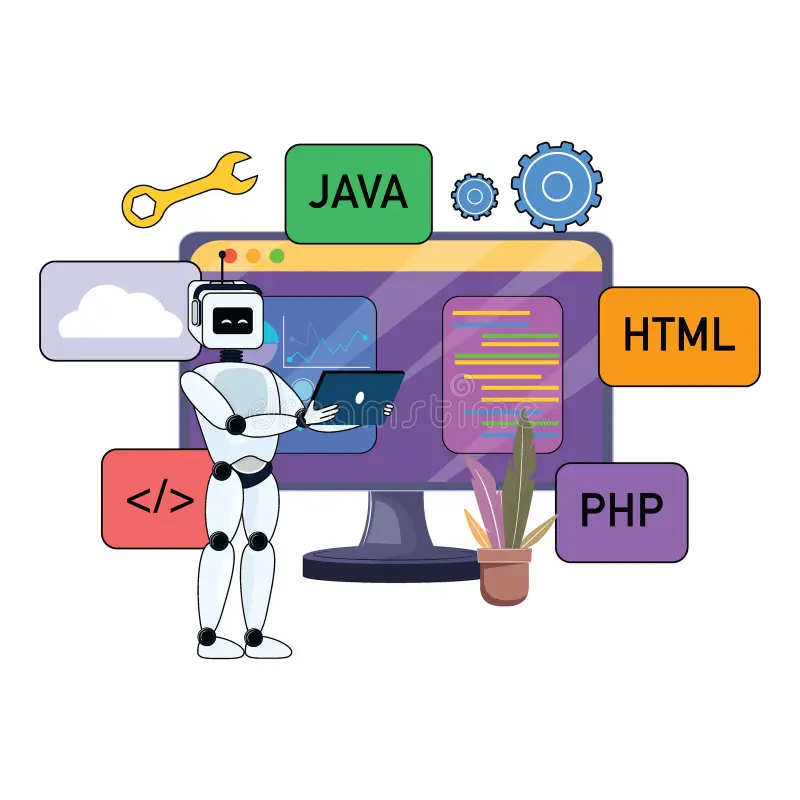
Why Java Is Useful in Robotics:
- Platform-independent: write once, run anywhere.
- Excellent for Android-based robot control applications.
- Strong support for simulations.
- Clean, object-oriented structure for large projects.
💡 Insider tip: If you’re combining mobile app development with robotics, Java is a solid choice.
Java continues to be a versatile robot programming language for mobile-integrated robotic systems.
4. MATLAB: Best Coding Language for Robotics Simulation 🧠
(Perfect for modeling, math, and control systems)
If you enjoy the science behind robotics — kinematics, dynamics, and control theory — MATLAB feels like home.
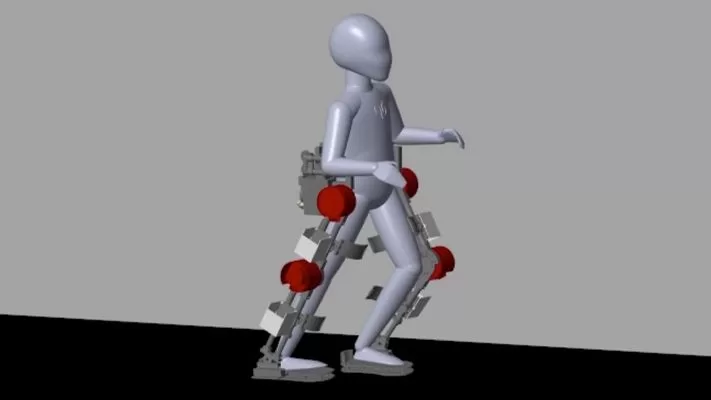
When I worked on a robotic arm designed to mimic human motion, MATLAB helped me simulate every joint and movement long before touching actual hardware.
Why Robotics Engineers Prefer MATLAB:
- Excellent tools for robotics simulation and visualization.
- Simulink simplifies complex system modeling.
- Built-in functions for control systems and signal processing.
- Widely trusted in research and industry.
MATLAB is often considered the best coding language for robotics simulation, modeling, and algorithm testing.
5. Arduino Language (C/C++): Best DIY Robot Programming Language 🔧
(Perfect for embedded systems and hobby robotics)
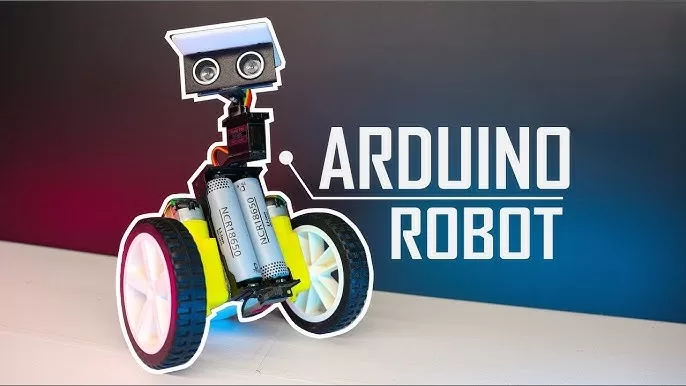
If you love learning by doing, Arduino is unbeatable. It’s how I built my first obstacle-avoiding robot — and honestly, that moment felt magical.
Arduino uses a simplified version of C/C++, making it beginner-friendly while still powerful enough for real-world robotics.
Why Arduino Is Perfect for Robotics:
- Massive global DIY community 🧑🔧
- Direct control over motors, servos, and sensors.
- Affordable hardware and beginner-friendly kits.
- A perfect stepping stone to advanced robotics projects.
Arduino, based on C/C++, is ideal for hobbyists looking for the best programming language for robotics DIY projects.
So, Which Programming Language Should You Start With?
| Goal | Language to Start With |
|---|---|
| Easy learning, AI, ML | Python |
| Real-time performance | C++ / Arduino |
| Mobile integration | Java |
| Math-heavy simulations | MATLAB |
| DIY and hardware tinkering | Arduino |
If you’re new, start with Python or Arduino. As your confidence grows, move into C++ or integrate MATLAB for advanced control and simulations.
Programming Languages for Robotics Aren’t Just for Coding — Build Something! 🛠️
Learning a robotics programming language is exciting. But the real thrill comes when your robot actually moves, reacts, or thinks.
Start small:
- A light-following robot
- A servo-based robotic hand
- A line-following robot using IR sensors
Build it. Break it. Fix it. Repeat.
If you want structured guidance, internships, or real-world exposure, you can explore robotics courses. I genuinely recommend Kaashiv Infotech’s Robotics Programs, especially for beginners in India — hands-on projects, mentorship, and industry-focused learning.
Final Thoughts 💬 Best Programming Languages for Robotics in 2026
Programming Languages for Robotics Robotics is more than machines and code. It’s creativity mixed with logic. It’s science meeting imagination.
Whether you’re building drones, automation systems, or your own version of Wall-E, these programming languages will be your core toolkit. And remember — every expert once started clueless.
Kaashiv Infotech Offers, Full Stack Python Course, Full Stack Java Course, & More, Visit Their Website course.kaashivinfotech.com.
Related Reads:




![Agile Model in Software Engineering [2025]](https://www.wikitechy.com/wp-content/uploads/2025/08/Agile-Model-in-Software-Engineering-2025-380x220.webp)