Compiler Interpreter Difference: 7 Simple Things You’ll Never Forget
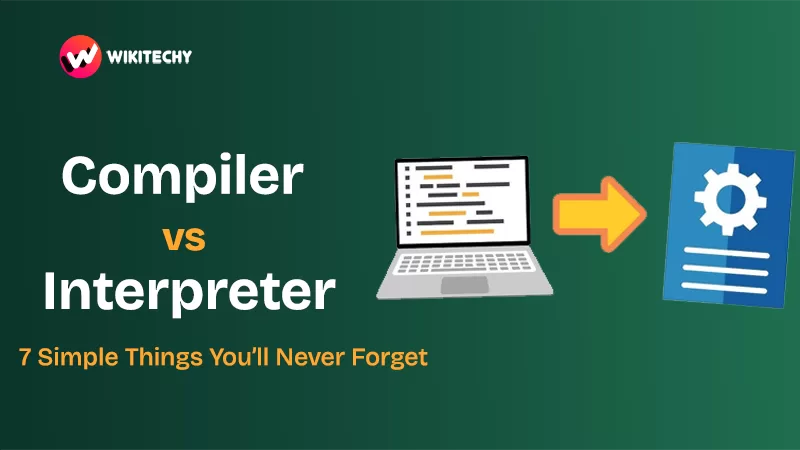
If you’re like me, you’ve probably wondered at some point: what’s the real compiler interpreter difference? I remember scratching my head during my very first programming class. The teacher said, “A compiler translates code all at once, and an interpreter translates it line by line.” And while that’s true, it felt too robotic—like reading straight from a textbook.
So in this blog, I’ll not just give you the compiler interpreter difference in a boring table (don’t worry, I’ll add that too ), but I’ll also explain it in a way that feels real, simple, and easy to digest. By the end, you’ll be able to confidently explain it to your friends, ace your interviews, and even remember it without memorizing.

Why Are You So Concerned about the Compiler Interpreter Difference?
Let’s be honest. When I first heard about compilers and interpreters, I thought, “Do I really need this knowledge?” 🤔
But here’s the thing—every time you write code, something in the background is translating it into machine instructions. Without knowing how this works, programming feels like magic. And trust me, interviewers love to throw this question at freshers and even experienced developers.
So, yes—you should care. Whether you’re learning Python, C++, or Java, this concept keeps coming back.
💻 What is a Compiler?
Here’s how I like to explain it: Imagine writing your entire essay in English and then handing it to a translator, who translates the whole thing into Spanish in one go. That’s exactly how a compiler works.
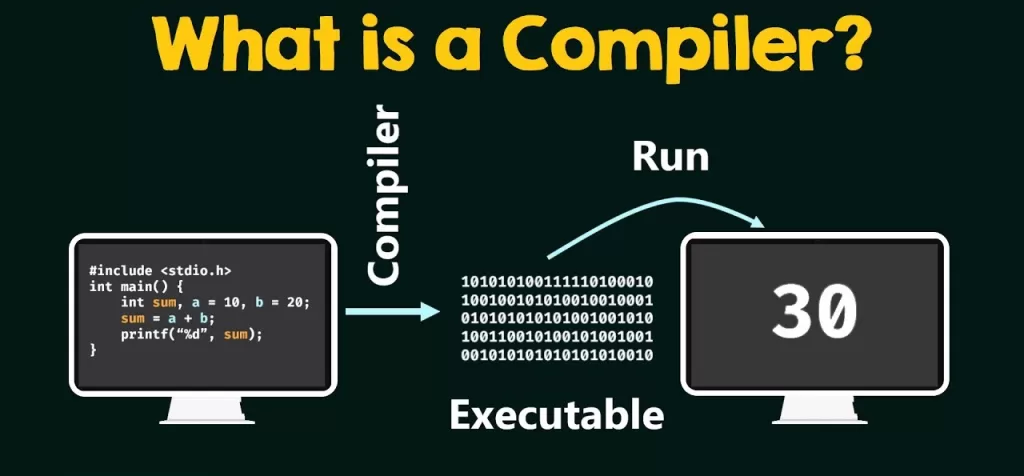
- A compiler takes your entire program (source code) and converts it into machine code before execution.
- Once compiled, the program runs super fast because the computer already has the complete translated version.
- Example languages: C, C++, Rust, Java (with JVM as a special case)
👉 A fun fact: I once wrote a small C program, and it refused to run because of a single missing semicolon. That’s the compiler being strict—it wants the entire code perfect before running anything.
⚡ What is an Interpreter?
Now, picture this: You’re giving a speech in English, and there’s a translator next to you who translates sentence by sentence into Spanish for the audience. That’s an interpreter.
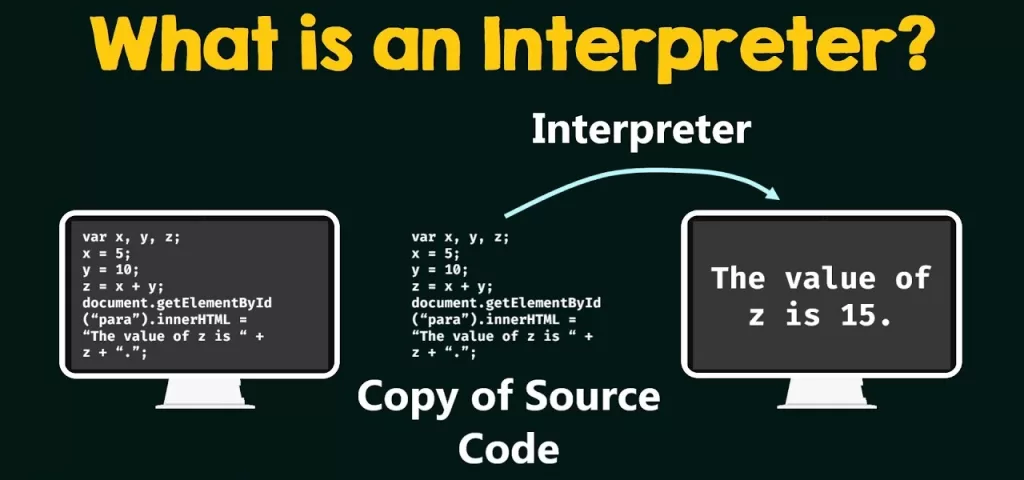
- An interpreter reads your code line by line and executes it immediately.
- You don’t need to wait for the whole program to compile.
- Debugging is easier because you know instantly when something goes wrong.
- Example languages: Python, JavaScript, Ruby, PHP
👉 This saved me once when I was learning Python. I made a small error, and the interpreter immediately told me the exact line, which saved hours of frustration.
📊 Side-by-Side Compiler Interpreter Difference
Here’s a quick table to help you remember 👇
| Feature | Compiler | Interpreter |
|---|---|---|
| Execution | Translates entire code at once | Translates line by line |
| Speed | Fast execution (after compilation) | Slower execution |
| Error Handling | Shows all errors at once (after compiling) | Stops at the error immediately |
| Memory Usage | More memory needed | Less memory used |
| Examples | C, C++, Rust, Java | Python, JS, Ruby |
| Best For | Large programs, performance | Scripting, debugging |
Real-Life Analogy of Compiler vs Interpreter
Let me break it down with something we all relate to—movies 🍿.
- A compiler is like watching a movie dubbed completely in your language. Once the dubbing is done, you enjoy the film without interruptions.
- An interpreter is like watching a live play with an on-stage translator repeating each line for you. Slower, but you understand things as they happen.
Simple, right? Now you’ll never forget the compiler interpreter difference.

📌 When Should You Use Compiler vs Interpreter?
- Use a compiler if you’re working on big applications where speed matters (like games, operating systems).
- Use an interpreter if you want quick testing, debugging, or scripting.
In fact, many modern languages combine both! For example, Java first compiles to bytecode and then uses the JVM interpreter.
👩💻 Interview Tips on Compiler Interpreter Difference
I can’t count how many times I’ve seen this question pop up in technical interviews. Here are quick notes you can keep in mind:
- If they ask for speed, say: “Compiler is faster, interpreter is slower.”
- If they ask for debugging, say: “Interpreter makes debugging easier.”
- Always give examples: C (compiler), Python (interpreter).
✅ Final Thoughts
The compiler interpreter difference isn’t just about memorizing definitions—it’s about understanding how computers actually think. I used to think this was one of those “boring theory” topics, but the more I coded, the more I realized it shaped my debugging, performance tuning, and even how I chose programming languages.
So here’s my takeaway:
- Compilers = whole story upfront, then run super fast 🚀
- Interpreters = step-by-step, easier to debug 🛠️
Next time someone asks you the difference, don’t just rattle off textbook lines. Use analogies, real-life examples, and your own coding experiences. That’s how you’ll stand out.
Want to Learn More About Coding, Kaashiv Infotech Offers Python Course, Java Course, Full Stack Development Course Visit www.kaashivinfotech.com.
Related Reads: