Intrusion Prevention System (IPS): A Friendly Guide With 7 Key Takeaways

It is the Intrusion Prevention System (IPS), a term that previously caused me fear when I began to learn more about cybersecurity. It was complex, cumbersome, and enterprise-only. However, after real experience with an Intrusion Prevention System, I came to understand that it is not some fancy buzzword, but a savior of networks.
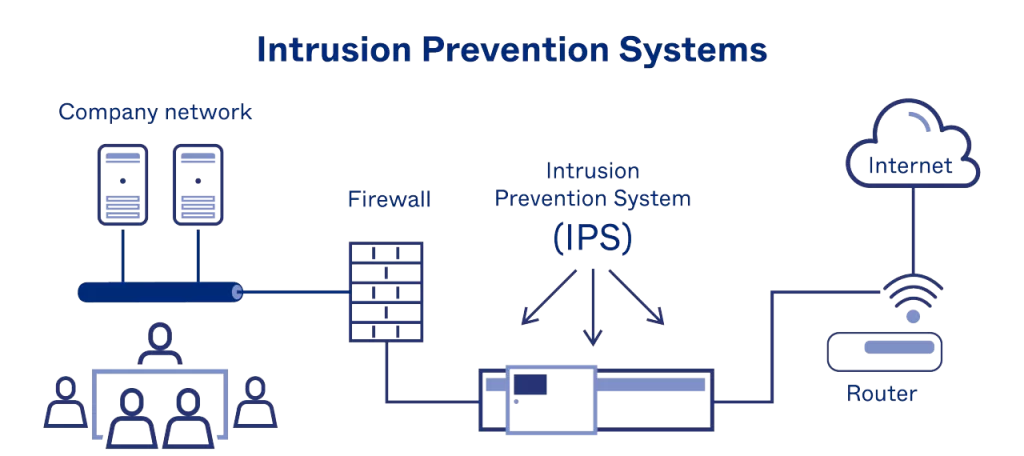
So, let’s start with the basics. In its simplest form, an Intrusion Prevention System (IPS) can be described as a security software that scans the network traffic and blocks threats on the fly. Imagine it as the guardian to your network- it does not just observe (as its brother IDS: Intrusion Detection System would), it intervenes, prevents the attack and leaves your systems secure.
What is an Intrusion Prevention System (IPS)?
Alright, I will simplify it without using jargon.
Intrusion Prevention System (IPS) is your digital security guard within your network. It inspects each packet of data arriving, determines whether it is harmless or suspect, and whether it reeks of trouble; it blocks it.
In contrast to the firewalls (which are like locked doors), an IPS is smart. It does not only verify addresses or ports. It scans deep into traffic, scan patterns and prevents attacks such as:
- Denial-of-Service (DoS)
- SQL injections
- Worms and viruses
- Buffer overflows
👉 To get the textbook meaning, the IPS page of Cisco. has a clean explanation. In my case, everything is easy, though, IPS = security + action.
Intrusion Detection System (IDS) vs Intrusion Prevention System (IPS)
When I was a student, this confused me like crazy. IDS, IPS—they sound almost the same, right? But here’s how I finally got it:
- IDS (Intrusion Detection System) → Think of it as a CCTV camera. It watches, records, and alerts you if something shady happens.
- IPS (Intrusion Prevention System) → Now imagine a security guard watching that CCTV. If someone tries breaking in, the guard doesn’t just raise the alarm—he physically stops them.
That’s the key difference. IDS = alert. IPS = alert + action.

Features of Intrusion Prevention System
When you are thinking of learning or putting IPS into practice, these were the features that appeared the most interesting to me:
- Deep Packet Inspection (DPI) – Inspected packet content, not just headers.
- Real-Time Prevention – Not only warnings it prevents malicious traffic.
- Policy Enforcement You can establish restrictions (block some applications or protocols).
- Logging & Reporting– IPS records all the threats to be analyzed.
- Automated Responses – There is no delay in response – it takes action immediately.
- Integration with Firewalls – Co-operations with other security tools.
- Scalability– New IPS is capable of managing large volumes of traffic.
Real-Life Case of IPS in Practice.
I would like to tell you something, which actually occurred in a project I was working on.
Our client was an operator of an e-commerce site. It happened one day and at the most unexpected moments their location started to crash. Initially, all people believed that it was heavy traffic. However, once we had linked an Intrusion Prevention System, we discovered they were being attacked by DDoS.
Malicious IPs and bad packets were immediately blocked by the IPS and in a few minutes the web site was online again. It was the day I really admired IPS, it was not theory any longer, it rescued a business in reality.

Benefits of Using an Intrusion Prevention System
What is the reason why people (and businesses) are fond of IPS? Here are my top takeaways:
✅ Real-Time Protection- prevents threats before it can cause damages.
✅ Peace of Mind You will not need to watch traffic 24/7 with your own eyes.
✅ Compliance Several sectors (finance, healthcare) demand IPS to comply with regulations.
✅ Cost Savings- It would be much less expensive to stop attacks than it would be to recover.
Intrusion Prevention System Tools that will be popular in 2025.
To actually test or experiment with an IPS, the following are some of the options that can be checked out:
- Snort (Open-source, very popular)
- Suricata (Great for scalability)
- Cisco Firepower IPS
- Palo Alto Threat Prevention
- McAfee Network Security Platform
if you are a beginner, I would suggest using Snort. It is open-source and free, and it is an excellent method to get practical knowledge.

Does Intrusion Prevention System Still Matter in 2025?
Here’s my honest take.
In the age of AI-powered threats, cloud environments, and IoT gadgets all around, I would claim that the Intrusion Prevention System is not just topical, it is essential.The cyberattacks keep on changing day by day.The absence of IPS is the same as leaving your doors wide open.
And a student, or an IT professional?IPS can positively increase your career.Employers adore people who are able to win networks.
Final Thoughts
What is an Intrusion Prevention System (IPS) then? It’s not just a tool. it is the kind of personal bodyguard that your network has. It does not wait till the damage occurs, it will intervene, grab the reins and save you on the spot.
The IPS turned into a term that I actually trust and that is why I have changed how I look at it. And in case you are serious about network protection (or career in cybersecurity) you cannot ignore it.
Want to learn about IPS, IDS, Cyber Security Course, or Networking Course ?, Visit www.kaashivinfotech.com.
Related Reads: