Tense Chart in English – Rules, Examples, & Types (My Honest Guide)

The reason I am writing this ( And Why Tenses Confused Me First )
When I first viewed a table grammar tenses chart in school, I scuffled. What a number of squares, arrows and rules! I recall me thinking: “Why not leave English in the present tense and leave me to myself?
And yet here is the fact: tenses are the foundation of the English grammar. Without them, we cannot make sense in our sentences. Take the case of saying I eat yesterday rather than I ate yesterday. You are still to be comprehended, but it is shattered.
So in this tutorial, I will cover table grammar tenses in a manner that I would have preferred someone to explain to me, easy, practical, but slightly entertaining.

What is a Tense ?
A tense is simply the way we express time in language—past, present, or future.
👉 If I say “I write a blog,” it’s present tense.
👉 If I say “I wrote a blog yesterday,” it’s past tense.
👉 If I say “I will write a blog tomorrow,” it’s future tense.
That’s it. Not so scary, right?
And this is exactly where table grammar tenses come in handy—they give us a structured chart of all the rules in one place.
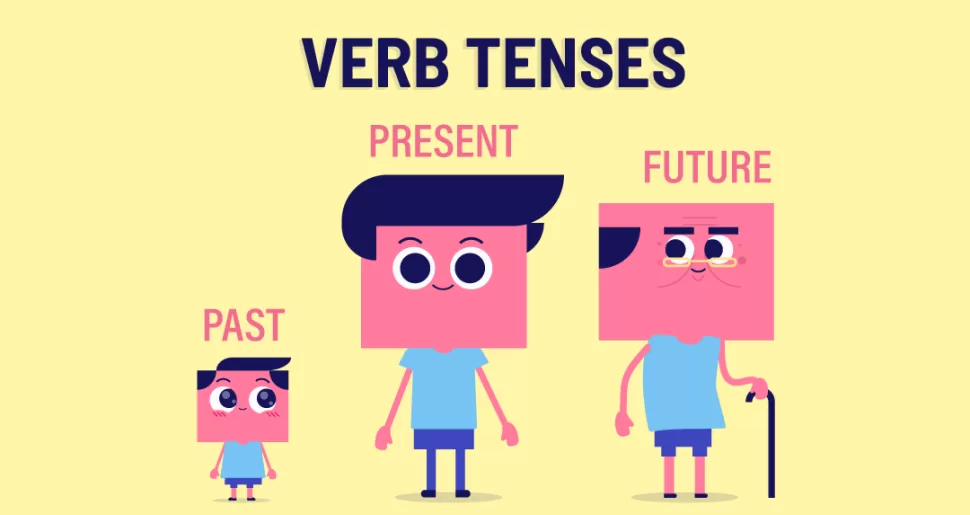
The Famous Table Grammar Tenses 📊
Here’s a simplified version of the table grammar tenses
| Tense Type | Example | Rule |
|---|---|---|
| Present Simple | I eat rice. | Subject + base verb |
| Present Continuous | I am eating rice. | Subject + am/is/are + verb+ing |
| Present Perfect | I have eaten rice. | Subject + have/has + past participle |
| Present Perfect Continuous | I have been eating rice. | Subject + have/has been + verb+ing |
| Past Simple | I ate rice. | Subject + past verb |
| Past Continuous | I was eating rice. | Subject + was/were + verb+ing |
| Past Perfect | I had eaten rice. | Subject + had + past participle |
| Past Perfect Continuous | I had been eating rice. | Subject + had been + verb+ing |
| Future Simple | I will eat rice. | Subject + will + base verb |
| Future Continuous | I will be eating rice. | Subject + will be + verb+ing |
| Future Perfect | I will have eaten rice. | Subject + will have + past participle |
| Future Perfect Continuous | I will have been eating rice. | Subject + will have been + verb+ing |
👉 Experiment with the changes that each version makes the sentence feel? That is the strength of grammar names of which tables.
Why a Mind Map Helps
Frankly speaking, looking at a grammar tenses table chart would make me bored. It was at that point that I learnt about mind maps.
- Present → Now → Habits + Actions + Experiences
- Past → Yesterday → Finished + Ongoing + Completed actions
- Future → Tomorrow → Plans + Predictions + Long-term actions
When you visualize tenses as a timeline instead of a scary chart, they suddenly make sense.

My Hards (And Probable yours as well)
I would confuse past perfect and present perfect. Example:
❌ I had eaten my lunch just now.
✅ I have eaten my lunch just now.
The term just now is referring to the current moment and therefore I should have used present perfect and not past perfect.
Lesson? Table grammar tenses are not simply a matter of rules by heart, they are a matter of time.
The Importance of Table Grammar Tenses in the Real Life globe

There is something personal I would like to tell you. The first job interview that I had conducted was a failure. Instead of saying:
I have been working on this project since 6 months.
I replied: I took 6 months working on this project.
The interviewer appeared bewildered. Did I still work there or not? That little error transformed everything.
It was at that point that I understood the strength of table grammar tenses. They do not just assist during exams, but define the way you are perceived by people.
Final Thoughts
If you’ve made it this far, congratulations—you’ve just cracked the basics of table grammar tenses.
Here’s the truth: grammar charts may look boring, but once you connect them with your own life, they become stories.
- Yesterday’s tense = your memories.
- Today’s tense = your actions.
- Tomorrow’s tense = your dreams.
So next time you open a table grammar tenses chart, don’t just memorize. Imagine yourself living those sentences. That’s how I learned, and that’s how you will too.
Related Reads: