Virtual File System Explained: 7 Insights Every Developer Should Know
Virtual File System, virtual file system — yes, I’m saying it twice right at the start because this magical concept deserves that spotlight. And honestly? When I first heard about the virtual file system, I thought it was something heavy and abstract.
But the more I played with Linux, mounted drives, and handled remote servers, the more I realised, “Oh wow, VFS is the quiet superhero behind everything.”
If you’re searching for:
👉 What exactly is a virtual file system?
👉 How does VFS work in real life?
👉 Why should a normal developer or tech student even care?
Then take a breath — you’re in the right place. I’ll explain everything the same way I’d explain it to a friend sitting next to me at a café.
1. Virtual File System: The Backbone We Don’t See (But Always Use!)
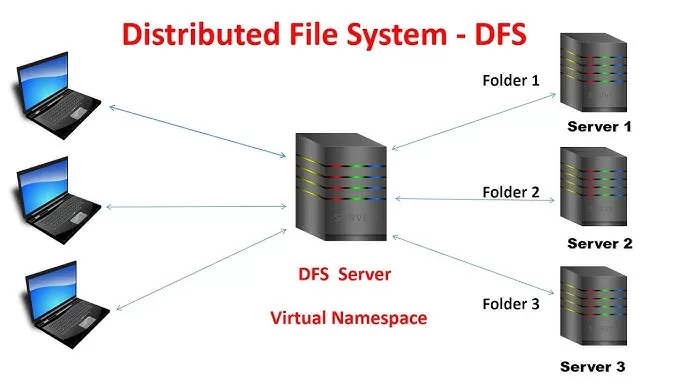
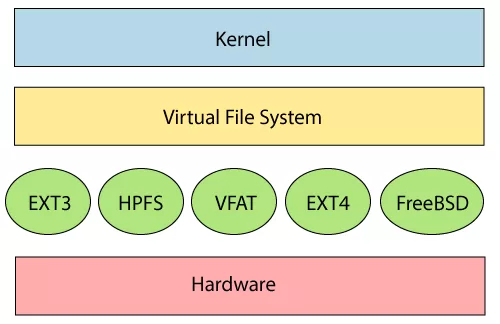
The virtual file system is basically a smart layer inside the operating system that hides the messy differences between real file systems.
I like to think of it like a translator friend. You know that one friend who helps you order food when you’re in a country where you don’t know the language? That’s the VFS.
My OS doesn’t directly understand what’s inside /home. Instead, the virtual file system jumps in, figures out which real file system is mounted there, and communicates with it in its own language.
This is why we feel like our computer has one big, smooth file system — but behind the scenes?
Ha! It’s chaos. A beautiful, organised chaos.

2. How the Virtual File System Works (in Simple, Honest Words)
When I first tried learning this, I saw diagrams so complicated they looked like a spider web.
So here’s my version — the “I can finally understand this” version:
The Virtual File System has 3 main jobs:
✔ 1. Provide a uniform interface
So apps never have to ask:
They simply call:open(), read(), write(), close()
And VFS does the translation.
✔ 2. Manage file and directory metadata
Like:
- file type
- size
- permissions
- ownership
- timestamps
Yes, the little details we take for granted.
✔ 3. Handle mounting
Ever plugged in a hard disk and it just shows up?
That’s VFS working quietly with the OS.
3. Why Developers
Let me confess something.
There was a time when I thought:
But once I started coding seriously, working with servers, and even building small apps, I realised:
The virtual file system is everywhere.
Here are real-life things that depend heavily on VFS:
✔ Linux and Android
Linux practically breathes through VFS. Android inherits the same design.
✔ Cloud storage
Using AWS S3 with tools like s3fs?
Yep — it works because VFS lets S3 act like a local drive.
✔ Docker & Containers
Containers create their own layered file system using — you guessed it — VFS magic.
✔ Remote file systems like NFS & Samba
Accessing a shared drive in your office?
Thank VFS.
✔ Games and apps
Game engines store data in custom file formats, but VFS makes them feel unified.
So yeah… it’s everywhere.
4. Components of a Virtual File System
Every time I read documentation, I get overwhelmed by terms like “inode,” “superblock,” “dentry.”
Let me break them down like a human:
Superblock
This is like the identity card of a file system.
Inode
You can call it a file’s profile page.
Directory Entry (Dentry)
This is how VFS keeps track of paths — /home/user/file.txt
You know how your brain remembers shortcuts?
That’s what dentries do for the OS.
🔗 File Object
Represents an open file.
Kinda like a ticket the OS gives you when you open a file.
When all these join forces, the VFS becomes a beautifully functioning system.
5. Real-Life Example: When the Virtual File System Saved My Project
A few months ago, I was working with a Raspberry Pi connected to a tiny robot.
I had:
- a USB formatted in FAT32
- internal storage on ext4
- a network drive using NFS
Without the virtual file system?
I would’ve cried.
Everything would have needed custom code.
But thanks to VFS:
- I read logs from ext4
- Played audio from FAT32
- Saved sensor data to NFS
And guess what?
The code looked exactly the same.
That moment, I realised the world needs more appreciation for VFS.
6. Virtual File System vs Real File Systems
➡ Real file system
Actual storage format, like:
- NTFS
- ext4
- HFS+
- FAT32
- APFS
➡ Virtual file system
The layer that sits on top and gives all file systems one common interface.
VFS is the manager.
Real file systems are the workers.
7. Where the Virtual File System Is Heading Next
With cloud storage becoming the new normal, I see the virtual file system evolving into something even bigger.
A few trends I’ve noticed:
✨ Cloud-native VFS layers
Something like FUSE but built for cloud.
✨ Secure virtual mounts
So apps can only see what they’re allowed to.
✨ AI-powered caching
Imagine a VFS that predicts what files you’ll need next.
✨ Virtualisation & container expansion
Kubernetes, Docker, LXC — they all depend on advanced VFS logic.
If you’re a developer, learning VFS concepts now will help you stay ahead of the curve.
Final Thoughts
The virtual file system is one of those foundational technologies that quietly powers almost everything we do in modern computing. We don’t always notice it, but it’s working behind the scenes every time we read a file, plug in a USB drive, connect to a cloud bucket, or run a container. Understanding how VFS works isn’t just useful for system programmers—it’s valuable for anyone who wants to build reliable applications, manage servers efficiently, or simply understand how their operating system thinks.
What I love most about the virtual file system is its elegance. It takes a world filled with different formats, structures, and storage devices and presents us with one simple, unified way to interact with them. That simplicity is the reason our workflows feel smooth and predictable, even though the underlying environment may be anything but.
If there’s one takeaway you should carry forward, it’s this: learning the virtual file system today prepares you for the future—a future where physical storage, cloud systems, containers, and distributed platforms continue to blend together. And the VFS will still be the silent bridge that keeps everything connected.
want to learn more?, kaashiv infotech offers, cloud computing course, networking course and more visit their website www.kaashivinfotech.com
Related Reads