🔥 What is NAT? [2025 Guide] Network Address Translation in Networking Explained with Real-Life Examples

🚀 Key Highlights
- 🌐 Learn what is NAT and how NAT works in networking
- 🔁 Understand types of NAT: Static, Dynamic, and PAT
- 💸 Discover why NAT saves public IP costs (especially for companies!)
- 🧠 Grasp NAT terms like inside local, outside global, etc.
- ⚠️ Know the advantages and disadvantages of NAT in real life
- 🏡 Example of NAT working in home Wi-Fi routers
- 🔒 How NAT adds a layer of privacy and security
👋 Let’s Start with the Basics – What is NAT?
So let me ask you something — have you ever noticed how all your devices at home connect to the internet using just one IP address?
Your phone. Your laptop. Your smart TV.
They all show up online as if they’re coming from the same place.

NAT Full Form — Network Address Translation.
NAT in networking is a clever trick that allows multiple devices on a private network (like your home Wi-Fi) to share one public IP address to access the internet.
I remember the first time I learned about it during my networking internship. I was like, “Wait… so my laptop and my brother’s phone look like the same device to the internet?” 🤯
Yes. That’s exactly what’s happening. And here’s why that matters — we’re running out of IP addresses. Seriously.
⚙️ The Problem NAT Solves – IP Address Exhaustion
Back in the day, IPv4 (the older version of IP addressing) gave us 2³² addresses — around 4.3 billion. Sounds like a lot, right?
Well, it’s not.
We have more devices than people now. Your phone, your fridge, even your light bulbs can connect to Wi-Fi!
So how do we connect billions of devices with limited public IPs?
Bingo — with NAT.
NAT is basically the reason your entire home or office can go online using just one IP address provided by your Internet Service Provider (ISP).
✅ NAT = Saves IPs + Adds a Layer of Privacy
🧪 How Does NAT Work? (with Real-Life Analogy)
Let me break it down simply.
Imagine your Wi-Fi router is like the receptionist of a company.
You (a device in the private network) want to send a letter (data packet) to someone on the Internet. But instead of sending it with your name, the receptionist (router with NAT) writes her own name on it and sends it out.
When a reply comes back, she knows who it’s for and hands it to the correct person.
That’s Network Address Translation.
Behind the scenes, the router maintains a NAT Table, a kind of cheat sheet:
- It maps your private IP + port to a public IP + new port
- This lets it know which reply goes to which device
🧠 So every time you open a website, watch a YouTube video, or send a meme — NAT is working silently in the background.
🔀 Types of NAT in Networking — Explained with Examples
Let’s explore the three main types of NAT you’ll come across in networking.
1. Static NAT
One private IP → One public IP
🧪 Example: A web server in an office that needs to be accessible from the internet.
Good for: Hosting websites
Bad for: Saving public IPs
2. Dynamic NAT
Private IPs → Allocated from a pool of public IPs
🎯 If the pool is full, new requests are dropped.
Good for: Limited users
Bad for: Scalability
3. PAT (Port Address Translation) — aka NAT Overload
Multiple private IPs share one public IP by using different port numbers.
Good for: Homes, offices, everyone!
This is the most common form of NAT.
I use PAT at home. All 5 of our devices connect to the net through one IP — and we’ve never had an issue. 🙌

🧩 Key Terminologies in NAT (You’ll Thank Me Later)
🔸 Inside Local Address: Your device’s private IP (e.g., 192.168.0.2)
🔸 Inside Global Address: The public IP assigned by your ISP
🔸 Outside Local Address: IP of destination host in your local perspective
🔸 Outside Global Address: Actual IP of the destination (like Google)
These might sound confusing at first, but once you start configuring NAT on a router or simulate it with tools like Cisco Packet Tracer, it all makes sense!
🧠 Why NAT in Networking is a Lifesaver (Advantages)
- 🌍 Conserves public IPs — no need to buy one for every device
- 🔒 Hides internal IPs — adds a layer of privacy and security
- 💰 Cost-effective — ISPs can serve thousands of homes with fewer IPs
- 🚀 Flexibility — no need to renumber private IPs when changing ISPs

😓 But It’s Not All Perfect – NAT Limitations
Let’s be real. NAT isn’t flawless.
- ❌ Breaks end-to-end connectivity
- ❌ Causes issues with certain protocols (like IPsec VPNs)
- ❌ Troubleshooting is harder
- ❌ Routers mess with port numbers, which they shouldn’t
And sometimes, if NAT runs out of addresses or port numbers — your packet is just dropped. No second chances.
🧑🏫 Real-Life Example of NAT in Action
Here’s something personal.
Back in college, I set up a home server to test my portfolio site. I had to configure port forwarding on my router — which is basically telling NAT:
“Hey, whenever a request comes to port 8080, send it to my laptop.”
Without NAT and PAT, I’d have needed a whole public IP just for my experiment. That would’ve been costly. NAT made it possible for free.
🧭 NAT vs. NAT Gateway – Are They the Same?
Not quite.
- NAT is the process of IP translation.
- A NAT Gateway (like in AWS) is a service that performs NAT in the cloud for private resources to access the internet.
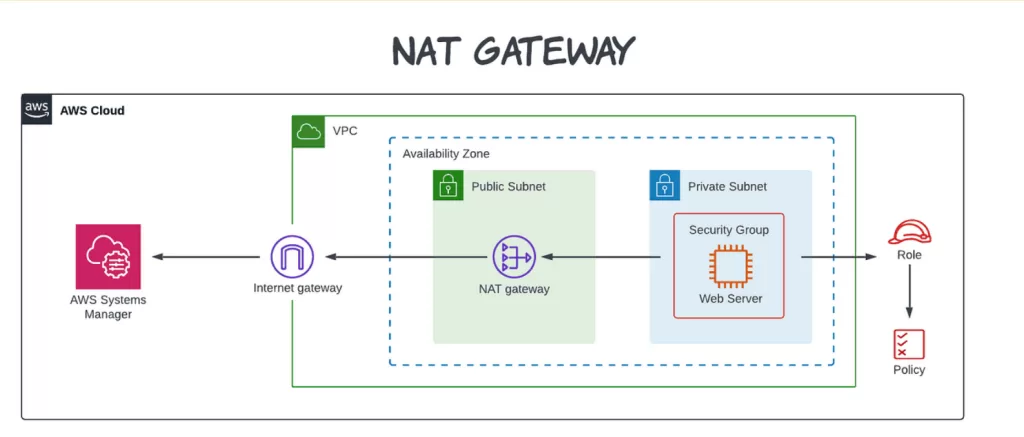
So if you’re learning cloud or DevOps, knowing NAT is a MUST.
Want to dive deeper? Check out our cloud computing internship or Networking course.
✅ Recap: Why NAT is Still Relevant in 2025
Even in a world moving to IPv6, NAT is still widely used. Most companies, homes, and routers depend on NAT daily. It’s cost-effective, adds security, and simplifies internal networking.
And now that you know what is NAT, you’ll start seeing it everywhere — in your router settings, in cloud configuration, even in job interview questions!
📚 Related Reads You Might Enjoy
Strengthen your understanding of networking, NAT, and related tech concepts with these insightful articles:
- 🔗 What is WordPress? A Beginner’s Guide
- 🔗 What is CPU? CPU Full Form Explained
- 🔗 What is My IP Address? Discover Your Public IPv6 Address
- 🔗 What is an ISP? Everything You Should Know in 2025
- 🔗 Computer Network Introduction – Wikitechy
- 🔗 Types of Computer Networks – Wikitechy
- 🔗 Fundamentals of Computer Networking – Wikitechy
- 🔗 What is OSI Model? – Wikitechy
💬 Final Thoughts: So, What is NAT?
To wrap it up — NAT in networking is a backbone technology that helps the internet scale, saves IPs, and adds security. Whether you’re prepping for interviews, studying for certifications, or just curious about how your Wi-Fi works — NAT is a great concept to understand.
If this helped you, consider sharing it with a friend or colleague who’s into networking. And hey — if you’ve got any NAT horror stories or cool use cases, drop them in the comments! 👇