What is SAP? A Complete Guide to SAP in Computers and Accounting

If you have a work background in business, accounting, IT, or even HR, chances are you’ve heard of SAP. People often ask, “what is SAP?” because it sounds technical, though it is one of the most utilized business tools around the globe. Whether you’re looking at SAP in computer systems or SAP in accounting, understanding it is important, as companies used by millions of people, such as Apple, Amazon, and Coca-Cola, have their operations running on SAP.
This article will tell you about what SAP is, how it works, why businesses use it, and why it matters for your career.
What is SAP?
SAP means “Systems, Applications and Products in Data Processing“. It is an ERP scope for all (Enterprise Resource Planning) that was created by a German company called SAP SE.
Simply, SAP assists businesses maintain finance, supply chain, human resources, customer relations, etc., all in one place.

Think of it this way; instead of every department using their own stand-alone software (accounting on Excel, HR on a different app, inventory in a different system), SAP allows for everything to be combined to allow efficiency and data flow across the whole organization.
SAP in Computer Systems
When we think about SAP in terms of technology, it isn’t simply one software; it is a suite of applications.

- ERP Central Component (SAP ECC): Takes care of the core functional processes (finance, HR, logistics).
- SAP S/4HANA: The official upgrade and cloud version that runs on the HANA in-memory database.
- SAP CRM (Customer Relationship Management): Helps organizations with sales/ customer service processes and managing customer information.
- SAP SCM (Supply Chain Management): Manage logistics, inventory, and suppliers.
When IT professionals think of SAP in relation to computer systems, they think of databases, networks, and servers. Their goal is to work with IT teams to ensure that SAP functions effectively for end-users.
SAP in Accounting
One of the most prevalent reasons for companies to adopt SAP, is the automation of accounting and finance.

With SAP, organizations can automate the following accounting tasks:
- Automate general ledger journal entries
- Manage accounts payable + accounts receivable
- Perform tax calculations
- Produce financial statements, reports, and analytics in real-time
- Accurate reporting to comply with international accounting standards
👉For example: Instead of using a spreadsheet to track invoices and manually inputting data, SAP would collect supplier data, confirm purchase orders, and automatically link payments — greatly reducing the risk of human error and a significant savings of time.
Therein lays one of the biggest reasons why SAP skills are in demand for accountants and finance professionals.
Why Do Companies Use SAP?
Organizations don’t adopt SAP because it’s pretty; they adopt it to solve these problems:
- Integration – All departments access the same data, with no silos.
- Efficiency – Processes automate manual work like payroll, invoicing, and order management.
- Scalability – From small businesses to Fortune 500 companies.
- Decision-making – Data and analytics provide visibility to help leaders make real-time decisions.
- Global standards – Supports all currencies, languages and tax laws.
Real-World Example of SAP in Action
Let’s say we are a car manufacturer:
- Sales Team generates customer orders and logs them in SAP.
- Production Team receives an automatic notification in SAP to start manufacturing.
- Finance Team accounts for orders in SAP, creates invoices, and manages payments.
- HR team manages employee shifts in SAP and tracks payroll.
- Logistics Team manages shipping and delivery in SAP.
👉 Without SAP, each department uses their own system, introduces confusion into the process, and wastes time. SAP allows all departments to link to the same process (customer order).
SAP Modules You Should Know
SAP is composed of modules – specialized parts of the system. Some of the most popular are:

- SAP FI (Financial Accounting) – deals with accounting & financial reporting.
- SAP CO (Controlling) – deals with internal or cost accounting.
- SAP MM (Materials Management) – deals with inventory & procurement.
- SAP HR/HCM (Human Capital Management) – deals with human resources & payroll.
- SAP SD (Sales & Distribution) – deals with orders, shipping, and billing.
Careers & Learning Opportunities in SAP
Because SAP is so common, the demand for qualified personnel is huge. Some of the most common SAP careers are:
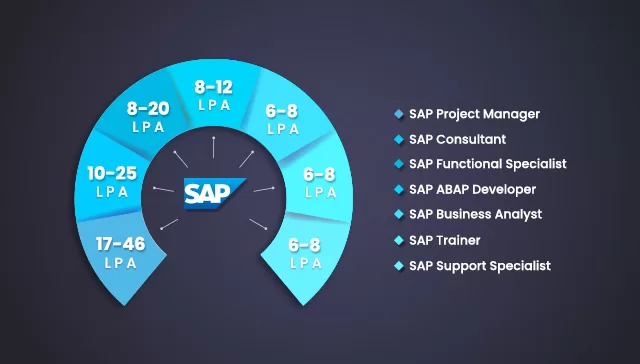
- SAP Consultant
- SAP Functional Analyst (Finance, Human Resources, Logistics)
- SAP Technical Consultant (ABAP, Basis, HANA)
- SAP Project Manager
Many universities have SAP certification programs which should make the entry into this field easier.
SAP vs Other Systems
A very common question is, “So why SAP instead of Oracle or Microsoft Dynamics?”
- SAP: Good for multi-nationals with complex problems
- Oracle ERP: Good at finance; less modular
- Microsoft Dynamics: Easier for small companies
All in all, SAP stands out due to its flexibility and acceptance.
FAQs on SAP
Q1: What is SAP in simple terms?
SAP is a software system that allows any business to manage their finance, human resources, etc. on one platform.
Q2: Do only big companies use SAP?
No, SAP has solutions for small and mid-sized businesses as well.
Q3: What skills do you need to use SAP?
It depends on the position. Finance professionals typically use SAP FI/CO; IT professionals use ABAP programming or SAP Basis.
Conclusion: Why You Should Learn SAP
In summary: What is SAP? More than software, it’s the support system for worldwide enterprises. From SAP in computer systems to SAP in accounting — it gives structure to global enterprise, allowing organizations to run smoothly.
If you are a student, IT professional, or accountant, acquiring SAP knowledge will offer you access to robust, high-paying, future-proof careers.
Organizations around the world are investing in SAP — you will always be in demand if you can learn it.
Related Links