
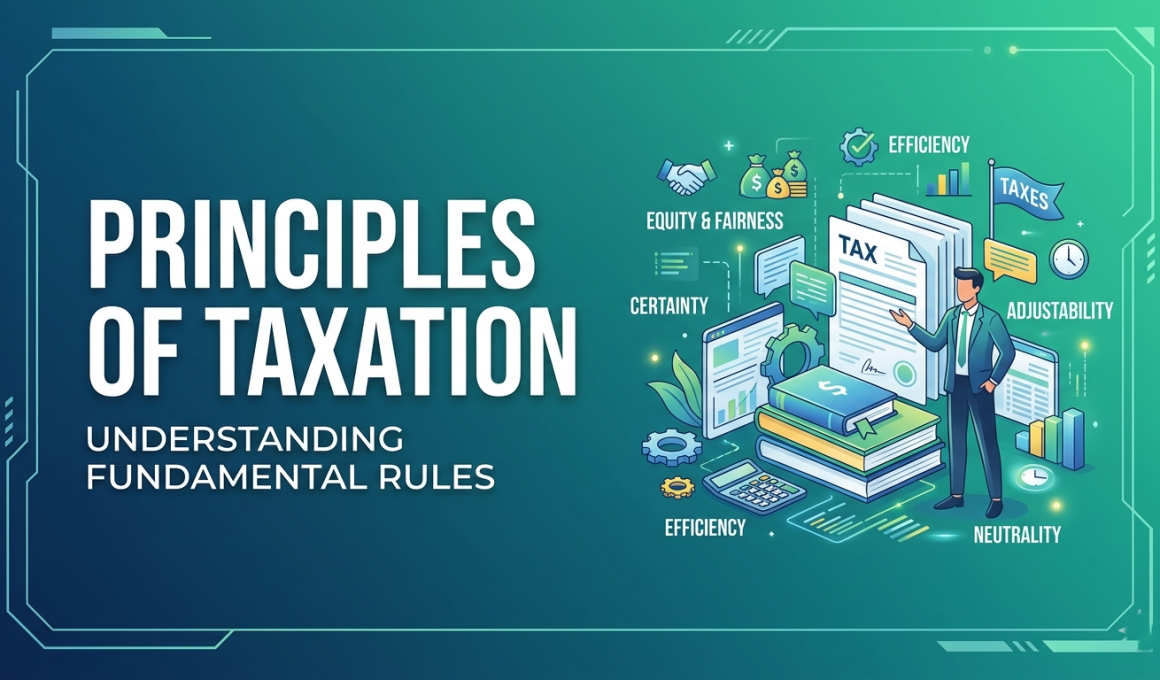
Principles of taxation guide fair and effective tax systems. Key principles include equity, certainty, convenience, and efficiency to ensure just revenue collection and economic balance.
What are the Principles of Taxation?
Have you ever looked at your paycheck stub and wondered where exactly that chunk of money goes? Or maybe you’ve grumbled while paying sales tax on a new laptop, thinking, “Why is this so complicated?” You’re not alone. The answer to why we pay what we pay lies in the principles of taxation.
Taxation isn’t just the government taking money because it can. It’s the lifeblood of a functioning society. It builds the roads you drive on, funds the schools your kids attend, and keeps the streetlights on at night. But collecting that money fairly? That’s a tricky balancing act.
Understanding the principles of taxation helps us move beyond just complaining about taxes to actually understanding the logic behind them. It’s the framework that decides who pays, how much they pay, and when they pay it. In this article, we’re going to break down the 7 basic principles of taxation in plain, simple English—no accounting degree required. We’ll look at how these rules shape the economy and, more importantly, how they impact your daily life.
Top 7 Principles of Taxation
Economists and policymakers have debated tax policy for centuries. While the tax code itself might be thousands of pages long, the core philosophy rests on just a handful of key ideas. These principles act as a North Star, guiding governments toward a system that is both effective (raises enough money) and fair (doesn’t crush the spirit of the people).
Let’s dive into the 7 principles of taxation that form the backbone of modern fiscal policy.
1. Fairness in Taxation: The Equity Principle
Let’s start with the one everyone cares about most: Fairness. The equity principle is the golden rule of tax policy. It’s the idea that the tax burden should be distributed justly. But what does “just” mean? In tax world, it usually boils down to two concepts:
- Horizontal Equity: This means people in the same financial situation should pay the same amount of tax. If you and your neighbor both earn $60,000 a year, you should have roughly the same tax bill. Simple enough, right?
- Vertical Equity: This is where it gets a bit more nuanced. It means people in different financial situations should pay different amounts. Specifically, those with a greater ability to pay should contribute a larger share.
This is why we have Progressive Taxation. Think of it like a ladder. As your income climbs higher, the tax rate on that top portion of your income increases. The logic is that a person earning $500,000 can afford to part with 30% of their income much more comfortably than a person earning $30,000 can part with 10%. The lower earner needs that money for absolute necessities like rent and groceries.
2. Predictability and Stability: The Certainty Principle
Imagine trying to run a business if you had no idea what your tax rate would be next month. Would you hire new employees? Would you invest in new equipment? Probably not. That’s where the Certainty Principle comes in.
This principle states that tax rules should be crystal clear and stable over time. Taxpayers shouldn’t need a crystal ball to figure out their obligations. They need to know:
- When the tax is due.
- How to calculate the amount.
- Where to pay it.
When governments constantly flip-flop on tax laws or create confusing loopholes, it breeds distrust and economic paralysis. Certainty allows families to budget for the year and businesses to plan for the future. It’s the difference between a smooth highway and a road full of unexpected potholes.
3. Efficient Tax Systems: The Economic Principle
Here’s a reality check: It costs money to collect money. The IRS or any tax authority has to pay employees, maintain computer systems, and send out notices. The Economic Principle demands that the cost of collecting a tax should be as low as possible compared to the revenue it brings in.
More importantly, an efficient tax system shouldn’t mess up the economy. A bad tax creates market distortions—it pushes people to make financial decisions based on avoiding tax rather than on sound business sense.
- Good Tax: You invest in a company because it’s a good company.
- Bad Tax: You invest in a weird, unprofitable scheme only because it’s a tax shelter.
Efficiency means the government gets its funding without creating a mountain of paperwork or accidentally killing off an entire industry.
4. Flexibility: Adapting to Economic Conditions
Life isn’t static, and neither is the economy. We have boom times and we have recessions. A rigid tax system that can’t adapt is like a car with no suspension—you feel every single bump in the road painfully.
The Flexibility Principle ensures the tax system can respond to economic changes. During a recession, governments might lower taxes or offer rebates to put more money in people’s pockets, hoping to stimulate spending. Conversely, during a period of high inflation, they might raise taxes slightly to cool down an overheating economy.
This built-in shock absorber helps stabilize the economy without requiring a massive, slow-moving legislative overhaul every time the GDP ticks up or down.
5. Simplicity: Easy to Understand and Comply With
Raise your hand if you’ve ever felt personally victimized by a tax form. You’re not alone. The Simplicity Principle argues that the tax system should be easy for the average person to navigate.
Complexity is the enemy of compliance. When tax codes are filled with jargon, exceptions, and phase-outs, two things happen:
- Honest Mistakes: People mess up because they genuinely don’t understand the rules.
- Loopholes: Wealthy individuals and corporations hire armies of lawyers to exploit the confusing language.
A simple tax system saves everyone time and money. It reduces the stress of filing season and increases the likelihood that everyone pays their fair share without needing a PhD in tax law.
6. Providing Fair Value: The Benefit Principle
This principle is a bit more transactional. The Benefit Principle suggests that taxes should function somewhat like a price tag for government services. In theory, the people who use a service the most should pay the most for it.
We see this in action all the time:
- Gas Taxes: The money you pay in fuel tax goes toward maintaining highways and bridges. The more you drive, the more gas you buy, and the more you contribute to road upkeep.
- Toll Roads: This is the purest form of the benefit principle. You pay to use that specific piece of infrastructure.
However, applying this to everything is tricky. How do you measure the “benefit” a wealthy person gets from national defense versus a poor person? Or the benefit of clean air regulations? That’s why we mix the Benefit Principle with the Equity Principle (ability to pay) for broader social programs.
7. Diversity: A Broad-Based Tax System
You’ve heard the saying, “Don’t put all your eggs in one basket.” The same applies to government revenue. The Diversity Principle states that a healthy tax system pulls money from multiple sources.
If a country relies only on income tax, a spike in unemployment wipes out the budget. If it relies only on sales tax, a consumer spending freeze does the same damage.
A diverse system spreads the risk. It includes:
- Income Tax (Individual and Corporate)
- Sales Tax / VAT
- Property Tax
- Excise Taxes (on specific goods like alcohol or tobacco)
By diversifying the tax base, the government ensures a more stable and predictable stream of revenue, even if one sector of the economy hits a rough patch.
Become A Data Analyst With Kaashiv Infotech
Looking to dive into the world of data analytics and carve your path to success? Kaashiv Infotech is here for you! Our Comprehensive Data Analytics Inplant Training (IPT) is specially designed by experts to equip you with practical skills and real-world experience that will help you to set your foot in the competitive Data analytics industry.
Let’s break down our course offerings to see what makes our course stand out
- Foundation Phase: Kickstart with Kaashiv’s Inplant Training (IPT) or specialized certification courses in Python, Full Stack, or AI to build a strong base in data analytics essentials.
- Practical Phase: Dive into hands-on learning led by Microsoft MVPs and Google-recognized experts, featuring Kaashiv’s Live Industry Projects (2 real-time projects per internship) to build a solid portfolio and apply skills directly.
- Practice Exercises: Get hands-on practice with daily practice exercises that enhance your learning and help you master key concepts.
- Doubt Clearing Sessions: Our regular doubt sessions ensure that no question goes unanswered, giving you clarity of all the concepts.
- Kaashiv Lab for Coding: Access our exclusive lab for coding practice and polish your coding skills in a supportive environment.
- Industry-Oriented Curriculum: Learn industry-relevant skills and techniques that are directly applicable to real-world scenarios.
- Triple Certification: Earn Kaashiv’s prestigious Triple Certification (Internship Certificate, IPT Certificate, and Industrial Exposure Certificate) upon completion that is recognized and valued by employers in the industry.
Q&A Forum: Engage with fellow batchmates and instructors in our Q&A forum to exchange ideas, seek advice, and collaborate on projects.
Instructor-Led Sessions: Benefit from interactive sessions led by experienced instructors from top MNCs who guide you every step of the way.
Career Jump: Gain access to 100% Job Assistance, ATS-friendly resume tools, and interview question banks to land your dream job in data analytics.
So what are you waiting for? Launch your career with confidence! Join the Kaashiv Infotech Data Analytics Inplant Training and unlock your potential today.
Conclusion
So, there you have it. The principles of taxation aren’t just dusty concepts from an economics textbook; they are the active guidelines that shape the financial relationship between you and your government. Whether it’s the fairness of the equity principle or the common sense of the simplicity principle, these seven pillars aim to create a system that funds our shared needs without breaking our individual backs.
Next time tax season rolls around, or you hear a debate about a new tax proposal, you’ll have the framework to understand the why behind the numbers. A good tax system is a constant work in progress, always striving for that perfect balance between revenue and fairness.
Principles of Taxation FAQs
1. What is the simple definition of taxation?
Taxation is the process by which a government collects money (taxes) from its citizens and businesses. This money is mandatory and is used to pay for public goods and services that benefit everyone, such as roads, schools, police departments, and national defense.
2. What are the 7 principles of taxation?
The 7 widely recognized principles of taxation are:
- Equity: Fairness based on ability to pay.
- Certainty: Predictability in timing and amount.
- Economy/Efficiency: Low cost of collection and minimal market disruption.
- Flexibility: Ability to adjust to economic cycles.
- Simplicity: Ease of understanding and compliance.
- Benefit: Linking taxes paid to services received.
- Diversity: Drawing revenue from multiple sources.
3. What is the benefit principle of taxation?
The benefit principle is the idea that taxes should be levied in proportion to the benefits a taxpayer receives from government services. For example, gasoline taxes are often justified under this principle because the revenue is used to maintain the roads that drivers use.
4. What are the main types of taxes?
The main types of taxes include:
- Income Tax: A tax on the money you earn from work or investments.
- Sales Tax: A tax on the purchase of goods and services.
- Property Tax: A tax on the value of real estate you own.
- Corporate Tax: A tax on the profits of businesses.
5. Why is the equity principle important in taxation?
The equity principle is crucial because it ensures the tax system is perceived as fair. If people believe the system is rigged or that the rich aren’t paying their fair share, tax morale drops. Low tax morale leads to increased tax evasion and a breakdown of trust between citizens and the government.
1. What is the simple definition of taxation?
Taxation is the process by which a government collects money (taxes) from its citizens and businesses. This money is mandatory and is used to pay for public goods and services that benefit everyone, such as roads, schools, police departments, and national defense.
2. What are the 7 principles of taxation?
The 7 widely recognized principles of taxation are:
Equity: Fairness based on ability to pay.
Certainty: Predictability in timing and amount.
Economy/Efficiency: Low cost of collection and minimal market disruption.
Flexibility: Ability to adjust to economic cycles.
Simplicity: Ease of understanding and compliance.
Benefit: Linking taxes paid to services received.
Diversity: Drawing revenue from multiple sources.
3. What is the benefit principle of taxation?
The benefit principle is the idea that taxes should be levied in proportion to the benefits a taxpayer receives from government services. For example, gasoline taxes are often justified under this principle because the revenue is used to maintain the roads that drivers use.
4. What are the main types of taxes?
The main types of taxes include:
Income Tax: A tax on the money you earn from work or investments.
Sales Tax: A tax on the purchase of goods and services.
Property Tax: A tax on the value of real estate you own.
Corporate Tax: A tax on the profits of businesses.
5. Why is the equity principle important in taxation?
The equity principle is crucial because it ensures the tax system is perceived as fair. If people believe the system is rigged or that the rich aren’t paying their fair share, tax morale drops. Low tax morale leads to increased tax evasion and a breakdown of trust between citizens and the government.