

In today’s competitive tech landscape, mastering Data Structures and Algorithms (DSA) is not just about solving coding problems—it’s about applying those concepts to build real-world projects. Recruiters in 2026 are increasingly looking for candidates who can demonstrate practical implementation skills rather than just theoretical knowledge.
Working on DSA-based projects helps you understand how core concepts like arrays, trees, graphs, hashing, and dynamic programming are used in real applications. Whether you’re preparing for interviews or building your portfolio, these projects will significantly boost your confidence and problem-solving ability.
In this article, we’ll explore 7 powerful DSA project ideas that are highly relevant in 2026 and can help you stand out.
1. Smart Route Planner (Graph-Based Project)
Overview
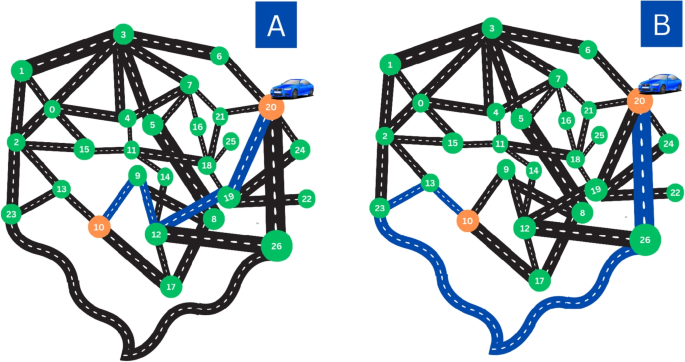
A Smart Route Planner is an advanced application designed to help users determine the most efficient path between two or more locations. Unlike basic navigation systems, this project can be expanded to include real-time decision-making capabilities such as traffic conditions, road closures, weather impact, and alternate route suggestions. The system models cities as nodes and roads as edges, forming a graph structure where algorithms can be applied to compute optimal routes.
You can further enhance this project by integrating features like distance vs time optimization, fuel-efficient routes, and multi-stop journey planning. For example, a delivery service could use this system to optimize routes for multiple deliveries in a single trip. This makes the project not only algorithmically rich but also highly practical and industry-relevant.
Key Concepts Used
- Graphs
- Dijkstra’s Algorithm
- Priority Queues
Features to Include
- Shortest path calculation
- Traffic-aware route suggestions
- Multiple route comparisons
Why This Project Matters
This project demonstrates real-world usage of graph algorithms and is widely used in applications like GPS systems.
2. Social Network Analyzer

Overview
A Social Network Analyzer is a system that models and examines relationships between users in a network, similar to platforms like social media or professional networking sites. In this project, users are represented as nodes and their relationships (friendships, follows, connections) as edges in a graph. The goal is to extract meaningful insights from this network structure.
You can implement features such as detecting communities (groups of closely connected users), identifying influencers based on centrality measures, and recommending new connections based on mutual relationships. This project can also include visualization tools to display network graphs, making it more interactive and insightful. It is an excellent way to understand how large-scale platforms analyze user behavior and connections.
Key Concepts Used
- Graph Traversal (BFS, DFS)
- Connected Components
- Union-Find
Features to Include
- Suggest mutual friends
- Detect communities
- Measure influence of users
Why This Project Matters
Social media platforms rely heavily on graph algorithms, making this a highly practical and impressive project.
3. Custom Search Engine (Trie-Based Project)

Overview
A Custom Search Engine project focuses on building a system that can efficiently store, retrieve, and rank information based on user queries. Unlike simple search functions, this system is designed to handle large datasets and provide fast, relevant results. By using a Trie (prefix tree), you can optimize search operations, especially for autocomplete and suggestion features.
This project can be expanded by implementing ranking algorithms, fuzzy search (handling typos), and keyword frequency analysis. You could also simulate how real search engines prioritize results based on relevance. Additionally, integrating a simple UI where users can type queries and receive instant suggestions will make the project more interactive and visually appealing.
Key Concepts Used
- Trie (Prefix Tree)
- Hashing
- String Matching
Features to Include
- Auto-suggestions
- Fast keyword search
- Ranking results
Why This Project Matters
Search engines depend on efficient string processing and indexing—this project showcases those skills effectively.
4. File Compression Tool (Greedy Algorithm)

Overview
A File Compression Tool is a system that reduces the size of files without losing essential data, making storage and data transfer more efficient. This project involves implementing compression techniques such as Huffman Coding, where frequently occurring characters are encoded with shorter bit sequences while less frequent ones use longer sequences.
You can design the tool to support multiple file types like text files, logs, or even basic binary formats. Enhancements could include visualizing the compression process, comparing original vs compressed sizes, and analyzing performance improvements. This project gives you a deep understanding of optimization and how algorithms can be used to improve system efficiency in real-world applications.
Key Concepts Used
- Greedy Algorithms
- Huffman Coding
- Binary Trees
Features to Include
- Compress and decompress files
- Display compression ratio
- Support multiple file formats
Why This Project Matters
This project demonstrates optimization and efficiency—key skills in system design.
5. Task Scheduler (Heap-Based Project)

Overview
A Task Scheduler is a system that manages and executes tasks based on priority, deadlines, or resource availability. This project simulates how operating systems or cloud platforms manage multiple processes efficiently. Tasks can be assigned priorities, and the scheduler ensures that higher-priority tasks are executed first using data structures like heaps.
You can extend this project by adding features such as task dependencies, time slicing, and dynamic priority updates. For example, in a real-world system, some tasks may depend on the completion of others before they can execute. Visualizing the scheduling process or creating a dashboard for monitoring tasks can further enhance the project’s usability and appeal.
Key Concepts Used
- Heaps (Priority Queue)
- Scheduling Algorithms
- Sorting
Features to Include
- Priority-based execution
- Real-time updates
- Task dependency handling
Why This Project Matters
Schedulers are widely used in operating systems and cloud computing platforms.
6. Online Code Editor with Syntax Highlighting

Overview
An Online Code Editor is a browser-based application that allows users to write, edit, and sometimes execute code directly within a web interface. This project involves parsing code, identifying keywords, and applying syntax highlighting to improve readability. It mimics tools like modern IDEs but on a smaller scale.
You can enhance this project by supporting multiple programming languages, implementing real-time error detection, and adding features like auto-indentation and bracket matching. The project can also include a backend component to execute code securely. This is a great way to combine DSA concepts with frontend and backend development skills, making it highly attractive for recruiters.
Key Concepts Used
- Stacks
- Parsing Algorithms
- String Processing
Features to Include
- Syntax highlighting
- Error detection
- Code formatting
Why This Project Matters
This project combines DSA with frontend development, making it a strong portfolio addition.
7. LRU Cache Implementation (System Design + DSA)

Overview
An LRU (Least Recently Used) Cache is a data structure that stores a limited number of items and removes the least recently accessed item when the cache reaches its capacity. This project is widely used in systems like web browsers, databases, and memory management.
The challenge lies in achieving constant time complexity (O(1)) for both insertion and retrieval operations. This is typically done using a combination of a hash map and a doubly linked list. You can expand this project by adding features like cache statistics, persistence, and multi-level caching systems. It’s a perfect example of how multiple data structures work together to solve real-world problems efficiently.
Key Concepts Used
- Hash Maps
- Doubly Linked List
Features to Include
- Fast access (O(1))
- Automatic eviction of old data
- Configurable cache size
Why This Project Matters
LRU caches are used in browsers, databases, and operating systems, making this a must-know concept.
Tips to Make Your Projects Stand Out
- Add a clean user interface (React, Angular, or simple HTML/CSS)
- Host your project on platforms like GitHub
- Write proper documentation
- Include test cases and performance analysis
- Try to solve real-world problems
Conclusion
Building DSA-based projects is one of the most effective ways to strengthen your problem-solving skills and showcase your abilities to recruiters. The projects listed above cover a wide range of concepts—from graphs and trees to hashing and dynamic programming—giving you a solid foundation in Data Structures and Algorithms.
In 2026, it’s no longer enough to just know DSA—you need to demonstrate it through impactful projects. Start with one or two ideas from this list, build them thoroughly, and gradually expand your portfolio.
Remember, consistency and practical application are the keys to mastering DSA.
Want to learn more ??, Kaashiv Infotech Offers Data Analytics Course, Data Science Course, Cyber Security Course & More Visit Their Website www.kaashivinfotech.com.