

Automation Test Engineer Roles are becoming increasingly important as software teams release applications faster than ever. When I first started learning about software testing, I used to think testing simply meant finding bugs after developers finished coding. But that is only a small part of the picture.
Today, an Automation Test Engineer does much more.
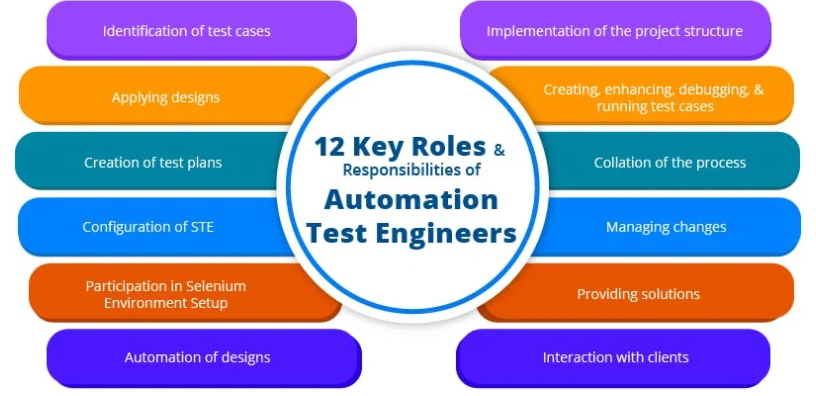
Automation Test Engineer Roles involve designing automated tests, writing test scripts, checking application quality, identifying defects, working closely with developers, and making sure software behaves as expected across different situations.
If you are planning to start a career in software testing or wondering what an Automation Test Engineer actually does every day, this guide will make the role much easier to understand.

Key Highlights ⭐
- Automation Test Engineers create and maintain automated test scripts.
- They help teams find bugs earlier in the software development process.
- Automation testing reduces repetitive manual testing work.
- They work closely with developers, manual testers, business analysts, and DevOps teams.
- Popular tools include Selenium, Playwright, Cypress, Appium, Postman, Jenkins, and Git.
- Programming knowledge in languages such as Java, Python, JavaScript, or C# can be extremely useful.
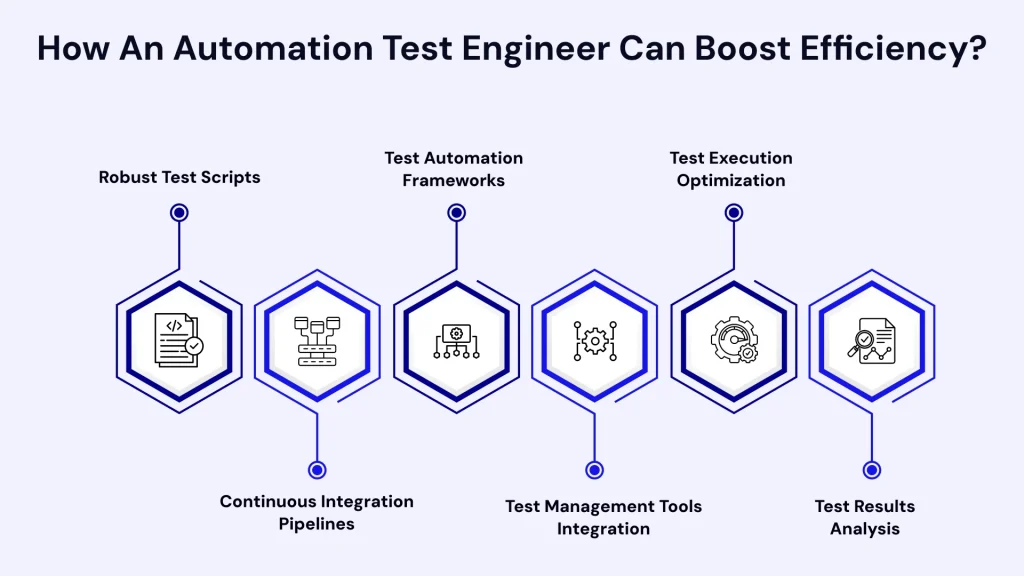
- Automation Test Engineers are responsible for maintaining reliable and reusable test frameworks.
- They also analyze test results and report defects.
- Good communication and problem-solving skills matter just as much as technical skills.
- Automation testing is not about replacing manual testers; it is about making testing faster, repeatable, and more efficient.
What Does an Automation Test Engineer Do? 🤔
An Automation Test Engineer uses software tools and programming skills to automate the testing of applications.
Imagine an e-commerce website.
Every time a new version is released, someone needs to check things like:
- Can users log in?
- Can they search for products?
- Can they add products to the cart?
- Does the payment page work?
- Does the order confirmation appear?
- Does logout work correctly?
Doing these checks manually every single time can take hours.
An Automation Test Engineer can create automated scripts that perform many of these checks automatically.
That is the basic idea behind the role.
But in a real company, Automation Test Engineer Roles and Responsibilities go far beyond simply writing scripts.
1. Understanding Application Requirements
One of the first Automation Test Engineer Roles is understanding what the application is supposed to do.
Before writing a test script, I need to know what I am actually testing.
For example, suppose a company is developing a banking application.
A requirement might say:
That sounds simple.
But a tester needs to think deeper:
- What happens if the account number is incorrect?
- What happens if the balance is insufficient?
- What happens if the amount is zero?
- What happens if the network disconnects?
- What happens if the user enters letters instead of numbers?
This is where a tester’s thinking becomes important.
Automation cannot replace understanding.
2. Creating Automated Test Scripts
This is probably the responsibility most people associate with the job.
Automation Test Engineers write scripts that automatically interact with an application and verify whether the expected results occur.
For example, a simple login test might:
- Open the website.
- Enter the username.
- Enter the password.
- Click the Login button.
- Check whether the dashboard appears.
If everything works, the test passes.
If the application behaves differently from what was expected, the test fails.
Tools such as Selenium, Playwright, and Cypress are commonly used for web application automation.
For mobile applications, tools such as Appium can be used.
3. Designing Automation Test Frameworks
Writing individual test scripts is one thing.
Building a proper automation framework is another.
A good framework helps testers organize their code so that tests remain:
- Reusable
- Maintainable
- Scalable
- Easy to understand
- Easy to execute
For example, instead of writing the login code separately in 50 tests, we can create a reusable login method.
Then different tests can call that method whenever login is required.
This saves time and avoids unnecessary duplicate code.
This is one reason why programming knowledge is important for Automation Test Engineer Roles.
4. Performing Regression Testing
Regression testing is another major part of Automation Test Engineer Roles and Responsibilities.
Let’s say a developer fixes the payment functionality.
Sounds good, right?
But what if that change accidentally breaks the shopping cart?
That’s where regression testing helps.
The tester runs previously created tests to check whether existing functionality still works after new changes.
Automation becomes particularly useful here because regression testing can involve hundreds or even thousands of test cases.
Instead of manually checking everything after every release, automated tests can run repeatedly.
That is a huge advantage.
5. Finding and Reporting Bugs 🐞
Finding a bug is only half the job.
The tester also needs to explain the problem clearly.
A good defect report usually contains information such as:
- Bug title
- Steps to reproduce
- Expected result
- Actual result
- Environment
- Severity
- Screenshots or logs
For example:
Bug: Login button does not respond after entering valid credentials.
Steps:
- Open the application.
- Enter a valid username.
- Enter a valid password.
- Click Login.
Expected Result: User should be redirected to the dashboard.
Actual Result: Nothing happens after clicking Login.
This kind of information helps developers reproduce and fix the issue quickly.
6. Analyzing Test Results
Automation testing produces results.
But somebody still needs to understand those results.
Suppose 500 automated tests run overnight.
The report shows:
- 470 Passed
- 20 Failed
- 10 Skipped
An Automation Test Engineer investigates the failures.
Not every failed test necessarily means there is a software bug.
Sometimes the problem could be:
- An unstable test
- A network issue
- Incorrect test data
- Environment problems
- Application changes
- A genuine defect
So Automation Test Engineer Roles also involve investigation and analysis.
7. Maintaining Automated Tests
One thing I learned about automation is that writing a test once doesn’t mean the work is finished.
Applications keep changing.
A developer might rename a button.
The UI team might redesign a page.
A login process might change.
An API endpoint might be updated.
Suddenly, an old automation script may stop working.
The Automation Test Engineer needs to update the test accordingly.
This is called test maintenance.
In fact, maintaining automation scripts can take a significant amount of time in real projects.
8. Working With Developers and Other Teams
An Automation Test Engineer doesn’t work alone.
This is an important part of Automation Test Engineer Roles and Responsibilities.
They may work with:
- Software Developers
- Manual Testers
- Business Analysts
- Product Managers
- DevOps Engineers
- Database Developers
- Project Managers
For example, when an automated test fails, the tester might discuss the issue with the developer.
The developer may say:
The tester then checks the requirement.
Maybe the test is wrong.
Or perhaps the requirement is unclear.
Good communication helps resolve these situations quickly.
9. Integrating Automation With CI/CD
Modern software teams often use CI/CD pipelines to automatically build, test, and deploy applications.
Automation testing can become part of this pipeline.
For example:
Developer pushes code → Build starts → Automated tests run → Results are generated → Deployment continues if tests pass
Tools such as Jenkins, GitHub Actions, GitLab CI/CD, and Azure DevOps can be used for automation pipelines.
This is why modern Automation Test Engineer Roles often overlap with DevOps practices.
You don’t necessarily need to become a full-time DevOps Engineer, but understanding CI/CD is a valuable skill.
10. Improving Test Automation
A good Automation Test Engineer doesn’t simply create more tests.
They also ask:
“Can I make these tests better?”
For example:
- Can I reduce duplicate code?
- Can I make execution faster?
- Can I improve test reliability?
- Can I reuse existing components?
- Can I improve reporting?
- Can I reduce flaky tests?
This mindset makes a big difference.
Automation is supposed to save time, not create another maintenance headache.
Automation Test Engineer Skills You Need 💻
If you are thinking about becoming an Automation Test Engineer, don’t worry if you don’t know everything immediately.
You can learn step by step.
1. Programming
Learn at least one programming language.
Popular choices include:
- Java
- Python
- JavaScript
- C#
If you already know programming basics such as variables, conditions, loops, functions, classes, and exception handling, you’re off to a good start.
2. Automation Tools
You can learn tools such as:
- Selenium
- Playwright
- Cypress
- Appium
Don’t try to learn ten tools at once.
I would rather become comfortable with one tool and understand automation concepts properly.
3. API Testing
Modern applications depend heavily on APIs.
Learning tools such as Postman and understanding HTTP methods like GET, POST, PUT, and DELETE can be very useful.
4. SQL
SQL is another useful skill.
Sometimes you need to verify whether data was correctly stored in the database after performing an action through the application.
For example:
A user registers → application stores user data → tester checks the database.
That is where SQL knowledge helps.
5. Git
Automation projects involve code, so version control matters.
Understanding Git helps you:
- Commit changes
- Create branches
- Merge code
- Review changes
- Collaborate with teammates
Manual Testing vs Automation Testing
People often ask me:
“Should I learn manual testing before automation testing?”
My answer is: understanding manual testing concepts is extremely helpful.
Why?
Because automation is basically using code to perform testing activities.
You should understand concepts such as:
- Test cases
- Test scenarios
- Test plans
- Regression testing
- Smoke testing
- Functional testing
- Defect life cycle
- Severity
- Priority
Once you understand these concepts, learning automation becomes much easier.
A Real-Life Example of Automation Testing
Let’s take a simple shopping website.
Suppose the company releases a new version every two weeks.
The team needs to test:
Login → Search → Product → Cart → Checkout → Payment → Order
If a tester manually checks every flow after every release, it can become repetitive.
Instead, the Automation Test Engineer creates automated tests.
The test can automatically:
- Open the website.
- Log in.
- Search for a product.
- Add it to the cart.
- Proceed to checkout.
- Verify the order details.
- Generate a test report.
Now imagine running the same process every night.
That’s where automation becomes powerful. ⚡
Automation Test Engineer Career Path 🚀
If you’re starting from zero, I would suggest learning in this order:
Software Testing Basics
↓
Manual Testing Concepts
↓
Programming Fundamentals
↓
SQL
↓
Selenium / Playwright / Cypress
↓
API Testing
↓
Git
↓
CI/CD
↓
Automation Framework Development
↓
Real-Time Projects
You don’t need to master everything in one month.
Build your skills gradually.
The important thing is consistency.
What Is the Difference Between an Automation Tester and a Manual Tester?
The biggest difference is the way testing is performed.
A Manual Tester executes test cases manually without using automation scripts for the testing activity.
An Automation Test Engineer uses programming and automation tools to execute repetitive tests automatically.
But there is overlap.
Both roles need to understand:
- Requirements
- Test scenarios
- Defects
- Application behavior
- Testing techniques
- Quality expectations
Automation is not simply “manual testing but faster.”
It requires programming, framework design, debugging, maintenance, and technical problem-solving.
Why Are Automation Test Engineer Roles in Demand? 📈
Software companies want to release products quickly while maintaining quality.
That creates a difficult balance.
Faster releases + more features + reliable software = stronger testing
Automation helps teams repeatedly test important application flows without manually performing every step.
It can also support continuous testing in CI/CD environments.
However, automation doesn’t mean every test should be automated.
Some tests are still better suited to human testers, especially exploratory testing, usability testing, and situations requiring human judgment.
The best teams usually combine manual testing and automation testing.
Final Thoughts
When I look at Automation Test Engineer Roles, I don’t see the job as simply “writing Selenium scripts.”
The role is much broader.
An Automation Test Engineer needs to understand the application, think like a tester, write code, investigate failures, communicate with developers, maintain frameworks, analyze results, and continuously improve the testing process.
If you’re planning a career in software testing, don’t feel overwhelmed by the number of tools available.
Start small.
Learn testing fundamentals.
Pick one programming language.
Learn one automation tool.
Build a small project.
Then slowly add API testing, SQL, Git, frameworks, and CI/CD to your skill set.
The tools will change. New frameworks will appear. AI will change parts of software testing too.
But the ability to think logically, understand software, find problems, and build reliable tests will continue to matter.
And that’s what makes Automation Test Engineer Roles interesting for anyone who enjoys both coding and finding problems. 🚀
If You Want to study Software Testing Course, or any other course & Internship visit www.kaashivinfotech.com