

Digital Marketing has become one of those skills that keeps showing up everywhere—business websites, Instagram pages, YouTube channels, Google searches, emails, and even WhatsApp messages. When I first looked at Digital Marketing, I thought it was mostly about running ads. But there is much more to it.
Digital Marketing covers the methods businesses use to reach people online, attract visitors, build trust, generate leads, and sell products or services.
If you are a complete beginner wondering, “Where should I start?”, this Digital Marketing syllabus for beginners gives you a clear learning path. You don’t need to learn everything in one day. Start with the basics, practise each topic, and gradually move toward advanced concepts.
Key Highlights
- 📌 Understand the basics of Digital Marketing
- 🔎 Learn Search Engine Optimization (SEO)
- 📱 Understand Social Media Marketing
- 💰 Learn the fundamentals of Paid Advertising
- ✍️ Explore Content Marketing
- 📧 Understand Email Marketing
- 📊 Learn Google Analytics and marketing data
- 🎯 Understand lead generation and conversion
- 🤝 Learn about affiliate marketing
- 🛠️ Explore useful Digital Marketing tools
- 💼 Understand career opportunities after learning Digital Marketing

What Is Digital Marketing?
Digital Marketing means promoting products, services, brands, or businesses through digital channels.
Instead of depending only on newspapers, television, banners, or physical advertisements, businesses can reach customers through:
- Search engines
- Social media
- Websites
- YouTube
- Online advertisements
- Mobile applications
- Content platforms
For example, imagine that I open a small bakery in Chennai.
I could simply put a board outside the bakery and wait for people to notice it. But what if I create an Instagram page, build a website, appear on Google when people search for “best cakes near me,” and send offers through email?
Now I have multiple ways to reach potential customers.
That’s the basic idea behind Digital Marketing.
Digital Marketing Syllabus for Beginners
The syllabus can look huge initially, but don’t let that scare you. I recommend learning it step by step.
1. Digital Marketing Fundamentals
The first topic in a Digital Marketing syllabus should always be the fundamentals.
Before learning SEO, Google Ads, or social media advertising, you need to understand how online marketing works.
You should learn:
- What is Digital Marketing?
- Traditional Marketing vs Digital Marketing
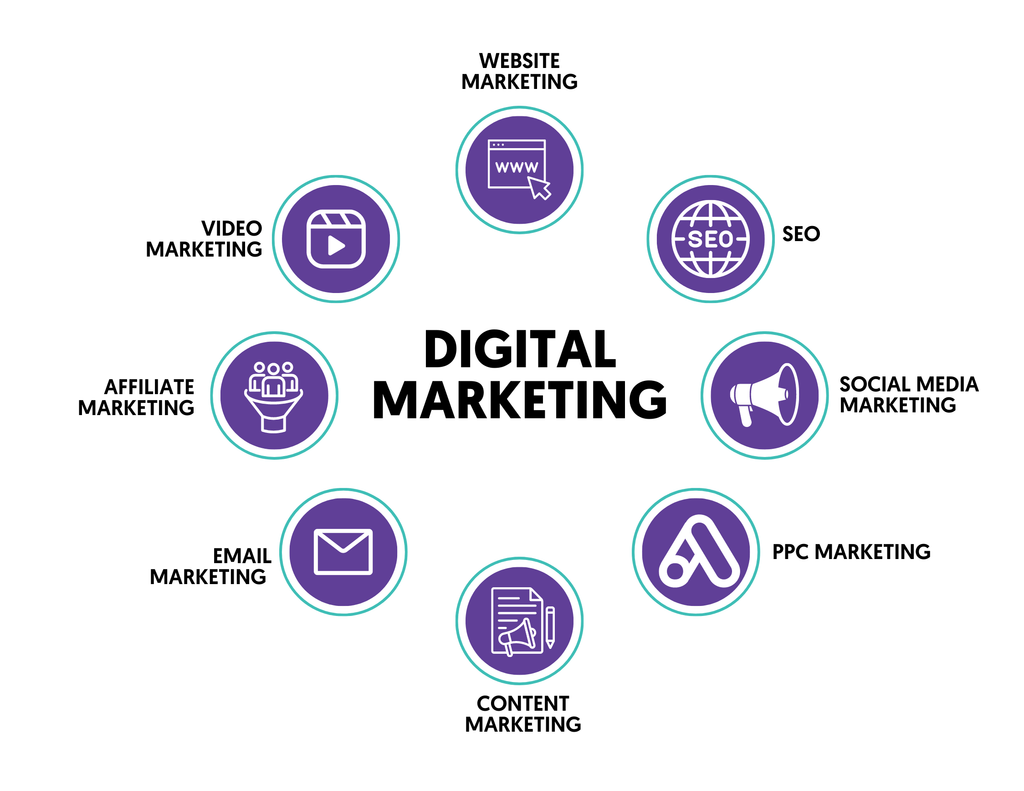
- Types of Digital Marketing
- Digital Marketing channels
- Target audience
- Customer journey
- Marketing funnel
- Leads and conversions
- B2B vs B2C marketing
- Organic vs paid marketing
One concept I would pay special attention to is the marketing funnel.
A customer usually doesn’t see an advertisement and immediately purchase something. They may first discover the brand, research it, compare alternatives, and finally make a decision.
Understanding this journey makes the rest of the Digital Marketing syllabus much easier.
2. Search Engine Optimization (SEO)
SEO is one of the most important parts of Digital Marketing.
SEO helps websites improve their visibility in search engine results.
Suppose I search Google for: “Best Digital Marketing courses for beginners”
Google displays several results. Businesses want their websites to appear prominently for relevant searches.
That’s where SEO comes in.
A beginner SEO syllabus should cover:
- What is SEO?
- How search engines work
- Keywords
- Keyword research
- Search intent
- On-page SEO
- Off-page SEO
- Technical SEO
- Meta title
- Meta description
- Headings
- Internal linking
- External linking
- Backlinks
- Image optimization
- URL structure
- Mobile SEO
- Local SEO
For example, if I’m writing an article about Digital Marketing courses, I shouldn’t randomly repeat the phrase hundreds of times.
Instead, I should understand what people are searching for and create useful content that answers their questions.
Google’s own Search Central documentation is a useful resource for learning SEO fundamentals.
3. Keyword Research
Keyword research deserves its own place in a beginner Digital Marketing syllabus.
A keyword is basically a word or phrase people type into a search engine.
Examples:
- Digital Marketing course
- Digital Marketing syllabus
- SEO course for beginners
- Social Media Marketing jobs
- Digital Marketing salary
Keyword research helps marketers understand what their audience is actually searching for.
You can learn:
- Short-tail keywords
- Long-tail keywords
- Search volume
- Keyword difficulty
- Search intent
- Commercial keywords
- Informational keywords
- Transactional keywords
- Navigational keywords
Here’s a simple example.
“Digital Marketing” is a broad keyword.
“Digital Marketing syllabus for beginners” is much more specific.
That difference matters when planning content.
4. Content Marketing
Here’s where creativity enters the Digital Marketing syllabus.
Content Marketing focuses on creating useful content to attract and engage an audience.
Content can include:
- Blog posts
- Videos
- Instagram posts
- YouTube videos
- Infographics
- Podcasts
- E-books
- Case studies
- Newsletters
Imagine that I sell laptops.
Instead of constantly saying, “Buy my laptop!”, I could create articles such as:
- How to choose a laptop for students
- Laptop vs desktop: Which one should you buy?
- Best laptop specifications for programming
This content can bring people to my website even before they are ready to purchase.
That is why Content Marketing and SEO often work closely together.
5. Social Media Marketing
Social media has become a major part of Digital Marketing.
A beginner should understand how brands use social platforms to build awareness, communicate with customers, and generate traffic or leads.
You can learn:
- Instagram Marketing
- Facebook Marketing
- LinkedIn Marketing
- YouTube Marketing
- X marketing
- Social media content planning
- Hashtags
- Reels and short-form videos
- Social media engagement
- Community management
- Social media analytics
For example, a clothing brand might use Instagram Reels to showcase new products.
A software company may use LinkedIn to share technical articles and company updates.
The platform can change depending on where the target audience spends time.
6. Paid Advertising
Organic marketing takes time. Paid advertising allows businesses to pay for visibility.
This is another important part of a practical Digital Marketing syllabus.
You should understand:
- Google Ads
- Search Ads
- Display Ads
- Video Ads
- Social media advertising
- Campaign objectives
- Target audience
- Ad copy
- Landing pages
- Budgeting
- Cost Per Click (CPC)
- Cost Per Mille (CPM)
- Cost Per Acquisition (CPA)
- Conversion tracking
For example, if I run a Digital Marketing training institute, I might create a Google Ads campaign targeting people searching for Digital Marketing courses.
The important part isn’t simply creating an advertisement.
I also need to understand who I’m targeting, what message I’m showing, where I’m sending them, and what happens after they click.
7. Email Marketing
Email Marketing may look old compared with Instagram or YouTube, but it remains an important Digital Marketing channel.
Businesses use email to communicate directly with people who have subscribed or interacted with them.
A beginner can learn:
- Email campaigns
- Newsletters
- Email lists
- Lead nurturing
- Subject lines
- Email copywriting
- Call-to-action buttons
- Segmentation
- Automation
- Open rates
- Click-through rates
For example, an online course website might send:
Day 1: Welcome email
Day 3: Free learning resources
Day 5: Beginner tips
Day 7: Course information
This type of communication can be planned as an automated sequence.
8. Web Analytics and Google Analytics
Learning Digital Marketing without understanding data is like driving a car without looking at the dashboard.
You need data to understand whether your marketing efforts are working.
A beginner should learn:
- Website traffic
- Users
- Sessions
- Traffic sources
- Engagement
- Conversions
- Events
- Landing pages
- Campaign tracking
- Reports
Google Analytics is widely used for website and marketing measurement. You can explore the official Google Analytics learning resources to understand the platform.
Here’s a simple example.
Suppose 10,000 people visit my website, but only 20 people submit a contact form.
At first glance, 10,000 visitors sounds impressive.
But the conversion data tells me something more useful: traffic alone isn’t enough.

9. Conversion Rate Optimization (CRO)
Once people arrive at a website, what happens next?
Do they purchase?
Do they register?
Do they fill out a form?
Do they contact the business?
Conversion Rate Optimization, commonly called CRO, focuses on improving those actions.
You can learn:
- Landing page optimization
- Call-to-action buttons
- Website navigation
- Forms
- A/B testing
- User experience
- Conversion tracking
- Bounce and engagement analysis
For example, changing a confusing “Submit” button into a clearer action such as “Get Free Consultation” may make the next step easier for visitors to understand.
Small changes can sometimes make a meaningful difference.
10. Affiliate Marketing
Affiliate Marketing is another topic worth including in a beginner Digital Marketing syllabus.
The basic idea is simple.
A person or publisher promotes another company’s product or service using a tracked link. If a qualifying purchase or action happens, the affiliate may receive a commission according to the program’s terms.
You can learn:
- Affiliate networks
- Affiliate links
- Commission models
- Product promotion
- Affiliate content
- Tracking
- Disclosure
- Niche selection
For example, a technology blogger might review a laptop and include an affiliate link to a retailer.
11. Mobile Marketing
People spend a large part of their online time using smartphones, so mobile marketing also deserves attention.
Topics include:
- SMS Marketing
- Mobile-friendly websites
- Mobile advertising
- App marketing
- Push notifications
- WhatsApp-based business communication
- Mobile user experience
A website that looks perfect on a laptop but is difficult to use on a phone can lose potential customers.
That’s why mobile optimization connects closely with both SEO and Digital Marketing.
12. Online Reputation Management
Imagine a customer searches for a company and finds several negative reviews.
What happens next?
They may think twice before contacting the company.
Online Reputation Management (ORM) focuses on monitoring and managing how a brand appears online.
You can learn:
- Customer reviews
- Google Business Profile
- Review responses
- Brand mentions
- Social media reputation
- Customer feedback
- Crisis communication
The goal isn’t simply to hide criticism. Businesses should also learn how to respond professionally and use genuine customer feedback to improve.
13. Digital Marketing Tools Beginners Should Know
You don’t need to master 50 tools immediately.
Start with a small set and understand what each tool does.
| Area | Example Tools |
|---|---|
| SEO | Google Search Console, Ahrefs, Semrush |
| Analytics | Google Analytics |
| Keyword Research | Google Keyword Planner |
| Social Media | Meta Business Suite |
| Design | Canva |
| Email Marketing | Mailchimp |
| Website | WordPress |
| Advertising | Google Ads |
| Reporting | Looker Studio |
The tools may change over time, but the marketing concepts remain more important.
14. AI in Digital Marketing 🤖
I would also add AI in Digital Marketing to any modern syllabus.
AI tools can help marketers with tasks such as:
- Content ideas
- Keyword research assistance
- Ad copy drafts
- Social media ideas
- Email drafts
- Data analysis
- Customer segmentation
- Image generation
- Video creation
- Chatbots
But I wouldn’t depend completely on AI.
AI can generate an answer quickly, but marketers still need to check facts, understand their audience, maintain brand voice, and make the final decisions.
Think of AI as a helper, not the entire marketing strategy.

A Simple Digital Marketing Learning Roadmap
If you are starting from zero, here’s the order I would personally follow:
Step 1 → Digital Marketing Fundamentals
⬇️
Step 2 → Keyword Research
⬇️
Step 3 → SEO
⬇️
Step 4 → Content Marketing
⬇️
Step 5 → Social Media Marketing
⬇️
Step 6 → Google Ads & Paid Advertising
⬇️
Step 7 → Email Marketing
⬇️
Step 8 → Google Analytics & Reporting
⬇️
Step 9 → Conversion Optimization
⬇️
Step 10 → AI Tools for Digital Marketing
Don’t rush through these topics.
For every concept, try to create something. Build a small website, write a blog, create a social media content calendar, run a practice campaign, or analyse website data.
Practice turns Digital Marketing knowledge into an actual skill.
Digital Marketing Skills You Should Have
By the end of a beginner-level Digital Marketing course, you should be comfortable with:
- SEO
- Keyword research
- Content creation
- Social Media Marketing
- Google Ads
- Email Marketing
- Web Analytics
- Lead generation
- Conversion optimization
- Basic reporting
- Marketing tools
- AI-assisted marketing
You don’t have to become an expert in every area.
Many professionals eventually specialise in one direction, such as SEO Specialist, Performance Marketer, Social Media Specialist, Content Marketer, Email Marketing Specialist, or Digital Marketing Analyst.
Is Digital Marketing Good for Beginners?
Yes, beginners can start learning Digital Marketing without having a programming background.
That’s one reason I find this field interesting.
You don’t necessarily need to be a developer. However, basic knowledge of HTML, CSS, websites, analytics, and online business can make your work easier.
If you’re completely new, don’t start by memorising complicated marketing terms.
Start with one simple question: “How does a business find customers online?”
Then slowly connect the pieces.
SEO brings organic search traffic.
Content gives people useful information.
Social media creates awareness and engagement.
Paid advertising can bring targeted traffic.
Email helps maintain communication.
Analytics tells us what happened.
CRO helps improve the customer journey.
Suddenly, the entire Digital Marketing syllabus starts making sense.
Career Opportunities in Digital Marketing 💼
After learning the fundamentals and gaining practical experience, beginners can explore roles such as:
- Digital Marketing Executive
- SEO Executive
- SEO Analyst
- Social Media Executive
- Content Marketing Executive
- PPC/Performance Marketing Executive
- Email Marketing Executive
- Digital Marketing Analyst
- Content Strategist
- Digital Marketing Specialist
Your first job may not require you to know everything.
In fact, I would focus more on practical projects than simply collecting certificates.
Create a small portfolio.
For example:
Project 1: SEO-optimized blog
Project 2: Social media content calendar
Project 3: Google Ads campaign plan
Project 4: Email campaign
Project 5: Website analytics report
These projects give you something concrete to discuss during interviews.
Final Thoughts
Learning Digital Marketing can feel overwhelming because the field contains so many different topics. SEO alone can take time to understand. Then there are social media, advertising, analytics, content, email, and now AI.
But you don’t have to learn everything at once.
Follow the Digital Marketing syllabus step by step. Learn one concept, practise it, make mistakes, fix them, and move to the next topic.
If I were starting from zero today, I would focus first on Digital Marketing fundamentals → SEO → content → social media → paid advertising → analytics. Once those foundations become comfortable, I’d add email marketing, CRO, automation, and AI tools.
The most important thing?
Don’t just study Digital Marketing. Practise Digital Marketing. 🚀
That is where the real learning begins.
Want to learn More about Marketing Management Kaashiv Infotech Offers Digital Marketing Course & More, Visit www.kaashivinfotech.com.

