

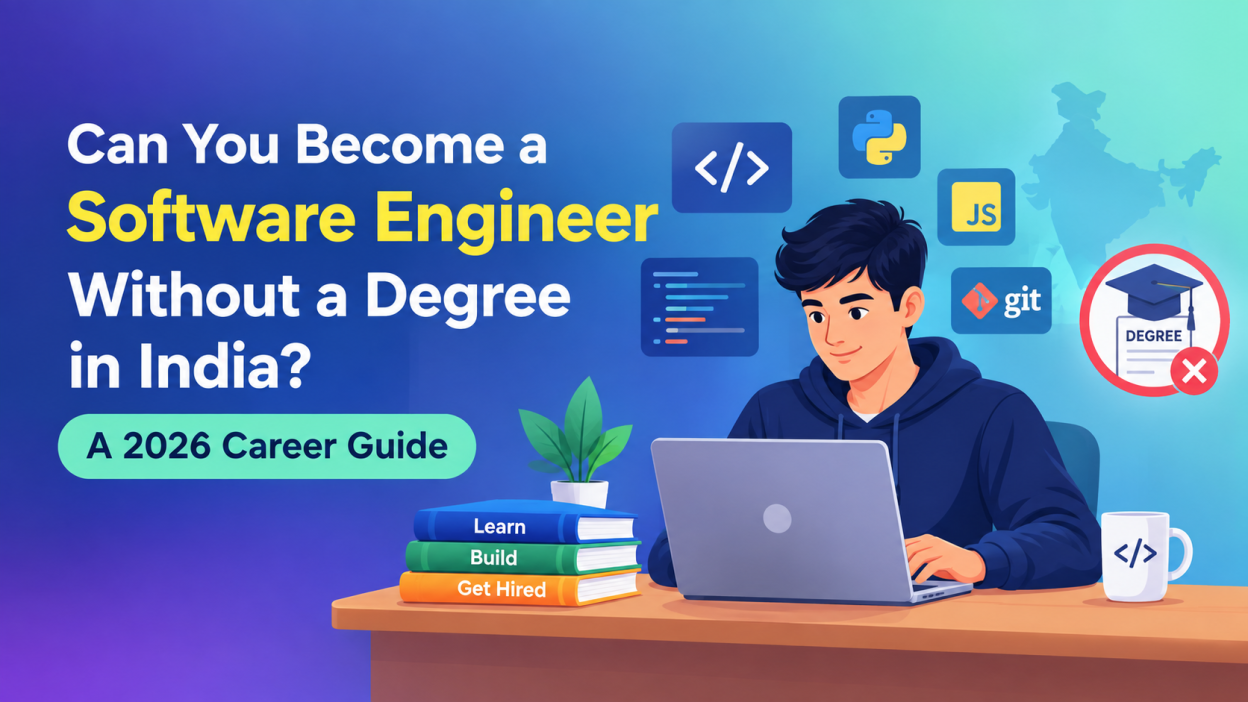
How to Become a Software Engineer – A traditional engineering degree has long been considered the standard path to becoming a software engineer in India. However, the technology industry is changing rapidly. Today, many people learn programming through online courses, coding bootcamps, internships, certifications, and practical projects instead of following a traditional four-year engineering program.
So, can you become a software engineer without a degree in India in 2026? Yes, it is possible. However, the path can be different from the traditional route, and your skills, projects, experience, and ability to demonstrate what you can build become especially important.
Is a Degree Mandatory to Become a Software Engineer?
A degree is not universally mandatory for working as a software engineer. Many companies evaluate candidates based on technical skills, practical experience, coding ability, and problem-solving skills.
However, a degree can still be useful. Some large organizations and certain job roles may include educational qualifications in their eligibility requirements. A degree can also make it easier to pass initial screening processes, especially for freshers.
For candidates without a degree, building strong evidence of technical ability is therefore important. A good portfolio, GitHub projects, internships, certifications, and practical experience can help demonstrate your capabilities.
What Skills Do You Need?
If you want to become a software engineer without a traditional degree, focus on building a strong technical foundation.
1. Learn Programming
Start with one programming language instead of trying to learn everything at once. Popular choices include:
- Python
- Java
- JavaScript
- C#
- C++
Learn variables, data types, conditions, loops, functions, object-oriented programming, error handling, and basic data structures.
Once you understand one language well, learning another language becomes easier.
2. Understand Data Structures and Algorithms
Data Structures and Algorithms (DSA) are important for software development and technical interviews.
Begin with arrays, strings, linked lists, stacks, queues, hash tables, trees, sorting, and searching. You do not need to become an expert immediately. Regular problem-solving practice can gradually improve your logical thinking.
3. Learn Web Development or Another Specialization
Choose a development area based on your interests.
For example, aspiring web developers can learn:
Frontend: HTML, CSS, JavaScript, React
Backend: Node.js, Java Spring Boot, Python, .NET, or PHP
Database: MySQL, PostgreSQL, or MongoDB
You can also explore mobile development, cloud computing, cybersecurity, data engineering, or other technology fields.
Build Real Projects

Projects are one of the most useful ways to demonstrate your skills when you do not have a formal computer science degree.
Instead of creating only basic tutorial projects, gradually build applications that solve practical problems.
For example, you could create:
- Student management systems
- E-commerce websites
- Expense tracking applications
- Online booking systems
- Task management applications
- Portfolio websites
- REST API projects
- Inventory management systems
Start with small projects and increase their complexity as your skills improve.
For each project, understand the code instead of simply copying it from tutorials. Be prepared to explain how the application works, why you selected particular technologies, and how you handled errors or security issues.
Create a Strong GitHub Portfolio
GitHub can act as a public portfolio of your programming work.
Upload projects with meaningful README files explaining:
- What the project does
- Technologies used
- Important features
- How to install and run it
- Screenshots or demonstrations
- What you learned
Keep your repositories organized and regularly update them as your skills improve.
A strong portfolio can give recruiters and interviewers practical evidence of your abilities.
Get Internship or Freelance Experience

Getting practical experience can be especially valuable for candidates without degrees.
Look for internships, freelance projects, open-source contributions, or small development opportunities. Even a simple real-world project can teach you about requirements, debugging, version control, testing, deployment, and working with users.
Internships can also help you understand how professional development teams operate.
When applying for opportunities, be honest about your educational background. Focus your resume on the skills and experience that are relevant to the role.
Certifications Can Help, But They Are Not Everything
Certifications can strengthen your profile, particularly when they demonstrate knowledge of a specific technology.
For example, you could consider certifications related to:
- Cloud computing
- Programming
- Databases
- Cybersecurity
- Software testing
- DevOps
However, collecting many certificates without practical knowledge is unlikely to replace actual skills. A combination of learning + projects + practical experience is more useful than certificates alone.
How to Get a Software Job Without a Degree
Your job search strategy should focus on opportunities where your actual skills can be demonstrated.
Create a resume that highlights:
- Programming skills
- Frameworks and tools
- Personal projects
- Internship experience
- Freelance work
- GitHub profile
- Certifications
- Relevant achievements
Prepare for technical interviews by practicing programming problems, SQL, object-oriented programming, databases, operating systems, networking basics, and software development concepts.
Also prepare to explain your projects clearly. Interviewers may ask why you built a project, what challenges you faced, and how you solved them.
Challenges You May Face

The non-degree route has some challenges.
Some companies may have degree requirements, which can prevent you from applying even when you have strong technical skills. Freshers without a degree may also have fewer opportunities during the initial stage of their careers.
Another challenge is proving your ability. Without a formal academic background, your portfolio and practical experience may become more important during the hiring process.
This does not mean the journey is impossible. It means you need to be strategic about the companies and roles you target.
A Practical Roadmap for 2026
A simple learning roadmap could look like this:
Step 1: Choose a programming language.
Step 2: Learn programming fundamentals.
Step 3: Study Git and GitHub.
Step 4: Learn data structures and algorithms.
Step 5: Choose a specialization such as web, mobile, cloud, or data development.
Step 6: Build 3–5 practical projects.
Step 7: Create a professional resume and GitHub portfolio.
Step 8: Apply for internships, junior roles, freelance opportunities, and suitable entry-level positions.
Step 9: Practice technical and HR interviews.
Step 10: Continue learning after getting your first job.
Final Thoughts
Becoming a software engineer without a degree in India is possible in 2026, but it requires a strong focus on practical skills. A degree can provide structured learning and access to certain opportunities, but it is not the only way to develop software engineering skills.
If you choose the non-degree route, concentrate on programming fundamentals, DSA, projects, GitHub, internships, and continuous learning. Most importantly, build things and understand how they work.
Your first goal should not simply be to collect certificates. Instead, build enough practical knowledge that you can confidently demonstrate what you know and what you can create. With consistent learning and hands-on practice, a non-traditional background can still lead to opportunities in the software industry.
Want to Learn More About Java ?, Kaashiv Infotech Offers, Full Stack Java Course, Java Course, Data Science Course, Internships & More, Visit Their Website www.kaashivinfotech.com.