

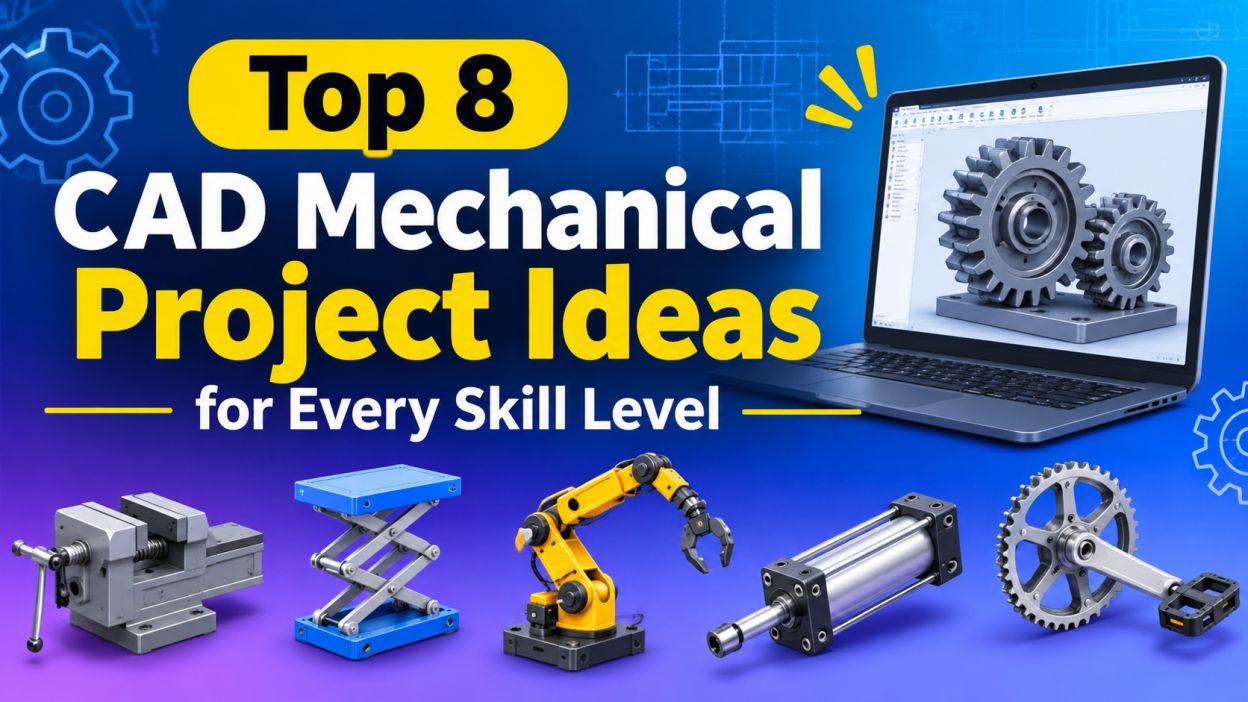
CAD Mechanical Project Ideas – Computer-Aided Design (CAD) is an important skill in mechanical engineering, product design, manufacturing, automotive engineering, and industrial development. CAD software allows engineers and students to create accurate 2D drawings, 3D models, assemblies, and engineering designs before manufacturing physical products.
Students learning CAD can improve their practical knowledge by working on projects rather than only practicing individual commands. Projects help them understand dimensions, tolerances, material selection, assembly mechanisms, and real-world engineering applications.
Whether you are a beginner or an experienced mechanical engineering student, working on CAD projects can improve your design skills and help you build a strong portfolio. Here are eight mechanical CAD project ideas suitable for different skill levels.
1. Mechanical Gear Assembly
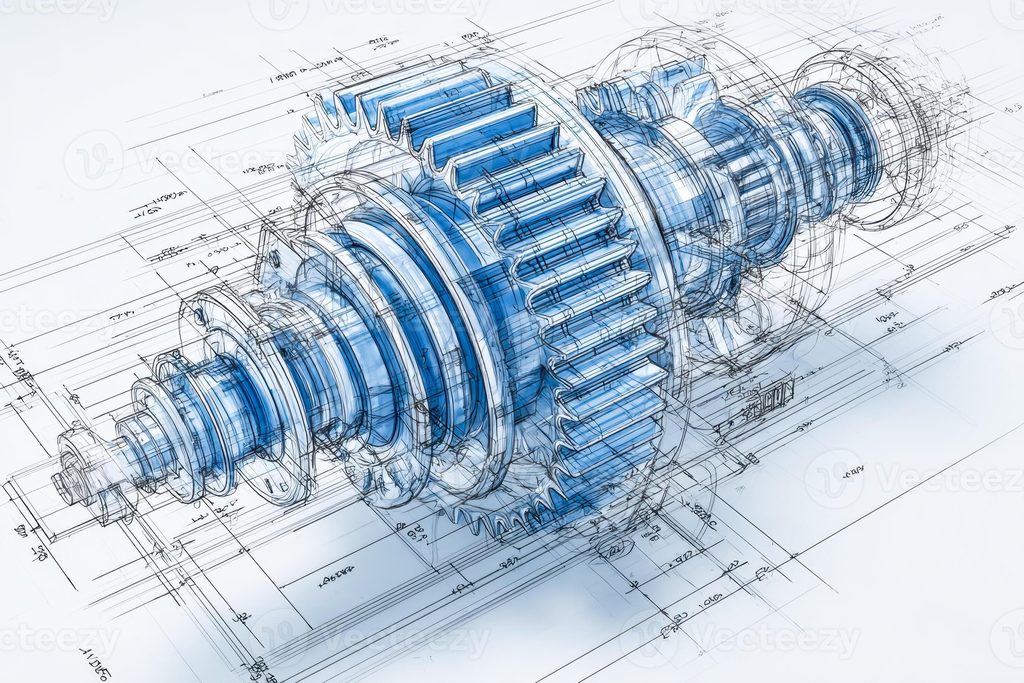
A mechanical gear assembly is one of the best projects for learning the fundamentals of mechanical design. Gears are widely used in machines, automobiles, industrial equipment, and manufacturing systems to transmit motion and torque.
In this project, students can design a simple gear mechanism consisting of two or more gears. They can create individual gear models and assemble them to demonstrate how rotational motion is transferred between components.
The project can include spur gears, shafts, bearings, and supporting structures. Students can experiment with different gear sizes and tooth counts to understand gear ratios and speed transmission.
Skills you can learn:
- Gear design and tooth geometry
- Assembly constraints
- Shaft and bearing design
- Rotational motion
- Mechanical drawing preparation
Software: SolidWorks, Autodesk Inventor, Fusion 360, CATIA.
2. Desktop Mini Vice Design
A desktop mini vice is a useful mechanical project for beginners who want to understand how simple mechanical components work together. A vice is commonly used to hold workpieces securely during drilling, cutting, filing, or machining operations.
The project involves designing a fixed jaw, movable jaw, threaded screw, handle, base plate, and guide mechanism. Students can create each component separately and assemble them into a complete working model.
The threaded screw mechanism moves the jaw forward and backward, allowing the vice to grip objects of different sizes.
Students can also create exploded views and manufacturing drawings to explain how the components are assembled.
Skills you can learn:
- Threaded mechanism design
- Part modelling
- Assembly design
- Dimensioning
- Manufacturing drawings
This project is suitable for beginners and intermediate CAD learners.
3. Scissor Lift Mechanism
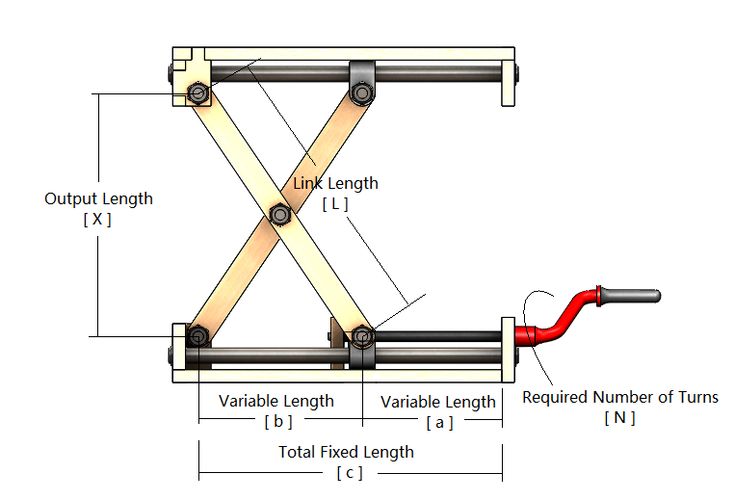
A scissor lift is a mechanical lifting system used in warehouses, construction sites, workshops, and industrial environments. It uses interconnected arms that expand and contract to raise or lower a platform.
In this project, students can design a miniature scissor lift with a platform, crossed support arms, pivot joints, base frame, and lifting mechanism.
The design can be created using different configurations, such as manually operated screw lifts or hydraulic-inspired mechanisms. Students can use CAD motion tools to simulate the movement of the platform.
The project provides an excellent opportunity to understand linkages, mechanical motion, structural design, and load distribution.
Skills you can learn:
- Linkage mechanisms
- Motion simulation
- Structural modelling
- Joint design
- Assembly constraints
This is a good intermediate-level project for mechanical engineering students.
4. Robotic Arm Design
A robotic arm is an interesting CAD project that combines mechanical design, automation, and robotics. Robotic arms are used in manufacturing, material handling, assembly lines, medical applications, and packaging industries.
Students can design a robotic arm with a base, shoulder joint, elbow joint, wrist, and gripper. Each section can be modelled separately and assembled using rotational joints.
The design can include multiple degrees of freedom to demonstrate how the arm moves objects between different positions.
Students can also create a basic motion simulation to show the robotic arm performing a picking and placing operation.
Skills you can learn:
- Joint and mechanism design
- Robotic assembly
- Motion simulation
- Gripper design
- Component modelling
This project is suitable for intermediate and advanced learners.
5. Pneumatic Cylinder Assembly
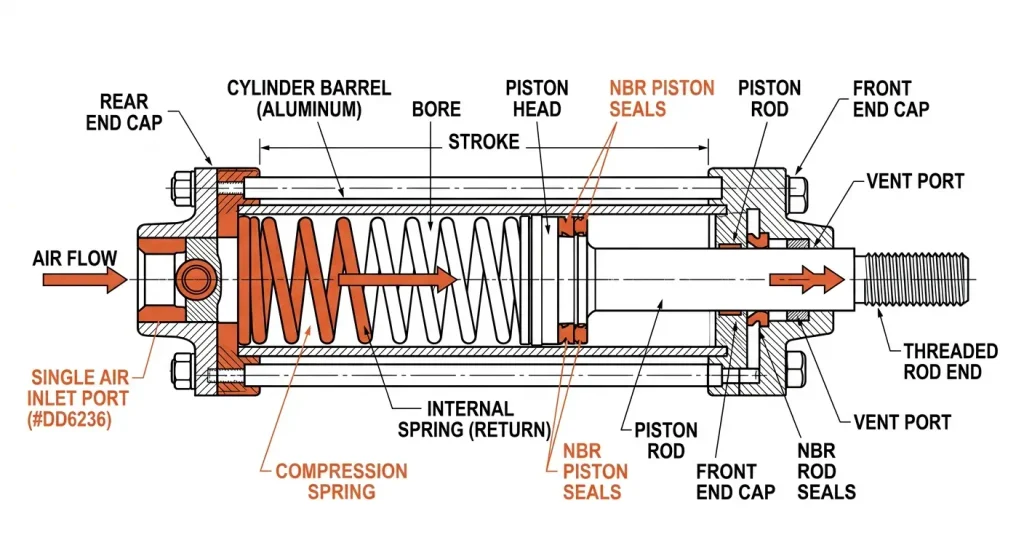
Pneumatic systems use compressed air to generate mechanical movement. They are widely used in industrial automation, manufacturing equipment, packaging machines, and material handling systems.
A pneumatic cylinder CAD project involves designing a cylinder barrel, piston, piston rod, end caps, seals, mounting brackets, and air ports.
Students can create a detailed assembly and demonstrate the extension and retraction movement of the piston rod.
The project can also be extended by designing a pneumatic clamping mechanism or a simple automated pushing system.
Skills you can learn:
- Internal component modelling
- Mechanical assembly
- Motion simulation
- Engineering design
- Industrial automation concepts
This project is ideal for intermediate-level students interested in manufacturing and automation.
6. Bicycle Pedal and Crank Mechanism
A bicycle pedal and crank mechanism is a practical project that helps students understand rotational motion and mechanical power transmission.
The design can include pedals, crank arms, crankshaft, chainring, bearings, and mounting components. Students can model the individual parts and assemble them into a complete mechanism.
By using CAD motion tools, students can simulate pedal rotation and observe how the crank mechanism transfers motion to the chainring.
The project can also be expanded to include a bicycle drivetrain with a chain and rear sprocket.
Skills you can learn:
- Rotating component design
- Shaft modelling
- Mechanical assembly
- Motion analysis
- Power transmission concepts
This project is suitable for beginners moving toward intermediate-level CAD design.
7. Engine Piston and Connecting Rod Assembly
An engine piston and connecting rod assembly is an advanced mechanical CAD project that demonstrates how reciprocating motion is converted into rotational motion.
Students can design a piston, piston rings, connecting rod, crankshaft, crank pin, and cylinder block. The components can then be assembled using appropriate mechanical joints.
A motion simulation can demonstrate the movement of the piston inside the cylinder and the rotation of the crankshaft.
This project is particularly useful for students interested in automotive engineering, engine design, and mechanical systems.
Skills you can learn:
- Advanced part modelling
- Assembly constraints
- Mechanical motion simulation
- Automotive component design
- Detailed engineering drawings
Students can further develop the project by designing a complete single-cylinder engine assembly.
8. 3D Printable Mechanical Tool Organizer
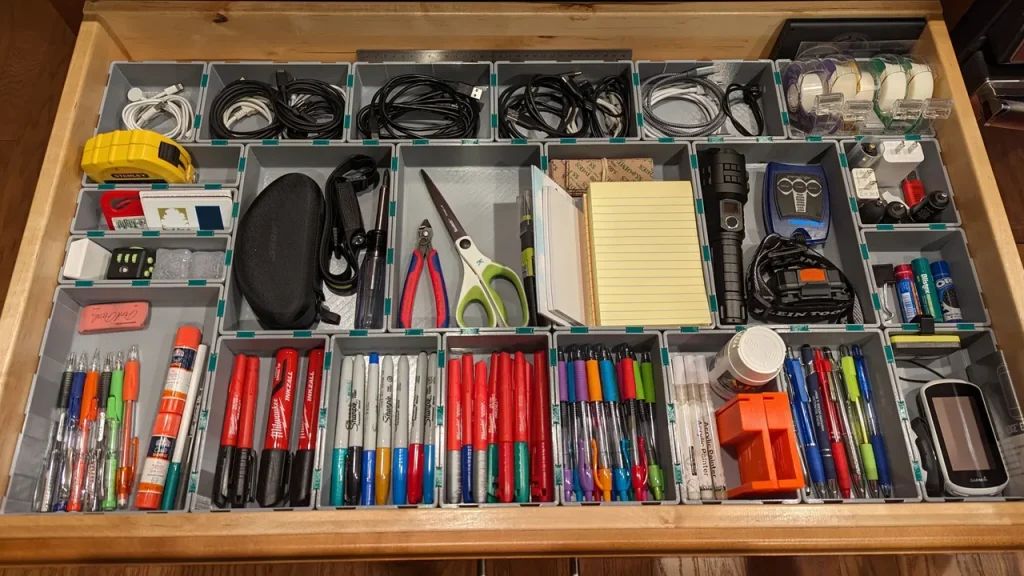
A mechanical tool organizer is a practical product-design project that combines CAD modelling with additive manufacturing.
Students can design a customized holder for screwdrivers, spanners, Allen keys, drill bits, measuring instruments, or workshop tools.
The design should consider tool dimensions, storage capacity, material thickness, accessibility, stability, and ease of manufacturing.
Students can create different modular sections and design a complete organizer that can be printed using a 3D printer.
The project can also include mounting holes, labels, modular connections, and adjustable compartments.
Skills you can learn:
- Product design
- 3D modelling
- Design for 3D printing
- Material selection
- Practical manufacturing considerations
This is a beginner-friendly project with real-world applications in workshops, laboratories, and engineering environments.
Conclusion
CAD mechanical projects are an excellent way to develop practical engineering knowledge and improve design confidence. Beginners can start with simple projects such as a mini vice, gear assembly, or tool organizer, while intermediate and advanced students can explore scissor lifts, robotic arms, pneumatic systems, and engine mechanisms.
Working on these projects helps students understand how mechanical components are designed, assembled, and operated. It also improves their ability to create engineering drawings, perform motion simulations, and solve practical design problems.
By completing these eight projects using software such as SolidWorks, CATIA, Autodesk Inventor, or Fusion 360, students can build a strong CAD portfolio that demonstrates their technical abilities to recruiters and engineering companies.
The best way to improve your CAD skills is to start with a simple project, complete the design, and gradually move toward more complex mechanical assemblies.
Want to Learn More About Python & Artificial Intelligence ???, Kaashiv Infotech Offers Full Stack Python Course, Artificial Intelligence Course, Data Science Course & More Visit Their Website course.kaashivinfotech.com.