Types & Stages of Marketing Funnels: The Ultimate 2026 Funnel Marketing Guide
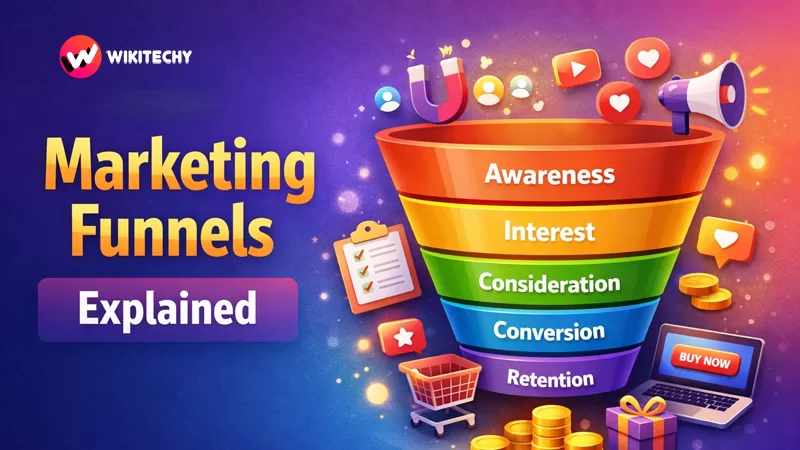
In the digital-first world of 2026, marketing is no longer about pushing products — it’s about guiding people through a journey. Customers today are smarter, more informed, and have countless options at their fingertips. They don’t just buy instantly; they explore, compare, analyze, and then decide.
This is where the concept of a marketing funnel becomes extremely powerful.
A marketing funnel helps businesses understand how people move from being strangers to becoming loyal customers. Instead of random marketing efforts, it gives you a structured path to follow — ensuring that every stage of the customer journey is optimized.
Whether you are a blogger, startup founder, freelancer, or business owner, mastering marketing funnels in 2026 can significantly increase your conversions and long-term growth.
What Is a Marketing Funnel?
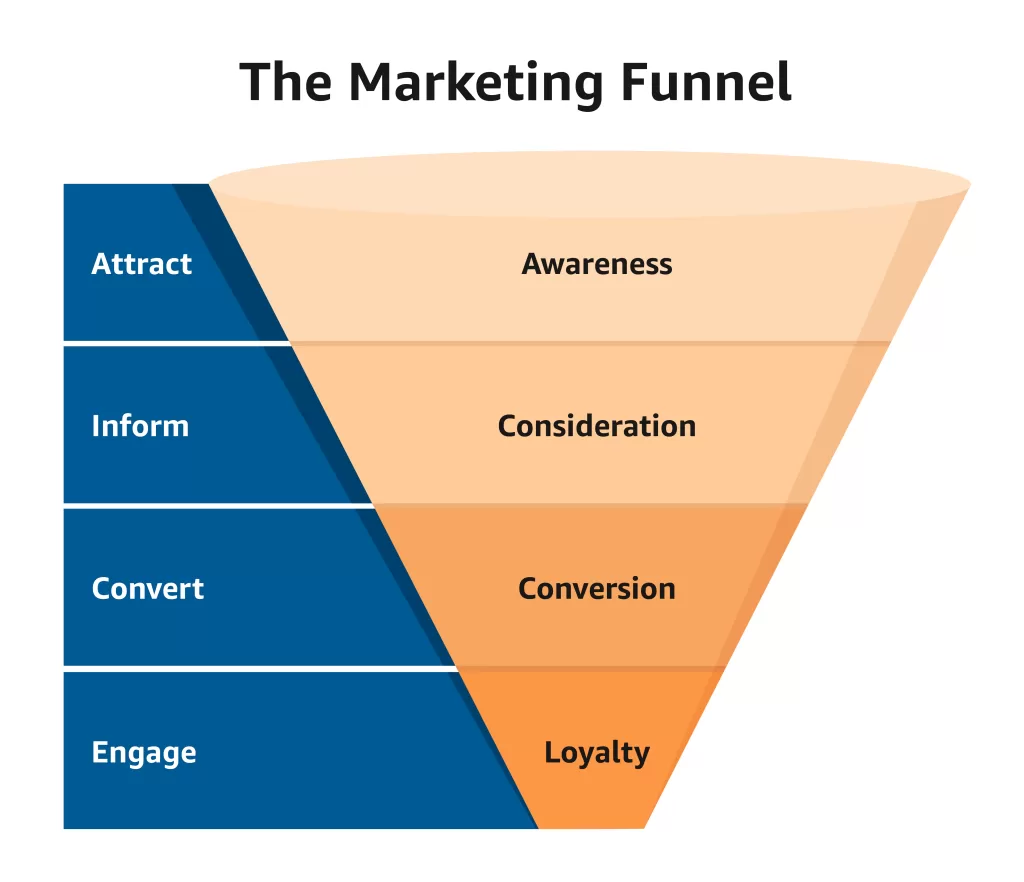
A marketing funnel is a strategic model that represents the step-by-step journey a customer takes before making a purchase and even after that.
It is called a “funnel” because:
- At the top, you attract a large number of people
- In the middle, you engage and filter interested users
- At the bottom, only a small percentage converts into customers
But modern funnels are no longer just linear. In 2026, they are more dynamic and interconnected, as users may enter or exit at different stages based on their behavior.
A good marketing funnel ensures that you:
- Deliver the right content at the right time
- Build trust gradually
- Reduce confusion in decision-making
- Increase the chances of conversion
Why Marketing Funnels Are Crucial in 2026
The buying behavior of customers has changed drastically over the years. Today, a single purchase decision may involve multiple touchpoints such as search engines, social media, reviews, and emails.
Because of this complexity, businesses cannot rely on a single strategy. They need a guided system, and that’s exactly what a funnel provides.
Marketing funnels help businesses:
- Understand how users interact with their brand
- Identify weak points where users drop off
- Improve targeting and personalization
- Build meaningful relationships instead of one-time sales
Without a funnel, marketing feels scattered. With a funnel, it becomes predictable, measurable, and scalable.
Detailed Stages of a Marketing Funnel
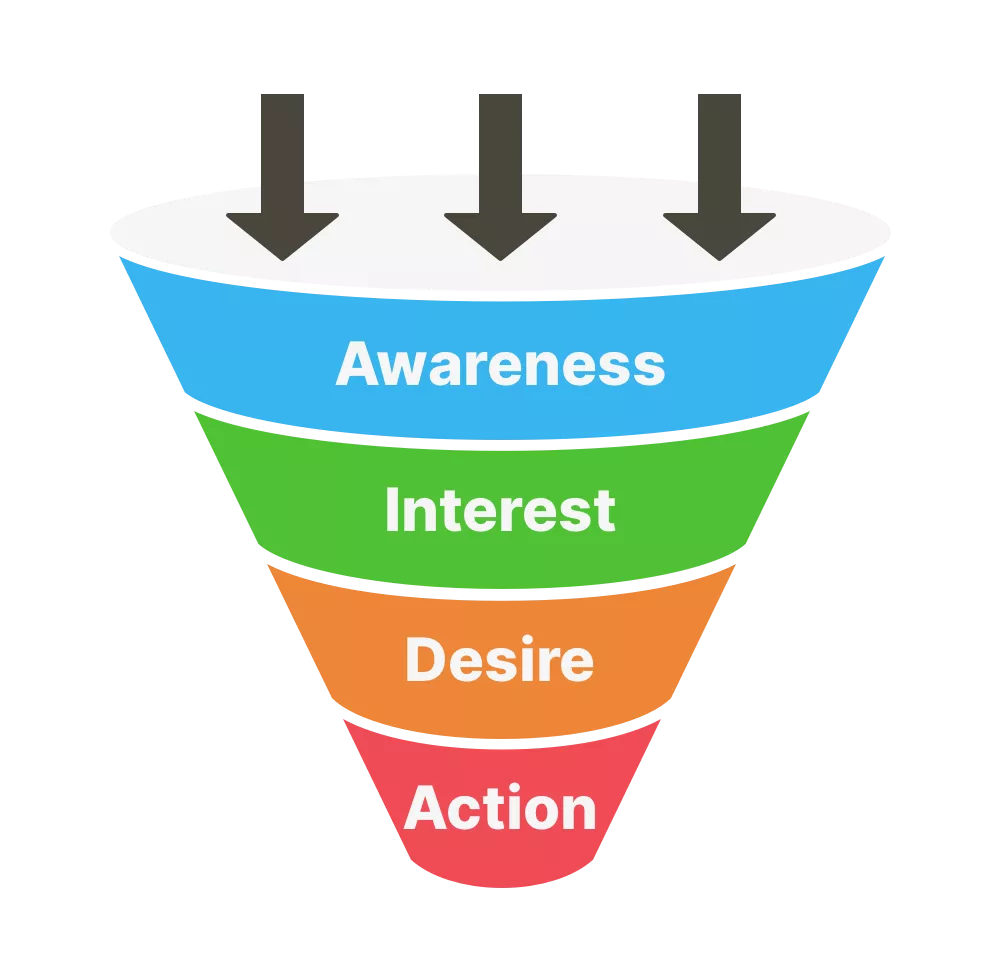
1. Awareness Stage (Top of Funnel – TOFU)
The awareness stage is the first interaction between your brand and potential customers. At this point, users may not even know they have a problem — let alone know about your solution.
Your role here is not to sell, but to educate and attract.
Content plays a huge role in this stage. Blog posts, SEO content, YouTube videos, and social media reels are powerful tools to bring users into your funnel. The key is to focus on solving problems or answering questions that your target audience is searching for.
For example, someone searching for “best budget smartphones” may land on your blog. That’s the beginning of your funnel.
2. Interest Stage
Once users discover your brand, the next step is to build interest. At this stage, they are curious and willing to engage, but they are not ready to buy yet.
You need to provide value-driven content that keeps them connected.
This is where lead magnets become effective. Offering something useful like a free ebook, checklist, or webinar encourages users to share their contact information. Email marketing also starts playing a key role here.
The goal is simple — make users feel, “This brand understands my needs.”
3. Consideration Stage (Middle of Funnel – MOFU)
In the consideration stage, users begin evaluating their options. They are comparing your product or service with competitors and looking for reasons to trust you.
This is one of the most critical stages in the funnel because trust determines conversion.
You can strengthen your position by providing:
- Detailed product explanations
- Real customer testimonials
- Case studies showing success stories
- Comparison content
At this stage, users are asking:
“Why should I choose you over others?”
Your content should answer that clearly.
4. Conversion Stage (Bottom of Funnel – BOFU)
This is where everything comes together. The user is ready to take action — but even small friction can cause drop-offs.
So your focus should be on making the process:
- Simple
- Fast
- Convincing
Landing pages, product pages, and checkout experiences must be optimized for conversions. Strong CTAs (Call-To-Actions), limited-time offers, discounts, and free trials can push users to take the final step.
Even small improvements in this stage can lead to huge increases in revenue.
5. Retention & Loyalty Stage
Many businesses make the mistake of ignoring this stage, but in reality, this is where long-term success is built.
Acquiring a new customer is expensive — retaining one is much more profitable.
After conversion, your goal should be to:
- Keep customers engaged
- Provide excellent support
- Offer personalized recommendations
Loyal customers not only buy again but also promote your brand. In 2026, word-of-mouth and online reviews play a massive role in growth.
Types of Marketing Funnels Explained
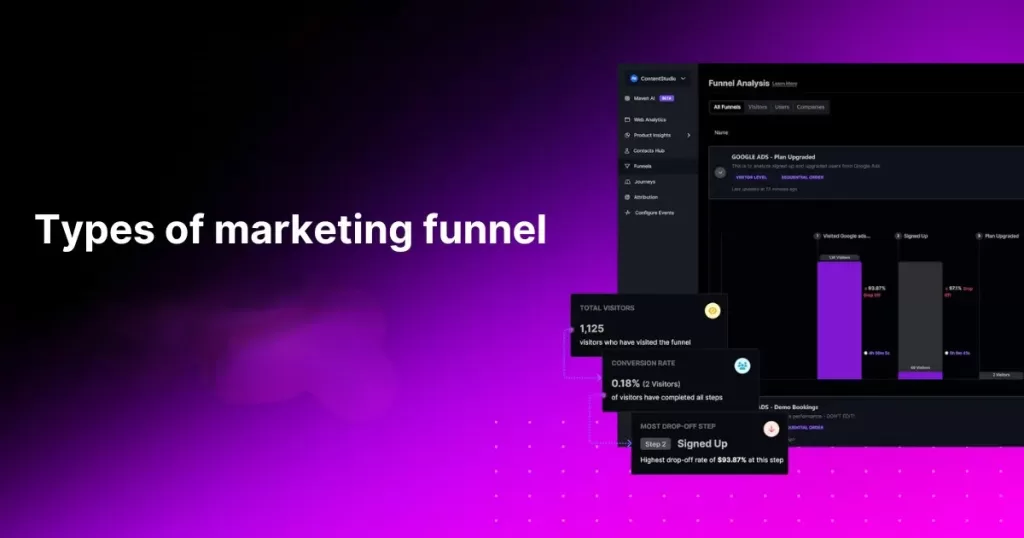
Different businesses require different funnel structures depending on their goals and audience.
Lead Generation Funnel
This funnel is focused on collecting leads rather than making immediate sales. It is widely used by bloggers, agencies, and SaaS businesses.
Users are usually offered something valuable for free, which encourages them to share their contact details. Once captured, they are nurtured through emails and content.
Sales Funnel
A sales funnel is more direct and focuses on converting users into paying customers. It works best for product-based businesses and e-commerce brands.
The strategy here is to move users quickly from awareness to purchase using persuasive messaging and optimized landing pages.
Webinar Funnel
Webinar funnels are highly effective for high-value products like courses or consulting services.
They work by educating users through live or recorded webinars, building trust, and then presenting an offer at the end.
Email Marketing Funnel
Email funnels are all about nurturing relationships over time. Instead of pushing for immediate sales, they build trust gradually through consistent communication.
A typical email funnel includes:
- Welcome emails
- Educational content
- Value-driven insights
- Promotional offers
Content Marketing Funnel
This is one of the most powerful long-term strategies. It relies heavily on SEO and valuable content to attract users organically.
Blogs, guides, and tutorials act as entry points, slowly guiding users toward conversion without aggressive selling.
E-commerce Funnel
E-commerce funnels are designed specifically for online shopping experiences.
They focus on improving every step from product discovery to checkout. Reducing cart abandonment and simplifying payment processes are key priorities here.
Real-World Funnel Example
Let’s take a practical example of an online course business.
A user first discovers your blog through Google (awareness). They find value and download a free resource (interest). Later, they attend your webinar (consideration), which builds trust. Then they purchase your course (conversion). After that, you offer advanced courses or memberships (retention).
This complete journey shows how each stage of the funnel works together.
Key Metrics to Measure Funnel Success

To improve your funnel, tracking performance is essential.
Important metrics include:
- Conversion rate
- Click-through rate (CTR)
- Bounce rate
- Customer acquisition cost (CAC)
- Customer lifetime value (LTV)
These metrics help you identify which stage needs optimization.
Common Funnel Mistakes to Avoid
Even a well-designed funnel can fail if certain mistakes are made.
Some common issues include:
- Focusing too much on selling instead of providing value
- Ignoring mobile optimization
- Weak or unclear CTAs
- Lack of follow-up communication
- Overcomplicated funnel steps
Fixing these problems can significantly boost your results.
Future Trends in Marketing Funnels (2026 & Beyond)
Marketing funnels are evolving with technology. In 2026, the focus is shifting towards personalization and automation.
Emerging trends include:
- AI-driven customer journeys
- Hyper-personalized content
- Omnichannel experiences
- Voice search optimization
- Interactive and immersive content
Businesses that adapt to these trends will gain a strong competitive advantage.
Conclusion
Marketing funnels are no longer optional — they are essential for any successful business in 2026.
They provide a clear structure to guide users from discovery to loyalty, ensuring that every interaction adds value. Instead of chasing random traffic, funnels help you convert the right audience into long-term customers.
The key is not just building a funnel, but continuously improving it based on data and user behavior.
Want to learn More about Marketing Management Kaashiv Infotech Offers Digital Marketing Course & More, Visit www.kaashivinfotech.com.
Related Reads: