🐍 What Is Django in Python? Understanding The Most Powerful Full-Stack Framework of 2025 That’s Redefining Web Apps

The internet moves fast — and so must your apps. In a world where milliseconds decide whether users stay or bounce, developers need frameworks that are powerful, secure, and built for scale.
That’s where Django steps in — Python’s full-stack framework that quietly powers some of the biggest names on the web, from Instagram to Spotify.
If you’ve ever searched “what is Django” or “Django in Python”, you’re about to discover why it’s not just another web framework — it’s an entire ecosystem designed to make complex applications feel simple.

🌐 The Web Needed Structure — Django Delivered
While frameworks like Flask give you freedom, Django gives you foundation — a complete toolkit that helps developers build production-ready apps faster and safer.
Every modern website you use — e-commerce platforms, streaming apps, admin dashboards — has the same core needs:
- Handle users and authentication
- Manage databases
- Secure data
- Serve web pages dynamically
Instead of reinventing the wheel, Django comes with all of this baked in. It’s the web framework for developers who want to focus on what they’re building, not how to glue it together.

Flask is like building a car from parts. Django is driving a car that’s already built, tested, and ready to race — you just customize the paint and engine.
⚙️ What Is Django in Python? (Definition + Quick History)
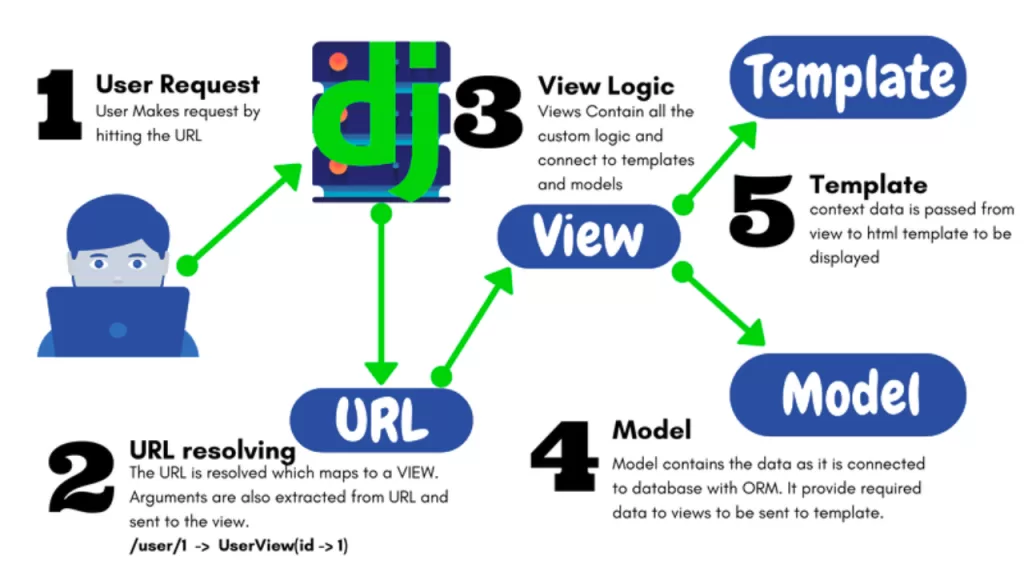
Django is a high-level, open-source web framework built with Python. It follows the Model-View-Template (MVT) architecture — helping developers structure code efficiently while maintaining scalability and security.
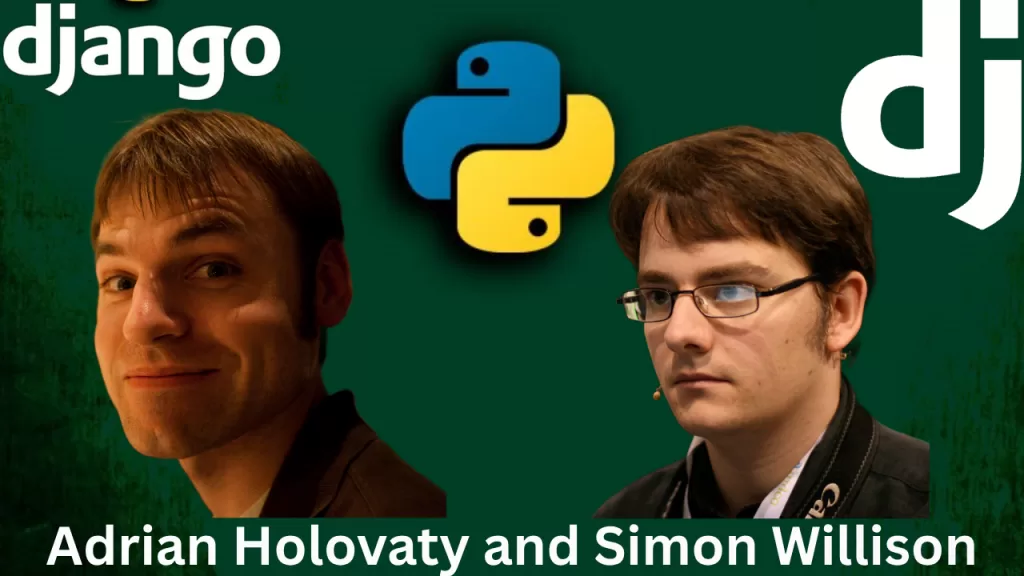
It was created in 2003 by Adrian Holovaty and Simon Willison, two developers at a newsroom who wanted to build web apps as quickly as journalists published stories.
By 2005, Django became open source — and today, it’s one of the most mature and battle-tested frameworks in Python’s ecosystem.
💡 Key philosophy: “Don’t repeat yourself.”
Django automates repetitive web tasks — authentication, database queries, admin dashboards — so you can build powerful applications without cluttered code.
Django is the “batteries-included” framework that lets you go from idea to full web app in days, not months.
🔑 Key Features That Make Django framework a Developer Favorite
Here’s why developers across the world keep choosing Django over the chaos of starting from scratch:
Batteries-Included Framework
Django framework ships with everything — authentication, admin interface, ORM, templating, sessions, middleware, and security modules. No need for endless add-ons.
Built-In Security
Cross-site scripting, SQL injection, and CSRF attacks? Django blocks them by default. It’s one of the most secure Python frameworks ever built.
ORM (Object-Relational Mapper)
No more complex SQL queries. Django’s ORM lets you interact with databases like you’re talking to Python objects.
# Example: Fetching all blog posts
posts = Post.objects.all()
It’s clean, intuitive, and database-agnostic — meaning you can switch from SQLite to PostgreSQL without rewriting queries.
Scalability & Speed
From startups to billion-user apps, Django scales effortlessly. Its caching system and modular design make performance optimization easy.
Powerful Admin Interface
Django auto-generates a professional admin panel from your models — saving days of work.
# models.py
from django.db import models

class Article(models.Model):
    title = models.CharField(max_length=100)
    published = models.DateTimeField(auto_now_add=True)
Run python manage.py createsuperuser, and voilà — a live admin dashboard to manage your app instantly.

Thriving Community & Long-Term Support
With 20+ years of maturity and global adoption, Django is backed by continuous updates, third-party packages, and a passionate developer base.
🚀 Why Django Became a Global Hit
While Flask wins hearts for flexibility, Django wins enterprises for reliability.
It’s trusted by developers, startups, and Fortune 500 companies alike.
Here’s why it’s still booming in 2025:
- 🧠 Faster Development: Less setup, more code that matters.
- 🔐 Enterprise-Grade Security: Used by banks, healthcare systems, and government platforms.
- ⚙️ Reusable Components: Apps built in Django can easily be plugged into other projects.
- ☁️ Perfect for Cloud & AI Integration: Seamlessly deploys on AWS, Azure, and GCP; connects with TensorFlow or FastAPI for AI-powered systems.
💬 Fun Fact: Instagram runs one of the world’s largest Django deployments — proof that the framework isn’t just for small projects.
🧩 Django vs Flask: The Framework Face-Off
| Feature | Django | Flask |
|---|---|---|
| Type | Full-stack framework | Micro-framework |
| Setup | Ready-to-use (batteries included) | Lightweight, manual setup |
| Architecture | Model-View-Template (MVT) | Flexible (no strict pattern) |
| Ideal For | Large, structured apps | APIs, prototypes, microservices |
| Learning Curve | Moderate | Easy for beginners |
| Performance | Slightly heavier but scalable | Faster for small apps |
| Community | Massive, long-term support | Growing, highly active |
| Admin Panel | Built-in | Needs external tools |
| ORM Support | Integrated ORM | External (like SQLAlchemy) |
💡 Quick summary:
If Flask is freedom, Django is structure.
If Flask is jazz, Django is classical — disciplined, elegant, and powerful.
🌍 What Django Is Used For
One of Django’s biggest strengths is versatility. It’s not tied to one specific type of project — it powers everything from simple blogs to AI-driven platforms.
Let’s explore how the world uses Django in Python today 👇
💻 Dynamic Web Applications
Django is made for building full-fledged websites that handle users, forms, and content dynamically.
- Example: Instagram uses Django to manage millions of photos, comments, and likes every minute.
- Other examples: Pinterest, Mozilla, and Bitbucket.
🧠 AI & Data-Driven Dashboards
Data scientists love Django because it integrates smoothly with NumPy, Pandas, and TensorFlow. You can deploy ML models, visualize data, or build interactive dashboards — all inside a secure web app.
- Example: A machine learning model predicting sales trends can be served to users via a Django-based API.
🏢 Enterprise Systems & Admin Tools
Django’s built-in admin panel makes it perfect for internal company tools — HR systems, analytics portals, and workflow dashboards.
- Many enterprises use Django internally for automation and monitoring.
💰 E-Commerce & Financial Apps
With features like user authentication, ORM, and security baked in, Django simplifies building e-commerce and fintech platforms.
- Example: Disqus, one of the web’s largest comment systems, runs on Django.
📱 APIs & Backend for Mobile Apps
Django works perfectly as a backend for mobile and IoT apps. When paired with Django REST Framework, it can expose clean, secure APIs for Android, iOS, or web frontends.
💬 Real-world fact: NASA used Django for internal data visualization tools before moving to cloud-native systems — proof that reliability matters as much as speed.
⚙️ How to Install & Run Your First Django Project
Ready to get hands-on? Let’s set up your first Django project in just a few minutes.
💡 You only need Python installed on your system.
Install Django
Open your terminal or command prompt and run:
pip install django
Once installed, check your version:
django-admin --version
Create a New Project
Run this command to start a new Django project:
django-admin startproject myproject
This creates a folder structure like this:
myproject/
├── manage.py
├── myproject/
│   ├── __init__.py
│   ├── settings.py
│   ├── urls.py
│   ├── asgi.py
│   └── wsgi.py
Run the Development Server
Move into your project folder and start the server:
cd myproject
python manage.py runserver
Now open your browser and visit:
👉 http://127.0.0.1:8000/
You’ll see the famous Django rocket 🚀 — your first Django app is live!
Create an App Inside the Project
In Django, a project can contain multiple apps.
To create one, run:
python manage.py startapp blog
This generates a blog folder with models, views, and templates ready to go.
💡 Pro tip: Django automatically reloads changes while the server runs in debug mode — just like Flask!
🧠 Core Concepts: ORM, Middleware & Django REST Framework
To really understand Django, you need to know the three pillars that make it powerful — ORM, Middleware, and the Django REST Framework.
🔹 ORM (Object-Relational Mapper)
Django’s ORM lets you interact with databases using Python objects instead of writing SQL.
It’s like having a translator between Python and SQL databases.
Example:
from myapp.models import Student

# Create a new record
student = Student(name="John", grade=10)
student.save()

# Fetch records
students = Student.objects.all()
Behind the scenes, Django translates that into SQL commands — saving you time and errors.
✅ Benefits:
- Database-agnostic (SQLite, PostgreSQL, MySQL, etc.)
- Prevents SQL injection
- Easier debugging and migrations
🔹 Middleware
Think of middleware as filters that process requests and responses between the browser and your Django views.
They handle things like:
- Authentication
- Session management
- Security (e.g., CSRF protection)
- Caching
Each request in Django passes through a chain of middleware before reaching your app logic.
💡 Analogy:
Middleware in Django is like airport security — checking every passenger (request) before they board (reach your view).
You can even create custom middleware for things like logging or IP tracking.
🔹 Django REST Framework (DRF)
In 2025, APIs are the backbone of modern web apps — and Django REST Framework (DRF) is the easiest way to build them.
DRF extends Django’s functionality to create RESTful APIs that communicate with web or mobile frontends.
Example:
from rest_framework import serializers, viewsets
from myapp.models import Article

class ArticleSerializer(serializers.ModelSerializer):
    class Meta:
        model = Article
        fields = '__all__'

class ArticleViewSet(viewsets.ModelViewSet):
    queryset = Article.objects.all()
    serializer_class = ArticleSerializer
This tiny code snippet gives you a fully functional CRUD API for your models — complete with authentication, filtering, and pagination.
✅ Why DRF is loved:
- Easy to connect with React, Angular, or mobile apps
- Handles JSON requests/responses automatically
- Built-in authentication and permissions
💬 Pro tip: Flask + Flask-RESTful may be lighter, but Django REST Framework gives you an enterprise-grade API setup in minutes.

💼 Career Insights — Why Learning Django in 2025 Is a Smart Move
If you’re planning a career in Python or full-stack web development, learning Django in 2025 is one of the smartest investments you can make.
Why? Because Django doesn’t just teach you how to code websites — it teaches you how the modern web works.
You’ll understand backend logic, databases, APIs, authentication, and deployment — the skills every company, startup, and SaaS platform needs.
🚀 Skill That’s Always in Demand
The demand for Python + Django developers has been rising steadily for years — and in 2025, it’s stronger than ever.
According to Naukri and Indeed job data, Python with Django ranks among the top 5 backend development skills employers in India look for.
From fintech startups in Bengaluru to AI firms in Hyderabad and SaaS giants in Chennai, companies rely on Django for secure, scalable backend systems.
💬 Real-world stat: Over 40,000 Django-related jobs are posted monthly across Indian job portals — spanning full-stack roles, backend development, and API engineering.
🧠 Perfect for Career Transitions
If you’re moving from front-end to full-stack, or from other stacks to web deployment, Django bridges the gap perfectly.
It combines backend fundamentals with the simplicity of Python — meaning you can build real-world apps faster without worrying about boilerplate code.
Common Django job titles in India include:
- Python Web Developer
- Django Backend Engineer
- Full-Stack Developer (Python/Django + React/Angular)
- API Developer (Django REST Framework)
- Machine Learning Engineer (Model Deployment with Django)
💡 Pro tip: Pair Django with frontend frameworks like React or Next.js to become a full-stack powerhouse — it’s a winning combo for 2025.
💰 Salary Trends in India
Here’s what you can expect in 2025 (average salary range based on experience):
| Experience | Role Type | Average Annual Salary (₹ INR) |
|---|---|---|
| 0–1 year | Junior Django Developer | ₹3.5–6 LPA |
| 2–4 years | Django Backend Developer | ₹6–10 LPA |
| 5+ years | Senior Django Engineer / Tech Lead | ₹12–20 LPA |
| With React or AWS Skills | Full-Stack Django Developer | ₹15–25 LPA |
Startups pay for speed and versatility, while larger enterprises value security and scalability — Django delivers both.
🌏 Global Demand for Django
Django is not limited to India — it’s a global tech currency.
In 2025, companies in the US, UK, Germany, and Singapore continue hiring Django developers for AI-powered dashboards, SaaS tools, and cloud-native APIs.
💬 Fun fact: Django developers often find remote work opportunities with international startups offering salaries in USD.
🎯 Learning Django Boosts Your Future Tech Stack
Once you master Django, frameworks like FastAPI and Flask will feel natural.
You’ll also find it easier to learn DevOps, containerization (Docker, Kubernetes), and cloud deployment — skills that multiply your career options.
In short:
Learn Django → Build faster → Get hired faster → Scale faster.
Conclusion — Django’s Role in the Future of the Web
Django has stood the test of time.
From a newsroom project in 2003 to powering global platforms in 2025, it’s proven one thing: structure scales.
In a web world obsessed with speed, Django focuses on sustainability. It gives you everything — security, performance, scalability — without sacrificing developer joy.
💬 Analogy:
If Flask is the sleek motorcycle for rapid sprints, Django is the high-speed bullet train — stable, fast, and built to carry thousands safely.
As more businesses in India and beyond go digital — from healthcare to e-commerce to edtech — the need for Django developers will only grow.
Because when performance, security, and reliability matter, Django is Python’s answer.
So, whether you’re a student exploring backend development, a data scientist deploying models, or a full-stack dev looking to scale — Django will be your foundation for the next decade.
🔗 Related Reads
If you enjoyed learning about Django in Python, here are a few hand-picked guides to level up your Python and web dev journey:
- 🐼 What Is a DataFrame in Python? Pandas Power Explained with Real-World Examples (2025 Guide)
Dive deep into Pandas DataFrames — the foundation of every data science project. - ⚡ What Is Flask in Python? Discover the Game-Changing Framework Behind Fast Web Apps (2025)
Explore Flask, Django’s lightweight sibling that powers fast, scalable web apps. - 🧮 NumPy and Pandas in Python: The 2025 Beginner’s Guide to Unstoppable Data Power
Learn how NumPy and Pandas supercharge Python’s data capabilities with simple, practical examples. - 🚀 Vectorization with NumPy: Game-Changing Loop Optimization Tricks for Amazing Python Speed in 2025
Speed up your Python code with vectorization — no loops, just lightning-fast results. - 🧠 What is Set in Python? 7 Essential Insights That Boost Your Code
Understand sets in Python with clear examples and use cases every developer should know. - 🤖 Surprising Truths About Machine Learning with Python (Even Beginners Can Master It!)
Unlock the world of machine learning — simple, practical, and beginner-friendly.