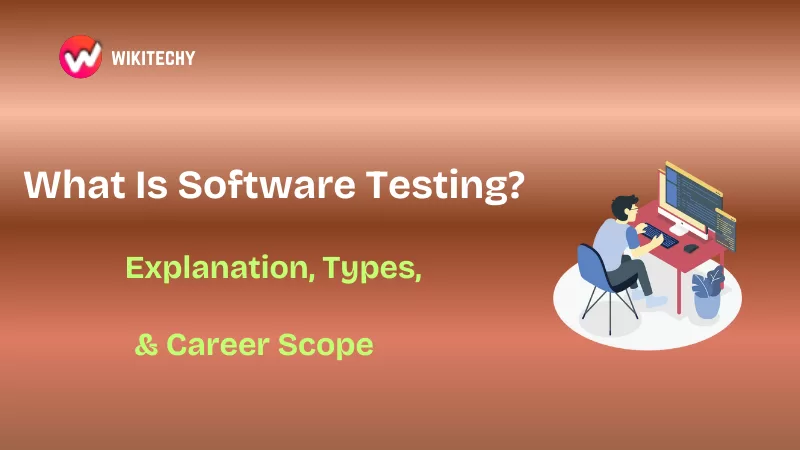
What Is Software Testing? Detailed Explanation, Types, and Career Scope
🟦 What Is Software Testing?
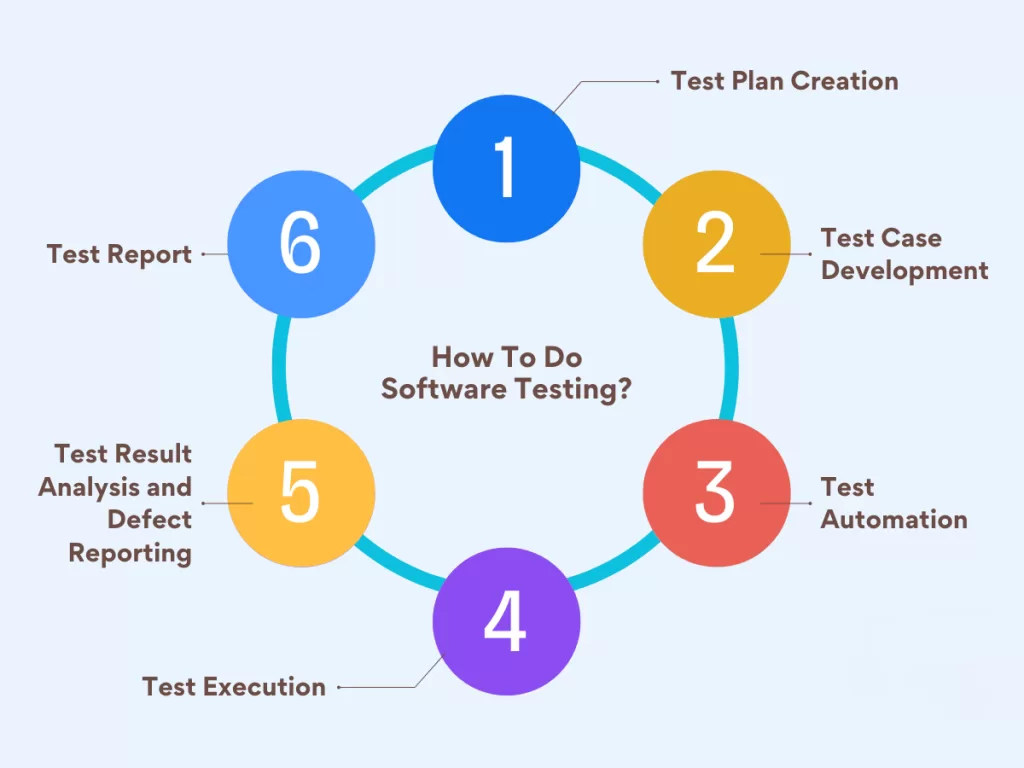
Software testing is the process of evaluating a software application to check whether it works the way it’s supposed to.
Nothing more complicated than that.
But let me say this in emotional human words:
👉 Software testing protects users.
👉 It prevents disasters.
👉 It keeps software stable, safe, and trustworthy.
If software development is the act of building a house, testing is the part where someone walks around shaking the windows, pressing every switch, flushing the toilet 10 times, checking if the lights flicker—and fixing anything weird before the family moves in.
That’s what software testing feels like.

⭐ My First Memory With Software Testing
When I wrote my first test case, I was nervous. My hands actually shook.
I clicked a button that was supposed to submit a form.
Nothing happened.
I thought I broke something.
Turns out—the feature was broken long before I touched it. I was the one who caught it.
That was the moment I knew software testing is not some boring, mechanical job.
It’s detective work.
Problem-solving.
A weird mix of curiosity, logic, and instinct.
🟨 Why Software Testing Matters (Yes, It REALLY Matters)
Have you ever used an app that froze at the worst moment?
Maybe while making a payment? Or booking a ticket? Or during an exam?
That’s what happens when testing is ignored.
Here’s why software testing is the backbone of every good product:
- Prevents bugs from reaching real users
- Saves companies millions
- Improves user experience
- Ensures security (your data matters!)
- Boosts reliability and brand trust
- Keeps performance smooth even with millions of users
When an app works perfectly, you don’t think about it.
When it doesn’t, you blame the app instantly.
🟫 Types of Software Testing
I spent years getting comfortable with these terms. Let me help you skip the confusion.
1️⃣ Manual Software Testing
This is where you act like the user.
No automation tools.
No scripts.
Just your eyes, brain, and curiosity.
Think of it like testing a new phone—opening every app, pressing every option, checking every setting.
Manual testing is perfect for beginners and still necessary for many projects today.
2️⃣ Automation Software Testing
This is where you use tools or scripts to perform repetitive tests.
Popular tools are:
- Selenium
- Cypress
- Playwright
- JUnit
- TestNG
Instead of spending hours clicking buttons, automation lets software do the clicking for you.
I still remember my first Selenium script.
It failed.
Then it failed again.
Then it passed.
And that small green PASS text felt like a trophy 🏆.
If you ever want to explore automation, here’s an external resource:
👉 https://www.selenium.dev/
And for beginners wanting guided learning, internal training suggestions like Kaashiv Infotech help people jump into QA and automation careers.
3️⃣ Functional Testing
This asks a simple question:
👉 Does the software do what it says it will do?
If the login button is supposed to log people in… well… it better log people in.
4️⃣ Non-Functional Testing
This focuses on how well the software performs, such as:
- Speed
- Security
- Stress
- Usability
- Reliability
Example:
If an app opens in 20 seconds, users won’t wait.
Non-functional testing saves apps from being abandoned.

5️⃣ Regression Testing
Whenever developers add a new feature, something else might break.
Weird but true.
Regression testing checks the old features so they don’t suddenly start acting weird.
6️⃣ Unit Testing
Developers test tiny pieces of code (units).
It ensures the building blocks are stable.
7️⃣ Integration Testing
Even if individual parts work fine, what happens when they talk to each other?
Example:
Shopping cart + payment gateway.
They need to sync perfectly.
⭐ Real-Life Examples of Software Testing Saving the Day
✈️ Airline Website Crash
One airline’s booking system once failed for 2 hours.
This tiny bug caused $1.5 million in revenue loss.
Testing could have prevented it.
🚀 NASA’s Lost Spacecraft
NASA once lost a spacecraft because of a unit conversion bug.
Meters vs. feet.
Yes, really.
Testing again could have saved it.
🛒 E-Commerce Bugs
A famous e-commerce site once displayed items for ₹0 because of a calculation bug.
Testers caught it before millions saw it.
That’s the power of software testing.
🟦 Skills You Need for a Career in Software Testing
You need:
- Sharp eyes
- Curiosity
- Logic
- Patience
- Empathy for users
- Communication skills
- Optional: Basic programming for automation testing
If you’re someone who notices small details in everyday life—you’re already halfway there.
💼 Career Scope of Software Testing
The career growth in software testing is huge.
Companies always need testers.
You can grow into:
- QA Engineer
- Manual Tester
- Automation Tester
- Performance Tester
- Security Tester
- SDET (Software Development Engineer in Test)
- Test Lead
- Test Architect
SDETs are currently in high demand because they combine testing + programming.
If you’re thinking of entering the field, platforms like Kaashiv Infotech or Coursera offer QA, manual testing, and automation training for beginners and advanced learners.
⭐ Common Myths About Software Testing (Let’s Break Them!)
❌ Myth: “Testing is easy.”
Good testing requires creativity and deep thinking.
❌ Myth: “Only failed developers become testers.”
Completely false.
Some of the smartest people I know are testers.
❌ Myth: “AI will replace testers.”
AI can assist.
But human intuition? You can’t automate that.
Final Thoughts:
As I wrap up my thoughts on software testing, I can’t help but appreciate how much this field has taught me—not just about technology, but about patience, observation, and empathy. Software testing has a quiet kind of power. It reminds me that even the smallest overlooked detail can change an entire user’s experience, and that our job as testers is to protect those experiences. If you’re stepping into this world, know that you’re choosing a path where your work truly matters, even when no one sees it. And honestly, that invisible impact is what makes this profession feel so rewarding, so human, and so worth pursuing.
Related Reads: