

Data Engineer is one of those technology careers that I think many people discover only after exploring data science, analytics, or software development. If you are wondering about the Data Engineer salary in India in 2026, the short answer is this: salaries can range from around ₹4–8 LPA for entry-level roles to ₹25 LPA or more for experienced professionals, with some product-company, GCC, specialist, and leadership roles going considerably higher.
But there is an important catch.
There isn’t one fixed Data Engineer salary in India. Your experience, technical skills, company type, city, industry, and ability to work with cloud and big-data technologies can make a big difference.
Current salary data also shows why you should be careful with a single “average salary” figure. Glassdoor’s India data currently shows an average base pay of about ₹10.3 lakh per year, while other datasets report different figures because they measure different samples and may include or exclude additional compensation.
So, if you’re thinking about becoming a Data Engineer, don’t just ask, “How much salary will I get?”
Ask a better question:
“What skills will help me move into the higher salary range?”
That’s what I want to explain in this article.
Key Highlights 🚀
- 💰 Data Engineer salary in India varies significantly by experience and employer.
- 👨💻 Freshers may commonly see offers around ₹4–8 LPA, particularly in large IT-services companies.
- 📈 Professionals with 2–5 years of experience can move into roughly the ₹8–28 LPA range depending on company and skills.
- 🏢 Product companies and Global Capability Centres (GCCs) can have higher compensation bands than many traditional service companies.
- ☁️ Cloud, SQL, Python, Spark, data warehousing, and ETL/ELT are important skills for Data Engineers.
- 📍 Bengaluru, Hyderabad, Pune, Chennai, Mumbai, and NCR are important hiring markets, but salary differences depend heavily on the employer and role.
- 🎯 Your salary is not determined by experience alone. Practical skills and the complexity of the systems you can handle matter too.
What Does a Data Engineer Actually Do?
Before talking about salary, let’s understand the job itself.
A Data Engineer builds and maintains the systems that collect, process, store, and move data.
Imagine an online shopping company.
Every day, thousands or millions of customers might:
- Search for products
- Add items to their cart
- Place orders
- Make payments
- Cancel orders
- Leave reviews
- Browse different pages
All of this creates data.
But raw data sitting in different systems isn’t very useful by itself.
Someone has to build the pipelines that move and transform that information so analysts, data scientists, business teams, and applications can actually use it.
That’s where a Data Engineer comes in.
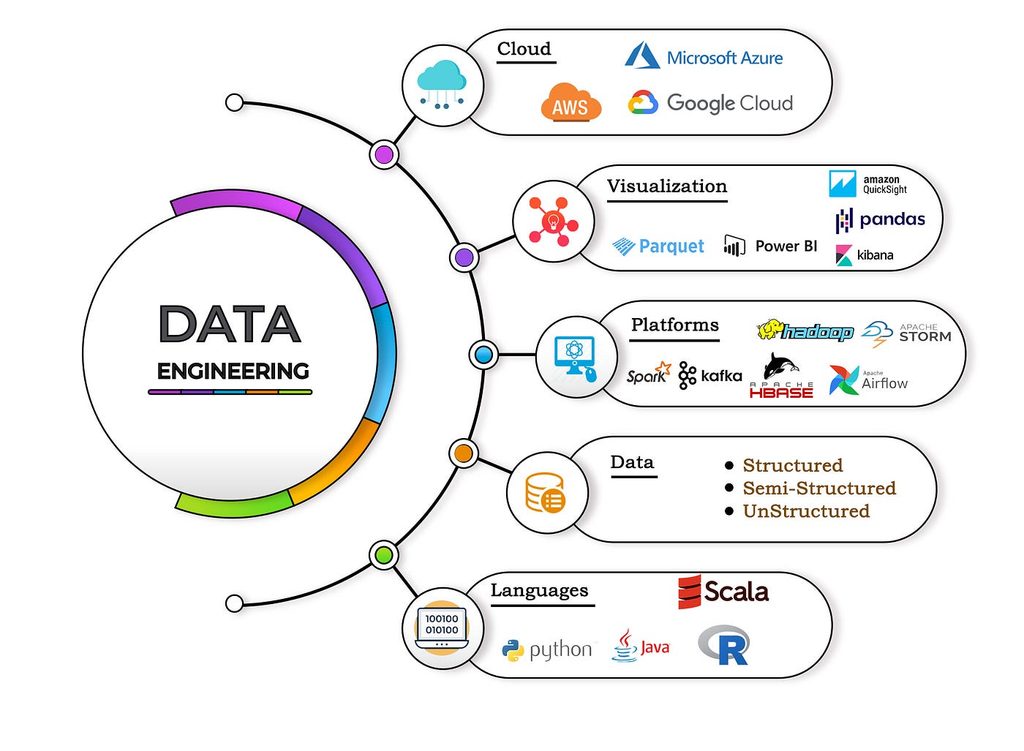
A typical Data Engineer may work with:
- Python
- SQL
- Apache Spark
- Airflow
- ETL/ELT pipelines
- Data warehouses
- Cloud platforms
- Databases
- APIs
- Data lakes
- Big-data technologies
So when you hear “Data Engineer,” don’t think of someone who simply works with Excel sheets.
The job is much more technical.
Data Engineer Salary in India in 2026
Let’s get to the number everyone is looking for. 💰
There is no single salary range that applies to every Data Engineer.
For a broad 2026 picture, available salary datasets show figures ranging from roughly ₹4–8 LPA for many entry-level/service-company roles, while experienced and product/GCC roles can reach substantially higher levels. One current salary guide places 0–2-year roles around ₹4–8 LPA in IT services and ₹8–15 LPA in product/GCC environments; its 2–5-year ranges are approximately ₹8–15 LPA and ₹15–28 LPA respectively.
Another current dataset reports a broader India range and shows that the market contains substantial variation even among people with similar experience.
So I would look at salary as a range, rather than believing that every Data Engineer earns a particular fixed amount.
| Experience | Approximate Salary Range |
|---|---|
| 0–2 years | ₹4–15 LPA |
| 2–5 years | ₹8–28 LPA |
| 5–9 years | ₹15–45 LPA |
| 10+ years / Lead | ₹22–40+ LPA |
These are indicative market bands, not guaranteed salaries. Employer type, location, technical depth, industry, and compensation structure can move an individual far outside these ranges.
Data Engineer Salary for Freshers 👨💻
If you’re a fresher, don’t get discouraged by seeing someone earning ₹20 LPA or ₹30 LPA.
They are not starting where you are starting.
For freshers, a Data Engineer salary around ₹4–8 LPA is common in many service-oriented environments, while stronger product-company or GCC opportunities can offer higher packages.
For example, current Glassdoor company-level data shows reported Data Engineer total-pay ranges such as:
- TCS: approximately ₹4–9 LPA
- Accenture: approximately ₹6–10 LPA
- IBM: approximately ₹8–17 LPA
- Cognizant: approximately ₹5–9 LPA
These figures are based on reported compensation and should not be interpreted as guaranteed fresher offers.
For a fresher, I would focus less on chasing a particular salary number and more on getting your first opportunity where you can actually work with SQL, Python, databases, pipelines, and cloud/data platforms.
Your first job is the beginning of the story, not the final chapter.

Data Engineer Salary Based on Experience
Experience has a major impact on salary, but there’s something I want to point out.
Five years of experience doesn’t automatically mean five years of Data Engineering experience.
Someone who spent five years doing basic reporting may not have the same market profile as someone who spent three years designing cloud data pipelines.
That’s why skills matter.
0–2 Years
At this stage, you may be working as:
- Junior Data Engineer
- Data Engineer Trainee
- ETL Developer
- Junior Analytics Engineer
- Data Platform Associate
Typical salary bands can start around ₹4–8 LPA, with stronger employers and specialized skills pushing higher.
2–5 Years
This is where things become interesting.
A Data Engineer with strong experience in SQL, Python, cloud platforms, Spark, ETL/ELT, and data warehousing can access significantly better opportunities.
Indicative market bands can range from around ₹8–28 LPA, depending heavily on the employer and technical depth.
5–9 Years
At this stage, you may move toward:
- Senior Data Engineer
- Data Platform Engineer
- Cloud Data Engineer
- Big Data Engineer
- Data Engineering Lead
Salary can move into the ₹15–45 LPA range in some parts of the market, with product/GCC and specialist roles potentially going beyond that.
10+ Years
Experienced professionals may move toward:
- Lead Data Engineer
- Data Architect
- Data Platform Architect
- Engineering Manager
- Principal Data Engineer
At this level, compensation depends heavily on leadership responsibilities, architecture skills, company size, and specialization.
Data Engineer Salary by City in India 📍
Location still matters.
But I wouldn’t say, “Move to Bengaluru and you will automatically get a huge salary.”
That’s not how the market works.
Your company and role can matter just as much as your city.
Current salary data shows Bengaluru, Hyderabad, Pune, NCR, Mumbai, and Chennai among important Data Engineering markets. One current 2026 dataset places mid-career compensation around ₹16–26 LPA in Bengaluru, ₹16–25 LPA in Hyderabad, ₹15–24 LPA in Pune and Noida, and ₹14–23 LPA in Chennai.
Chennai’s Glassdoor data, for example, currently reports an average base pay of around ₹8 LPA, with additional pay around ₹1 LPA, although individual salaries vary considerably.
The important lesson?
Don’t choose a career based only on a city-wise salary table.
Look at the actual job description.
Skills That Can Increase Your Data Engineer Salary 🔥
This is probably the section I would pay the most attention to if I were starting today.
Why?
Because salary follows skills more than people sometimes realize.
1. SQL
Learn SQL properly.
Not just:
SELECT * FROM employees;
You should become comfortable with:
- Joins
- Subqueries
- CTEs
- Window functions
- Aggregations
- Indexes
- Query optimization
- Stored procedures
- Database design
For a Data Engineer, SQL isn’t an optional extra.
It’s one of the foundations.
2. Python
Python is another important skill.
You don’t necessarily need to become a hardcore software developer, but you should understand how to use Python for:
- Data processing
- Automation
- API integration
- ETL pipelines
- File processing
- Database interaction
- Data validation
Libraries such as Pandas can also be useful for data manipulation and exploration.
The official Python documentation is a good starting point if you’re learning Python.
3. Cloud Computing ☁️
Cloud skills can open another layer of Data Engineering opportunities.
The major platforms include:
- AWS
- Microsoft Azure
- Google Cloud
For example, you might encounter services such as:
- Amazon S3
- AWS Glue
- Amazon Redshift
- Azure Data Factory
- Azure Data Lake
- Azure Synapse
- Google BigQuery
- Google Cloud Storage
You don’t need to learn every cloud service.
That’s a trap beginners often fall into.
Choose one platform and understand it properly.
You can explore the official AWS Data Engineering resources, Microsoft Azure Data Engineering resources, and Google Cloud data engineering documentation.
Data Engineer Skills: Spark, Airflow and Data Warehousing
Once your fundamentals are strong, you can start exploring more advanced tools.
Apache Spark
Spark is widely used for large-scale data processing.
It becomes particularly useful when datasets are too large or workloads are too complex for simple single-machine processing.
The official Apache Spark documentation is useful for learning the technology.
Apache Airflow
Airflow is used to develop and schedule workflows.
For example:
Extract data → Clean data → Transform data → Load warehouse → Run validation
Instead of someone manually doing these steps every morning, a workflow orchestration tool can automate and monitor them.
You can learn more through the official Apache Airflow documentation.
Data Warehousing
You should also understand concepts such as:
- Fact tables
- Dimension tables
- Star schema
- Snowflake schema
- Data marts
- OLTP vs OLAP
- ETL vs ELT
These concepts become very important as you move beyond beginner-level Data Engineering.
Data Engineer Salary: Skills vs Experience
Here’s something I wish more beginners understood.
Experience matters. But the type of experience matters too.
Consider two candidates.
Candidate A
5 years of experience:
- Basic SQL
- Excel
- Manual reporting
- Limited Python
- No cloud experience
Candidate B
3 years of experience:
- Advanced SQL
- Python
- AWS/Azure
- Spark
- Airflow
- Data warehouse
- Production ETL pipelines
You cannot assume Candidate A will always receive a higher salary simply because they have five years of experience.
Companies evaluate the actual role, skills, responsibilities, interview performance, and business needs.
That is why I would never tell a beginner: “Just collect years of experience.”
Instead:
Build useful experience.

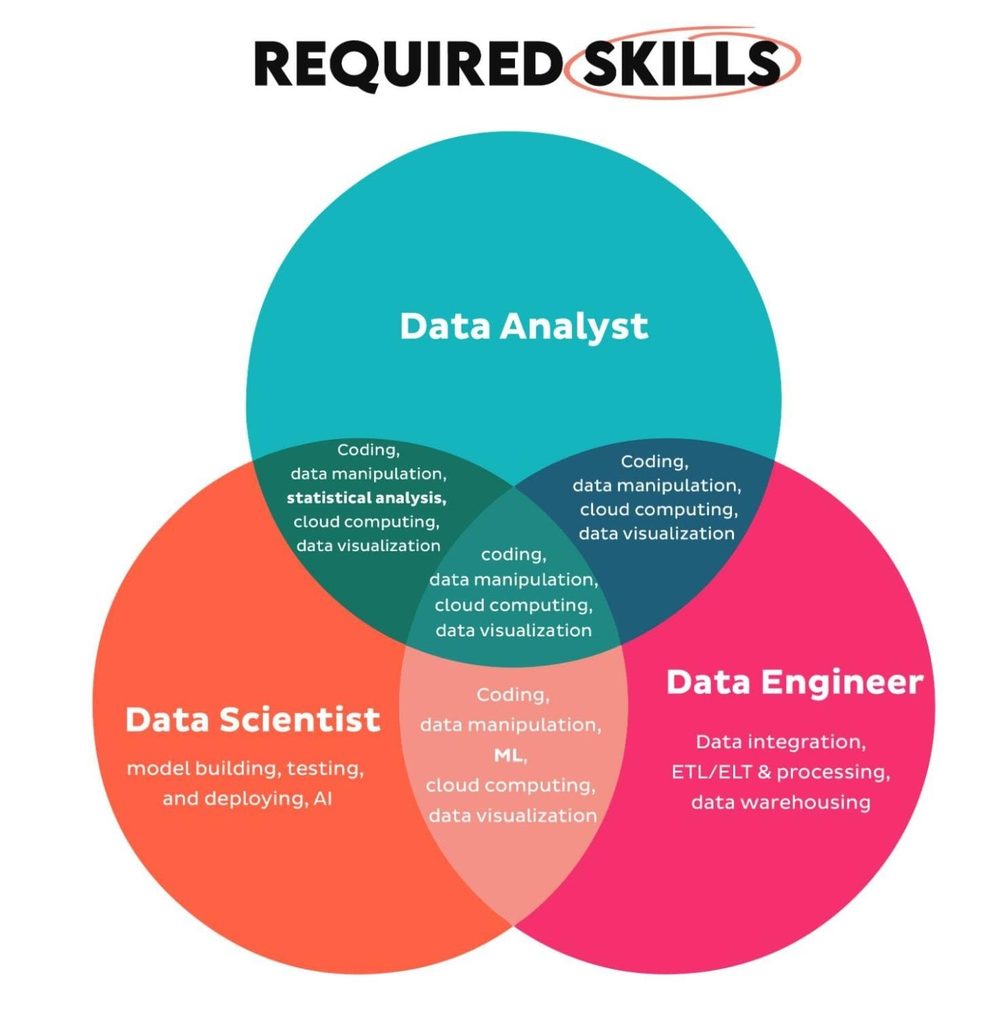
Data Engineer vs Data Scientist vs Data Analyst
These roles often get mixed up.
Here is a simple way to understand them.
| Role | Main Focus |
|---|---|
| Data Analyst | Understands and reports on data |
| Data Scientist | Builds models and extracts predictions/insights |
| Data Engineer | Builds systems and pipelines that make data usable |
Of course, real-world roles can overlap.
A Data Engineer might work closely with Data Scientists and Analysts.
Think of it like a restaurant.
The Data Engineer helps make sure the ingredients arrive, are organized, stored properly, and reach the kitchen.
The Data Scientist might use those ingredients to create something new.
The Data Analyst may study the finished information and explain what happened.
Different jobs. Same ecosystem.
How to Become a Data Engineer in 2026 🚀
If I were starting from zero, I wouldn’t try to learn 30 tools at once.
I’d build the foundation first.
Step 1: Learn SQL
Start with databases and SQL.
Step 2: Learn Python
Focus on practical programming and data processing.
Step 3: Understand Databases
Learn relational databases and basic database design.
Step 4: Learn ETL/ELT
Understand how data moves from one system to another.
Step 5: Learn a Cloud Platform
Choose AWS, Azure, or Google Cloud.
Step 6: Learn Spark
Understand distributed data processing.
Step 7: Learn Airflow or another orchestration tool
Understand how pipelines are scheduled and monitored.
Step 8: Build Projects
This is where your learning becomes real.
For example:
E-commerce Data Pipeline
Customer data → API → Python → Cloud Storage → Spark → Data Warehouse → Dashboard
That single project can teach you far more than watching ten random tutorials.
What Does a Data Engineer Project Look Like?
Let’s imagine a food-delivery application.
Every day it generates:
- Customer data
- Restaurant data
- Order data
- Payment data
- Delivery data
- Rating data
The Data Engineer could create a pipeline that:
- Collects the data
- Stores raw data
- Cleans incorrect records
- Transforms the data
- Loads it into a warehouse
- Runs the process automatically
- Monitors failures
- Makes clean data available to analysts
Now imagine doing this project yourself.
You aren’t simply saying:
“I know Python.”
You’re able to say:
“I built a data pipeline using Python, SQL, cloud storage, transformation tools, and a data warehouse.”
That’s a much stronger conversation in an interview.
Is Data Engineering a Good Career in 2026?
I would look at the question differently.
Instead of asking whether Data Engineering is “good,” ask whether the work matches your interests.
If you enjoy:
- Programming
- Databases
- Cloud technologies
- Problem solving
- Automation
- Working with large datasets
- Building systems
then Data Engineering can be an interesting career path.
But if you strongly dislike databases, backend systems, debugging pipelines, and technical infrastructure, the role may not feel enjoyable just because the salary numbers look attractive.
Money matters.
But you’ll spend a lot of your week doing the actual work.
That’s worth remembering.
Final Thoughts on Data Engineer Salary in India in 2026
The Data Engineer salary in India in 2026 has a wide range.
For entry-level professionals, salaries around ₹4–8 LPA are common in parts of the market, while stronger product/GCC opportunities can start higher. With experience, the range can expand considerably, particularly for professionals who develop strong skills in SQL, Python, cloud platforms, Spark, data warehousing, ETL/ELT, and workflow orchestration.
Current Glassdoor data also shows why salary figures should be treated as estimates rather than promises: its India data reports an average base salary around ₹10.3 LPA, while individual reported salaries vary significantly by experience and location.
So, if you’re considering becoming a Data Engineer, don’t obsess over the ₹10 LPA, ₹20 LPA, or ₹30 LPA number.
Start with something more practical.
Learn SQL.
Learn Python.
Understand databases.
Build data pipelines.
Learn cloud.
Create real projects.
Then keep improving.
Your first salary might not be spectacular. That’s okay. What matters is whether you’re building skills that allow you to take on more complex Data Engineering work over time. 🚀
And honestly, that’s the part of the career journey I find more interesting than the salary number itself.
Frequently Asked Questions
1. What is the average Data Engineer salary in India in 2026?
Current salary sources report different averages because they use different datasets and compensation definitions. Glassdoor currently reports around ₹10.3 LPA average base pay for Data Engineers in India, while other datasets report different figures.
2. What is the Data Engineer salary for freshers in India?
A fresher Data Engineer may commonly earn around ₹4–8 LPA in many service-company environments. Product companies and GCCs can offer higher packages depending on skills and hiring requirements.
3. Which skills are important for a Data Engineer?
Important skills include SQL, Python, databases, ETL/ELT, cloud computing, data warehousing, Spark, and workflow orchestration.
4. Can a Data Engineer earn ₹20 LPA in India?
Yes, reported salary data includes Data Engineers earning above ₹20 LPA, particularly among experienced professionals and in some product/GCC environments. However, ₹20 LPA should not be treated as a standard salary for every Data Engineer.
5. Is Python necessary for Data Engineering?
Python is widely used in Data Engineering for automation, data processing, APIs, and pipeline development. However, SQL is equally fundamental and should not be neglected.
6. Which cloud platform should I learn for Data Engineering?
You can start with AWS, Azure, or Google Cloud. Rather than trying to learn all three simultaneously, choose one and build practical projects around it.
7. Does location affect Data Engineer salary?
Yes. Salary can vary between cities, but employer, industry, experience, skills, and role complexity also have a major effect. Current salary data shows variation across Bengaluru, Hyderabad, Pune, Chennai, Mumbai, and NCR.
8. Is Data Engineering suitable for freshers?
Yes. Freshers can enter through roles such as Junior Data Engineer, ETL Developer, Data Engineer Trainee, or related data-platform positions. Building strong SQL, Python, database, and cloud fundamentals can help prepare for these roles.
Want to learn more ??, Kaashiv Infotech Offers Data Analytics Course, Data Science Course, Cyber Security Course & More Visit Their Website www.kaashivinfotech.com.

