
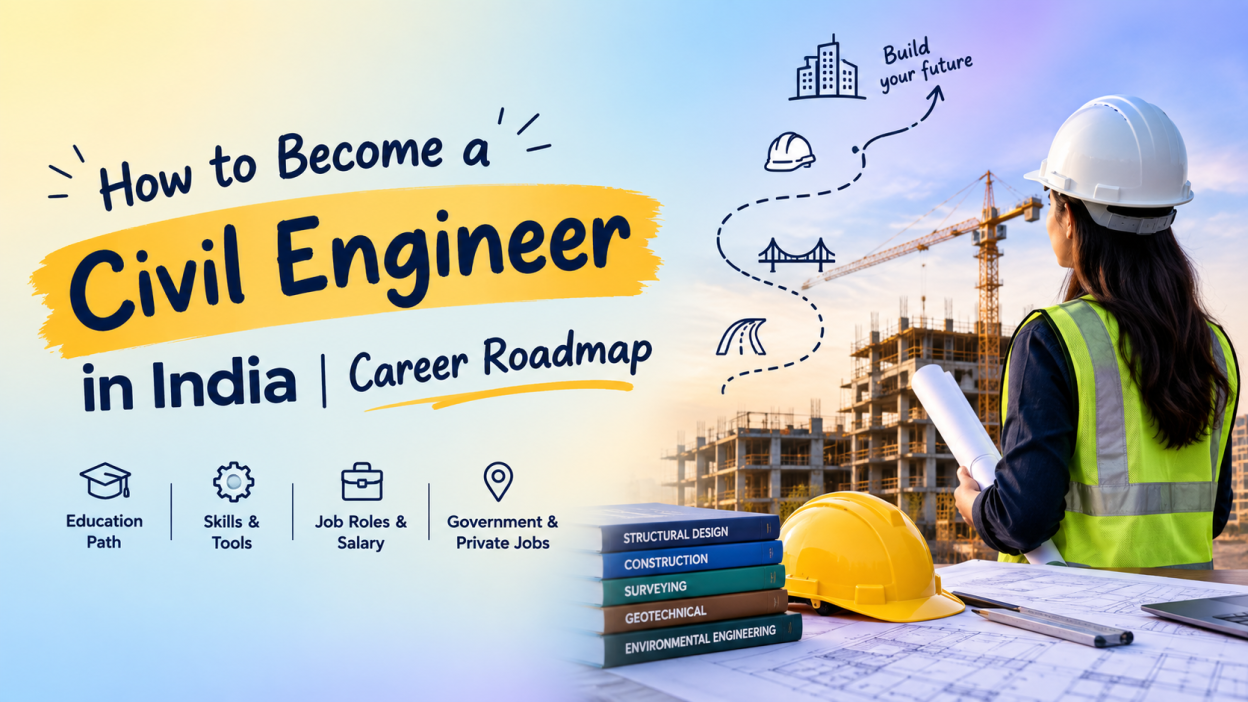
If you are planning to become a Civil Engineer, you might already have a lot of questions.
What should I study after 10th?
Is Maths compulsory?
Should I choose a diploma or B.Tech?
What does a Civil Engineer actually do?
Which skills should I learn?
And, most importantly, how do I get my first Civil Engineering job in India?
I had similar questions when I first started exploring engineering careers. Civil Engineering can look confusing from the outside because it covers everything from buildings and roads to bridges, water systems and large infrastructure projects.
So, in this guide, I’ll break down the Civil Engineer career roadmap in India in simple words.
You’ll learn about the education path, skills, job roles, salary factors, software, government jobs, private-sector opportunities and what you can do to start building your career.
Key Highlights 🚧
- A Civil Engineer works on the planning, design, construction and maintenance of infrastructure.
- After 10th, students can choose a Diploma in Civil Engineering or continue through the 11th–12th route and later pursue a degree.
- A B.E./B.Tech in Civil Engineering is a common degree route for becoming a graduate Civil Engineer.
- AICTE’s undergraduate Civil Engineering model curriculum is structured as a 4-year programme.
- Important areas include structural engineering, construction, surveying, geotechnical engineering, transportation and environmental engineering.
- Software skills such as AutoCAD, Revit, Civil 3D, STAAD.Pro and BIM-related tools can be useful depending on the career path.
- Civil Engineers can work in construction companies, infrastructure firms, consulting companies, government departments and real-estate organisations.
- Practical experience through internships, site visits and projects can make the transition from college to employment easier.
- The National Career Service provides job-search, internship, career-centre and career-support resources for job seekers in India.
Who Is a Civil Engineer?
A Civil Engineer is a professional who works with the planning, design, construction and maintenance of physical infrastructure.
Think about the road you use every morning.
Someone had to plan it.
Someone had to calculate the materials.
Someone had to study the soil.
Someone had to prepare drawings.
Someone had to supervise construction.
Someone had to make sure the finished road met the required standards.
That is where Civil Engineering comes in.
The same idea applies to buildings, bridges, drainage systems, water-supply systems, highways, airports and many other infrastructure projects.
In simple words:
Civil Engineers help turn infrastructure ideas into real structures.
How to Become a Civil Engineer in India
Java Servlet Life Cycle Explained: Steps, Methods, and Examples
The Civil Engineer career roadmap can be divided into a few straightforward stages:
10th → 11th & 12th / Diploma → Civil Engineering Degree → Skills & Internship → First Job → Specialisation → Career Growth
Let’s look at each step.
Step 1: Complete Your 10th Standard 📚
Your journey usually starts with completing Class 10.
If you’re already interested in becoming a Civil Engineer, start paying attention to subjects such as:
- Mathematics
- Science
- Physics
- Basic computer skills
- Technical drawing
You don’t need to know everything about construction at this stage.
In fact, you probably won’t.
The important thing is to develop a good foundation in Mathematics and Science, because many Civil Engineering subjects involve calculations, measurements and scientific concepts.
Step 2: Choose Your Path After 10th
After Class 10, students generally have more than one route into Civil Engineering.
Route 1: 11th and 12th → B.E./B.Tech
You can continue your higher secondary education and later apply for an undergraduate engineering programme.
For students targeting engineering, Physics, Chemistry and Mathematics (PCM) are commonly relevant subjects, although exact admission requirements depend on the institution and admission route.
After Class 12, you can pursue a degree such as:
B.E. Civil Engineering
or
B.Tech Civil Engineering
The exact admission process and eligibility requirements can vary by institution and state, so always check the current rules of the college or admission authority you are applying through.
Route 2: Diploma in Civil Engineering
Another option is to pursue a Diploma in Civil Engineering after Class 10.
This route gives students an earlier introduction to technical and practical aspects of engineering.
Later, eligible diploma holders may have opportunities for lateral entry into degree programmes, depending on the applicable admission rules.
So there isn’t only one road to becoming a Civil Engineer.
Step 3: Complete Your Civil Engineering Degree 🎓
If you choose the degree route, you can pursue a B.E. or B.Tech in Civil Engineering.
AICTE’s undergraduate model curriculum for Civil Engineering describes a four-year undergraduate structure with 160 credits. The curriculum includes subjects from engineering fundamentals through specialised Civil Engineering areas.
During college, you may encounter subjects such as:
- Engineering Mathematics
- Engineering Mechanics
- Strength of Materials
- Fluid Mechanics
- Surveying
- Structural Analysis
- Concrete Technology
- Geotechnical Engineering
- Transportation Engineering
- Environmental Engineering
- Construction Management
- Structural Design
Don’t worry if some of these names sound intimidating.
I remember looking at engineering subject lists and thinking, “How am I supposed to understand all of this?”
The trick is not to memorise everything at once.
Learn the concepts one subject at a time.
Step 4: Learn Important Civil Engineering Software 💻
This is one area I would not ignore.
A degree gives you the technical foundation, but software skills can help you apply that knowledge in practical work.
Depending on the role you want, you may come across tools such as:
AutoCAD
AutoCAD is widely used for creating and editing technical drawings.
A beginner Civil Engineer should understand basic:
- 2D drawing
- Dimensions
- Layers
- Blocks
- Annotations
- Layouts
- Plotting
Revit
Revit is associated with Building Information Modelling (BIM) and is used for creating information-rich building models.
Civil 3D
Civil 3D is useful for civil infrastructure workflows such as:
- Land development
- Surfaces
- Alignments
- Profiles
- Grading
- Corridors
STAAD.Pro
Structural analysis and design software can be useful for students interested in structural engineering.
The important point is this:
Don’t try to learn ten software tools at the same time.
Choose software based on the career area you want to enter.
Step 5: Develop Practical Civil Engineering Skills 🦺
Here’s something I would tell every Civil Engineering student:
Don’t become a person who only knows theory.
Civil Engineering is strongly connected to real-world work.
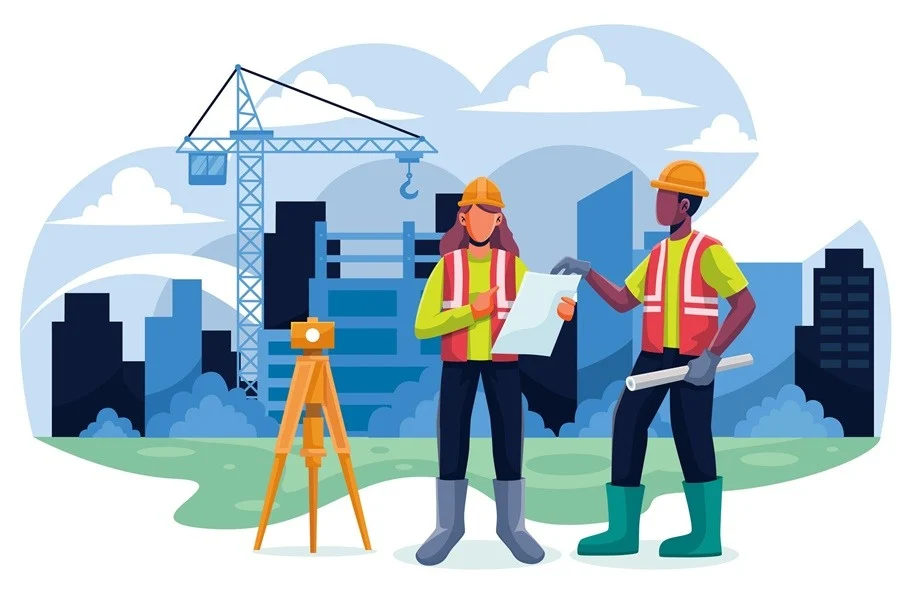
Try to understand how things actually happen on a construction site.
For example, learn about:
- Reading engineering drawings
- Quantity estimation
- Material calculations
- Construction safety
- Surveying
- Site supervision
- Quality control
- Concrete work
- Reinforcement
- Project documentation
- Basic project management
Even a simple site visit can teach you something that a classroom explanation cannot.
If your college offers internships, industrial visits or practical training, take them seriously.
Step 6: Choose Your Civil Engineering Specialisation
You don’t have to remain a general Civil Engineer forever.
As you gain experience, you can move towards a specific area.
1. Structural Engineering
Structural Engineers work with the behaviour and design of structures such as:
- Buildings
- Bridges
- Industrial structures
- Structural components
If you enjoy calculations and structural analysis, this area may interest you.
2. Construction Engineering
This area focuses heavily on the actual construction process.
You may work with:
- Contractors
- Site teams
- Project managers
- Suppliers
- Engineers
- Clients
A construction-focused Civil Engineer may spend considerable time on project sites.
3. Geotechnical Engineering
Interested in soil?
Then geotechnical engineering could be an area to explore.
It deals with topics such as:
- Soil properties
- Foundations
- Ground conditions
- Soil investigation
4. Transportation Engineering
This area covers infrastructure connected with transportation, including:
- Roads
- Highways
- Traffic systems
- Pavements
- Transportation planning
5. Environmental Engineering 🌱
This area focuses on environmental infrastructure and pollution-related challenges.
You may work around:
- Water treatment
- Wastewater
- Solid waste
- Pollution control
- Environmental management
Step 7: Get an Internship Before Graduation
If I could give one practical piece of advice to a Civil Engineering student, it would be this:
Don’t wait until graduation to think about experience.
Try to get an internship while you’re still studying.
For example, imagine two fresh graduates.
Student A has a degree but has never visited a construction site.
Student B has a degree, completed an internship and worked on a small project involving drawings, measurements and site documentation.
Their academic qualifications may look similar on paper, but their practical exposure is different.
An internship can help you understand what Civil Engineering looks like outside the classroom.
Step 8: Build a Civil Engineer Resume
Your resume doesn’t need to contain twenty different skills.
It needs to show what you can actually do.
For a fresher Civil Engineer, your resume could include:
Education
- B.E./B.Tech Civil Engineering
- Diploma, if applicable
Technical Skills
- AutoCAD
- Revit
- STAAD.Pro
- MS Excel
- Quantity estimation
- Surveying
Academic Projects
Include:
- Project title
- Your role
- Tools used
- What you worked on
- Result or outcome
Internship
Mention:
- Company
- Duration
- Responsibilities
- Site/project exposure
- Skills learned
Keep the resume clear.
A recruiter should understand your profile within a few seconds.
Civil Engineer Jobs in India 👷
Once you complete your education and develop relevant skills, you can explore several job roles.
Some common titles include:
- Civil Engineer
- Site Engineer
- Structural Engineer
- Project Engineer
- Planning Engineer
- Quantity Surveyor
- Estimation Engineer
- QA/QC Engineer
- Design Engineer
- Construction Engineer
- Junior Civil Engineer
- BIM Engineer
The exact responsibilities depend heavily on the company and project.
For example, a Site Engineer may spend much of the working day coordinating construction activities, checking work and communicating with different teams.
A Design Engineer may spend more time working with drawings, calculations and engineering software.
A Quantity Surveyor/Estimator may focus more on quantities, measurements, costs and project documentation.
Government Jobs for Civil Engineers 🇮🇳
Civil Engineers can also explore opportunities in the government sector.
Depending on the recruitment notification and eligibility requirements, opportunities may arise through organisations and departments involved in:
- Roads
- Railways
- Public works
- Water resources
- Urban development
- Infrastructure
- Public-sector construction
Recruitment rules are not identical across organisations.
So, instead of relying on random social-media posts, check the official recruitment notification for the particular position.
The Government of India’s National Career Service (NCS) is also useful for exploring jobs, internships, career centres and other employment resources.
You can also use NCS’s career resources and job-search facilities when you’re actively looking for opportunities.
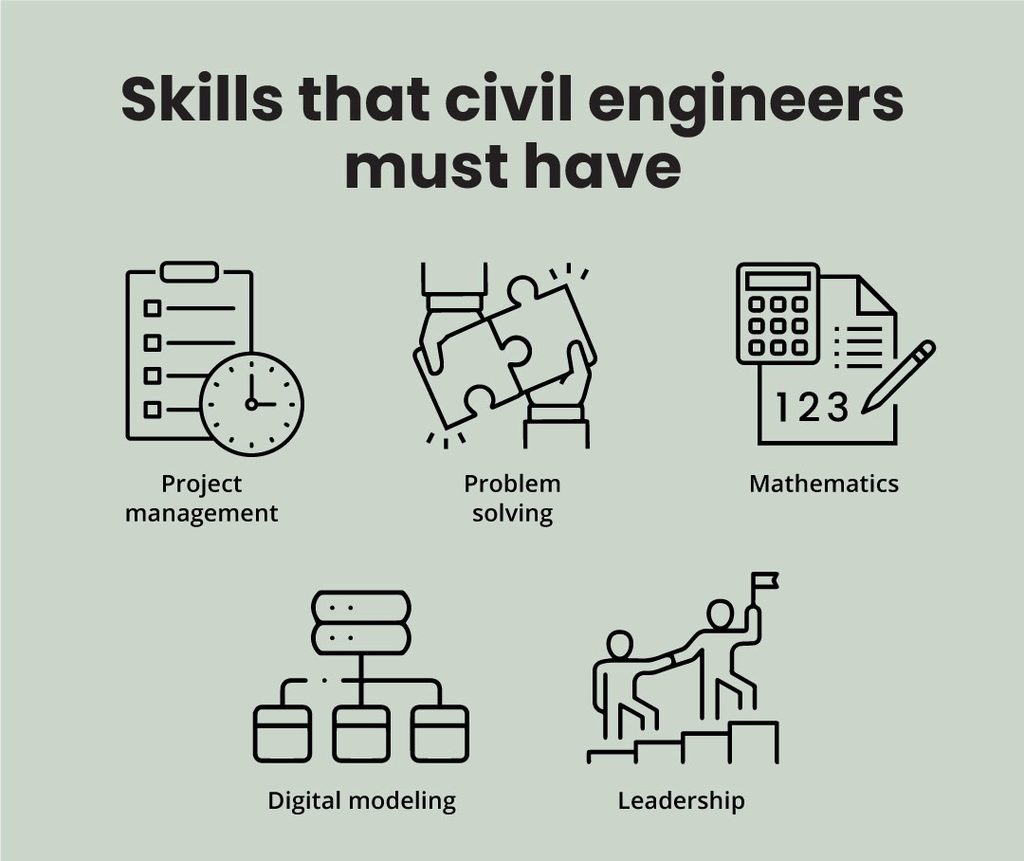
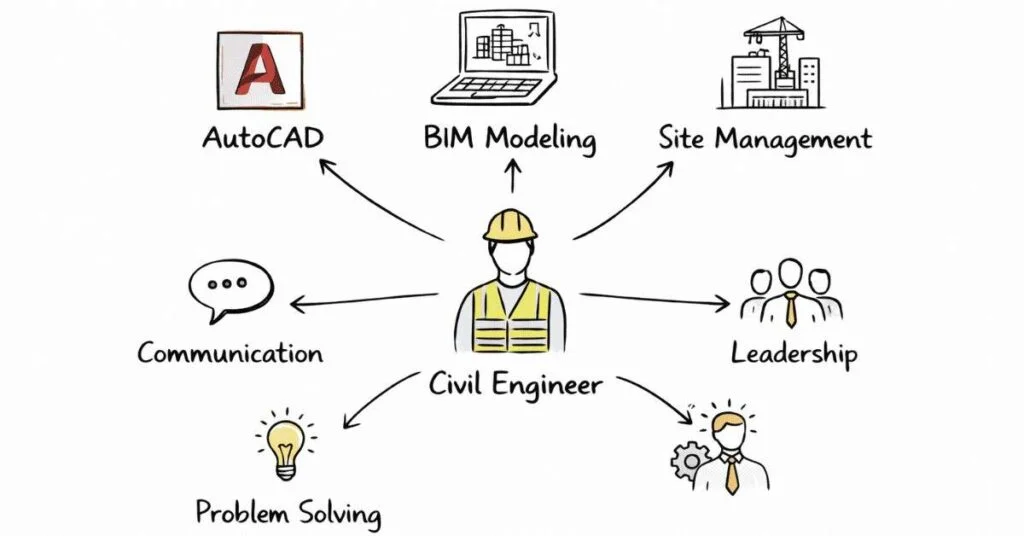
Skills Every Civil Engineer Should Develop
5 Creational Design Patterns in Java Software Design Patterns (Explained With Real Examples)
A good Civil Engineer needs more than technical knowledge.
Here are the skills I would focus on:
Technical Skills
- Engineering drawing
- AutoCAD
- Surveying
- Quantity estimation
- Structural basics
- Construction methods
- Basic BIM knowledge
- MS Excel
Soft Skills
Don’t ignore these.
You may need to communicate with:
- Contractors
- Workers
- Architects
- Clients
- Suppliers
- Project managers
- Other engineers
So work on:
- Communication
- Teamwork
- Problem-solving
- Time management
- Documentation
- Decision-making
Being technically strong is important.
Being able to explain your work clearly is important too.
How Much Can a Civil Engineer Earn in India?
There isn’t one fixed salary for a Civil Engineer.
Your compensation can vary depending on:
- Education
- Experience
- Location
- Company
- Industry
- Specialisation
- Technical skills
- Project type
- Job responsibilities
A fresher and an experienced project engineer obviously won’t have the same salary.
Instead of choosing a career only based on an expected starting salary, I would look at the skills and experience you can build during the first few years.
Those can have a major impact on your future opportunities.
For current job openings and market information, the National Career Service can be one useful place to start your search.
Is Civil Engineering a Good Career for the Future?
Civil Engineering continues to be connected with one basic human requirement:
We need infrastructure.
People need homes.
Cities need roads.
Communities need water and drainage systems.
Businesses need buildings.
Countries need transportation and infrastructure.
That doesn’t mean every Civil Engineer will automatically get a job.
You still need to build relevant skills, gain practical exposure and keep learning.
Technology is also changing how civil projects are planned and managed. Digital drawings, BIM, surveying technologies, modelling tools and data-driven project management are becoming increasingly relevant.
That’s why I wouldn’t stop learning after getting the degree.
Your degree is the foundation.
Your skills and experience are what you build on top of it.
Civil Engineer Career Roadmap: A Simple Version 🛣️
If the entire article feels like too much information, remember this roadmap:
Step 1: Complete Class 10
⬇️
Step 2: Choose 11th–12th or Diploma route
⬇️
Step 3: Study B.E./B.Tech Civil Engineering
⬇️
Step 4: Learn AutoCAD and other relevant software
⬇️
Step 5: Build technical and communication skills
⬇️
Step 6: Complete internships/projects
⬇️
Step 7: Create your Civil Engineer resume
⬇️
Step 8: Apply for fresher Civil Engineering jobs
⬇️
Step 9: Gain site/project experience
⬇️
Step 10: Choose a specialisation and grow your career 🚀

Final Thoughts
Becoming a Civil Engineer in India is not something that happens overnight.
Abstract Classes in Java: 7 Essential Things You Must Know to Master Java OOP
There will be difficult subjects.
There will be calculations you don’t understand the first time.
There may be software that feels confusing when you open it for the first time.
That’s normal.
I would focus on one thing at a time.
First, build your educational foundation. Then learn the technical concepts. After that, start working with software, projects and real-world examples. Finally, use internships and practical experience to move towards your first job.
And don’t compare your journey with someone else’s.
One person might enter construction.
Another might move into structural design.
Someone else might choose government recruitment.
Another person might build a career in BIM or project management.
There isn’t just one definition of a successful Civil Engineer.
The important thing is to understand the options, build useful skills and keep moving forward.
If you’re currently a student wondering, “Can I really become a Civil Engineer?”
Start with the next step.
You don’t need to figure out your entire career today. 🏗️
Want to go deeper? Kaashiv Infotech Offers Full Stack Java Developer Course, Java Course, Java Internship In Online & Offline Visit Our Website www.kaashivinfotech.com