
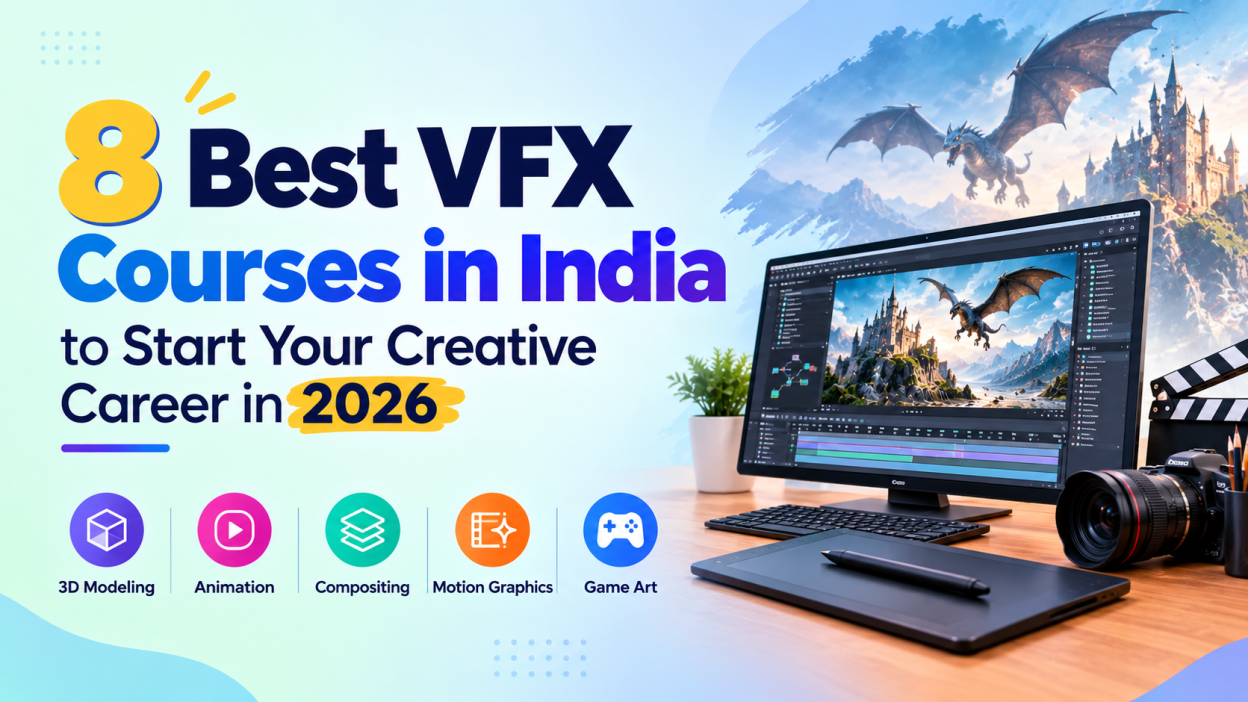
Visual effects (VFX) has become an important part of the entertainment, advertising, gaming, and digital media industries. From blockbuster movies and web series to advertisements and video games, VFX artists help create visuals that would be difficult, expensive, or impossible to capture in real life.
For students and beginners who are interested in animation, filmmaking, design, and digital art, learning VFX can open several career opportunities. However, choosing the right course can be challenging because there are many options available.
In this article, we explore 8 popular VFX courses in India that can help you build practical skills and understand the different areas of the VFX industry.
1. Diploma in VFX and Animation
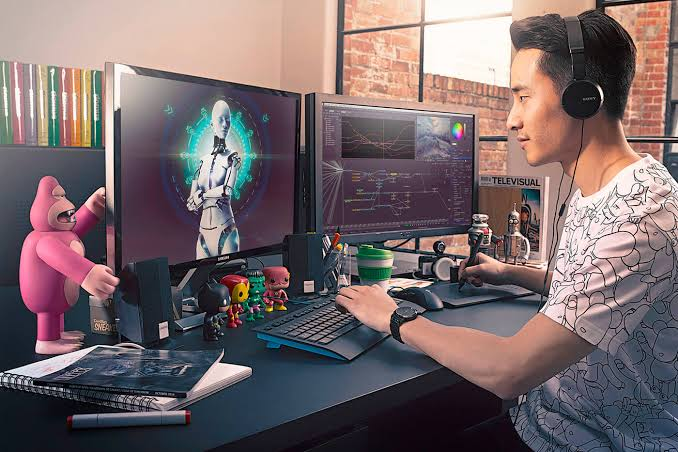
A Diploma in VFX and Animation is a good starting point for students who want to learn both visual effects and animation. These courses generally introduce students to fundamental concepts such as 2D and 3D animation, compositing, modeling, texturing, lighting, and rendering.
Students may also work on small projects that help them understand how VFX is used in movies, advertisements, and digital content.
This course can be suitable for beginners who want a broad understanding of the creative industry before choosing a specialization.
2. 3D Animation and VFX Course
3D animation is closely connected with modern VFX production. A 3D Animation and VFX course focuses on creating three-dimensional characters, objects, environments, and visual scenes.
Students typically learn concepts such as:
- 3D modeling
- Texturing
- Rigging
- Character animation
- Lighting
- Rendering
- Compositing
This course can help learners develop the technical and artistic skills required for animation studios, production companies, advertising agencies, and gaming companies.
3. VFX Compositing Course
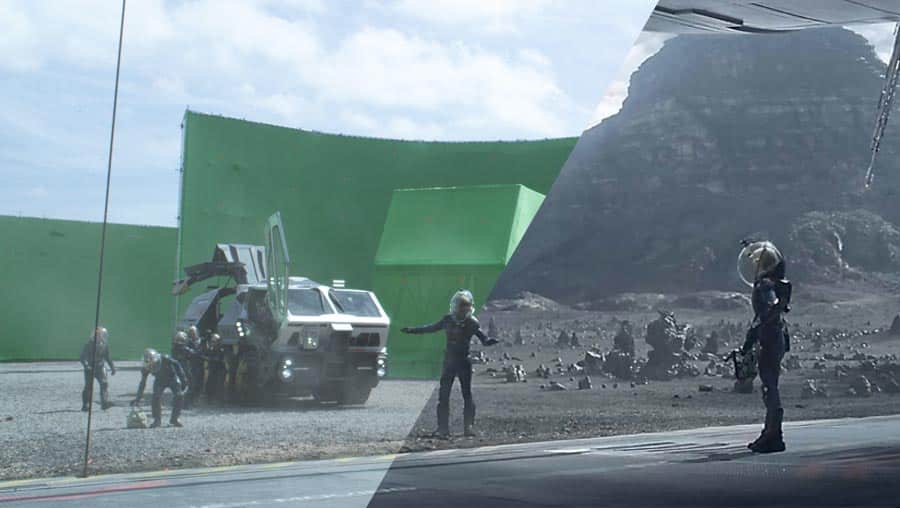
Compositing is one of the most important stages of VFX production. It involves combining multiple visual elements into a single realistic-looking scene.
A VFX compositing course teaches students how to work with green-screen footage, digital backgrounds, visual effects, color correction, masking, and layers.
Students may learn tools such as Nuke, Adobe After Effects, and Photoshop, depending on the institute and course structure.
This specialization can be useful for students who enjoy working with footage and creating realistic final shots.
4. VFX Modeling and Texturing Course
3D models are used extensively in movies, games, advertisements, and animation projects. A VFX Modeling and Texturing course focuses on creating detailed digital objects and surfaces.
Students learn how to transform basic shapes into complex 3D models and then add realistic textures and materials.
Important topics can include:
- 3D modeling
- Digital sculpting
- UV mapping
- Texturing
- Material creation
- Lighting
- Rendering
This course can be particularly interesting for learners who enjoy drawing, designing objects, and creating detailed digital assets.
5. Motion Graphics and VFX Course
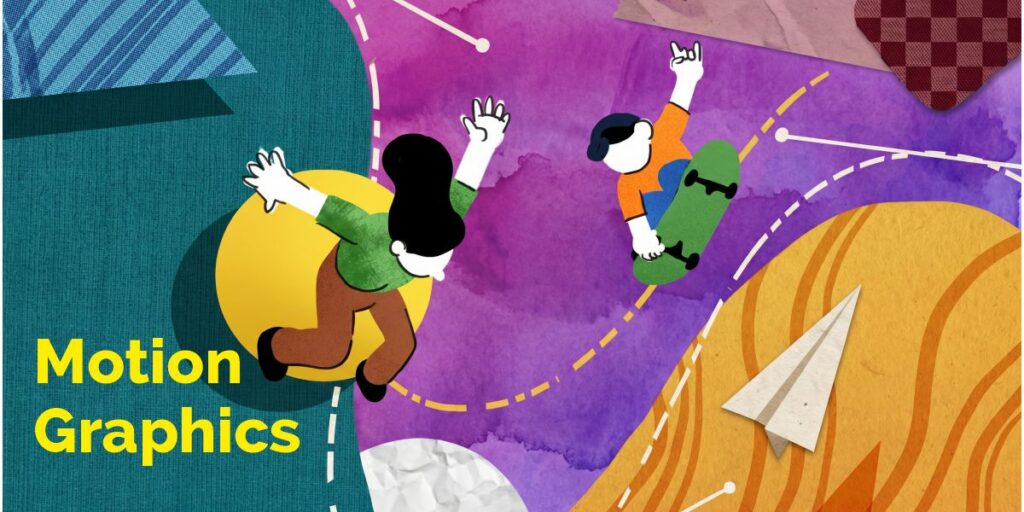
Motion graphics combines graphic design, animation, typography, and visual effects. It is widely used in advertisements, YouTube videos, social media content, television programs, presentations, and brand promotions.
A motion graphics course generally covers animated text, transitions, visual effects, logo animation, and video compositing.
Students may work with software such as Adobe After Effects, Premiere Pro, Photoshop, and Illustrator.
Motion graphics can be a useful specialization for learners interested in both graphic design and video production.
6. Film VFX and Digital Compositing Course
Film-focused VFX courses are designed around the production requirements of movies and other large-scale visual media.
Students can learn about the VFX pipeline, including pre-production, production, post-production, tracking, rotoscoping, keying, compositing, and final output.
The course may also introduce students to professional workflows used by VFX studios.
Practical projects are especially important in this area because employers often look at a candidate’s portfolio and showreel when evaluating their skills.
7. Game Art and VFX Course
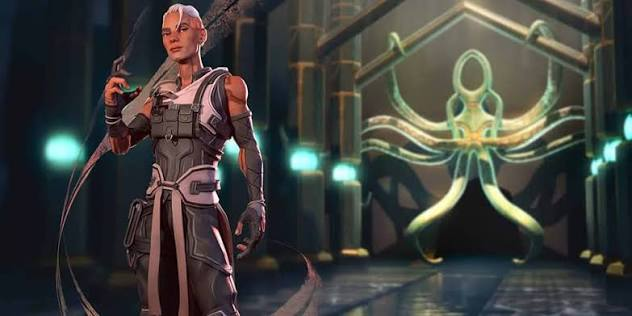
The gaming industry has created another major area for artists with 3D and VFX skills. Game Art and VFX courses introduce students to creating digital assets and effects for games.
Depending on the course, students may learn:
- 3D environment design
- Character modeling
- Game textures
- Lighting
- Particle effects
- Animation
- Game engines
Learners may also get exposure to tools such as Blender, Maya, Unity, or Unreal Engine.
This course can be a good option for students who are interested in combining VFX, animation, and interactive technology.
8. Advanced VFX and Animation Course
An advanced VFX and Animation course is generally designed for students who want to develop professional-level skills after learning the fundamentals.
Such programs may cover multiple areas, including 3D modeling, animation, compositing, motion graphics, visual effects, lighting, and rendering.
Some advanced programs also include portfolio development and industry-oriented projects. A strong portfolio can demonstrate a learner’s ability to apply software knowledge to practical creative work.
How to Choose the Right VFX Course
Choosing a VFX course should depend on your interests, career goals, course duration, curriculum, software training, practical projects, and overall learning approach.
If you are completely new to VFX, a general VFX and animation course can help you understand different areas before selecting a specialization.
If you already know what you want to do, consider a specialized course in compositing, 3D modeling, motion graphics, animation, or game art.
You should also check whether the course includes hands-on projects, portfolio development, and a showreel. These can be valuable when applying for internships and entry-level opportunities.
Career Opportunities After Learning VFX
After completing a VFX course, learners can explore different creative roles depending on their specialization and portfolio. Some possible career paths include:
- VFX Artist
- Compositor
- 3D Modeler
- 3D Animator
- Texture Artist
- Motion Graphics Designer
- Rotoscopy Artist
- Lighting Artist
- Rendering Artist
- Game Artist
VFX professionals can work across film production, animation studios, advertising, gaming, television, OTT content, and digital media.
Conclusion
VFX is a creative and technology-driven field that offers several areas for specialization. From 3D modeling and animation to compositing, motion graphics, and game art, students can choose a learning path based on their interests and career goals.
The 8 VFX courses discussed above provide different ways to enter the field. Before enrolling, compare the syllabus, software covered, practical training, project opportunities, faculty experience, and portfolio requirements.
With consistent practice and a strong portfolio, aspiring artists can gradually develop the technical and creative skills needed to build a career in the growing VFX and digital media industry.
If you want to learn more about editing, kaashiv infotech offers, Front End Developer Course, UI/UX Course & More, Visit Their Website www.kaashivinfotech.com.