
Limitations of Artificial Intelligence – Artificial Intelligence (AI) has become an important part of modern technology. From virtual assistants and chatbots to healthcare systems, self-driving vehicles, and business automation, AI is changing how people work and solve problems. It helps organizations analyze large amounts of data, automate repetitive tasks, and make decisions more efficiently.
Despite these advantages, AI is not perfect. It has several limitations that affect its accuracy, reliability, security, and practical use. AI systems depend on data, algorithms, computing resources, and human supervision. They can sometimes produce incorrect information, misunderstand situations, or make decisions that create unexpected problems.
Understanding the limitations of artificial intelligence is essential for students, developers, business owners, and technology professionals. It helps people use AI responsibly and recognize situations where human judgment is still necessary.
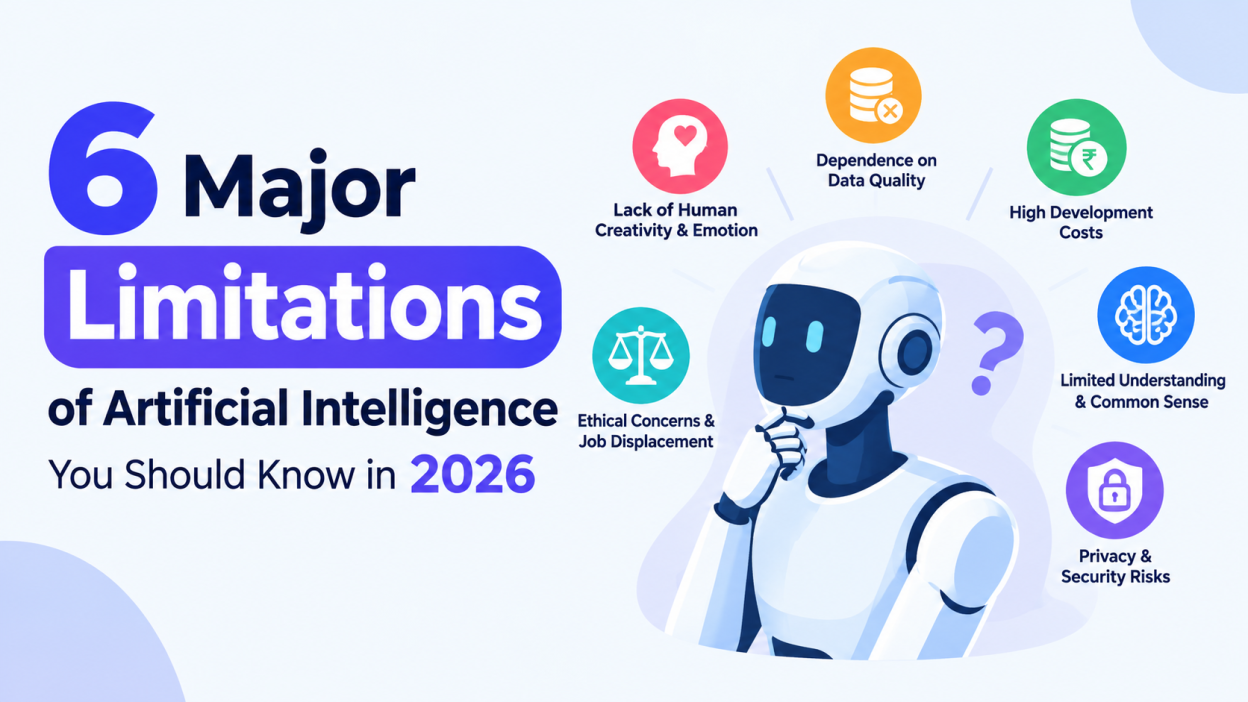
In this article, we will explore six major limitations of artificial intelligence, along with practical examples and possible solutions.
What Are the Limitations of Artificial Intelligence?
The limitations of artificial intelligence are the weaknesses or challenges that prevent AI systems from performing certain tasks perfectly. These limitations may arise from insufficient training data, a lack of human-like understanding, high development costs, security risks, or ethical concerns.
Although AI can perform specific tasks faster than humans, it does not possess human intelligence in the same way people do. Its performance depends on how it is designed, trained, evaluated, and used.
1. Lack of Human Creativity and Emotional Understanding
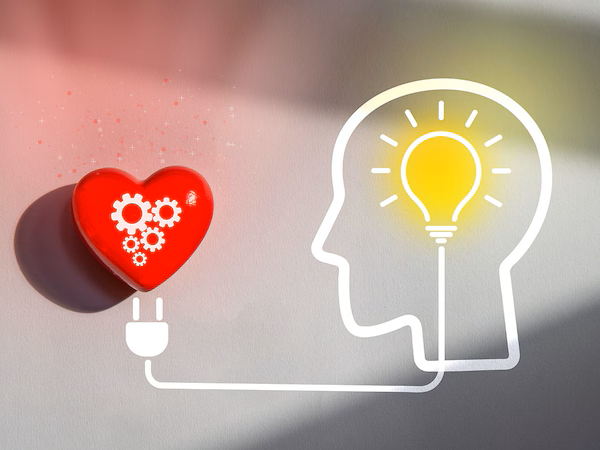
One major limitation of artificial intelligence is its inability to fully reproduce human creativity and emotional understanding.
AI tools can generate articles, images, music, designs, and other creative content by learning patterns from existing data. However, generating something that appears creative is different from having personal experiences, emotions, intentions, or cultural understanding.
For example, an AI chatbot can suggest comforting words to someone experiencing a difficult situation. However, it does not experience sadness or empathy as a human does. Similarly, an AI writing tool can create a story, but it may struggle to understand the deeper emotional meaning behind a real-life experience.
This limitation can affect areas such as counseling, education, customer service, and artistic work, where emotional awareness and personal judgment are important.
Possible solution: AI should support human creativity rather than replace it completely. Human professionals can review AI-generated content, add personal experiences, and ensure that emotional and cultural factors are considered.
2. Dependence on Data Quality
Artificial intelligence systems rely heavily on the data used to train and operate them. If the data is incomplete, outdated, inaccurate, or biased, the results may also be unreliable.
For example, an AI recruitment system trained using historical hiring data may unfairly favor certain groups if the original data reflects past discrimination. Similarly, an AI model trained with outdated information may provide recommendations that are no longer suitable.
Data quality is especially important in healthcare, finance, cybersecurity, and other fields where incorrect predictions can have serious consequences.
Another challenge is data availability. Some organizations may not have enough relevant data to train an AI model effectively. Collecting high-quality data can also require significant time, money, and effort.
Possible solution: Organizations should use reliable datasets, regularly update training information, test for bias, and monitor AI performance. Human experts should review important decisions before they are implemented.
3. High Development and Maintenance Costs
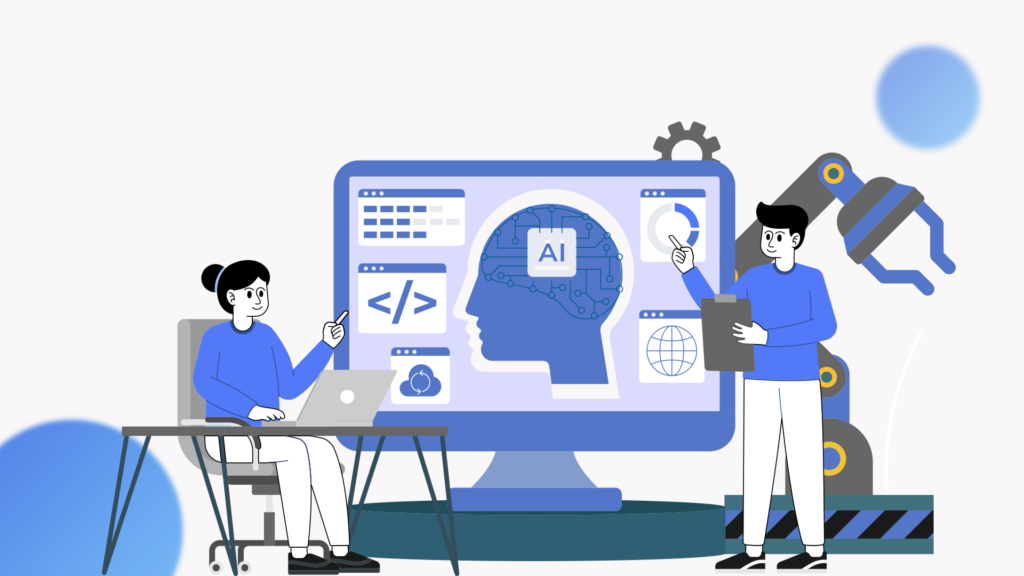
Developing and maintaining artificial intelligence systems can be expensive. Organizations may need powerful computing hardware, cloud infrastructure, specialized software, large datasets, and skilled professionals.
Training advanced AI models can require substantial computing resources and electricity. In addition, businesses must spend money on testing, security, software updates, and ongoing monitoring.
For small businesses and educational institutions, these expenses can make advanced AI adoption difficult.
For example, a company planning to build a custom AI-powered customer support platform may need to hire machine learning engineers, data specialists, and software developers. It must also maintain the infrastructure required to keep the system running reliably.
The cost does not end after deployment. AI models may need retraining when business requirements change or new data becomes available.
Possible solution: Businesses can begin with affordable AI tools, open-source frameworks, or cloud-based services. Evaluating the expected benefits and total operating costs before implementation can help organizations choose an appropriate solution.
4. Limited Understanding and Common-Sense Reasoning
AI systems can process information, identify patterns, and generate useful responses. However, they may fail when a task requires deep contextual understanding, practical experience, or common-sense reasoning.
For instance, an AI assistant may provide a technically correct answer that is unsuitable for a particular real-world situation because it misunderstands the user’s intention or overlooks an important detail.
Generative AI tools can also produce convincing but incorrect information, sometimes called hallucinations. These errors may include fabricated facts, inaccurate explanations, or nonexistent references.
This limitation is particularly important in education, legal services, scientific research, and healthcare, where information must be checked carefully.
AI performance can also decrease when it encounters situations that differ significantly from the data or examples it learned from.
Possible solution: Users should verify important AI-generated information using trustworthy sources. Developers can improve reliability through better testing, retrieval from authoritative information sources, and human review. AI should not be treated as an unquestionable source of truth.
5. Privacy and Security Risks
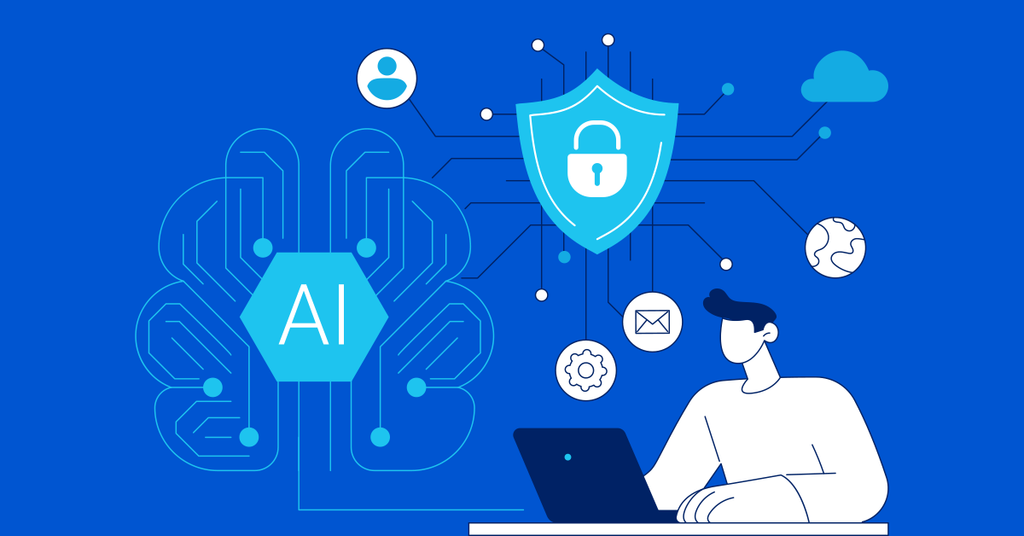
Artificial intelligence creates several privacy and security challenges. AI systems may process sensitive information, including personal details, financial records, business documents, and customer data.
If this information is collected, stored, or handled improperly, it can expose individuals and organizations to privacy violations.
AI can also introduce new cybersecurity threats. Attackers may use AI to create convincing phishing messages, automate certain malicious activities, or generate misleading content. AI applications themselves may be vulnerable to attacks that manipulate their inputs or expose sensitive information.
For example, an employee who pastes confidential company information into an unapproved AI chatbot could unintentionally expose data to an external service.
These risks make security controls essential when adopting AI technology.
Possible solution: Organizations should establish clear AI usage policies, restrict access to sensitive data, use approved tools, and apply encryption and access controls where appropriate. Regular security assessments and employee awareness training can further reduce risks.
6. Ethical Concerns and Job Displacement
The growing use of artificial intelligence raises ethical questions about fairness, accountability, transparency, and employment.
AI systems can make biased decisions when their training data or design contains unfair assumptions. In some applications, it may also be difficult to understand why a model produced a particular result.
For example, an automated loan approval system might disadvantage certain applicants if it relies on biased historical data. If an AI system makes a harmful decision, determining responsibility can be complicated when several organizations and individuals are involved.
AI automation can also change the employment market. Tasks such as data entry, basic content generation, and routine customer support may require fewer human working hours as businesses adopt automated systems.
However, AI can also create new roles in AI development, data analysis, cybersecurity, and AI governance. Its overall effect on employment depends on the industry, the tasks involved, and how organizations introduce the technology.
Possible solution: Organizations should conduct fairness assessments, explain important automated decisions where possible, establish clear accountability, and protect personal data. Workers can prepare for changing job requirements by developing technical skills, communication abilities, and critical-thinking skills.
Conclusion
Artificial intelligence offers significant benefits, including automation, faster data analysis, improved productivity, and support for complex tasks. However, its limitations should not be ignored.
The six major limitations discussed in this article are the lack of genuine emotional understanding, dependence on data quality, high development costs, limited contextual reasoning, privacy and security risks, and ethical concerns with potential job displacement.
These challenges do not mean that AI should be avoided. Instead, they highlight the importance of responsible implementation, continuous evaluation, and human supervision.
As AI technology advances, organizations must focus on improving reliability, protecting sensitive information, reducing bias, and ensuring accountability. For students and professionals, learning both the capabilities and limitations of AI is an important step toward using this technology effectively.
Ultimately, AI is most valuable when it complements human intelligence rather than replacing human judgment entirely.
Want to Learn More About Python & Artificial Intelligence ?, Kaashiv Infotech Offers Full Stack Python Course, Artificial Intelligence Course, Data Science Course & More Visit Their Website course.kaashivinfotech.com.
Related Reads:
Artificial Intelligence vs Human Intelligence: A Deep Dive into Minds Made and Minds Born
Top 10 AI Tools for Content Creation in 2026 You Shouldn’t Miss.