

Commerce students can develop practical business knowledge by working on projects that connect classroom concepts with real-world situations. Projects involving accounting, marketing, finance, entrepreneurship, and business analytics help students understand how companies operate and make decisions.
In 2026, students can explore modern topics such as digital payments, e-commerce, artificial intelligence in business, sustainable products, and financial planning. These projects are useful for school assignments, college submissions, presentations, and resume development.
Choosing a unique commerce project also helps students improve their research, communication, problem-solving, and analytical skills. Instead of selecting a common topic, students can focus on a specific business problem and suggest practical solutions.
Here are eight innovative commerce project ideas that students can explore in 2026.
1. Digital Payment Systems and Their Impact on Small Businesses

Digital payments have changed the way businesses receive money from customers. Small shops, restaurants, service providers, and online sellers increasingly use UPI, QR codes, debit cards, and mobile banking to complete transactions.
This project examines how digital payment systems influence the daily operations of small businesses.
Students can study how shop owners accept payments, maintain transaction records, reduce cash-handling difficulties, and manage customer purchases. They can also investigate challenges such as failed transactions, fraud awareness, internet connectivity, and payment-related service charges.
Objectives of the project:
- Understand different types of digital payment systems.
- Analyze the advantages and disadvantages of cashless transactions.
- Study the impact of digital payments on sales and customer convenience.
- Identify common payment-related problems faced by small businesses.
How to complete it: Interview local shopkeepers, prepare a questionnaire for customers, and compare their experiences with cash and digital payments. Present the findings using charts and graphs.
This project is suitable for students interested in banking, accounting, fintech, and business management.
2. Financial Literacy and Budget Planning Among College Students
Financial literacy helps individuals understand saving, budgeting, borrowing, investing, and responsible spending. However, many students begin managing money without a clear financial plan.
This project explores the spending and saving habits of college students and identifies ways to improve their financial awareness.
Students can investigate monthly expenses, transportation costs, food spending, online shopping, savings habits, and awareness of banking services. They can also study whether students prepare budgets and how they handle unexpected expenses.
Objectives of the project:
- Understand the importance of personal financial planning.
- Examine student spending and saving patterns.
- Identify common budgeting mistakes.
- Recommend practical ways to improve financial discipline.
How to complete it: Collect anonymous survey responses from students, classify their expenses, and prepare a sample monthly budget. Compare planned spending with actual spending to identify areas for improvement.
The project helps students understand personal finance while applying basic accounting, percentages, and data analysis.
3. AI in Accounting and Financial Management

Artificial intelligence is changing how businesses manage accounting, financial records, and reporting. AI-powered tools can help organizations automate repetitive tasks, identify unusual transactions, and analyze financial information.
This project studies how AI can support accountants and improve financial management in small and medium-sized businesses.
Objectives of the project:
- Understand the applications of AI in accounting.
- Explore automated bookkeeping and invoice processing.
- Study the benefits and limitations of AI-based financial tools.
- Identify the importance of human supervision and data security.
How to complete it: Compare manual accounting with an AI-assisted workflow using sample invoices and fictional financial records. Present the differences in processing time, accuracy, and effort.
This topic is ideal for students interested in accounting, auditing, financial technology, and business analytics.
4. Consumer Buying Behaviour in E-Commerce
Online shopping has changed how customers compare products, evaluate prices, read reviews, and make purchasing decisions. Understanding these behaviours helps businesses improve their marketing strategies.
This project investigates the factors that influence customers when they purchase products through online shopping platforms.
Students can examine product pricing, discounts, delivery charges, customer reviews, return policies, and payment options.
Objectives of the project:
- Identify the major factors influencing online purchases.
- Compare customer preferences for online and offline shopping.
- Understand the role of discounts and reviews in purchasing decisions.
- Evaluate customer satisfaction with online shopping services.
How to complete it: Conduct a survey among college students and compare their online shopping habits. Use graphs to present their preferred product categories, shopping frequency, and reasons for choosing particular platforms.
The project develops market research and consumer analysis skills.
5. Sustainable Business Models and Eco-Friendly Products
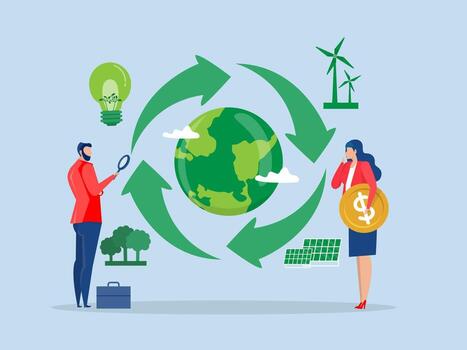
Sustainability has become an important consideration for businesses and consumers. Many companies are exploring reusable packaging, recycled materials, energy-efficient operations, and environmentally responsible products.
This project examines whether customers are willing to purchase eco-friendly products and what influences their buying decisions.
Objectives of the project:
- Understand sustainable business practices.
- Study consumer awareness of eco-friendly products.
- Compare the prices of sustainable and conventional products.
- Recommend affordable strategies for promoting sustainable consumption.
How to complete it: Select products such as reusable bags, recycled notebooks, or refillable bottles. Survey customers about their preferences, purchasing habits, and willingness to pay for sustainable alternatives.
Students can also prepare a simple business plan for an eco-friendly product.
6. Social Media Marketing and Small Business Growth

Social media platforms provide businesses with opportunities to promote products, connect with customers, and increase brand awareness. Even small businesses can use online content to reach potential customers.
This project studies how social media marketing influences customer engagement and business growth.
Objectives of the project:
- Understand different social media marketing strategies.
- Examine the relationship between online engagement and customer interest.
- Compare promotional methods used by small businesses.
- Suggest cost-effective marketing improvements.
How to complete it: Study two or three local businesses that use social media. Interview business owners or analyze publicly available posts, engagement patterns, and promotional activities.
Students can prepare a sample marketing campaign and estimate its budget using a spreadsheet.
7. Financial Performance Analysis of a Company
Financial performance analysis helps businesses understand profitability, liquidity, and financial stability. It is an excellent project for students who want to apply accounting concepts to real company data.
Students can select a publicly listed company and examine its financial performance over three years.
Objectives of the project:
- Analyze revenue, expenses, and profit trends.
- Calculate important financial ratios.
- Compare financial performance across different years.
- Identify possible strengths and weaknesses in the company’s financial position.
How to complete it: Collect published annual reports and use Excel to calculate profitability, liquidity, and debt-related ratios. Present the findings using tables and charts.
This project is particularly useful for students interested in finance, accounting, auditing, and investment analysis.
8. Micro-Entrepreneurship and Local Business Development

Small businesses play an important role in creating employment and supporting local economies. However, new entrepreneurs may face challenges involving capital, marketing, competition, and financial planning.
This project explores how small businesses start, operate, and grow.
Objectives of the project:
- Understand the process of starting a small business.
- Identify common challenges faced by local entrepreneurs.
- Study pricing, marketing, and basic financial management.
- Develop a practical business plan for a small enterprise.
How to complete it: Interview a local entrepreneur and document the business idea, initial investment, target customers, operating expenses, and marketing approach. Prepare a sample business plan for a small venture such as handmade products, home-based catering, or customised gifts.
This project develops entrepreneurship, communication, and business planning skills.
How to Choose the Right Commerce Project
Before selecting a topic, consider your academic level, available research data, interests, and career goals. A good project should have clear objectives and practical findings rather than simply explaining business concepts.
Students can use Excel or Google Sheets for calculations, Google Forms for surveys, and presentation software to communicate their findings. These tools are sufficient for many commerce projects without requiring advanced programming skills.
Conclusion
Commerce projects help students connect theoretical knowledge with real business situations. The eight ideas discussed above cover digital payments, financial literacy, AI in accounting, consumer behaviour, sustainability, social media marketing, company financial analysis, and entrepreneurship.
Students should select a topic that matches their interests and allows them to collect reliable information. By including surveys, case studies, calculations, and practical recommendations, they can create a meaningful project that strengthens their academic performance and prepares them for future opportunities in commerce and business management.
Want to Learn More About Python & Artificial Intelligence ???, Kaashiv Infotech Offers Full Stack Python Course, Artificial Intelligence Course, Data Science Course & More Visit Their Website course.kaashivinfotech.com.