
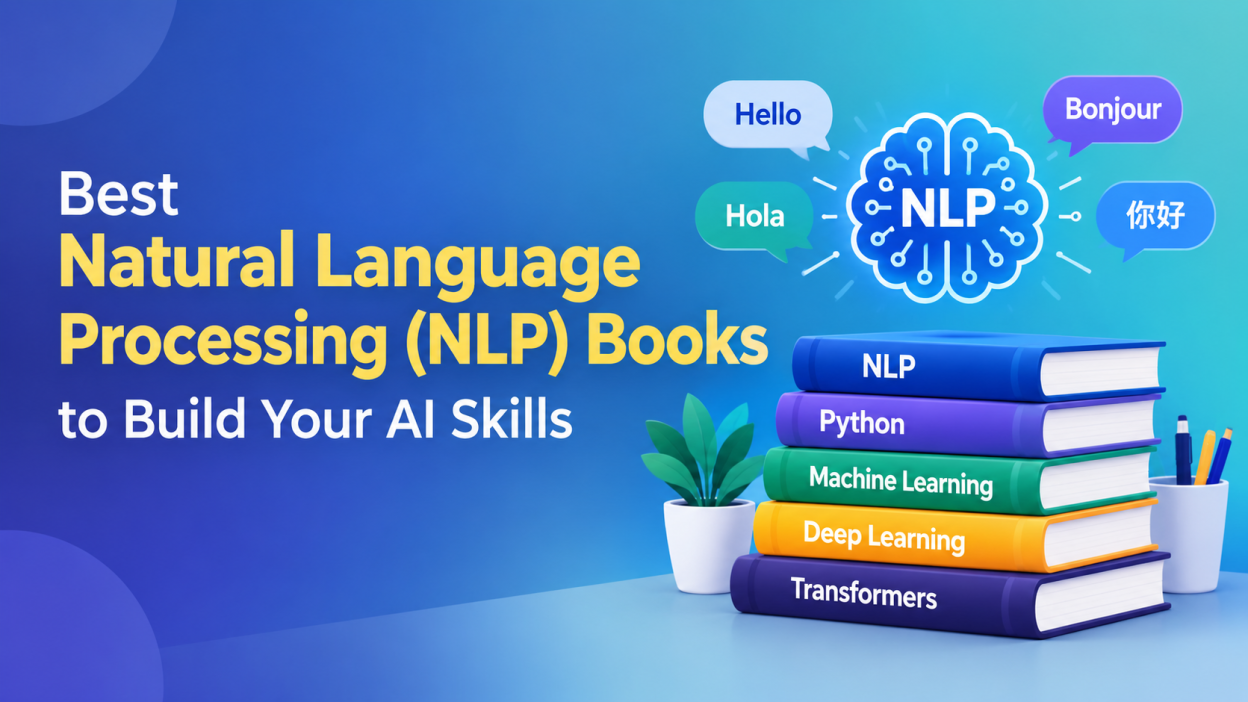
Natural Language Processing (NLP) Books – is one of the most interesting areas of Artificial Intelligence (AI). It helps computers understand, process, and generate human language. From chatbots and virtual assistants to search engines, translation tools, sentiment analysis, and generative AI, NLP is used in many real-world applications.
For students, developers, and AI enthusiasts, reading the right books can make learning NLP much easier. A good book can explain everything from basic text processing to advanced topics such as transformers, language models, and deep learning.
If you are planning to learn NLP or improve your existing knowledge, here are some useful NLP books to consider.
Why Should You Learn NLP?
Before exploring the books, it is useful to understand why NLP is important. Humans communicate primarily through language, but computers process information differently. NLP provides techniques that allow machines to work with human language.
NLP is used in applications such as:
- Chatbots and virtual assistants
- Machine translation
- Sentiment analysis
- Text classification
- Spam detection
- Speech and language applications
- Search engines
- Question-answering systems
- Text summarization
- Generative AI applications
Learning NLP can therefore be useful for students interested in AI, machine learning, data science, and software development.
1. Speech and Language Processing – Daniel Jurafsky and James H. Martin
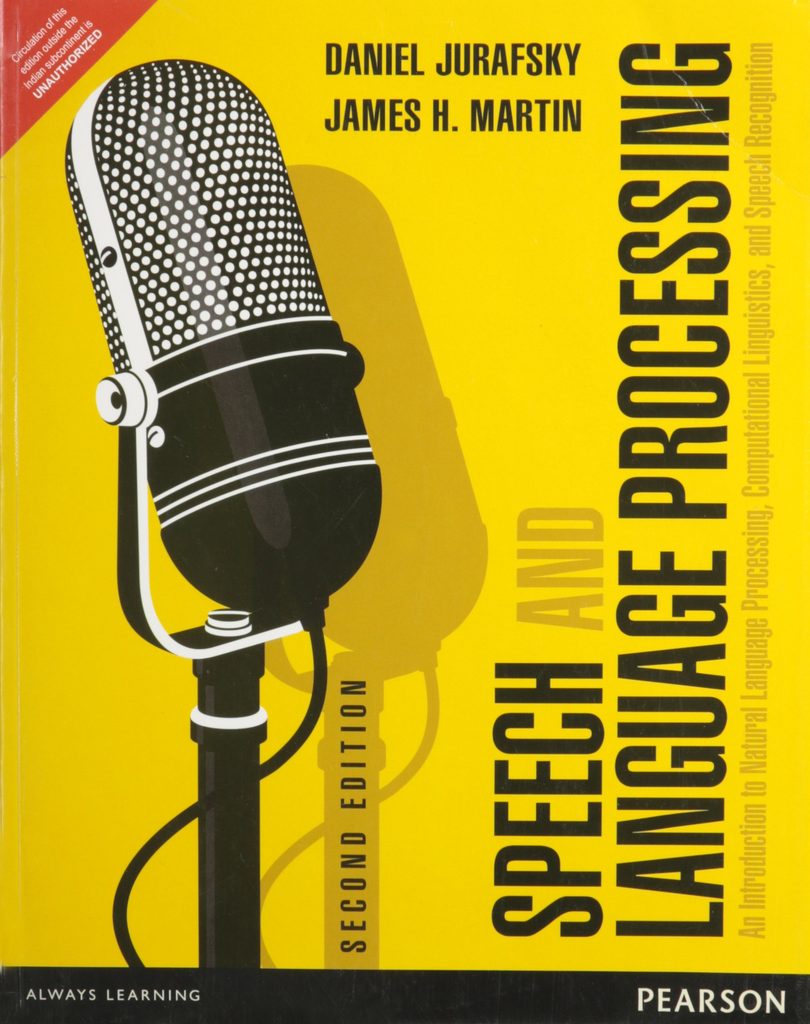
Speech and Language Processing by Daniel Jurafsky and James H. Martin is one of the most widely known resources for learning NLP. It covers a broad range of topics, making it useful for students and professionals who want a strong theoretical foundation.
The book introduces fundamental concepts such as regular expressions, language models, text classification, information retrieval, and speech processing. It also discusses modern NLP approaches involving neural networks and transformers.
Because it combines theory with practical examples, it can be a valuable reference throughout your NLP learning journey.
Best for: Students, researchers, and serious NLP learners.
2. Natural Language Processing with Python – Steven Bird, Ewan Klein, and Edward Loper
If you are learning NLP with Python, Natural Language Processing with Python is an excellent starting point. The book is closely associated with the Natural Language Toolkit (NLTK), a popular Python library for language processing.
It introduces concepts such as tokenization, stemming, tagging, classification, information extraction, and text analysis. The examples help beginners understand how NLP techniques can be implemented using Python.
The book is particularly useful if you prefer learning by experimenting with code rather than studying only theoretical concepts.
Best for: Python beginners and students starting NLP.
3. Natural Language Processing in Action – Hobson Lane, Cole Howard, and Hannes Hapke
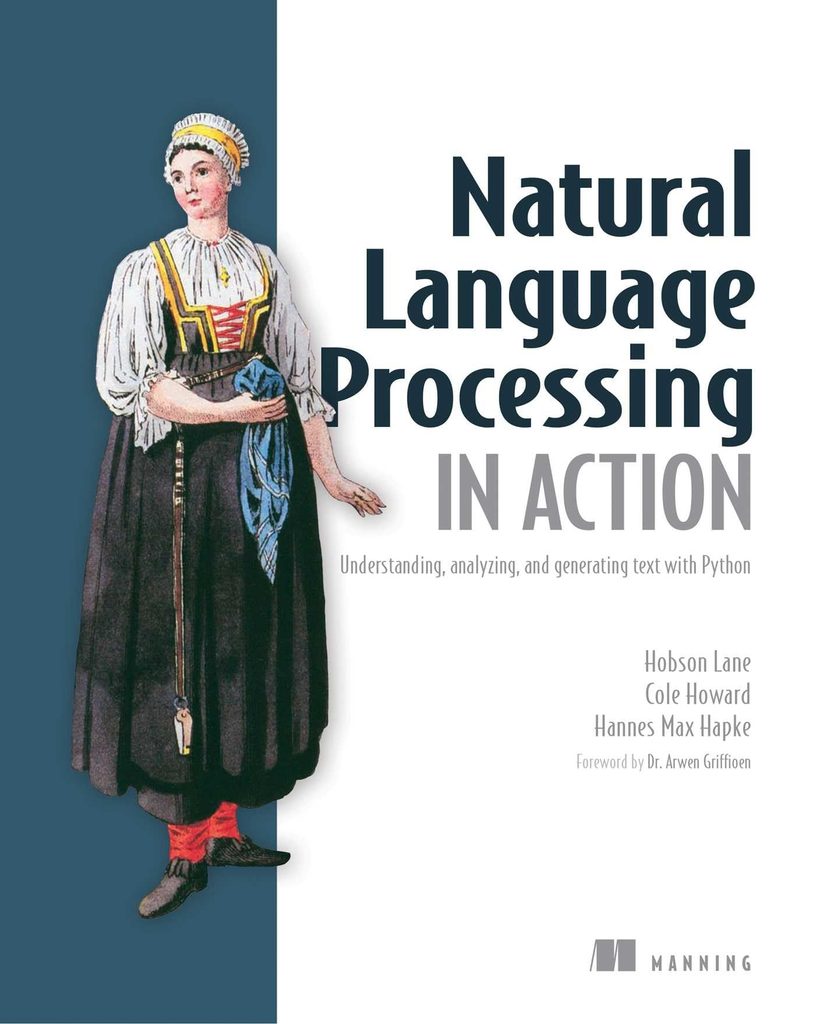
Natural Language Processing in Action focuses on practical NLP development. It explains how machine learning and deep learning can be applied to real-world language problems.
The book covers topics such as text classification, sentiment analysis, semantic analysis, information retrieval, and chatbot development. It also introduces neural network-based approaches for processing language.
This makes the book useful for learners who want to move from basic NLP concepts toward building working applications.
Best for: Developers and practical learners.
4. Foundations of Statistical Natural Language Processing – Christopher D. Manning and Hinrich Schütze
For readers interested in the mathematical and statistical side of NLP, Foundations of Statistical Natural Language Processing is an important reference.
The book explores statistical approaches to language processing, including probability models, language modeling, tagging, parsing, and information retrieval.
Although some sections can be challenging for beginners, it provides a strong foundation for understanding how statistical methods influenced modern NLP.
Best for: Advanced students, researchers, and learners interested in NLP theory.
5. Deep Learning for Natural Language Processing – Palash Goyal, Sumit Pandey, and Karan Jain
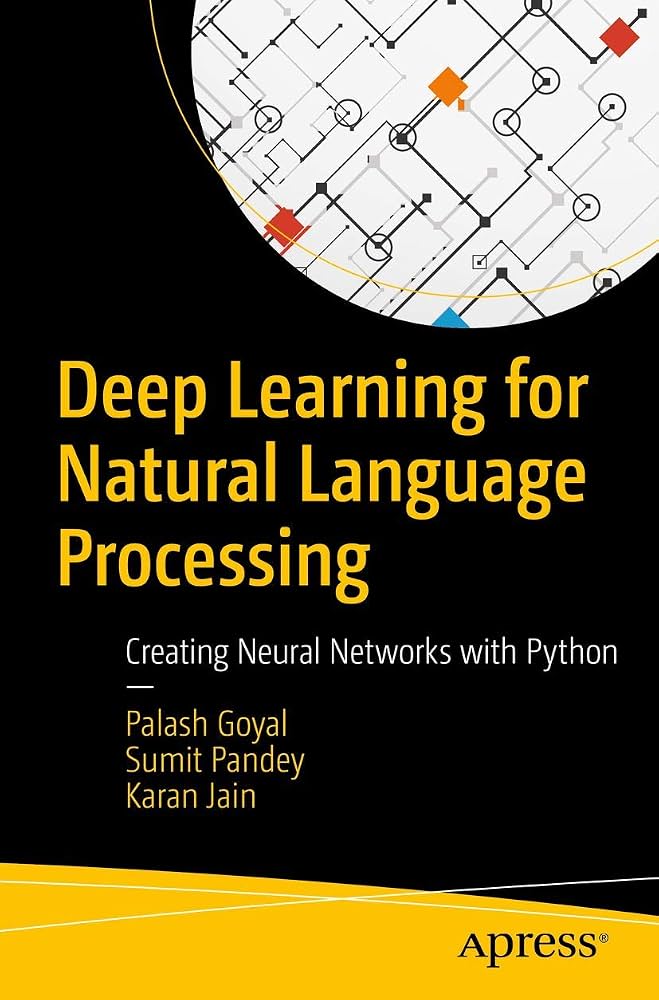
Deep learning has transformed NLP by making it possible to build powerful systems capable of understanding complex language patterns. This book focuses on applying deep learning techniques to NLP problems.
It discusses neural networks, word representations, sequence models, recurrent neural networks, and other deep learning approaches.
For learners who already understand basic machine learning and want to explore neural approaches to NLP, this can be a useful resource.
Best for: Machine learning and deep learning learners.
6. Transformers for Natural Language Processing – Denis Rothman
Transformers have become a major technology in modern NLP. They power many advanced language applications, including large language models and generative AI systems.
Transformers for Natural Language Processing introduces transformer architecture and explains how transformer-based models can be used for different NLP tasks.
The book can help learners understand concepts behind models such as BERT and other transformer-based architectures. It is particularly relevant for anyone interested in modern NLP and generative AI.
Best for: Intermediate and advanced NLP learners.
7. Natural Language Processing with Transformers – Lewis Tunstall, Leandro von Werra, and Thomas Wolf
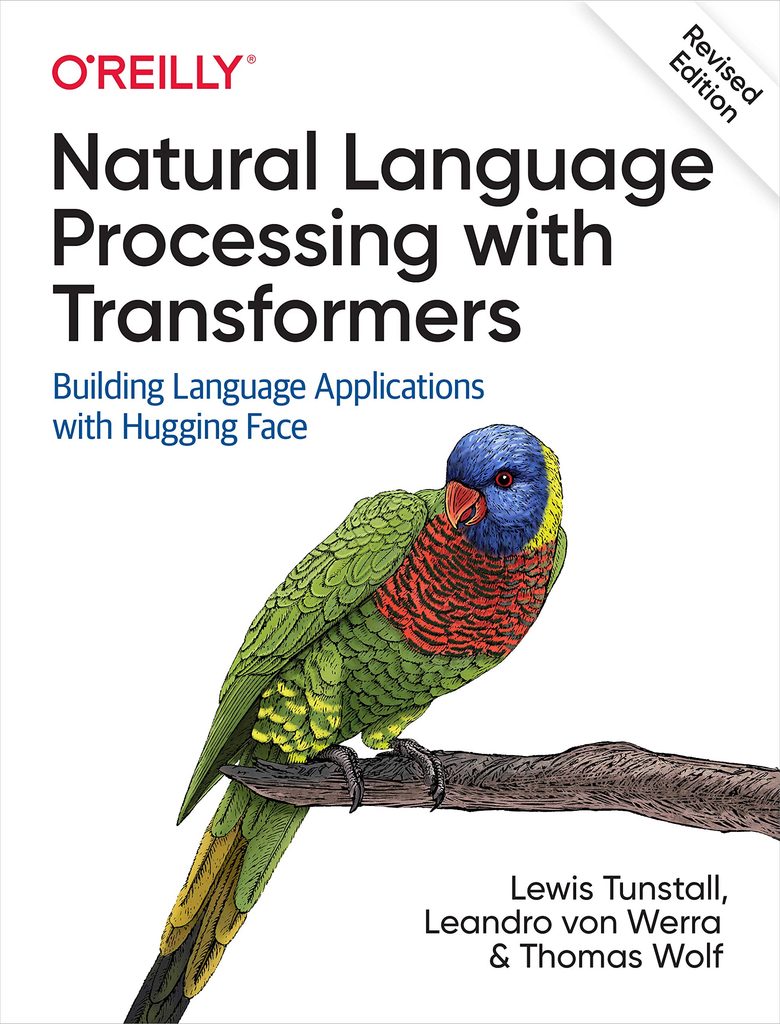
This book is especially useful for developers who want to work with transformer models using the Hugging Face ecosystem.
It explores pretrained models, transfer learning, fine-tuning, text classification, tokenization, and other practical NLP workflows.
The book provides a bridge between NLP concepts and real-world implementation, making it valuable for people who want to build modern NLP applications.
Best for: Developers working with transformers and Hugging Face tools.
How to Choose the Right NLP Book
The best book depends on your current knowledge and learning goals. Beginners should start with resources that explain basic NLP concepts and provide simple Python examples.
If you already know Python and machine learning, practical books covering deep learning and transformers may be more suitable. Learners interested in research should consider books that provide deeper mathematical and statistical explanations.
You should also consider whether you want to learn traditional NLP, deep learning-based NLP, or modern transformer-based NLP. Each area requires a slightly different learning approach.
Tips for Learning NLP Effectively
Reading an NLP book alone is not enough. Try to combine reading with practical projects. For example, you can build a sentiment analysis system, spam classifier, chatbot, text summarizer, or news classification application.
Python is a useful language for NLP because it has many libraries and frameworks. Libraries such as NLTK, spaCy, scikit-learn, and Hugging Face Transformers can help you experiment with different NLP techniques.
Start with simple projects and gradually move toward more advanced applications. Understanding concepts such as tokenization, embeddings, attention, and transformers will make it easier to understand modern AI systems.
Conclusion
Learning Natural Language Processing can open the door to many opportunities in Artificial Intelligence, machine learning, and data science. The best NLP books provide different learning experiences, from Python-based practical development to statistical foundations, deep learning, and transformer architectures.
Beginners can start with Python-focused resources, while experienced learners can explore deep learning and transformer-based books. Most importantly, combine your reading with hands-on projects so that you can turn theoretical concepts into practical NLP applications.
With consistent practice and the right learning resources, NLP can become a strong foundation for building intelligent applications that work with human language.
Want to Learn More About Python & Artificial Intelligence ?, Kaashiv Infotech Offers Full Stack Python Course, Artificial Intelligence Course, Data Science Course & More Visit Their Website course.kaashivinfotech.com.
Related Reads:
Artificial Intelligence vs Human Intelligence: A Deep Dive into Minds Made and Minds Born
Top 10 AI Tools for Content Creation in 2026 You Shouldn’t Miss