

CNN in Machine Learning – In the rapidly evolving world of Artificial Intelligence, Convolutional Neural Networks (CNNs) have become one of the most powerful and widely used techniques in machine learning. From unlocking facial recognition on smartphones to enabling self-driving cars and medical diagnostics, CNNs play a crucial role in how machines understand visual data.
As of 2026, CNNs remain a foundational technology in deep learning, especially in computer vision, even with the rise of transformers and generative AI models. Their ability to automatically learn features from images makes them indispensable in modern AI systems.
What is CNN in Machine Learning?
A Convolutional Neural Network (CNN) is a type of deep learning algorithm specifically designed to process data that has a grid-like structure, such as images.
Unlike traditional neural networks that treat input as flat data, CNNs preserve spatial relationships between pixels. This allows them to understand patterns like edges, textures, and shapes.
In simple terms:
CNNs help machines “see” and interpret images similar to how humans do.
They are primarily used in:
- Image recognition
- Object detection
- Video analysis
- Medical imaging
- Facial recognition
CNNs became extremely popular after breakthroughs like AlexNet (2012), and they continue to evolve in 2026 with more efficient architectures.
Why CNN is Important in 2026
CNNs are still highly relevant due to their unmatched performance in visual tasks. They can automatically extract features from raw images, eliminating the need for manual feature engineering.
Key reasons why CNNs remain important:
- Handle large-scale image data efficiently
- Achieve high accuracy in visual recognition tasks
- Enable real-time applications like autonomous driving
- Support transfer learning for faster model development
Even with newer models like Vision Transformers, CNNs are still widely used because they are computationally efficient and well-optimized.
How CNN Works
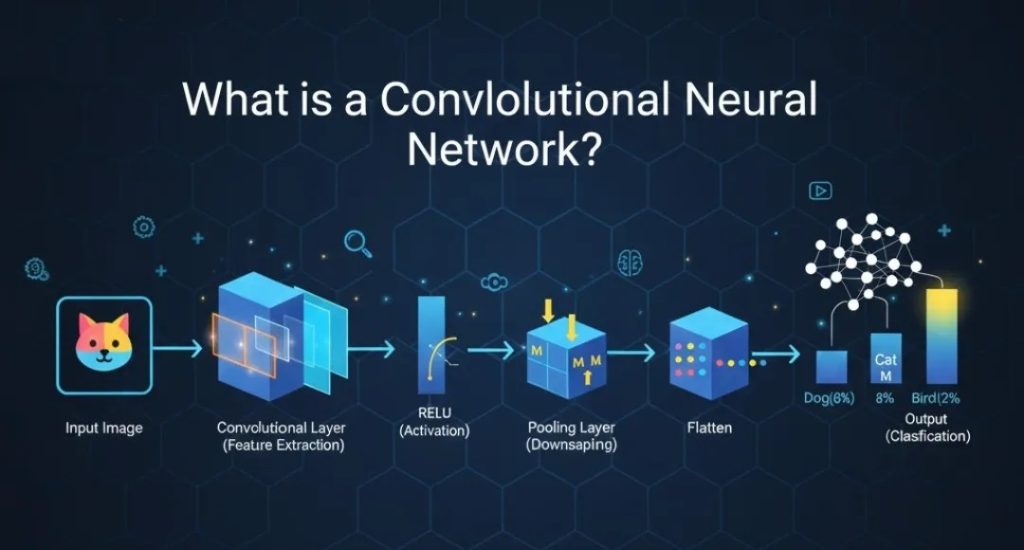
CNNs work by passing an image through multiple layers, each extracting different features.
1. Input Layer
The input is usually an image represented as a matrix of pixel values (height × width × channels).
2. Convolutional Layer
This is the core of CNN. It applies filters (kernels) to detect features like edges, colors, and patterns.
Early layers detect simple features (edges), while deeper layers detect complex features (faces, objects).
3. Activation Function (ReLU)
After convolution, activation functions introduce non-linearity so the network can learn complex patterns.
4. Pooling Layer
Pooling reduces the size of feature maps, making the model faster and reducing overfitting.
5. Fully Connected Layer
This layer connects everything and produces the final output (e.g., classification).
CNN Architecture Overview
A typical CNN architecture looks like this:
Input → Convolution → ReLU → Pooling → Fully Connected → Output
Each layer plays a role in gradually transforming raw image data into meaningful predictions.
Key Features of CNN
CNNs stand out due to several unique characteristics:
- Automatic Feature Extraction
No need for manual feature engineering. - Parameter Sharing
Filters are reused across the image, reducing computation. - Spatial Hierarchy Learning
Learns from simple to complex patterns. - Translation Invariance
Recognizes objects regardless of position in the image.
Applications of CNN in 2026
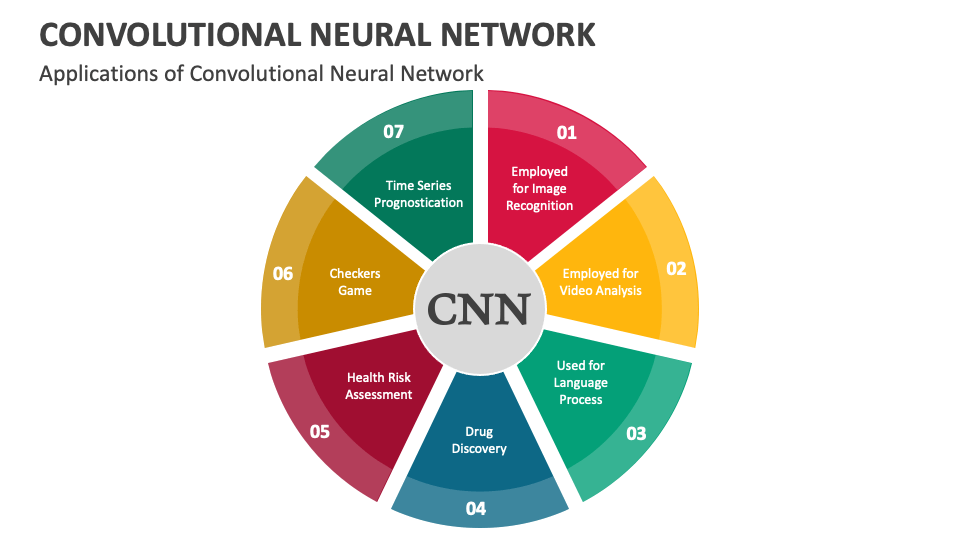
CNNs are used across multiple industries and real-world applications:
1. Computer Vision
Used in image classification, object detection, and segmentation.
2. Healthcare
Helps detect diseases like cancer from medical images.
3. Autonomous Vehicles
Detects pedestrians, traffic signs, and obstacles.
4. Facial Recognition
Used in smartphones, security systems, and surveillance.
5. Retail & E-commerce
Product recognition and visual search.
6. Agriculture
Crop disease detection using image analysis.
CNNs are essential for any system that needs to process visual or spatial data.
Advantages of CNN
CNNs provide several benefits compared to traditional machine learning models:
- High accuracy in image-related tasks
- Automatic learning of features
- Reduced preprocessing requirements
- Scalable for large datasets
- Works well with transfer learning
Limitations of CNN
Despite their strengths, CNNs also have challenges:
- Require large amounts of data
- High computational cost (GPU needed)
- Difficult to interpret (black-box nature)
- Not ideal for non-visual data
CNN vs Traditional Neural Networks
| Feature | CNN | Traditional Neural Network |
|---|---|---|
| Data Type | Images, grids | Structured/tabular |
| Feature Extraction | Automatic | Manual |
| Efficiency | High | Lower for images |
| Performance | Superior in vision tasks | Limited |
CNNs outperform traditional models when dealing with spatial data.
Popular CNN Architectures
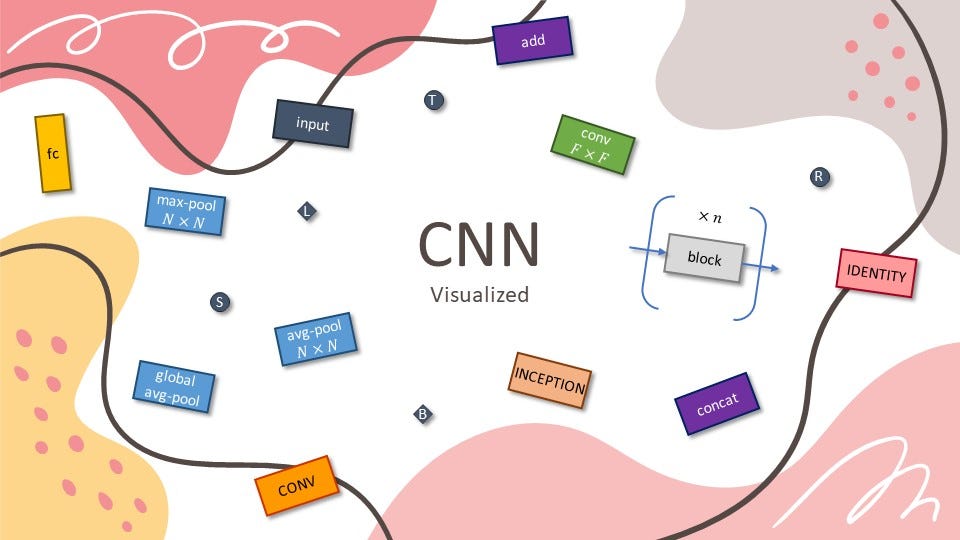
Over the years, several powerful CNN models have been developed:
- LeNet – Early handwritten digit recognition
- AlexNet – Breakthrough in deep learning
- VGGNet – Deep architecture with small filters
- ResNet – Introduced skip connections
- EfficientNet – Optimized performance vs computation
These architectures continue to influence modern AI systems.
Future of CNN in 2026 and Beyond
Although newer models like Vision Transformers are gaining popularity, CNNs are far from obsolete.
Future trends include:
- Hybrid CNN + Transformer models
- Lightweight CNNs for mobile devices
- Faster training using optimized hardware
- Integration with generative AI systems
CNNs will continue to be a core part of AI development, especially in edge computing and real-time systems.
Conclusion
Convolutional Neural Networks have revolutionized machine learning by enabling machines to understand visual data with remarkable accuracy. Even in 2026, they remain a fundamental building block in AI, powering applications from healthcare to autonomous vehicles.
If you’re entering the field of machine learning, mastering CNNs is not optional — it’s essential. They form the backbone of computer vision and continue to evolve alongside modern AI innovations.
Kaashiv Infotech Offers, Full Stack Python Course, Data Science Course, & More, visit their website www.kaashivinfotech.com.