
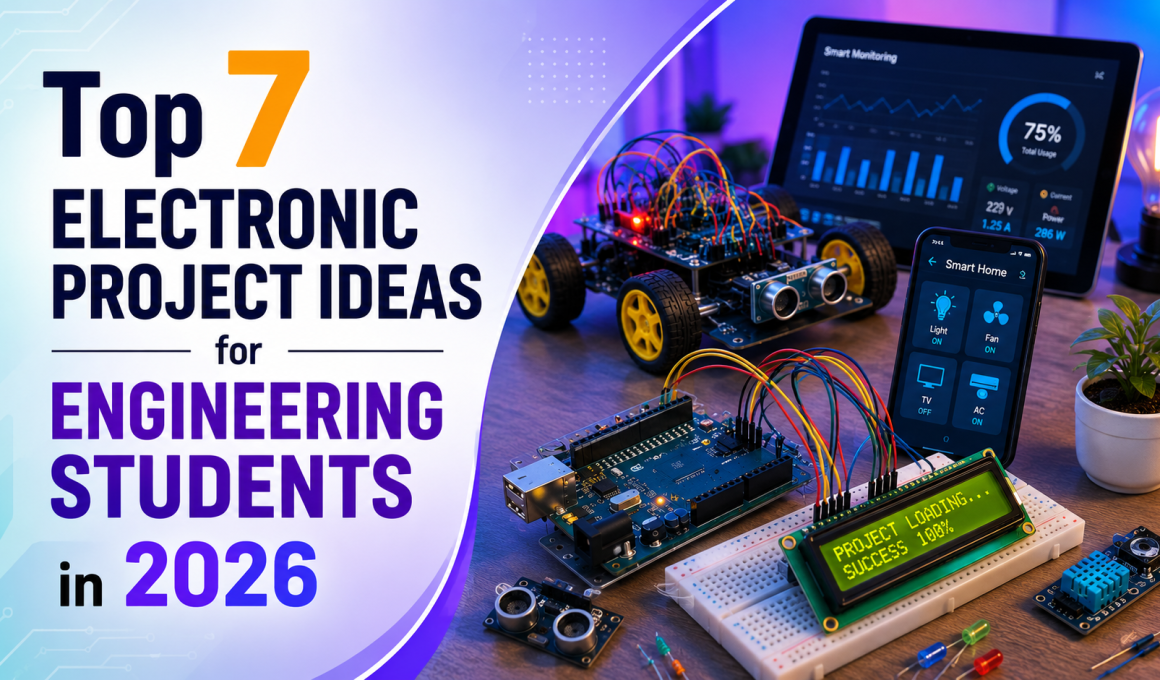
Electronic Project Ideas – Electronics engineering is not just about theory—it’s about building intelligent systems that solve real-world problems. A strong project can showcase your understanding of circuits, embedded systems, IoT, and emerging technologies like AI. Below are 7 unique electronic project ideas, each with a detailed overview to help you understand the concept deeply.
7 unique electronic project ideas
1. Smart Energy Meter with IoT Monitoring
Overview
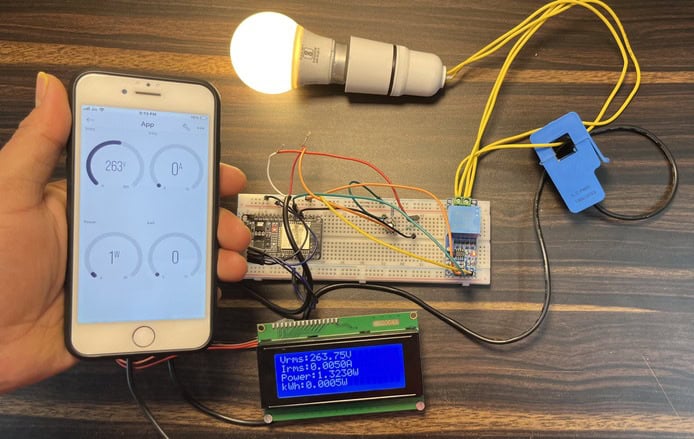
A Smart Energy Meter with IoT Monitoring is a modern electronic system designed to track electricity consumption in a much more intelligent and connected way compared to traditional meters. In this project, current and voltage sensors continuously measure power usage and send that data to a microcontroller like ESP8266 or ESP32. The microcontroller processes this data and uploads it to a cloud platform using Wi-Fi, allowing users to monitor their electricity usage in real time through a mobile app or web dashboard.
This system not only displays consumption but also enables users to analyze usage patterns over time, identify high-energy-consuming appliances, and optimize electricity usage. Advanced features like alerts for excessive consumption and remote switching of appliances can also be added. This project helps students understand IoT architecture, cloud integration, and energy optimization—skills that are highly relevant in smart homes and smart grid systems.
Key Features
- Real-time energy monitoring
- Cloud dashboard access
- Over-usage alerts
- Remote appliance control
Components Required
- Arduino / ESP8266 / ESP32
- Current & voltage sensors
- Wi-Fi module
- LCD display
Applications
- Smart homes
- Energy management systems
- Industrial monitoring
2. AI-Based Object Detection System
Overview
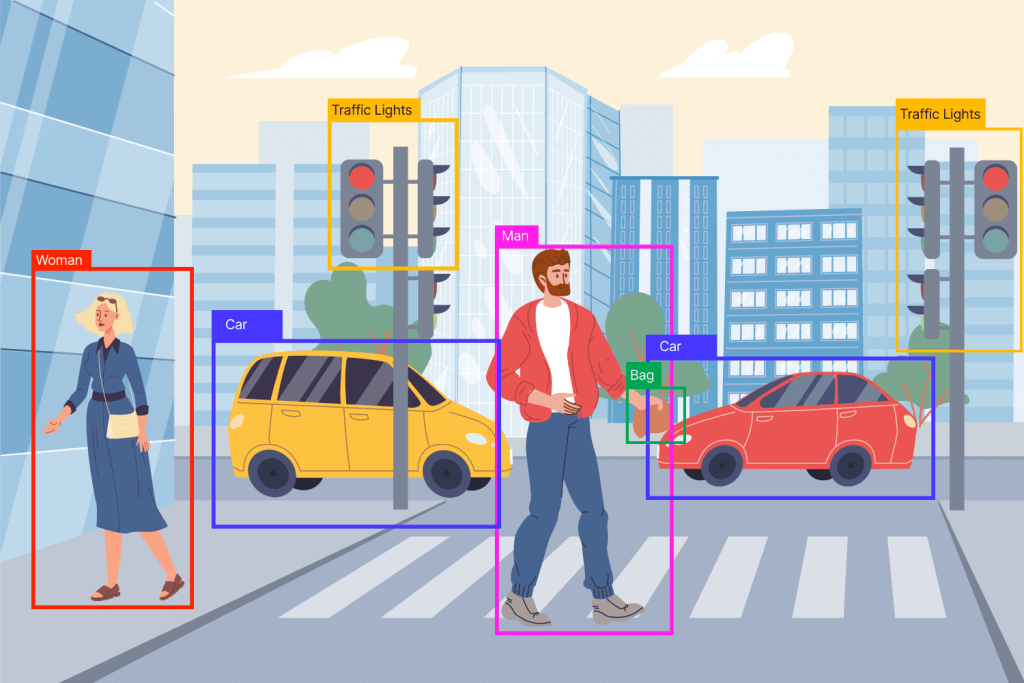
The AI-Based Object Detection System is an advanced project that integrates electronics with artificial intelligence to recognize and classify objects in real time. In this system, a camera module captures live video, which is processed by a compact computing device such as a Raspberry Pi. Using computer vision libraries like OpenCV and optimized machine learning models such as TensorFlow Lite, the system identifies objects and displays labels along with bounding boxes.
This project introduces students to edge AI, where machine learning models run directly on embedded devices instead of relying on cloud processing. It allows customization to detect specific objects depending on the use case, such as people detection, vehicle tracking, or safety monitoring. By working on this project, students gain hands-on experience in AI deployment, image processing, and real-time system design—making it one of the most industry-relevant projects today.
Key Features
- Real-time object detection
- AI model integration
- Camera-based input
- Edge computing
Components Required
- Raspberry Pi
- Camera module
- SD card & power supply
Applications
- Surveillance systems
- Smart retail
- Robotics
3. Smart Irrigation System
Overview
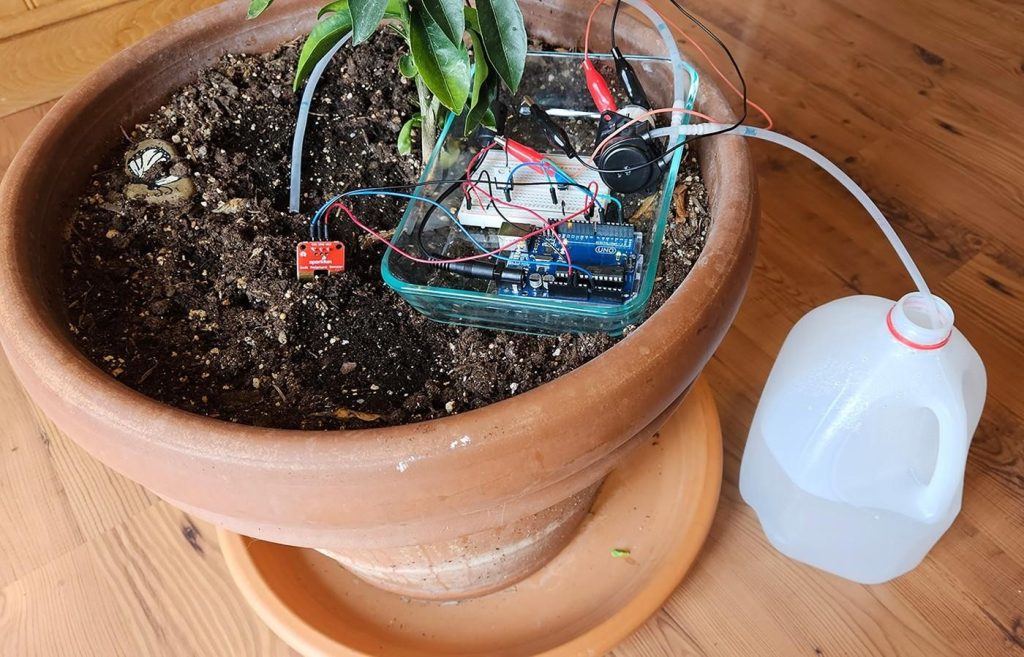
The Smart Irrigation System is an automated solution that ensures plants receive the right amount of water based on soil conditions. This system uses soil moisture sensors to continuously monitor the water content in the soil. When the moisture level drops below a predefined threshold, the microcontroller activates a water pump to irrigate the plants. Once the required moisture level is reached, the system automatically turns off the pump.
This intelligent approach helps prevent both overwatering and underwatering, which are common issues in traditional irrigation methods. The project can also be enhanced with IoT capabilities, allowing users to monitor soil conditions remotely and control irrigation through a mobile interface. It is especially useful in agriculture and smart farming, where efficient water management is critical. Students working on this project gain knowledge in sensor interfacing, automation logic, and sustainable engineering practices.
Key Features
- Automatic watering
- Water conservation
- Sensor-based control
Components Required
- Soil moisture sensor
- Arduino
- Relay module
- Water pump
Applications
- Agriculture
- Gardening
- Smart farming
4. Gesture-Controlled Robotic Car
Overview
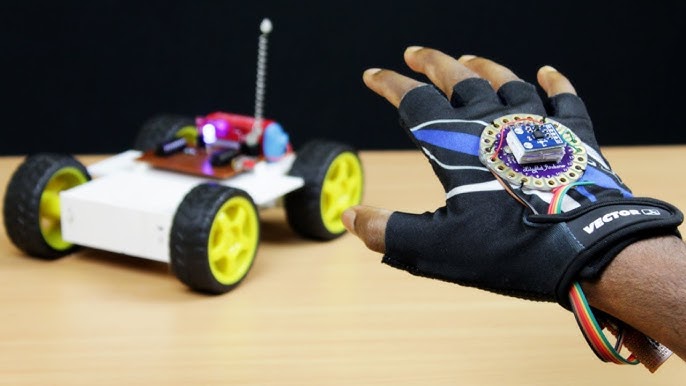
The Gesture-Controlled Robotic Car is an interactive electronics project that allows users to control a robot using hand movements instead of traditional remote controls. This system uses an accelerometer sensor to detect the tilt and orientation of the user’s hand. The sensor data is processed by a microcontroller and transmitted wirelessly to the robotic car using RF or Bluetooth communication.
Based on the received signals, the car moves in different directions such as forward, backward, left, and right. This project demonstrates how human gestures can be translated into machine actions, making it an exciting example of human-machine interaction. It also helps students understand wireless communication, embedded systems, and robotics control, which are essential skills in modern automation and robotics industries.
Key Features
- Gesture-based control
- Wireless communication
- Real-time response
Components Required
- Arduino
- Accelerometer
- RF/Bluetooth module
- Motor driver
Applications
- Robotics
- Defense systems
- Automation
5. Voice-Controlled Home Automation
Overview
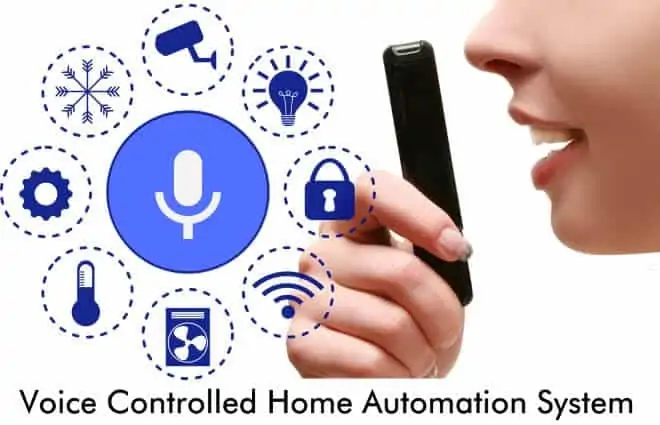
The Voice-Controlled Home Automation System is designed to simplify the control of household appliances using voice commands. In this project, voice input is captured through a smartphone or smart assistant and processed via cloud-based services. The command is then transmitted to a microcontroller connected to home appliances through relay modules.
This system allows users to turn devices on or off without physically interacting with switches, improving convenience and accessibility. It can also be integrated with IoT platforms for remote access and monitoring. The project introduces students to smart home technologies, cloud communication, and voice recognition systems, making it highly relevant in today’s connected world.
Key Features
- Voice command control
- Remote access
- Smart automation
Components Required
- ESP32 / Arduino
- Relay module
- Wi-Fi module
Applications
- Smart homes
- Assistive technology
6. Automatic Street Light Control
Overview
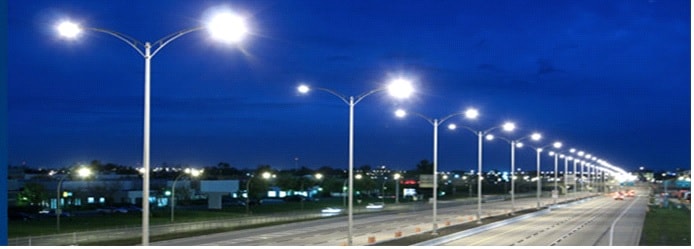
The Automatic Street Light Control System is a simple yet highly effective project focused on energy efficiency. It uses an LDR (Light Dependent Resistor) to detect ambient light levels and automatically control street lights. During the daytime, when sunlight is sufficient, the system keeps the lights off. As the light intensity decreases in the evening, the system automatically switches the lights on.
This eliminates the need for manual operation and ensures that energy is used only when necessary. The system can be further enhanced by adding motion sensors to activate lights only when movement is detected, making it even more efficient. This project is widely used in smart city applications and helps students understand sensor-based automation and energy-saving techniques.
Key Features
- Automatic ON/OFF
- Energy efficient
- Low cost
Components Required
- LDR sensor
- Arduino
- Relay
Applications
- Street lighting
- Smart cities
7. Wearable Health Monitoring Device
Overview
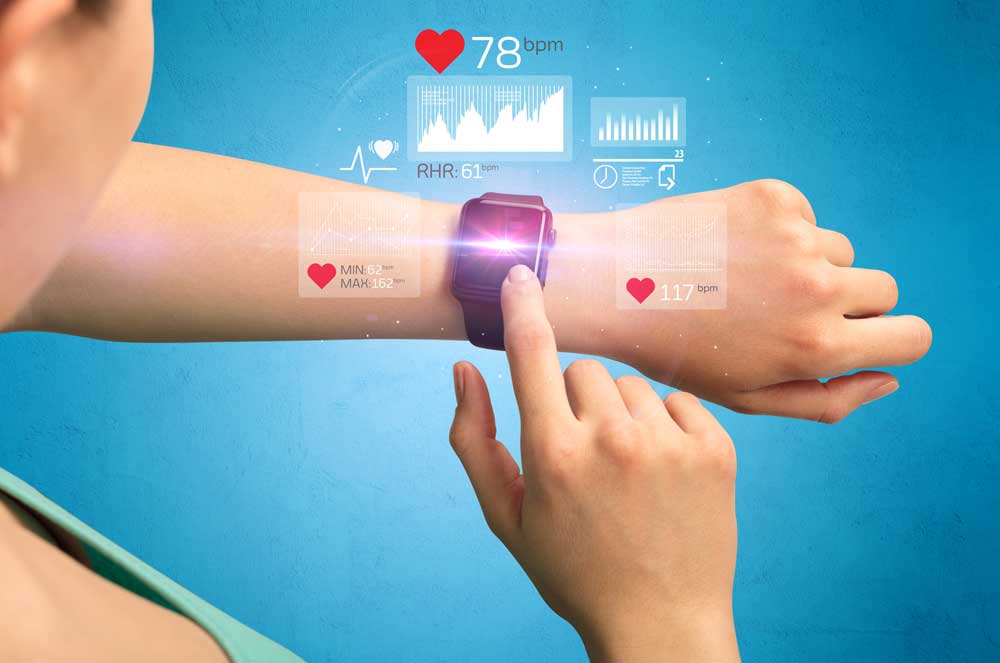
The Wearable Health Monitoring Device is a compact and portable system designed to continuously track important health parameters such as heart rate and body temperature. Sensors collect physiological data from the user, which is then processed by a microcontroller and displayed on a screen or transmitted to a mobile application.
In advanced versions, the system can send alerts if abnormal readings are detected, making it useful for remote health monitoring. This project is especially relevant in modern healthcare, where wearable technology plays a crucial role in preventive care and patient monitoring. Students working on this project gain exposure to biomedical sensors, IoT integration, and wearable system design.
Key Features
- Real-time monitoring
- Portable design
- Health alerts
Components Required
- Pulse sensor
- Temperature sensor
- Microcontroller
Applications
- Healthcare
- Fitness tracking
Final Thoughts
Choosing the right project can define your engineering journey. The ideas above are not only technically rich but also aligned with current industry trends like IoT, AI, automation, and healthcare technology.
By building and presenting such projects, you demonstrate practical knowledge, problem-solving skills, and innovation—qualities that employers and academic institutions value highly.
Want to learn more ??, Kaashiv Infotech Offers Data Analytics Course, Data Science Course, Cyber Security Course & More Visit Their Website www.kaashivinfotech.com.