
Full Stack Developer is one of those job titles I keep seeing everywhere in the Indian tech industry. And honestly, I understand why.
A Full Stack Developer can work on both the front end and back end of an application. One day, you might be fixing a button that refuses to align properly. The next day, you could be debugging an API or writing a database query. 😄
If you’re wondering, “What is the salary of a Full Stack Developer in India in 2026?”, here’s the short answer:
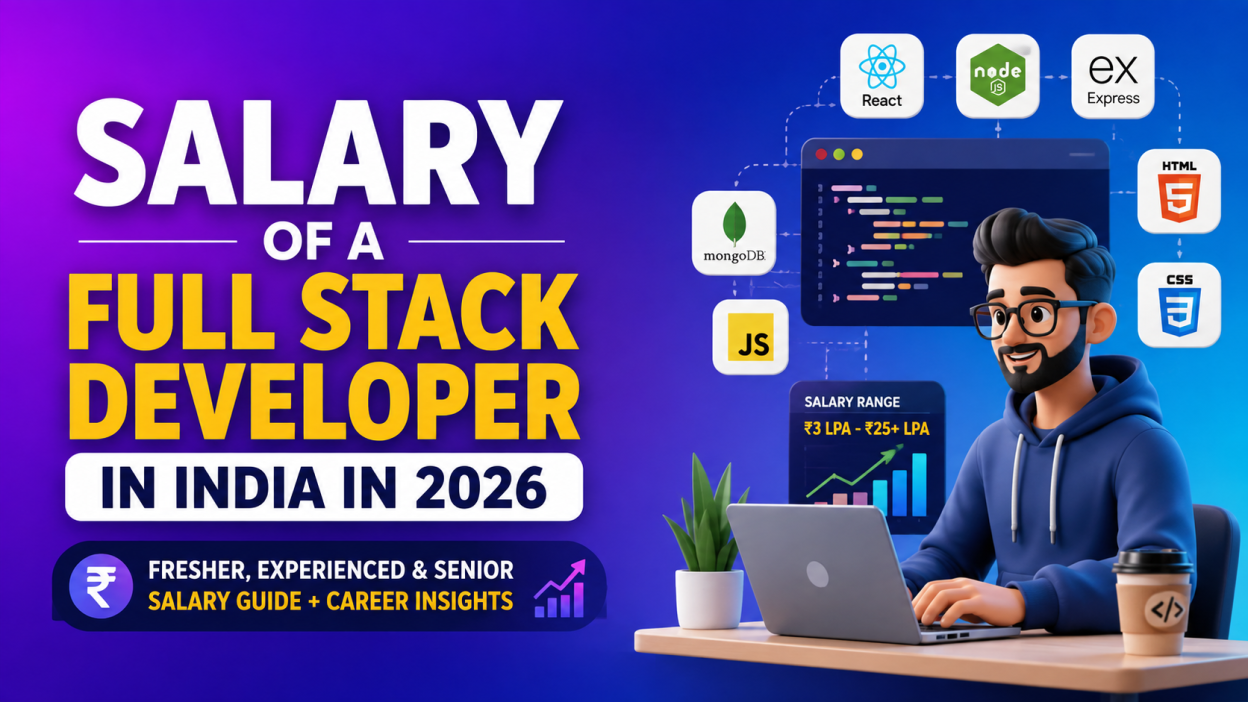
A Full Stack Developer in India can earn roughly ₹3 lakh to ₹12+ lakh per year, depending heavily on experience, skills, location, company, and technology stack. Experienced developers in strong product companies or specialised roles can earn considerably more.
Current salary data also shows a wide range. Glassdoor’s India data lists an average base pay of around ₹6 lakh per year, with reported base-pay ranges around ₹4 lakh–₹10 lakh. Recent user-submitted salaries also show how much the number can vary by experience and location.
So, don’t look at one salary number and assume that’s what everyone earns.
Your skills matter. A lot.
Key Highlights
- 💰 Full Stack Developer salary in India varies mainly by experience, skills, company and location.
- 👨💻 Freshers can commonly start around ₹3–6 LPA, although offers can fall below or above this range.
- 📈 Developers with 2–5 years of experience can target approximately ₹6–12 LPA depending on their profile.
- 🚀 Senior Full Stack Developers can move into ₹12 LPA+ territory, with considerably higher packages possible at strong product companies.
- 🏢 Product companies and specialised technology roles can offer higher compensation than many entry-level service-company roles.
- 🛠️ React, Node.js, .NET, Java, SQL, cloud, APIs, Docker and modern development practices can strengthen a developer’s profile.
- 🌍 Bengaluru, Hyderabad, Chennai, Pune, Mumbai and NCR remain important technology hiring markets.
- 🤖 AI is becoming increasingly relevant to software development, so Full Stack Developers should learn how to use AI tools rather than ignore them.
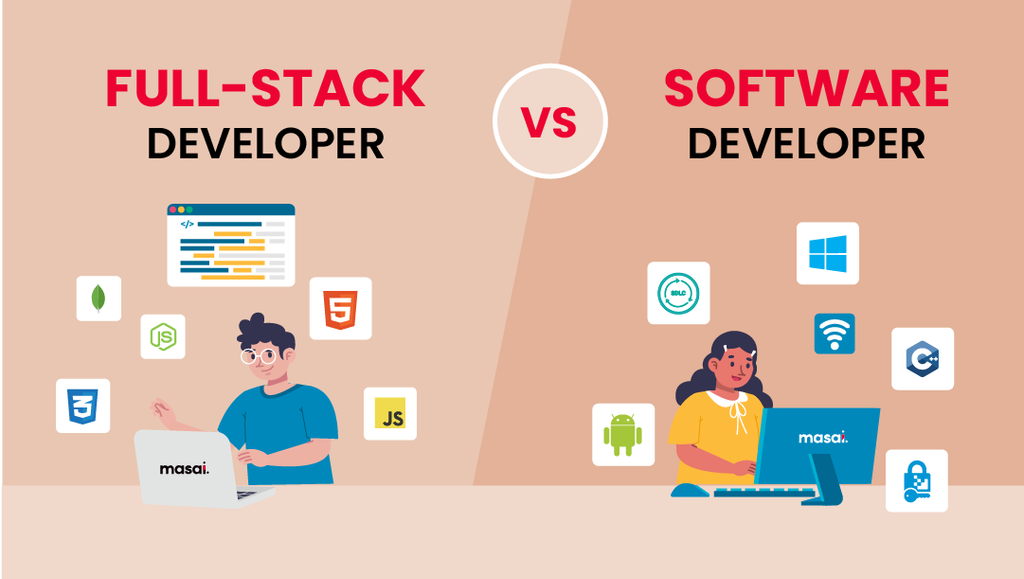
Full Stack Developer Salary in India in 2026
Let’s get straight to the number.
Based on current market data and reported salaries, I would use the following as a practical salary range rather than a promise:
| Experience | Approx. Salary Range |
|---|---|
| Fresher / 0–1 year | ₹3–6 LPA |
| 1–2 years | ₹4–7 LPA |
| 2–5 years | ₹6–12 LPA |
| 5–8 years | ₹10–18+ LPA |
| 8+ years | ₹15–25+ LPA |
These are broad market-oriented estimates. Actual offers can be lower or much higher.
For example, Glassdoor’s current India data reports an average base salary of about ₹6 lakh per year for Full Stack Developers. Its reported total-pay information and recent salary submissions show significant variation. A recent Chennai submission for someone with 4–6 years of experience was ₹7–9 lakh per year, while other cities and candidates showed different figures.
That’s why I don’t recommend saying: “A Full Stack Developer earns exactly ₹6 lakh.”
There is no single salary.
Instead, think of salary as a range influenced by your profile.
Full Stack Developer Salary for Freshers in India
This is probably the question I hear most often:
“I’m a fresher. How much can I expect?”
If you’re starting your career, a reasonable target is around ₹3–6 LPA.
But here’s something important.
Don’t learn Full Stack Development only because you saw a ₹10 LPA job advertisement.
I have seen beginners jump between React, Angular, Node.js, Python, Java, AWS, Docker, Kubernetes and AI within a few months. The result?
They know ten technologies at a surface level but struggle to build one complete application.
I’d much rather see a fresher who can build this:
React → API → Backend → Database → Authentication → Deployment
than someone who can list 25 technologies on a resume but can’t explain how their application works.
What can increase a fresher’s salary?
A fresher can stand out by having:
- Strong HTML and CSS
- JavaScript fundamentals
- React or Angular
- Node.js, Java, Python or .NET
- SQL
- REST APIs
- Git and GitHub
- Basic cloud knowledge
- Authentication and authorization
- At least 2–3 practical projects
And please don’t make your project just a calculator. 😄
Build something closer to real life.
For example:
Online Food Ordering Application
Frontend:
- React
- HTML
- CSS
- JavaScript
Backend:
- Node.js / .NET / Java
Database:
- MySQL / PostgreSQL / SQL Server
Features:
- User registration
- Login
- Product listing
- Search
- Cart
- Orders
- Admin dashboard
Now you have something meaningful to discuss in an interview.
Full Stack Developer Salary With 1–3 Years of Experience
This is where things start getting interesting.
With 1–3 years of experience, many developers move toward approximately ₹4–8 LPA, although the actual range can vary significantly.
At this stage, companies don’t just want someone who knows syntax.
They want someone who can solve problems.
You might be asked:
- How does a REST API work?
- How do you connect an application to a database?
- What happens when a user clicks Login?
- How do you handle errors?
- How do you secure an API?
- What is JWT?
- How do you optimise a slow SQL query?
- What happens when 10,000 users access your application?
These questions separate “I watched a tutorial” from “I can actually develop software.”
Full Stack Developer Salary With 3–5 Years of Experience
For developers with around 3–5 years of experience, I would consider ₹6–12 LPA a useful broad benchmark, with higher offers possible for strong candidates.
At this stage, your technology stack starts making a bigger difference.
For example:
MERN Stack Developer
- MongoDB
- Express.js
- React
- Node.js
.NET Full Stack Developer
- C#
- ASP.NET Core
- Web API
- SQL Server
- JavaScript
- React or Angular
Java Full Stack Developer
- Java
- Spring Boot
- REST APIs
- React or Angular
- MySQL/PostgreSQL
You don’t need to learn every stack.
Pick one.
Get really good at it.
That’s usually a much better strategy.
Senior Full Stack Developer Salary in India
Once you reach the senior level, salary becomes much more dependent on impact and responsibility.
A senior Full Stack Developer may earn ₹12–25+ LPA, while developers in high-paying product companies or specialised roles can go considerably higher.
At this point, companies expect more than coding.
You may be responsible for:
- Designing application architecture
- Reviewing code
- Mentoring junior developers
- Designing APIs
- Database optimisation
- Cloud infrastructure
- Security
- Performance
- CI/CD
- Technical decisions
In other words, the question changes from:
“Can you write this code?”
to:
“Can you design this system and explain why you designed it this way?”
That’s a completely different level.
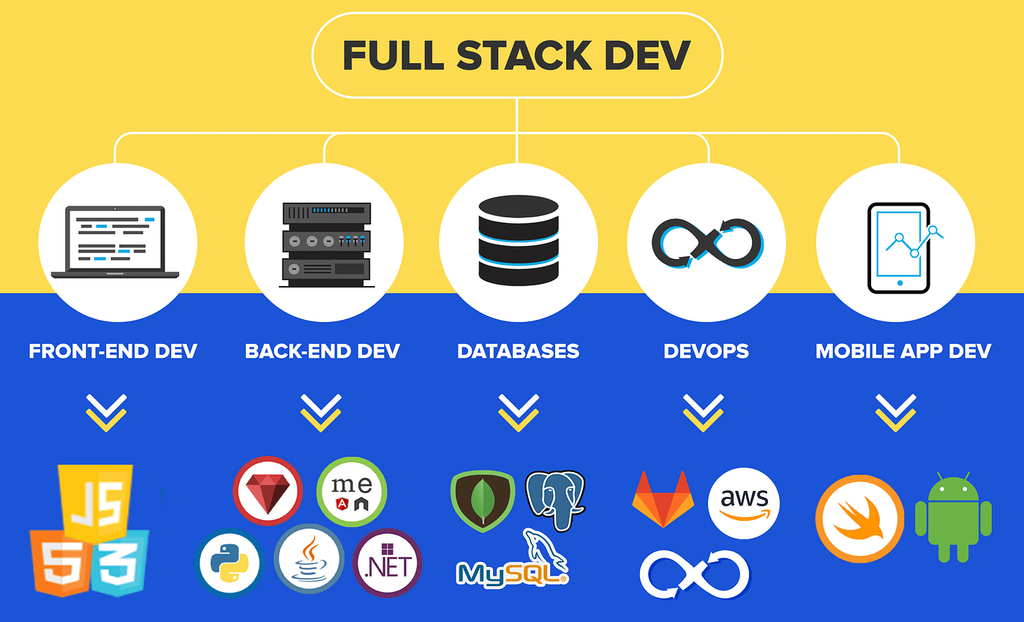
Which Skills Increase a Full Stack Developer Salary?
If you’re trying to increase your salary, don’t randomly collect certificates.
Build skills that companies actually use.
1. JavaScript
JavaScript remains one of the most important technologies for web development.
Learn:
- Variables
- Functions
- Objects
- Arrays
- DOM
- Events
- Promises
- Async/await
- Fetch API
- ES6+
- Error handling
Then move into a framework such as React or Angular.
The 2025 Stack Overflow Developer Survey continues to show JavaScript and modern web technologies as important parts of the developer ecosystem.
2. React
React is a popular choice for front-end development.
Learn:
- Components
- Props
- State
- Hooks
- Forms
- Routing
- API integration
- State management
Don’t stop after learning useState() and useEffect().
Build applications.
That’s where the real learning happens.
3. Backend Development
You need to understand what happens behind the screen.
Popular choices include:
- Node.js
- ASP.NET Core
- Java Spring Boot
- Python
If you’re interested in .NET, for example, a powerful combination would be:
C# + ASP.NET Core + Web API + SQL Server + React
That gives you a solid Full Stack Development path.
4. SQL
Please don’t underestimate SQL.
A developer who understands databases well can be much more useful than someone who only knows how to create beautiful interfaces.
Learn:
- SELECT
- WHERE
- JOIN
- GROUP BY
- HAVING
- Subqueries
- Views
- Stored procedures
- Indexes
- Transactions
- Query optimisation
5. Git and GitHub
I consider Git almost essential for modern software development.
Learn:
git clonegit addgit commitgit pushgit pull- Branches
- Merge
- Pull requests
And actually use GitHub for your projects.
6. Cloud and Deployment
A Full Stack Developer who understands how to deploy an application has another advantage.
Learn the basics of:
- AWS
- Microsoft Azure
- Google Cloud
- Docker
- CI/CD
- Linux
- Environment variables
You don’t need to become a cloud architect overnight.
Start small.
Deploy one application.
Then learn from there.
Does Location Affect Full Stack Developer Salary?
Yes.
Location can influence salary because technology companies are concentrated in certain cities.
Major technology hubs include:
- Bengaluru
- Hyderabad
- Chennai
- Pune
- Mumbai
- Delhi-NCR
But remote work has changed the equation somewhat.
You might live in one city and work for a company headquartered somewhere else.
Even within the same city, salary can vary dramatically.
For example, current Glassdoor salary submissions show Full Stack Developer salaries in Chennai, Mumbai, Indore, Noida and other cities ranging across different experience levels.
So I wouldn’t choose a career based purely on location.
Choose the right skills first.
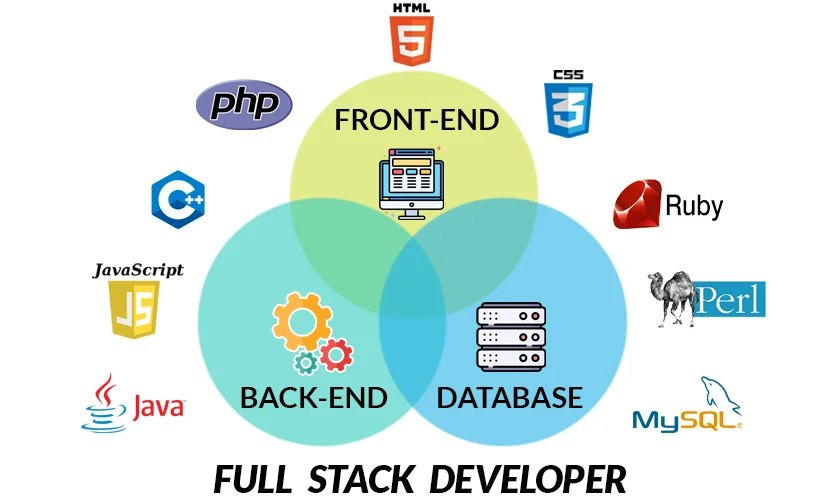
Full Stack Developer vs Software Developer Salary
These titles can overlap.
A Software Developer might specialise in:
- Backend
- Frontend
- Mobile
- Desktop
- Cloud
A Full Stack Developer usually works across multiple layers of a web application.
That broader responsibility can make the role attractive, but it doesn’t automatically mean a higher salary.
A highly skilled backend developer may earn more than a beginner Full Stack Developer.
That’s something many beginners overlook.
Job title doesn’t determine salary. Value does.
Is Full Stack Development a Good Career in 2026?
I would say yes — but with one condition.
Don’t treat Full Stack Development as a shortcut to a high salary.
The industry is changing.
Developers now have AI coding assistants, automated testing tools, cloud platforms and countless frameworks available to them. The 2025 Stack Overflow Developer Survey found that 69% of developers had spent time learning new coding techniques or programming languages in the previous year, while more than a third reported learning AI programming or AI-enabled tooling.
That tells me something important.
A developer who stops learning will eventually fall behind.
You don’t need to chase every new trend, though.
I’d focus on fundamentals first:
HTML → CSS → JavaScript → Frontend Framework → Backend → APIs → SQL → Git → Cloud → Deployment
Then add AI tools.
Use AI to learn faster, debug code, generate test cases and explore ideas.
But understand the code you submit.
That’s the difference.
How Can I Become a High-Paid Full Stack Developer?
If I were starting again in 2026, I’d keep my roadmap surprisingly simple.
Step 1: Learn web fundamentals
Start with:
HTML + CSS + JavaScript
Don’t rush.
Step 2: Pick one frontend framework
Choose:
React or Angular
Learn one properly before jumping to another.
Step 3: Pick one backend technology
You could choose:
- Node.js
- .NET
- Java
- Python
For someone interested in Microsoft technologies, C# + ASP.NET Core is a strong option.
Step 4: Learn SQL
Understand how applications store and retrieve data.
Step 5: Build projects
Build at least 2–3 projects that solve actual problems.
Step 6: Learn Git
Put your projects on GitHub.
Step 7: Deploy
Make at least one application available online.
Step 8: Prepare for interviews
Practice:
- Coding
- SQL
- JavaScript
- OOP
- APIs
- System basics
- Project explanations
And don’t memorise answers.
Interviewers can usually tell.
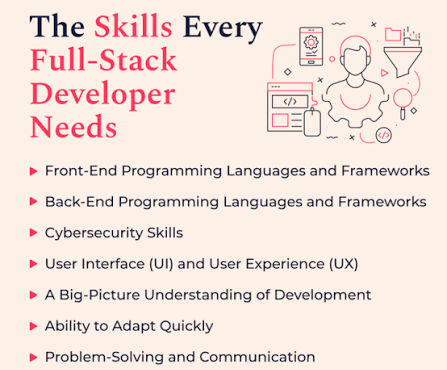
Final Thoughts on Full Stack Developer Salary in India in 2026
So, how much can a Full Stack Developer earn in India in 2026?
The honest answer is: it depends.
A fresher may start around ₹3–6 LPA. With experience and stronger skills, developers can move into ₹6–12 LPA, while senior professionals can reach ₹12–25+ LPA and sometimes considerably more.
Current salary data reinforces that there isn’t one fixed number. Glassdoor’s current India figures put average base pay around ₹6 lakh annually, while reported salaries vary significantly by employer, experience and location.
But here’s the part I’d remember.
Don’t chase the salary first.
Chase skills that create salary.
Learn how a browser communicates with a server. Understand APIs. Write good SQL. Build something people can actually use. Learn Git. Deploy your application. Read other people’s code. Break things and fix them.
That’s how I would approach Full Stack Development in 2026.
Because at the end of the day, companies don’t pay you simply because your resume says “Full Stack Developer.”
They pay you because you can build, debug, improve and maintain software that solves real problems. 🚀
Want to Learn More About Java ?, Kaashiv Infotech Offers, Full Stack Java Course, Java Course, Data Science Course, Internships & More, Visit Their Website www.kaashivinfotech.com.
Related Reads:
- Java vs JavaScript: 3 Key Differences Every Developer Must Know
- Java Serialization Explained: A Complete Beginner’s Guide
- What Is Django in Python? Understanding The Most Powerful Full-Stack Framework of 2025 That’s Redefining Web Apps
- Python Dictionaries: 7 Surprising Ways They Make Your Code Smarter