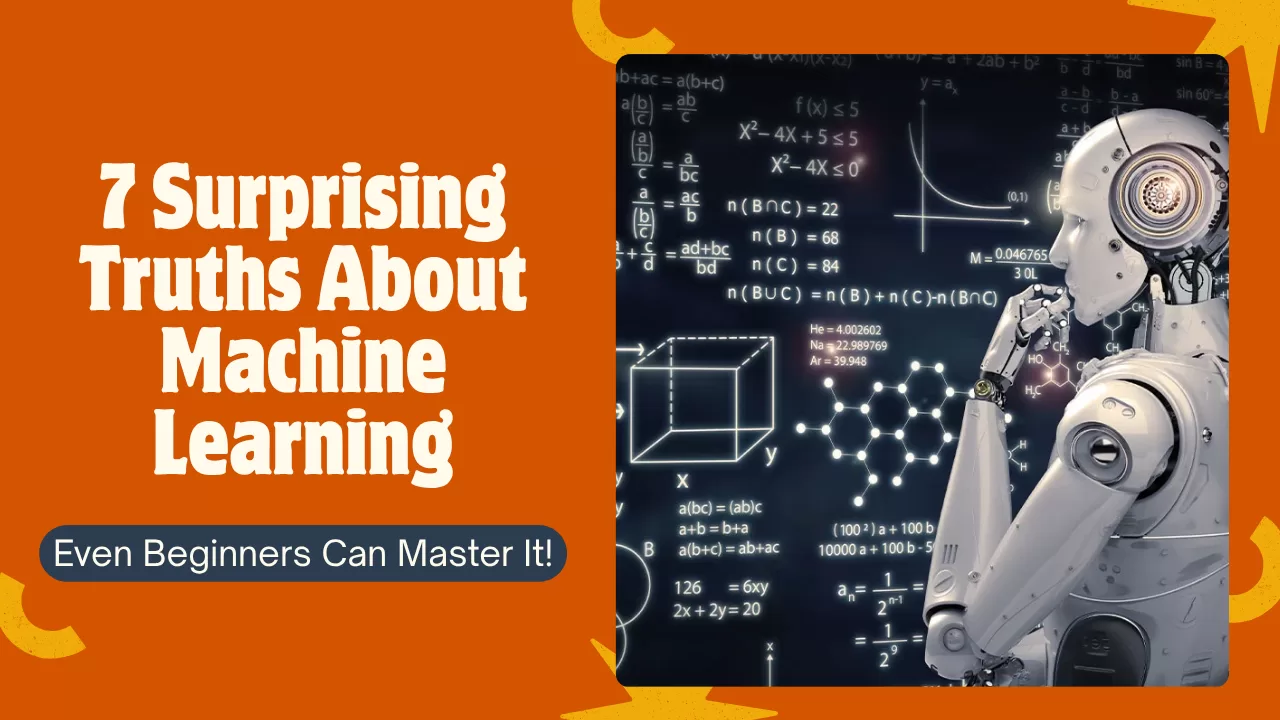
7 Surprising Truths About Machine Learning with Python (Even Beginners Can Master It!)
🤖 Machine Learning with Python: A Complete Beginner’s Guide
Let me guess — you typed “Machine Learning with Python” into Google because you’re curious, a little confused, and maybe even slightly overwhelmed.
I get it. I’ve been there too.
When I started, “machine learning” sounded like something only tech wizards at Google or MIT could do. But what shocked me was how accessible it becomes once you pair it with Python — especially for beginners like us.
So this isn’t just another guide. This is the guide I wish someone gave me when I was fumbling through YouTube videos, StackOverflow threads, and random blog posts, trying to make sense of it all.
Let’s break it down — simply, practically, and most importantly — like humans talking to humans. 🧠💬
📌 What is Machine Learning (ML) and Why Python?
Let me give it to you straight:
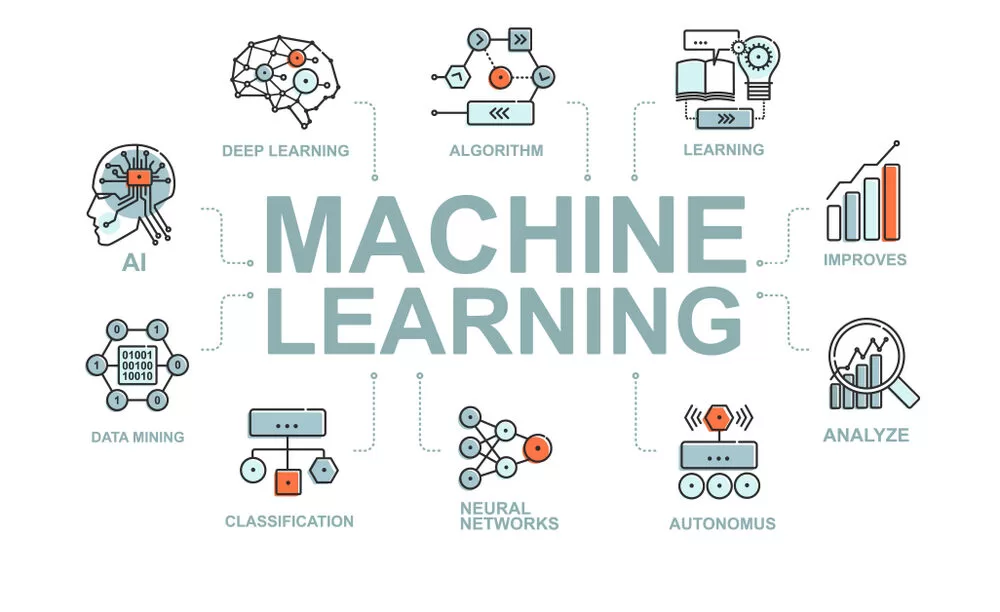
Machine learning is teaching computers to make decisions by feeding them data — instead of giving them step-by-step instructions. Think: spam filters, Netflix recommendations, or Siri predicting what you’re about to say.
Now why Python for machine learning?
Because:
- Python reads like English.
- It has insane libraries that do the heavy lifting (you’ll meet them soon).
- It’s literally the language of choice for ML in 2025 (ask any hiring manager!).
Want proof? Look up any course on machine learning with Python — you’ll see Python as the default. It’s like peanut butter and jelly — just better for your career 🍞📈
🧰 Top Tools You Need to Know in Python for Machine Learning
This part used to freak me out: all the packages people threw around like “You don’t know NumPy? Bro…” 😵
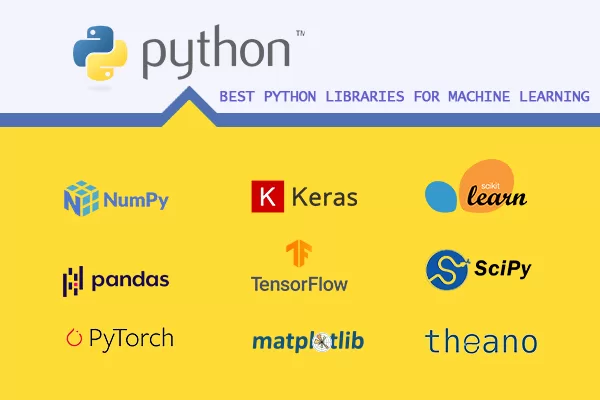
But here’s the deal — you only need a few to get started:
NumPy:
- It helps you with numbers and matrices (ML loves both).
- Think Excel, but on steroids.
Pandas:
- Your go-to for cleaning and managing data.
- Ever tried turning messy CSV files into usable data? Pandas is your BFF.
Matplotlib & Seaborn:
- For making cool charts.
- Visualize your data like a pro.
Scikit-learn:
- The holy grail of machine learning algorithms.
- Want to build a spam filter or a prediction model? This is your toolkit.
💡 My First Real-World Machine Learning Project (And What I Learned)
I still remember my first ML project. It was basic — predicting housing prices using Python.
I used a dataset from Kaggle, ran some data cleaning with Pandas, built a linear regression model with Scikit-learn, and voilà — it actually worked. Kind of.
Okay, my accuracy was trash 😂 — but I finally saw the magic.
And that’s when it clicked: you don’t need to build the next ChatGPT to start.
Start small. Start real. Then build up.
🚀 Real-world Machine Learning Projects You Can Try:
- Predict movie ratings based on user history 🎬
- Classify emails as spam or not 📧
- Recommend books or music 🎵
- Detect fake news using NLP 📰
- Forecast stock prices (careful with this one 💸)
🔄 How Machine Learning Algorithms Actually Work
You don’t need a PhD to understand this, trust me.
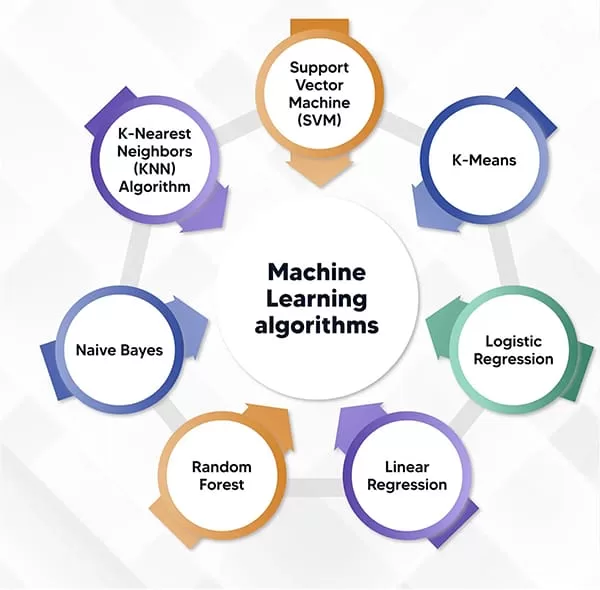
Here’s the simplified breakdown of machine learning algorithms:
- Supervised Learning: Teach with examples (like flashcards)
🧠 Examples: Linear Regression, Decision Trees - Unsupervised Learning: Let the machine find patterns (unsorted puzzle)
🧩 Examples: K-Means Clustering, PCA - Reinforcement Learning: Learn by trial and error (like playing a video game)
🎮 Examples: Q-learning, Deep Q Networks
The beauty? Scikit-learn handles most of this under the hood.
You just choose the algorithm and let Python do its thing.
⚙️ Your Starter Kit for Machine Learning with Python
Here’s what I’d suggest if you’re starting today:
🛠 Tools You’ll Need:
- Python
- Jupyter Notebook – Great for playing with code in chunks
- VS Code or PyCharm – If you like full IDEs
- Google Colab – No installs, just run Python on the cloud
📦 Install Your Libraries:
pip install numpy pandas matplotlib seaborn scikit-learn
Or if you’re using Jupyter/Colab — most of these come pre-installed!
🧭 Learning Path: From Newbie to Ninja in Python for Machine Learning
Here’s a real, no-BS path I wish someone laid out:
- Learn Python basics (variables, loops, functions, OOP)
👉 Here’s a Python basics crash course - Understand how data works (Pandas, NumPy, Matplotlib)
👉 Play with real datasets on Kaggle - Explore machine learning algorithms using Scikit-learn
👉 Classification, regression, clustering — build 3 mini-projects each - Work on real-world machine learning projects
👉 Put them on GitHub or a portfolio — this is gold during job hunts - Optional but fun: Deep Learning with Keras or PyTorch
👉 When you’re ready, it gets addictive!
❌ Common Myths That Almost Stopped Me
- “I need to be good at math.”
Not true. You just need basic algebra and curiosity. Python handles the rest. - “ML is only for data scientists.”
Nope. Developers, analysts, and even product managers are learning it. - “You need tons of data.”
You can start with small, free datasets — even 100 rows can teach you loads.
🎓 Ready to Learn Machine Learning with Python? Let’s Do This!
If you’re still reading, here’s your sign. You can learn machine learning with Python.
And you don’t need to go it alone. Start with a free course, a small project, or even a single algorithm. Build momentum. Fail forward.
💡 I started with a humble CSV file. You can start today.
✨ Final Thoughts
Machine Learning with Python isn’t just a trend — it’s becoming a fundamental skill across industries. Whether you’re into finance, marketing, healthcare, or gaming, Python for machine learning will open doors you didn’t know existed.
And hey — if a regular person like me can figure it out, you definitely can too.
🔗 Related Links